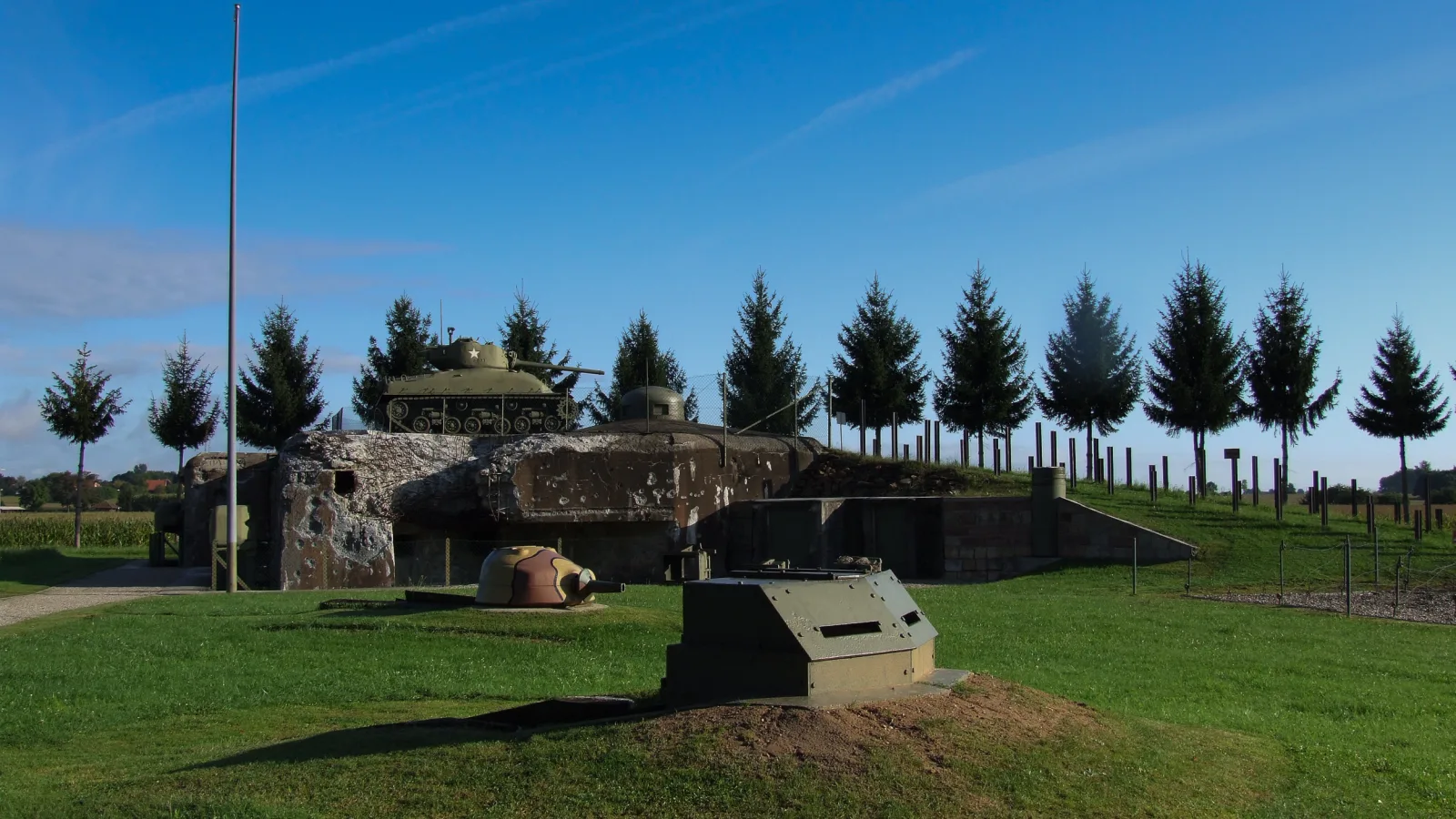
Urbex in Strasbourg has a distinctive geography: a border city that changed nationality four times in a century, ringed by the German forts of the Festung Strassburg (1872-1885) and, further out, bristling with the blockhouses of the Maginot Line along the Rhine. Here the genuine abandoned places are almost never in the listed, restored and watched historic centre, but in the wastelands of the Port du Rhin, the forgotten casemates of the plain and the great brewery wastelands no one has reopened. On our map, hundreds of geolocated spots cover the Bas-Rhin and the whole Grand Est region.
For this article we picked 3 places that are genuinely abandoned and still standing in 2026, each verified one by one: a Maginot Line blockhouse on the eastern edge of the city, the listed Schutzenberger brewery left derelict in Schiltigheim, and a Maginot casemate lost in the Erstein plain. No demolished spots, no fort reclaimed by an association and passed off as a ruin. Under each entry, an "Add to my map" button saves the GPS coordinates to your personal account, for free and with no credit card.
The queries urbex Strasbourg, Strasbourg urbex map, abandoned places Strasbourg, Schutzenberger brewery urbex, urbex spot Strasbourg and urban exploration Bas-Rhin all point to the same reality: a military and bourgeois heritage that history set aside - defeats, annexations, military withdrawals, bankruptcies - and that photographers, urbexers and historians are rediscovering today. This guide gives you each site's dated history, its legal status and its real dangers, before handing you its coordinates.
Free Strasbourg urbex: why Urbex Maps changes the game
Before the spots, a word on what makes this guide different. Most sites that talk about free urbex in Strasbourg put "free" in the title, then redirect you to a paid forum or a closed Telegram group. Here the promise is concrete: under each place, an "Add to my map" button sends the GPS coordinates to your personal account, with no subscription and no credit card.
Behind the map is a community of more than 40,000 explorers, active since 2021. Every coordinate is checked at least twice - by the contributor who submits it, then by a regional moderator who confirms the spot still exists and has not been walled up. The places offered in this article are part of that catalogue; the rest of the hundreds of Bas-Rhin spots are unlocked through packs that fund the moderation and field verification.
One reminder before you set off: urbex is not illegal in itself, but entering private property without permission is trespassing (article 226-4 of the French Penal Code, up to one year in prison and a 15,000 euro fine). We document these places for their history; we never encourage breaking in. Helmet, torch, ankle boots: the blockhouses and casemates below carry real risks (shafts, scrap metal, total darkness).
1. Maginot Line blockhouse - the forgotten concrete of east Strasbourg

East of Strasbourg, in the former military glacis of the Port du Rhin, several Maginot Line blockhouses survive. Built in the 1930s to lock the Rhine crossing and defend the city, these reinforced-concrete works belong to the fortified sector of the Bas-Rhin. Outflanked in 1940, then abandoned by the army, many were partly buried or walled up; others remain open, blind casemates crouching between warehouses and railway tracks. This is the rawest face of Strasbourg urbex: not a romantic chateau, but a concrete shell the city forgot.
The firing chambers, the embrasures for machine guns and anti-tank guns, the ammunition bins and, sometimes, the staircase plunging to a flooded lower level. The concrete is bare, covered in tags and moss, the steel of the cupolas and chutes has rusted. It is a playground for military photography and a full-scale history lesson on the defence of the Rhine in 1939-1940.
These works sit on public or port land and access to the interiors is not secured. Main risks: open shafts and chutes, jagged scrap metal, standing water on the lower level, total darkness. A powerful head torch, a helmet and ankle boots are essential; never go down into a flooded level alone. The Port du Rhin area is being heavily redeveloped: some blockhouses vanish as the building sites advance, all the more reason to document them now.
The Maginot blockhouse remains the most accessible urbex spot in central Strasbourg: the best entry point to understand the militarised Rhine border.
2. Schutzenberger brewery - the listed brewery wasteland of Schiltigheim
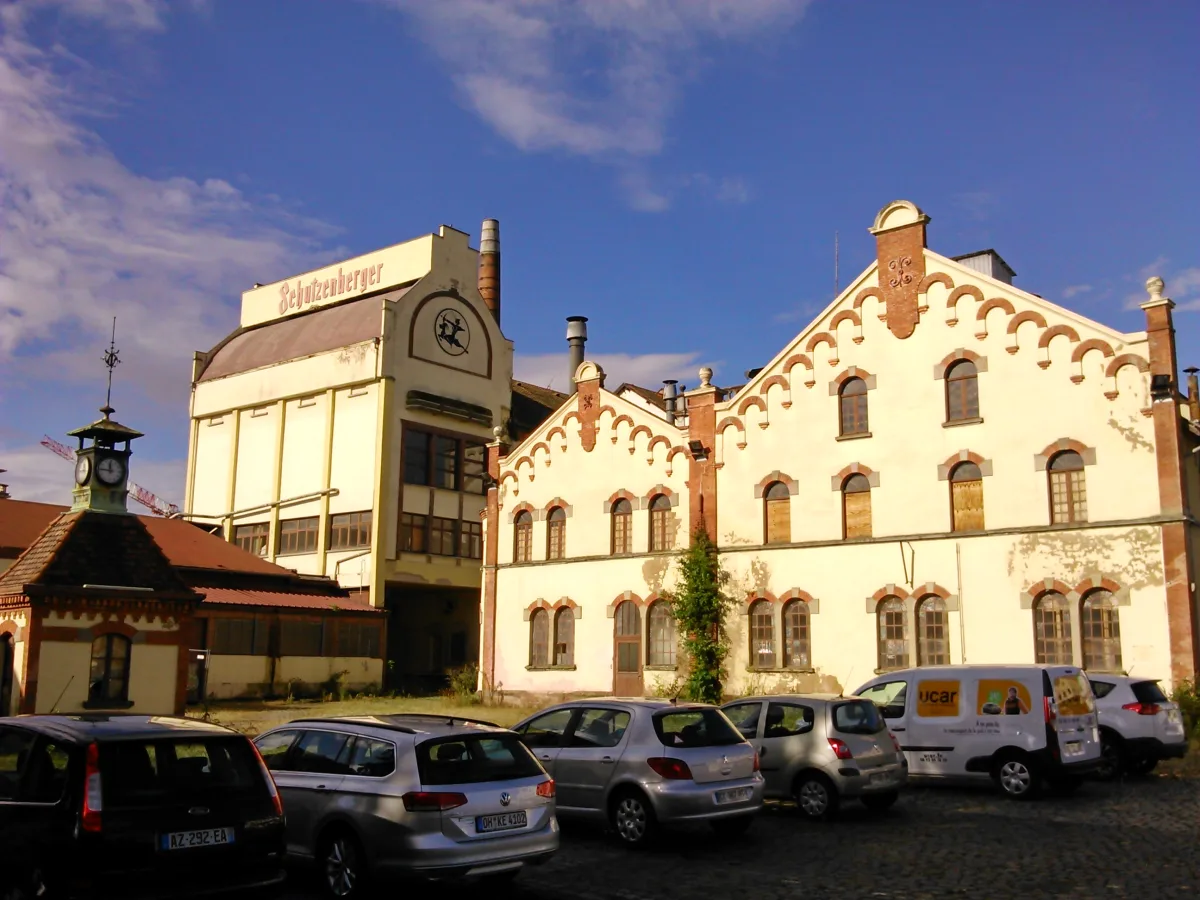
In Schiltigheim, a town bordering Strasbourg to the north, the former Schutzenberger brewery ("grande brasserie de la Patrie") is the largest abandoned industrial hulk in the metro area. Founded in 1740 and established in Schiltigheim in the 1860s, it was one of the jewels of "Schilick, city of brewers", with its 1864 brewing building. The brewery closed for good on 12 June 2006 (court-ordered liquidation). Since then the 26,000 m² complex, listed as a Historic Monument in 2008 (brewing hall, facades, roofs, master's house), has stood derelict. Mind the trap: in 2025, "the Schutzenberger beer comes back to life" - but that is the buyout of the brand and the recipes by another brewery, not the reopening of the historic building, still abandoned.
What strikes you is the scale: a huge brewing hall, sandstone and brick facades, 26,000 m² of empty halls and a master's house, all frozen since 2006. Subsoil surveys flag hydrocarbon pollution, a sign of a site never cleaned up. It is one of the finest industrial-wasteland backdrops in the Grand Est, and a full-scale history lesson on the golden age of Alsatian brewing.
Private, derelict property: access is not authorised, and the site is the subject of a redevelopment scheme (hotel, food court, around 180 homes). A public inquiry opened in late August 2025 and concludes at the end of 2026: in other words, the works have not started and the wasteland is still standing, but the window is closing. Standard risks of a large wasteland: degraded floors and roofs, glass, scrap metal, soil pollution. Observe and photograph it from the outside first. Schiltigheim is about ten minutes from central Strasbourg.
The Schutzenberger is the most iconic abandoned place in the Strasbourg metro area: a listed brewing cathedral to see before the redevelopment works transform it.
3. The Tuilerie-d'en-Haut Maginot casemate - the bunker of the plain (Erstein)
For anyone willing to drive half an hour south of Strasbourg, the Erstein plain (Bas-Rhin) lines up the casemates of the Maginot Line along the Rhine. The "Tuilerie-d'en-Haut" casemate (no. 21/3), a CORF-type work built in the 1930s, is a good example: a concrete block with flanking embrasures, set in the middle of the fields, abandoned since the end of the war. It is the archetype of the spot you widen the radius for, out of the city, where the military urbex of the Bas-Rhin is far richer than in central Strasbourg.
The casemate stands in open fields, on land that is often private or farmed: observe and photograph it from the outside first. Inside, as in any abandoned Maginot work, watch out for open chutes, scrap metal and damp. A torch and a helmet are essential. It is a quiet, out-of-the-way spot, ideal for understanding how France tried to lock the Rhine - and how quickly these concrete fortresses were bypassed. Find every spot in the area on the Bas-Rhin map.
FAQ - Urbex Strasbourg
Is urbex legal in Strasbourg?
Urban exploration is not illegal in itself, but entering private property without permission is trespassing (article 226-4 of the French Penal Code). Most Strasbourg spots are private, port or military land: we document them for their history, without ever encouraging break-ins. For more, read our guide is urbex legal in France.
Where can I find other abandoned places around Strasbourg?
Our map lists hundreds of spots across the Bas-Rhin and the Grand Est region: industrial wastelands, German belt forts, Maginot casemates and brewery wastelands. You can add the three places in this article to your personal map for free via the button under each entry, then unlock the rest through our regional packs.
Can I visit the Schutzenberger brewery?
No, not legally: the former Schutzenberger brewery in Schiltigheim is private, derelict property, a listed Historic Monument earmarked for a redevelopment scheme (public inquiry opened in late 2025). We document it for its history and observe it from the outside; its coordinates are available via the "Add to my map" button on entry no. 2. It is a spot to approach with discretion and without damaging anything.
Do I need special gear to explore the blockhouses?
For the Maginot blockhouses and casemates, a powerful head torch is essential, along with a helmet and ankle boots: you will find open chutes, scrap metal and sometimes a flooded lower level. Our urbex gear guide covers the essentials to start safely.
Conclusion: Strasbourg, a border city to read in its concrete
From the blockhouses of the Port du Rhin to the casemates of the Erstein plain, Strasbourg urbex tells a century of contested border: the German Festung, the Maginot Line, the annexations and military withdrawals. These places are not stage sets: they are open-air history books, fragile, to be explored with respect and without damage. Add them to your map, and carry on your exploration with our urbex in Lyon guide or the free urbex map.