Urbex Rotterdam is an honest story: after the bombing of May 1940 the city itself was completely rebuilt, and whatever the war did not demolish, the port economy has redeveloped over the past decades. That is why you will not find real abandoned places between the skyscrapers of the centre, but on the edges of the Rijnmond area: in the dunes of Hoek van Holland, in the woods of 's-Gravenzande, along the coast of Voorne and among the rotting greenhouses of the Westland. There you will find a hidden bunker village from 1942, a toppled NATO radio relay station and an abandoned command bunker. Our map lists thousands of geolocated places across the whole of the Netherlands, and that is the database we drew from.
In this guide we have selected 6 places that are genuinely abandoned in 2026 and still standing, each checked individually: the camouflaged bunker village of the Staelduinse Bos, an infamous graffiti bunker, the Vineta dune battery with its abandoned radio relay station, the Markostand command bunker, the dune bunkers of Oostvoorne and the skeleton greenhouses of the Westland. No demolished icons presented as existing spots, no restored museum dressing up as a ruin. Under each place a "Add to my map" button saves the GPS coordinates to your personal account for free, no credit card required. This is a deep dive that complements our big guide Urbex Netherlands: top 10 abandoned places.
The search terms urbex Rotterdam, abandoned places Rotterdam, urbex South Holland, abandoned bunker Hoek van Holland and abandoned greenhouses Westland all point to the same reality: a military and agricultural heritage that history left behind on the edge of the port city. Almost everything that is genuinely abandoned here dates from the Second World War or the Cold War, or it is a horticultural business that did not survive global competition. For each place you get the dated history, the legal status and the real dangers, before we give you the coordinates.
Urbex Rotterdam for free: why Urbex Maps makes the difference
Most lists of "abandoned places in Rotterdam" promise free coordinates in the title and then send you off to a private Facebook group, a forum or a paywall. Worse still: many lists have been recycling the same outdated names for years. Tropicana has long been the circular business hub BlueCity, the Fenix warehouses and the RDM shipyard have been redeveloped, and the Maassilo is an events venue. None of those places are abandoned any more. We do it the other way round: under each of the six places below you will find a real spot from our database, with a button that puts the GPS coordinates in your profile for free.
Behind that promise sits a verification model. A community of more than 40,000 urbexers has been mapping abandoned places since 2021, and every set of coordinates is checked at least twice: once by the person who submits the spot, and once by a regional moderation team that confirms the place still exists and has not been bricked up or demolished. The spots in this guide come from that database; the rest, thousands of other Dutch locations, is accessible through thematic packs that fund the moderation work.
A reminder before you set off: urban exploration is not illegal in itself, but entering private property without permission is trespassing (article 138 of the Dutch Penal Code) and becomes a criminal offence as soon as you cause damage or ignore signs and fences. We document these places for their history; we never encourage anyone to break in. Most of the bunkers below are moreover sealed-off bat reserves: you look and photograph from the outside, you do not go in. Helmet, torch, sturdy shoes and caution: the risk of collapse, sharp steel and deep dunes is real.
1. The Staelduinse Bos - the hidden bunker village ('s-Gravenzande)
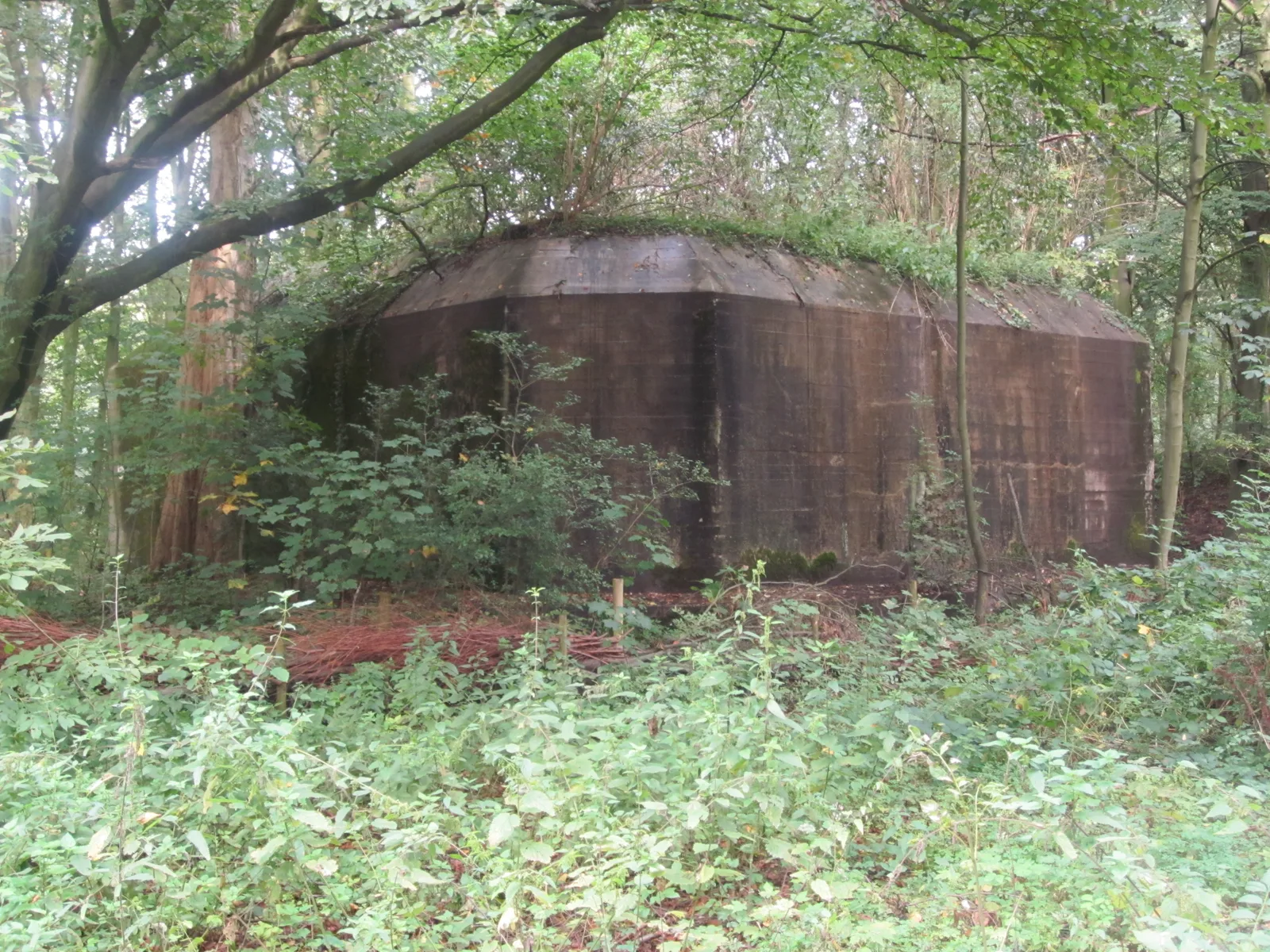
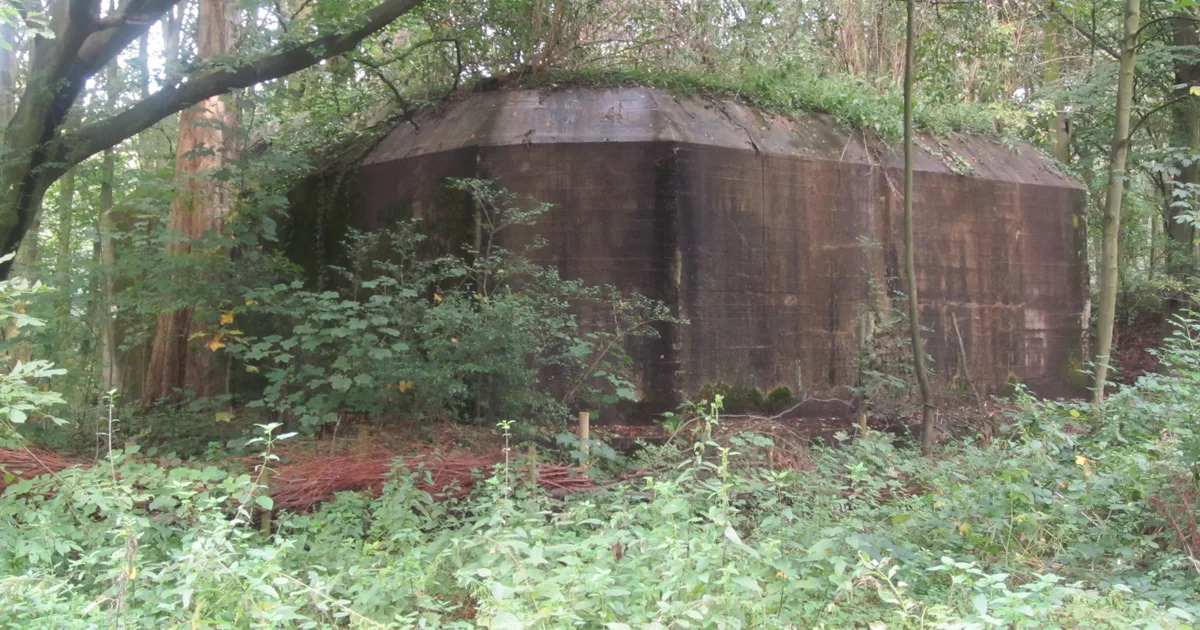
On the western edge of the Rijnmond area, in the Staelduinse Bos near 's-Gravenzande, lies the most photogenic abandoned complex in the entire region. From 1942 the Germans built a camouflaged "bunker village" here: around sixteen heavy bunkers and six ammunition bunkers, in a ring around a central command bunker, the headquarters of the Festung Hoek van Holland. There were crew quarters, a canteen and even a theatre. After the liberation in 1945 the complex was abandoned; the Royal Navy still used it as an ammunition depot between 1957 and 1960.
Today the bunkers slowly disappear under ivy and young trees, and it is exactly that which makes the Staelduinse Bos the emblematic spot of the Festung. The wood itself is freely accessible, managed by the Zuid-Hollands Landschap, with three marked walking trails that run past the bunkers. So you can simply walk among them and photograph them from every angle.
Access and caution: the wood is public and free, but the bunkers themselves are sealed as a bat reserve and you may not enter them ("don't go inside, far too dangerous", the manager warns). The real risks are collapsing masonry, hidden shafts under the vegetation and the darkness inside. Treat it as what it is, a German headquarters returning to the forest, and you will understand why this remains the best-known abandoned place on the Westland coast.
2. The graffiti bunkers on the edge of the wood ('s-Gravenzande)
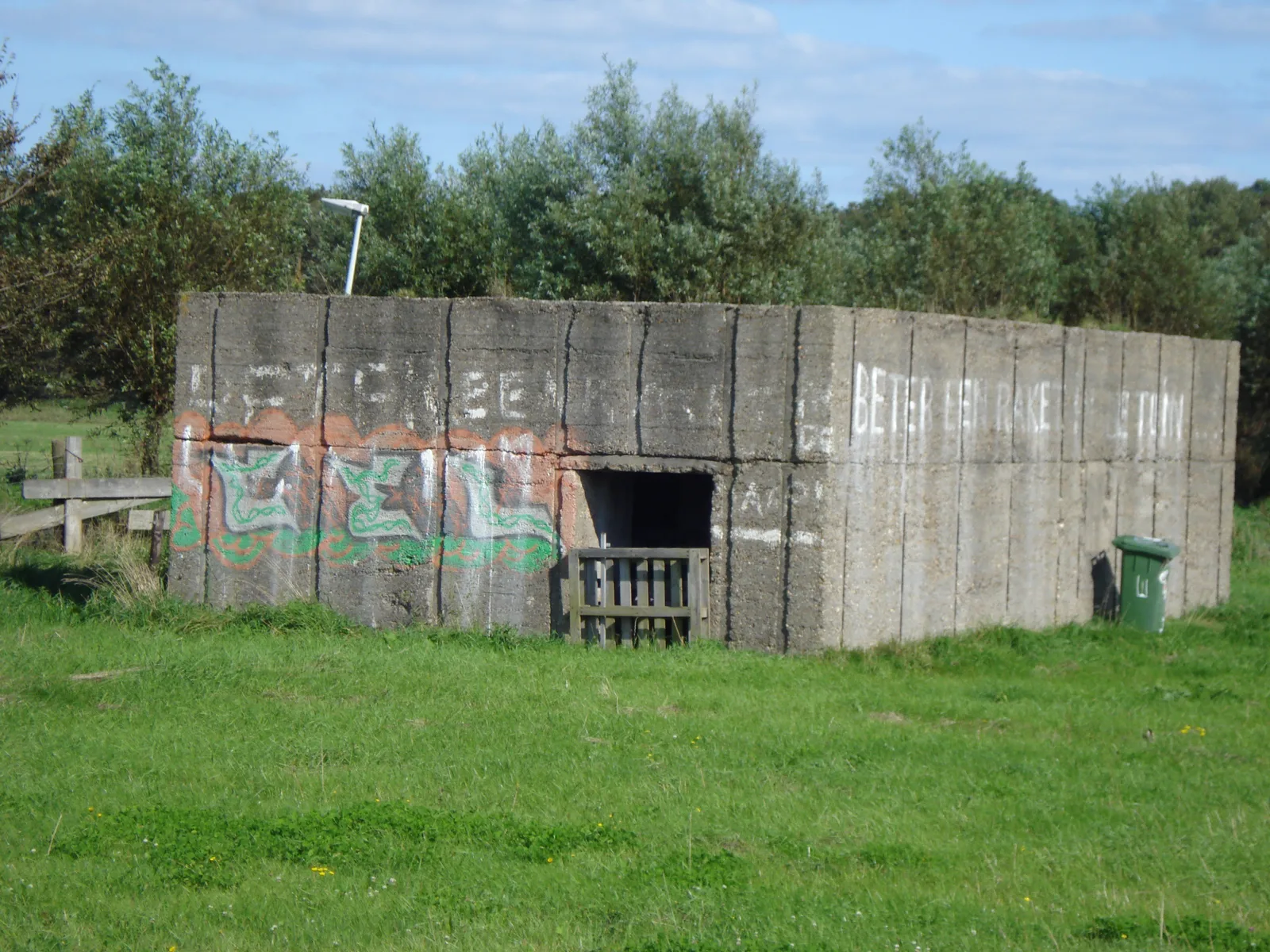
Not all of the bunkers of the Festung Hoek van Holland are hidden away in the wood. On the open edge of the Staelduinse Bos, by the Bonnenweg in 's-Gravenzande, a group of bunkers stands out in the open field, and over the years they have become a canvas for street art. They are the same Regelbau bunkers from 1942 to 1944, part of the defence system around the mouth of the Nieuwe Waterweg, but instead of overgrown they are covered here with decades of graffiti.
The high-contrast combination of grey war concrete and colourful graffiti makes these bunkers a favourite photographic subject. They are within walking distance of the bunker village, so you can combine both spots in a single walk. It is an honest picture of how abandoned military heritage is reclaimed in the Netherlands, not by nature but by the street.
Access and caution: the bunkers stand on Zuid-Hollands Landschap land and are clearly visible and easy to photograph from the outside. Inside, just as in the wood, it is a bat reserve, and the risks are the same: sharp concrete edges, pits in the floor and darkness. Stay outside, and you have the most beautiful backdrop in the whole region for free in front of your lens.
3. The Vinetaduin - the Vineta battery and the abandoned radio relay station (Hoek van Holland)
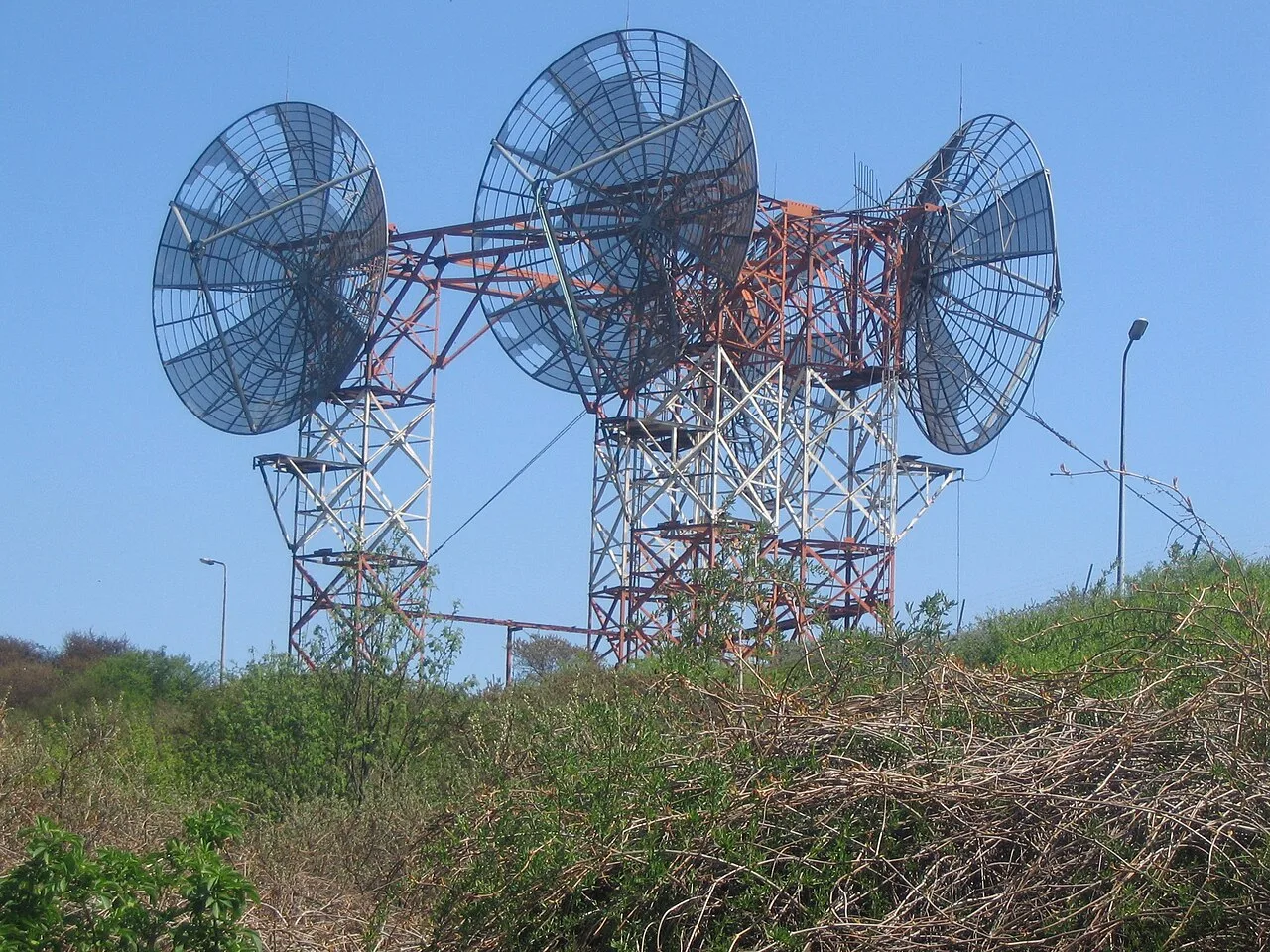
In the dunes behind the beach of Hoek van Holland lies the Vinetaduin, the core of the German coastal defence. The naval coastal battery "Vineta" was set up from 1940 on a Dutch battery from 1936 and, between 1942 and 1944, expanded into around twenty-five concrete bunkers, connected by some 500 metres of underground passages. After the war the complex was reused: in the sixties and seventies a NATO radio relay station stood here, a troposcatter installation whose rusting skeleton with dish antennas still rises above the dunes.
The bunkers still carry German inscriptions and are by now covered with graffiti, a national monument slowly falling into decay. The abandoned radio relay station is the most spectacular silhouette of the Vinetaduin: a Cold War skeleton that the dunes are slowly swallowing. It is one of the rare places where two wars, the Second World War and the Cold War, overlap in a single landscape.
Access and caution: the Vinetaduin is a closed nature reserve (Natura 2000, bats) and is only opened by the Zuid-Hollands Landschap on guided excursions, not freely accessible. You see the radio relay station and the outer bunkers from the public paths around it. The risks inside are collapsing vaults, flooded passages and open shafts. Admire it from the outside; it is part of the protected heritage of the region.
4. Markostand - the abandoned command bunker (Hoek van Holland)

On the seafront boulevard of Hoek van Holland, on the edge of the Vinetaduin, stands the Markostand, a German command bunker of the M152 type. Completed in 1942, this was the "Marko-Stand", the Marine-Artillerie-Kommandeurs-Stand, the nerve centre that directed all the coastal batteries of the Festung Hoek van Holland. Here were the observation post, the cartography and the communication rooms that coordinated the fire of the Vineta battery. After the war the bunker was reused by the Dutch army and stripped in the eighties.
Today the Markostand is an empty, soundless block of concrete, a bat shelter and part of the national monument Vinetaduin. The bare, stripped rooms give exactly that abandoned feeling urbexers look for, even though this is not just any ruin but a perfectly preserved piece of war history. The bunker is the heart on which the entire coastal defence turned.
Access and caution: the Markostand lies in the closed Vinetaduin and can only be viewed inside on special days (such as the annual Bunkerdag); otherwise it is sealed but visible from the outside. The underground passages are not freely accessible. Dangers are open shafts, darkness and the closed status of the nature area. A command post that governed the whole region, now given back to the silence.
5. The dune bunkers of Voorne - Atlantic Wall near Oostvoorne (Voorne aan Zee)
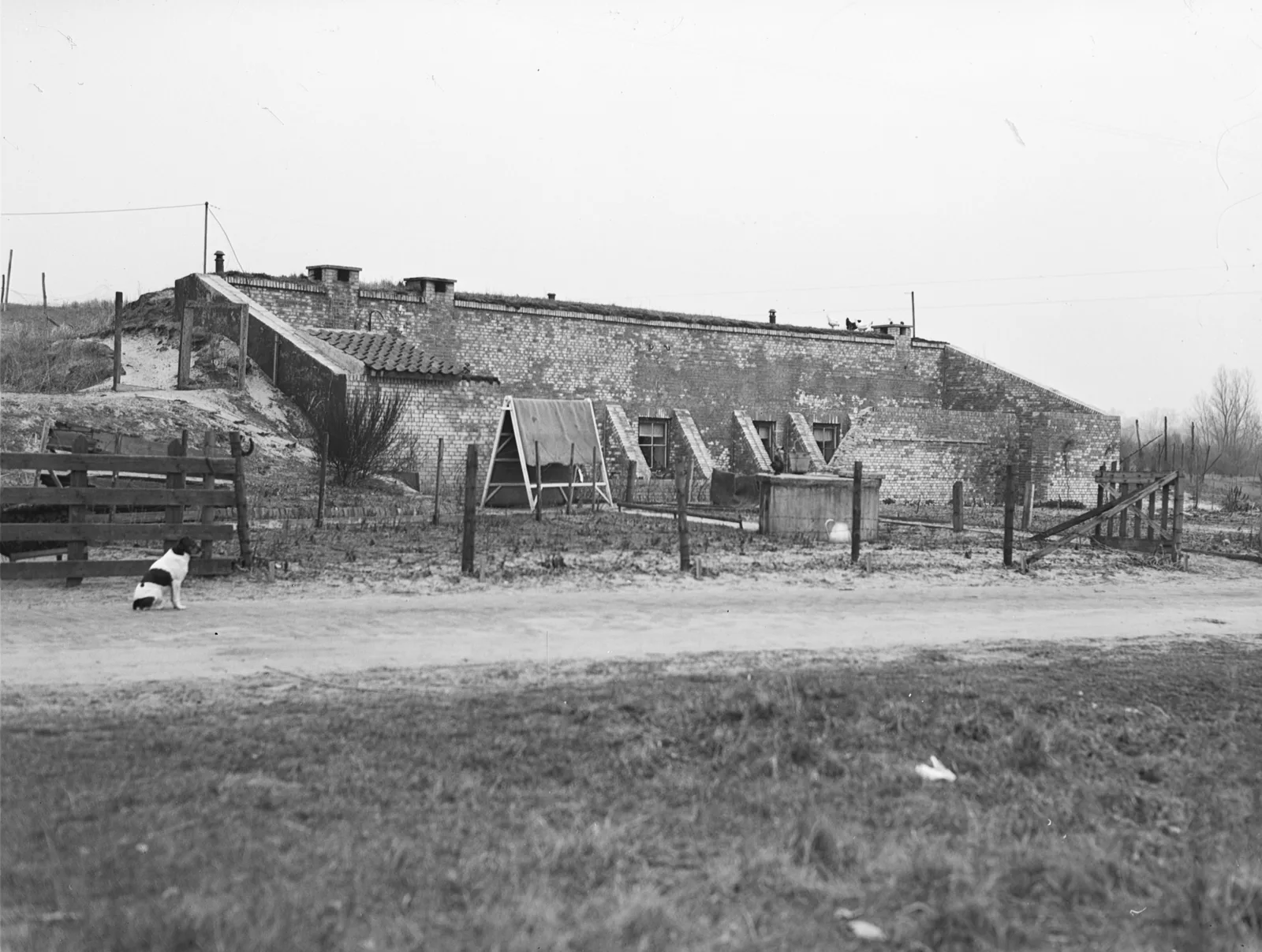
On the south side of the Nieuwe Waterweg, in the dunes of Voorne aan Zee near Oostvoorne, lies the other end of the same Atlantic Wall. From around 1942 the Germans fortified this coast too: the air watch and radar position "Biber" with dozens of bunkers, plus coastal posts further into the dunes. The storm and coastal erosion of 1947-1948 dragged two coastal bunkers into the sea, and they still resurface at low tide along the tideline at the Groene Punt.
The Biber bunker itself is no longer an abandoned place; it is run as a guided attraction. But the dozens of associated bunkers around it lie half overgrown and half buried in sand in the Dunes of Voorne, out in the open. It is quieter and rougher than Hoek van Holland: here you walk over dune paths and, among the bushes, come across concrete shelters that no one uses any more.
Access and caution: the Dunes of Voorne are partly nature reserve (Natuurmonumenten) with marked paths, partly fragile terrain, so stay on the paths. The bunkers are visible from the outside; do not enter dark, half-flooded rooms. Risks are quicksand-like dunes, sharp steel and the tide at the bunkers by the sea. A quieter variant on the Hoek van Holland theme, for those who avoid the crowds.
6. The abandoned grape greenhouses of the Westland (Heenweg)
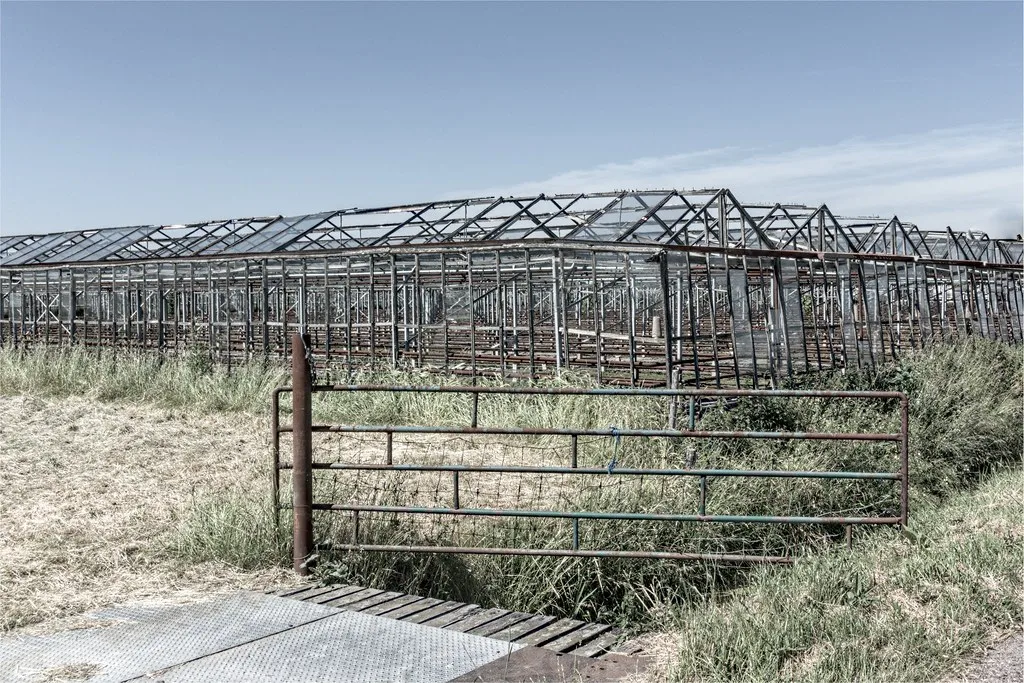
The Westland, north of Hoek van Holland, is the largest greenhouse area in the world, but behind that glass hides a less well-known phenomenon: abandoned greenhouses. Between Heenweg and 's-Gravenzande stand old grape greenhouses and horticultural businesses that did not survive global competition and the move to larger scale. Their glass is broken, their steel frames stand like skeletons in the weeds, sometimes already empty for fifteen years while awaiting demolition or redevelopment.
It is a typically South Holland kind of urbex: not a monumental castle or factory, but an emptied glass landscape that belongs to the breakneck restructuring of horticulture. These places are fleeting; an abandoned greenhouse of today may be demolished within a year, sometimes delayed because protected bats or animals have been found inside. That is exactly what makes them an honest snapshot of the real, contemporary abandoned Westland.
Access and caution: abandoned greenhouses are almost always private property, often fenced off and sometimes contaminated with asbestos or old pesticides. Entering is trespassing; you photograph from the public road or path. The physical risks are obvious: broken glass everywhere, collapsing roofs and hidden pits. Photograph the skeleton from the outside, and you have the most graphic image of the whole list. For the full map see our guide Urbex Netherlands.
FAQ - Urbex Rotterdam
Are there abandoned places in Rotterdam itself?
Almost none. The centre of Rotterdam was bombed in May 1940 and completely rebuilt, and the well-known "abandoned" names, Tropicana, the Fenix warehouses, the RDM shipyard, the Maassilo, have all been redeveloped into business hubs, housing or event venues. That is why you find real urbex on the edges of the Rijnmond area: in Hoek van Holland, 's-Gravenzande, on Voorne and in the Westland. You can read more about the whole of the Netherlands in our Urbex Netherlands pillar.
Is urbex legal in the Rotterdam region?
Viewing and photographing buildings from public ground is allowed. Entering private property without permission is trespassing (article 138 of the Dutch Penal Code) and becomes a criminal offence as soon as you cause damage or ignore fences and signs. Most of the bunkers here are moreover sealed-off bat reserves or protected national monuments: we document them for their history, without ever encouraging anyone to go inside.
Can you see the bunkers of Hoek van Holland from the inside?
The Staelduinse Bos is freely accessible and you walk past the bunkers, but inside there are bats and it is sealed. The Vinetaduin and the Markostand lie in a closed nature area and can only be seen from the inside on guided excursions or special days (such as Bunkerdag). The restored Atlantic Wall museum and the Fort aan den Hoek van Holland are separate, paid locations, not abandoned places.
Which place is the easiest to start with?
The Staelduinse Bos is by far the most accessible: a freely public wood with marked paths along a real bunker village, without having to force anything. Anyone who prefers the quiet should head to the dune bunkers of Voorne near Oostvoorne. The most graphic image is provided by the abandoned greenhouses of the Westland, but you photograph those from the public road.
Are these places dangerous?
Yes. The bunkers have open shafts, flooded passages and collapsing concrete; the abandoned greenhouses are full of broken glass and have collapsing roofs and possibly asbestos. Do not go alone, take a torch with you and never enter a space that feels unsafe. Our equipment guide covers the essentials.
Where can I find more abandoned places around Rotterdam?
Our map lists thousands of spots across the whole of the Netherlands. You add the six places from this article for free via the button under each place; the rest you unlock through our thematic packs. A logical next step is our pillar Urbex Netherlands: top 10 abandoned places.
Conclusion: Rotterdam erased its ruins, the edge preserved them
Rotterdam erased its ruins twice, first through the bombing of 1940, then through decades of port redevelopment, and that is precisely why the real urbex of the region lies on the edge. From the hidden bunker village in the Staelduinse Bos via the toppled radio relay station of the Vinetaduin and the Markostand command bunker to the skeleton greenhouses of the Westland: the abandoned places of Rijnmond tell the story of two wars and of a horticulture in constant change. They are not stage sets but history books in the open air, fragile, to be explored with respect and without causing damage. Add them to your map and read on in our pillar Urbex Netherlands or on the full urbex map of the Netherlands.