The Netherlands is a surprisingly rich country for urbex: an unfinished concrete castle that rises like a haunted house above the water of Almere, the largest abandoned factory in the country slowly rotting away along the Oude Rijn, a squatted fort with a genuine Krupp cannon on the North Sea Canal, a roofless church ruin in a North Holland village and a tilting bunker that the dunes of Schouwen are slowly swallowing. Our map counts more than 1,700 abandoned places in the Netherlands, spread across all twelve provinces from Limburg to Groningen, and it is from that record that we have drawn.
In this guide we have selected 10 abandoned places in the Netherlands to explore in 2026: a cement factory and a marl quarry, an abandoned villa and a concrete castle, a brickworks and a strawboard factory, a water-line fort and a wartime bunker, a church ruin and an emptied-out factory complex. Each place has been checked individually: we have only kept the locations that are genuinely abandoned in 2026, still standing and not converted into a museum, hotel or housing. Under each place you will find an "Add to my map" button that saves the GPS coordinates to your personal account, free and without a credit card.
The search terms urbex Netherlands, abandoned places Netherlands, lost places, urban exploration and urbex map Netherlands all point to the same passion: finding, photographing and documenting derelict buildings that nobody uses any more and that nature is slowly taking back. Whether you are looking for an abandoned factory in Limburg, an abandoned castle in Flevoland, an abandoned church in North Holland or an abandoned bunker in Zeeland: this top 10 covers the whole of the Netherlands, from the south to the far north.
Discover thousands of abandoned places all across the Netherlands on the interactive urbex map →
Urbex Netherlands for free: why Urbex Maps makes the difference
Most lists of "abandoned places in the Netherlands" promise free coordinates in the title, then send you off to a closed Facebook group, a forum or a paywall. We do the opposite. Under each of the ten places that follow you will find a real spot from our database, with a button that drops the GPS coordinates into your profile for free. No subscription, no credit card, no hidden conditions, just everything you need for urban exploration in the Netherlands.
Behind that promise sits a verification model. A community of more than 40,000 urbexers has been mapping abandoned places since 2021, and every set of coordinates is checked at least twice: once by the person who submits the spot, and once by a regional moderation team that confirms the place still exists. The spots in this guide come from that record; the rest, well over 1,700 other Dutch locations, are reachable through thematic packs that fund the moderation work.
This top 10 is ordered by visual impact and historical weight, not by province. We open with the cement factory and the marl quarry of Maastricht, and finish with a brickworks along the IJssel. Each place comes with a link to the map of its province. And an honest warning: almost all the places below are private property, protected monuments or sealed-off buildings. Urbex does not mean breaking in: you look, you photograph from permitted spots, you force nothing and you damage nothing.
What is NOT on this list (and why)
Anyone who googles "abandoned places Netherlands" quickly runs into names that have long since stopped being real urbex spots. The Netherlands redevelops at lightning speed, and after checking we have deliberately left those places out. The Zonnestraal Sanatorium in Hilversum, for years the showpiece of every urbex list, was fully restored between 1998 and 2009 and is now an estate full of offices, a clinic and a brasserie. The famous Sphinx factory in Maastricht has been absorbed into the Sphinxkwartier: the Eiffel building has been a hotel since 2017, with hundreds of homes built around it. No abandoned Sphinx building is left standing.
The same goes for other big names. Radio Kootwijk on the Veluwe is a restored national monument and event venue, not a ruin. Fort Pampus and Fort bij Vechten are paid museums (UNESCO World Heritage), not abandoned forts. The ENKA factory in Ede has largely been demolished and replaced by 1,250 homes, and the earthquake farmhouses in Groningen have either been pulled down or restored by Het Groninger Landschap. A place only earns a spot in this ranking if it is genuinely abandoned in 2026, still standing and not converted into a museum, hotel or building project. That is what sets us apart from the copied-over lists that have been recycling the same outdated names for years.
1. ENCI factory and quarry: the industrial scar of Maastricht
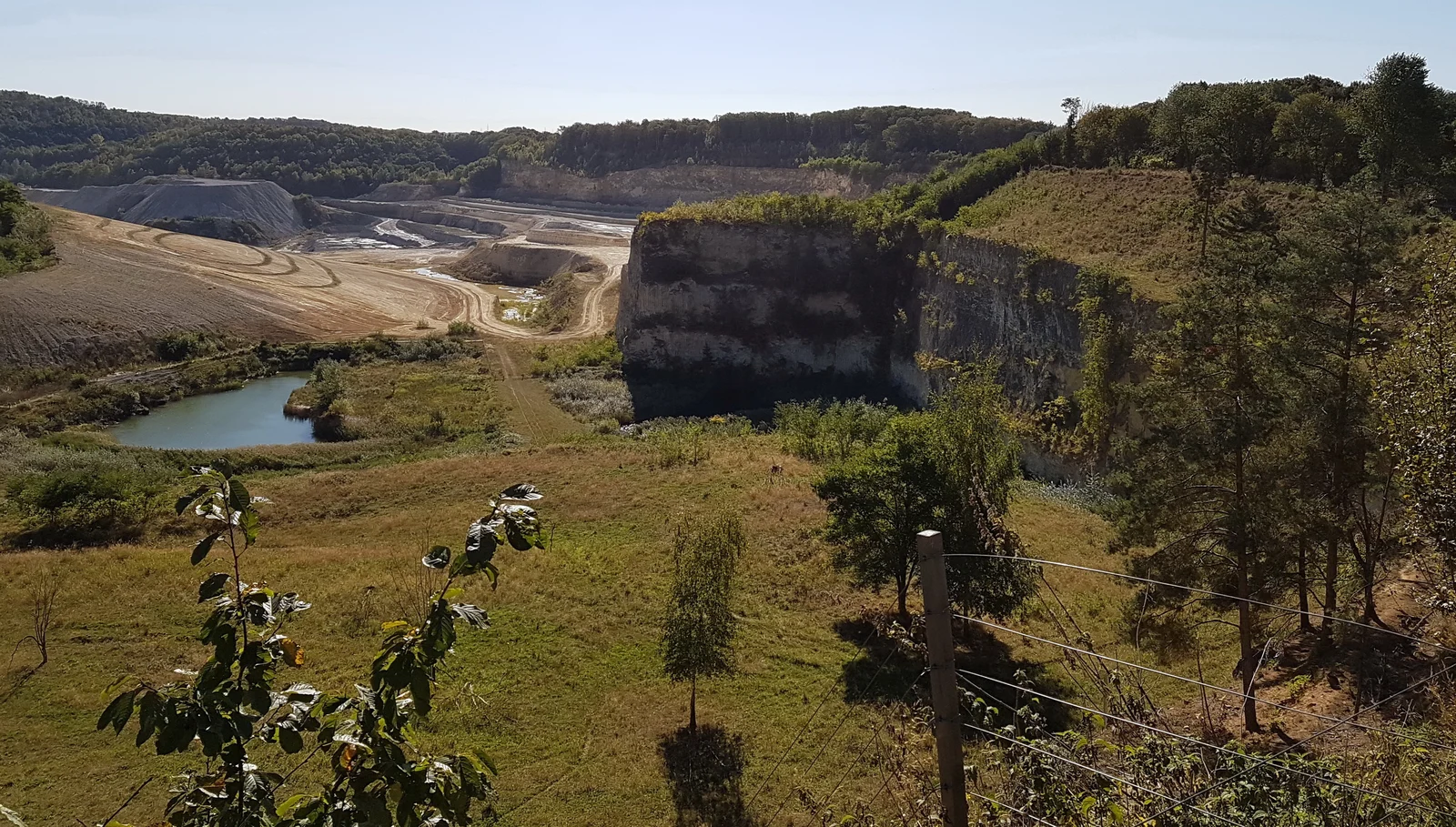
At the foot of the Sint-Pietersberg near Maastricht lies the ENCI, the Eerste Nederlandsche Cement Industrie, the oldest and largest cement company in the Netherlands. The company was founded in 1926 and for almost a century dug marl out of the hill to turn it into cement. The marl quarry that resulted is an immense, terraced moonscape of pale limestone, one of the most photogenic industrial scars in the country.
Marl extraction stopped on 1 July 2018, with cement production following in 2020. Since then the factory buildings have stood abandoned, though not unprotected: in April 2025, 23 buildings were granted monument status, the largest such designation in the Netherlands in ten years, which blocks demolition for now. The site has been in the hands of Limburg Real Estate since 2022 and is slowly being transformed. The factory itself is fenced off and guarded, but the quarry is accessible via a managed nature reserve (215 steps). So view the factory from the outside, and use the quarry as the legal way to see this landscape. More places on our urbex map of Limburg.
2. Huize Ivicke: the most famous abandoned villa in the Netherlands
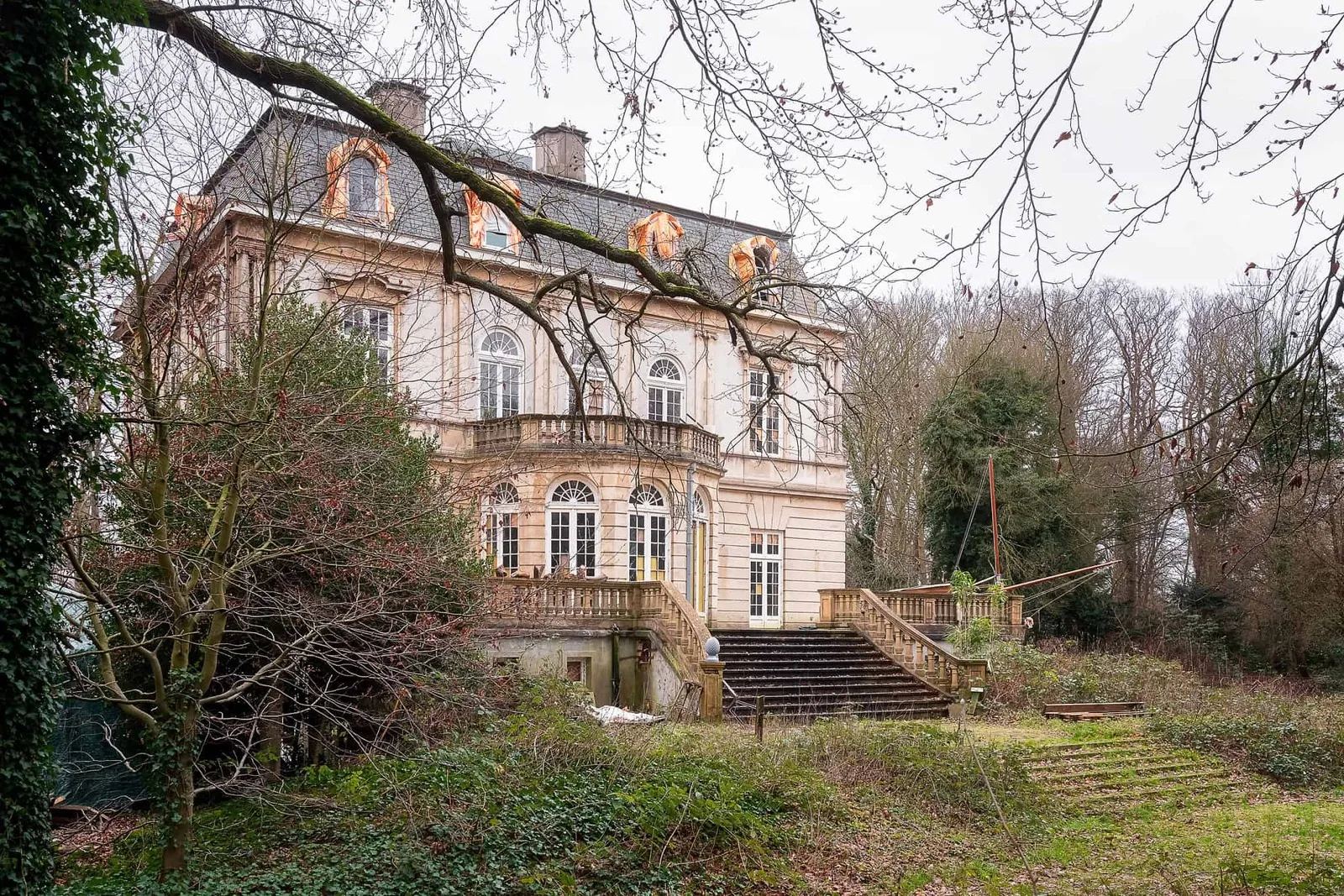
Along the N44 in Wassenaar stands Huize Ivicke, perhaps the best-known abandoned villa in the Netherlands in urbex circles. The house was built in 1913 by architect G.J. van der Mark as an almost exact copy of the Hermitage palace near Copenhagen, for businessman A.F.J. van Hattum, whose Danish wife died there in 1922 at the age of 33. It was lived in until the mid-1980s, after which it served as offices.
In 2000 the national monument fell into the hands of a property speculator who deliberately let it fall into ruin, a method that earned him the press nickname "Slum King". Ivicke ended up on the list of the fourteen most endangered monuments in Europe. The municipality took it into management in 2020 and won a court case in April 2025 to recover the costs, but the conflict drags on: in October 2025 the villa was squatted and cleared again, and at the end of December 2025 the municipality published eleven options up to and including expropriation. The villa is still standing, abandoned and surrounded by greenery. Private property, to be admired from the road. More places on our urbex map of South Holland.
3. Kasteel Almere: the unfinished concrete ruin
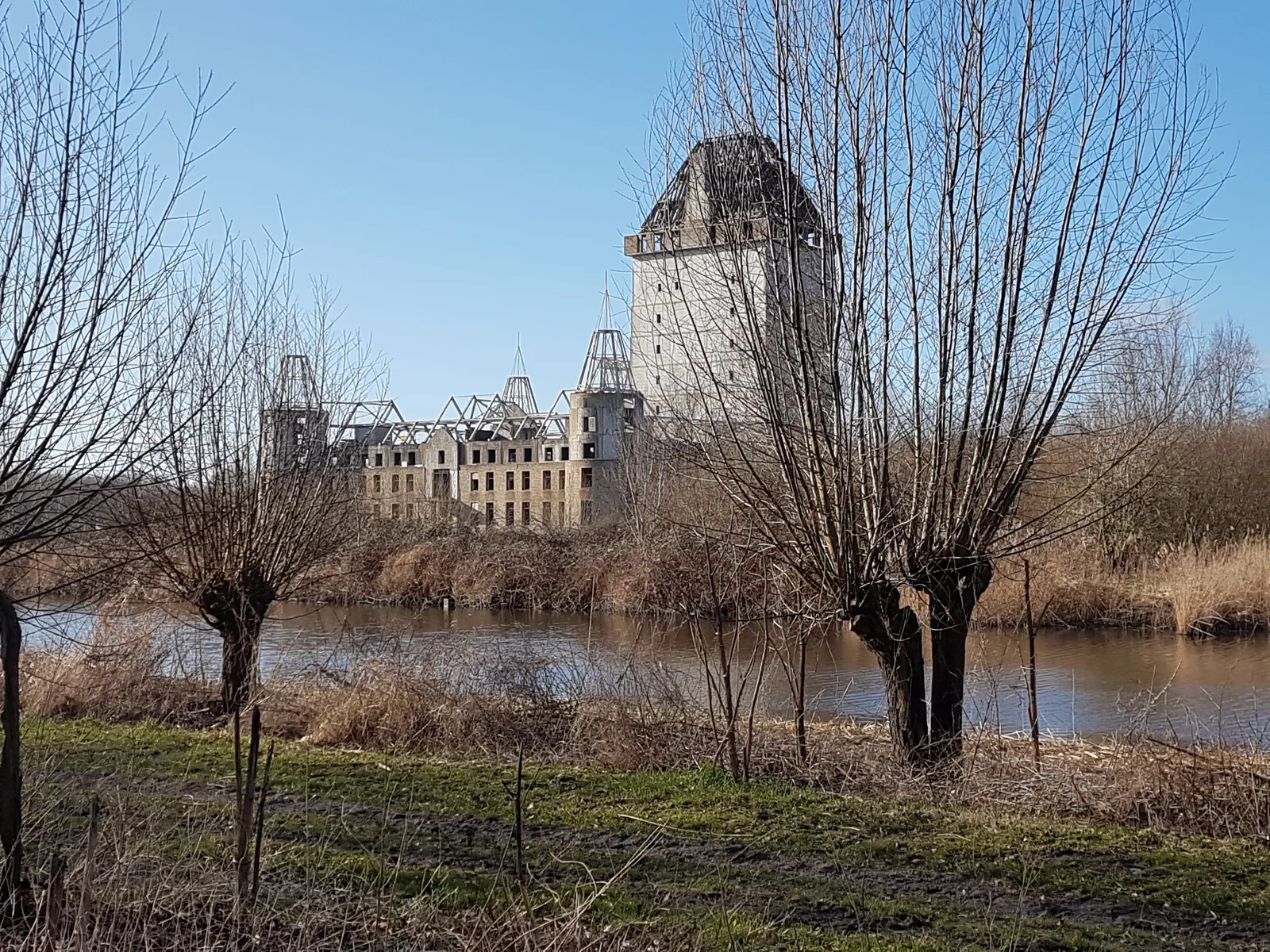
On the edge of Almere, visible from the A6, stands one of the strangest abandoned places in the Netherlands: Kasteel Almere, a neo-medieval castle that was never finished. Construction began in 2000 and it was meant to become a wedding and event venue, but in 2002 the project stalled when the developer went bankrupt. Ever since, a grey, graffiti-covered concrete shell has stood there: a genuine modern ghost castle.
More than twenty years later the castle is still a derelict shell, as Omroep Flevoland confirmed in April 2024. A theme-park plan ("WitchWorld") foundered between 2013 and 2018, and in 2025 a housing plan ("Kasteeltuin") surfaced that would finish the castle, but that has been delayed and remains vague. For now, then, it is still an unfinished ruin, a favourite subject for urbex photographers and drone pilots. Private property along the motorway, to be viewed from the road and the water. More places on our urbex map of Flevoland.
4. Nieuw Werklust clayware factory: the largest abandoned factory in the Netherlands
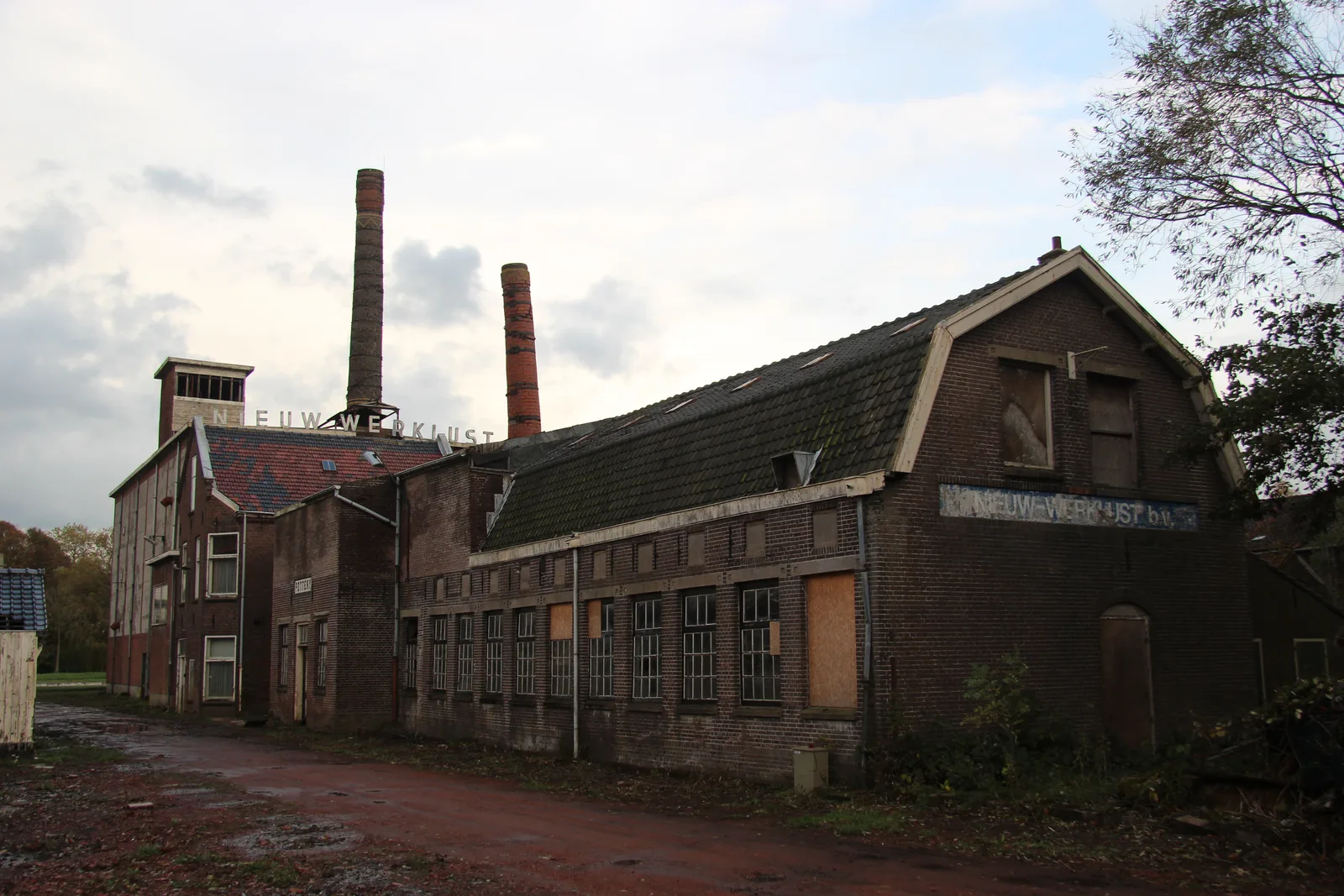
Along the Rijndijk in Hazerswoude, in South Holland, lies the Nieuw Werklust clayware factory, often described as the largest abandoned factory in the Netherlands. Its history goes back to around 1675; the factory made roof tiles, flower pots and chimney pots. Production stopped in 2000 and the company closed in 2001. The entire complex, with its long brick halls and tall chimneys, has been a national monument since 2002.
That monument status blocks demolition, which is why the sprawling complex still stands, slowly decaying. A fire in November 2022 damaged the buildings but did not destroy them, and in October 2024 Omroep West reported that the municipality was still only "in talks" with the owner about the future. So nothing has been demolished and nothing redeveloped. Note: the site is heavily fenced off and the owner is often present, so this is a place to view from the public road, not to enter. More places on our urbex map of South Holland.
5. Fort bij Velsen: the squatted fort with the cannon
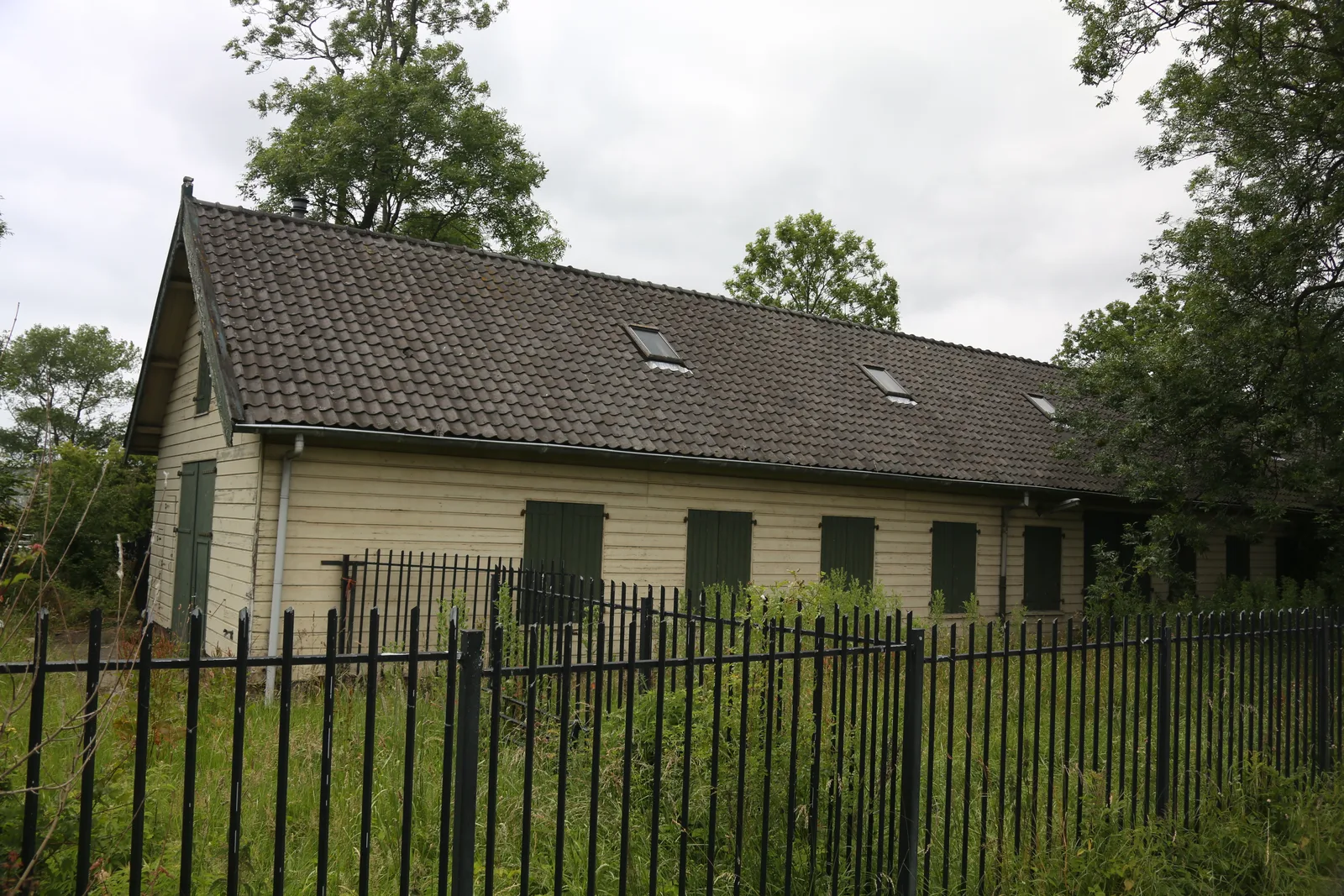
On the North Sea Canal, between Velsen and Beverwijk in North Holland, lies Fort bij Velsen, one of the few forts of the Defence Line of Amsterdam that are genuinely abandoned and derelict. Most of the water-line forts have by now become museums, care homes or tea houses; Velsen is the exception. The fort was built between 1885 and 1899 and armed in 1910 with three 15 cm Krupp cannons in armoured turrets.
The main building was blown up with explosives by a private owner in the early 1980s; what remains is the front building with a turret, two damaged turret buildings and an engineers' shed. The fort was squatted and cleared in 2019, then fell into further decline, "severely neglected" according to local media in January 2024. An investor bought it in 2022 and submitted restoration plans, but by July 2025 only the grounds had been paved. The fort is not open to the public and the front building serves only as storage, so this is a place to view from the surrounding public area. More places on our urbex map of North Holland.
6. Stork KMS: the emptied-out machine factory of Hengelo
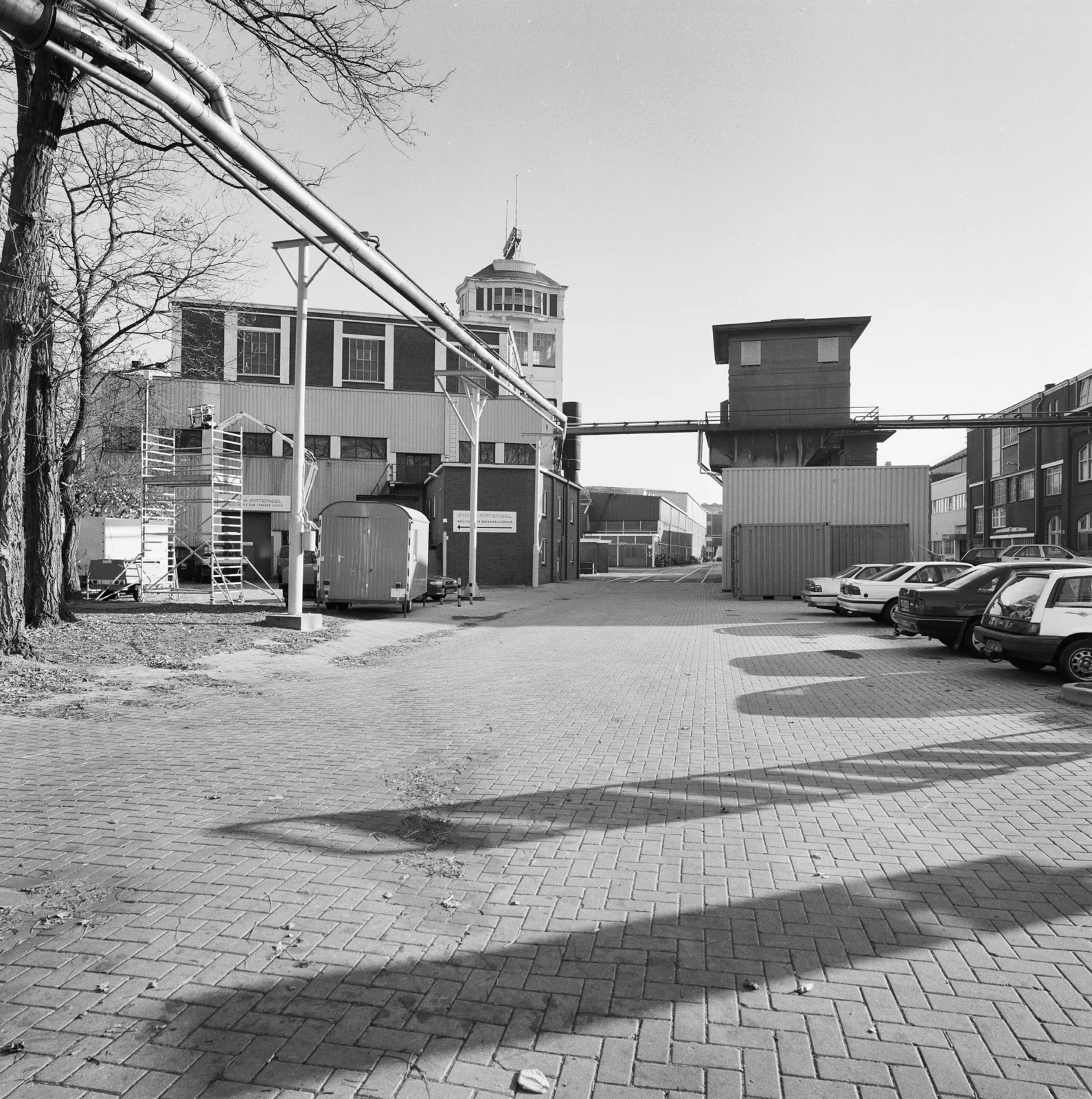
In the heart of Hengelo, in Overijssel, stands the old factory site of the Royal Stork Machine Factory (KMS). Stork started in Borne in 1859 and moved to Hengelo around 1868, where it grew into one of the largest industrial complexes in the Netherlands: steam engines, turbines and pumps rolled off the line here. With the decline of heavy industry from the 1960s onward, the factory halls slowly fell vacant.
The factory halls around the Industrieplein now stand empty and unused, and according to local media were being actively visited by urbexers in 2025, prompting the municipality to step up surveillance. The site was bought in 2024 by developer Trebbe, which wants to build some 475 homes there over the next eight to ten years, but construction has not yet begun: for now it is still empty and untouched. Note: the adjacent club building and the old foundry have actually been restored and are in use. The abandoned core, the factory halls, is a temporary window: the transformation is on its way. Private property, to be viewed from the public road. More places on our urbex map of Overijssel.
7. Atlantic Wall bunker Kop van Schouwen: concrete in the dunes
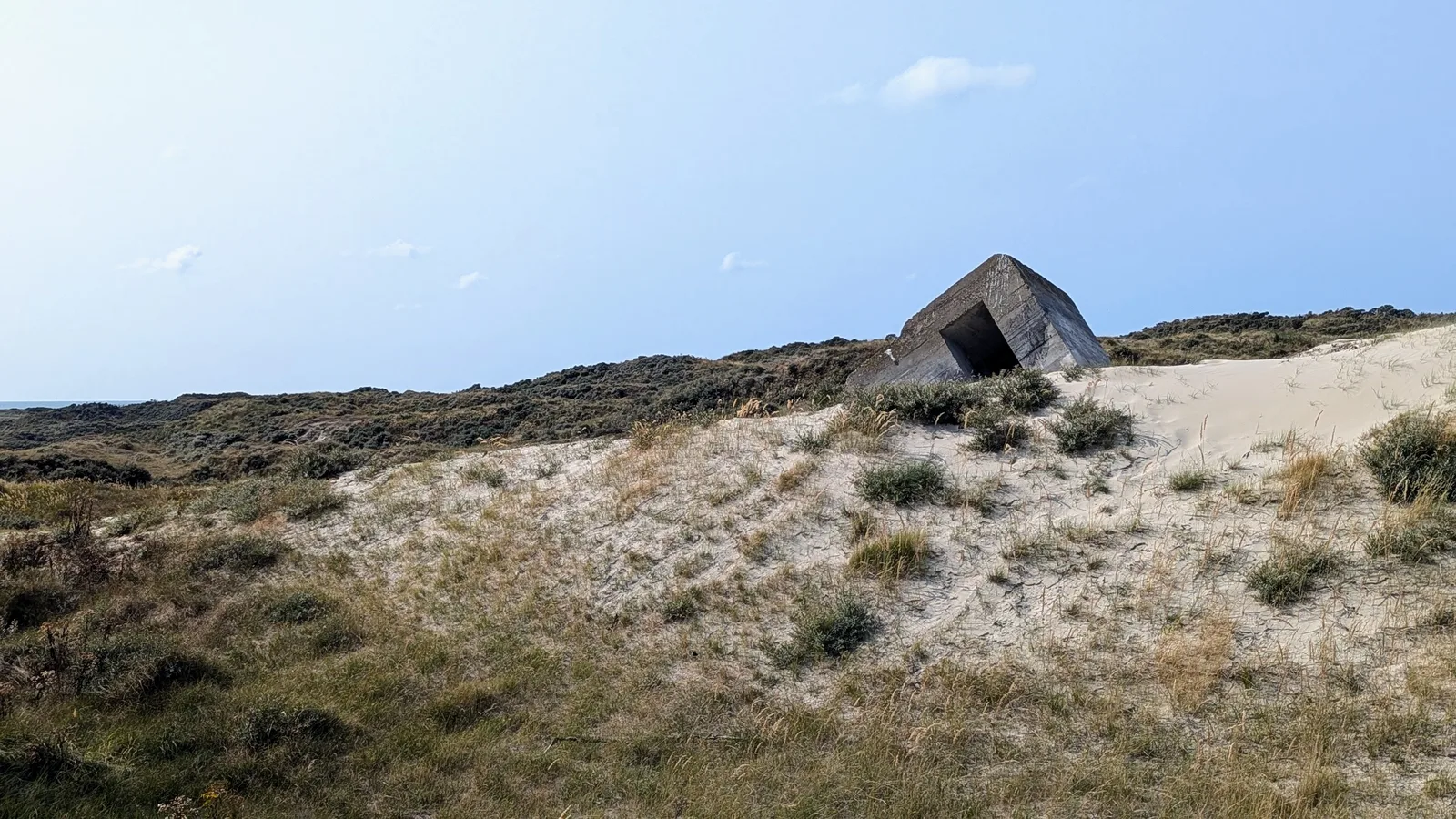
On the Kop van Schouwen, near Westenschouwen in Zeeland, the remains of the Atlantic Wall, the German defensive line from the Second World War, lie among the dunes. From 1942 the occupiers built dozens of bunkers here in the dune area. Some were demolished after 1945, but the bunkers deep in the dunes remained and have since been slowly swallowed and tilted by the drifting sand.
The result is one of the most atmospheric abandoned places in Zeeland: massive concrete blocks sinking at an angle into the sand, in the middle of an open dune landscape freely accessible as a Natura 2000 nature reserve. Unlike the bunker museums of Zoutelande, this is not a restored or managed location but genuinely abandoned wartime concrete. The bunkers are dangerous, sometimes half flooded or unstable, so keep your distance and do not crawl inside. A drone photo from August 2024 confirms they are still there. More places on our urbex map of Zeeland.
8. Ruïnekerk of Oude Niedorp: the roofless church
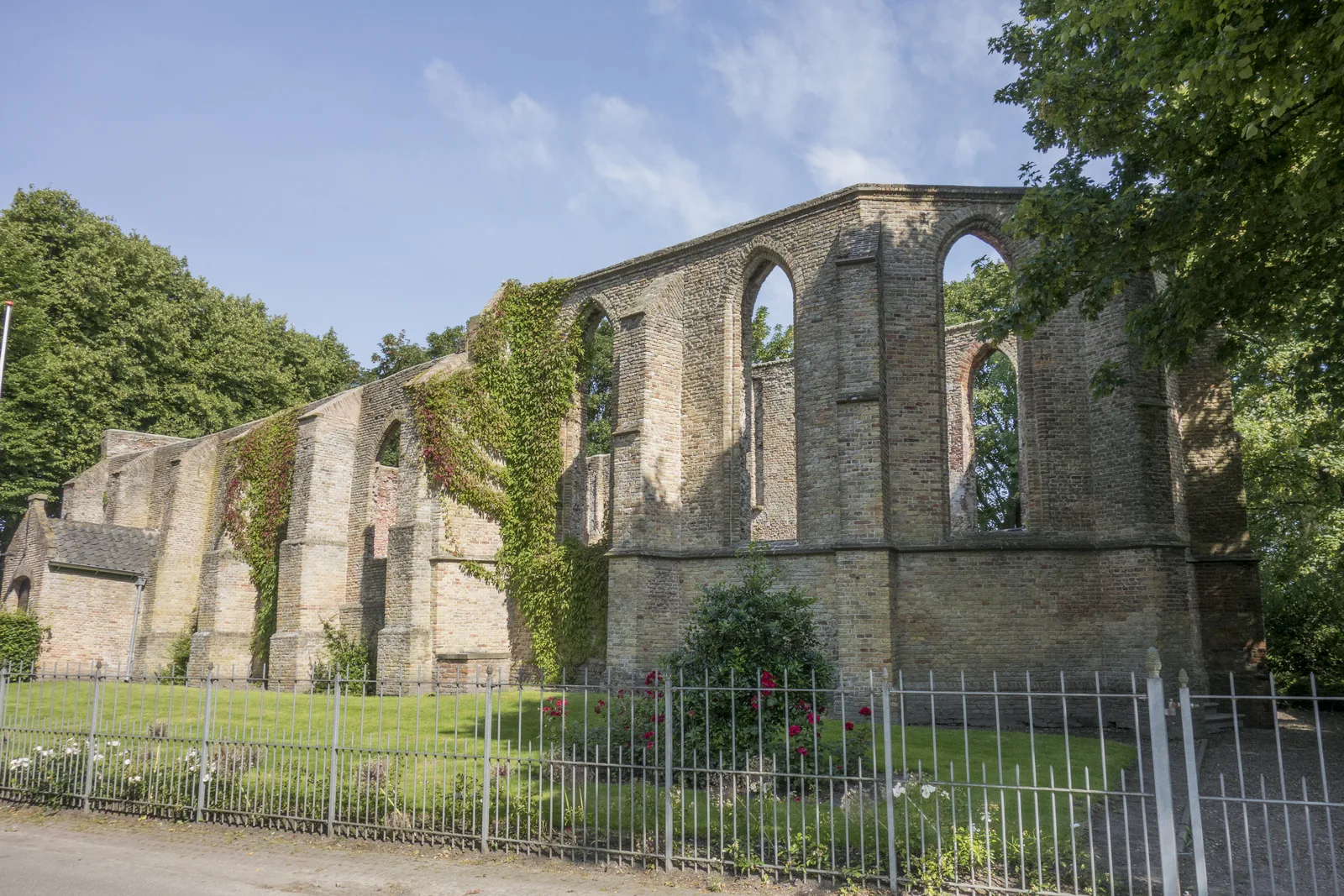
In the village of Oude Niedorp, municipality of Hollands Kroon in North Holland, stands the Ruïnekerk, a roofless church left to the elements. The original church dates back to the thirteenth century, dedicated to Saint Werenfridus; the current walls stem from a rebuild around 1648. On 3 April 1977 lightning struck and the church burned out; the roof has never been restored since.
In 2010 the municipality decided not to restore the church but to deliberately preserve it as a ruin; in 2013 it was stabilised and reopened. What remains are the open brick walls with their Gothic windows, overgrown with ivy, with the sky as the only roof. It is one of only five recognised church ruins in the Netherlands and the only one deliberately kept as an open shell. The ruin is occasionally used for events but remains a genuine abandoned ruin; it sits openly in the village and is easy to admire from the outside. More places on our urbex map of North Holland.
9. De Toekomst strawboard factory: industrial heritage in the Oldambt
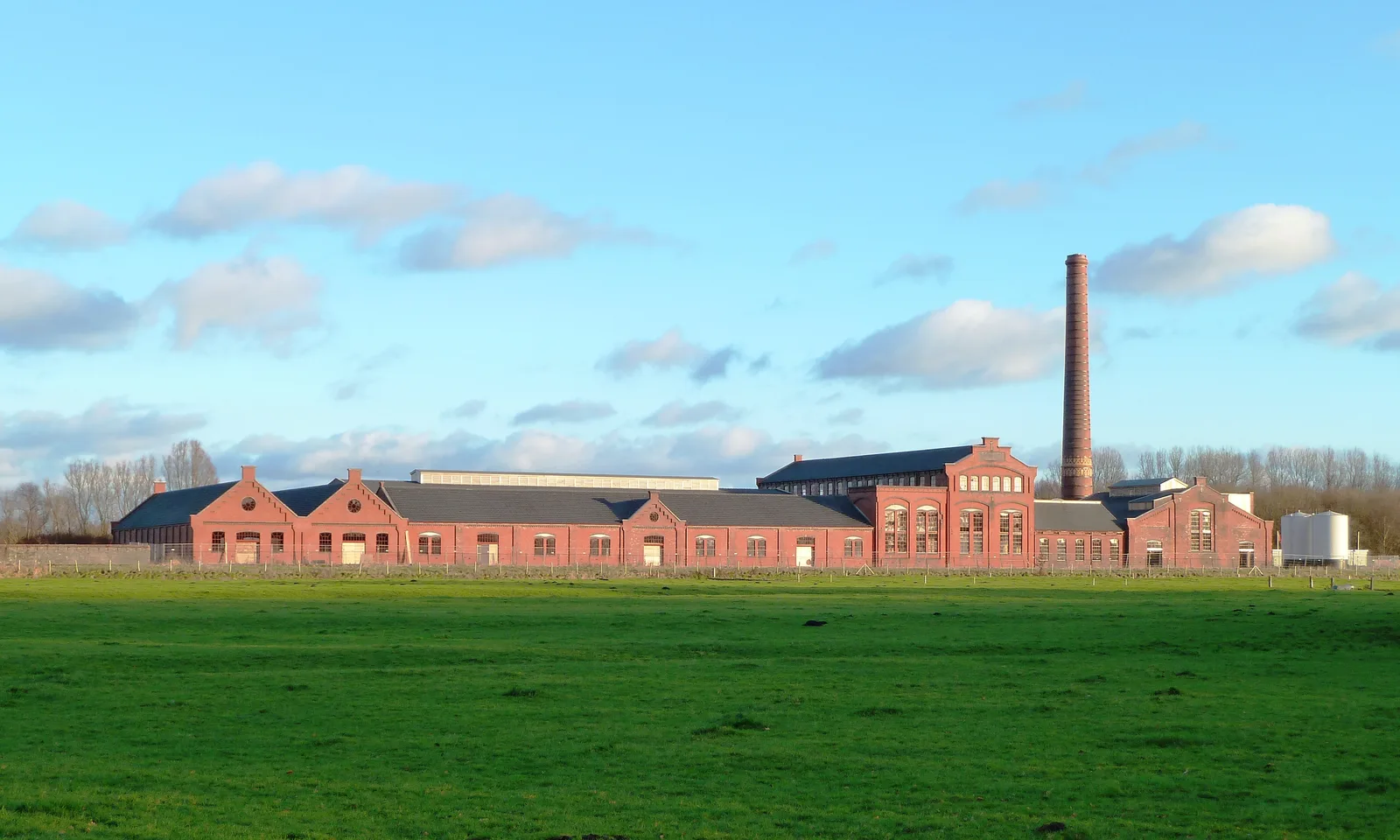
In Scheemda, in the Oldambt in Groningen, stands the old De Toekomst strawboard factory, a monument to Groningen's industrial history. The cooperative strawboard factory turned straw into the sturdy cardboard the region was famous for; the "De Toekomst II" building dates from 1908, designed by architect P.G. Cremer. Strawboard production stopped in 1968.
Be honest in your expectations here: the oldest hall (De Toekomst I) was demolished in 2005, and the surviving 1908 building was restored between 2009 and 2011 into "Erfgoedpark De Toekomst", a rental and event venue. So it is no longer a pristine sneak-in object, but it is a national monument that has kept its raw industrial character, with the red brick facades and the tall chimney dominating the flat Oldambt. We include it as the most striking industrial heritage in Groningen, alongside the story of the earthquake farmhouses that have disappeared or been restored elsewhere in the province. More places on our urbex map of Groningen.
10. Riverstone brickworks: the derelict brick factory along the IJssel
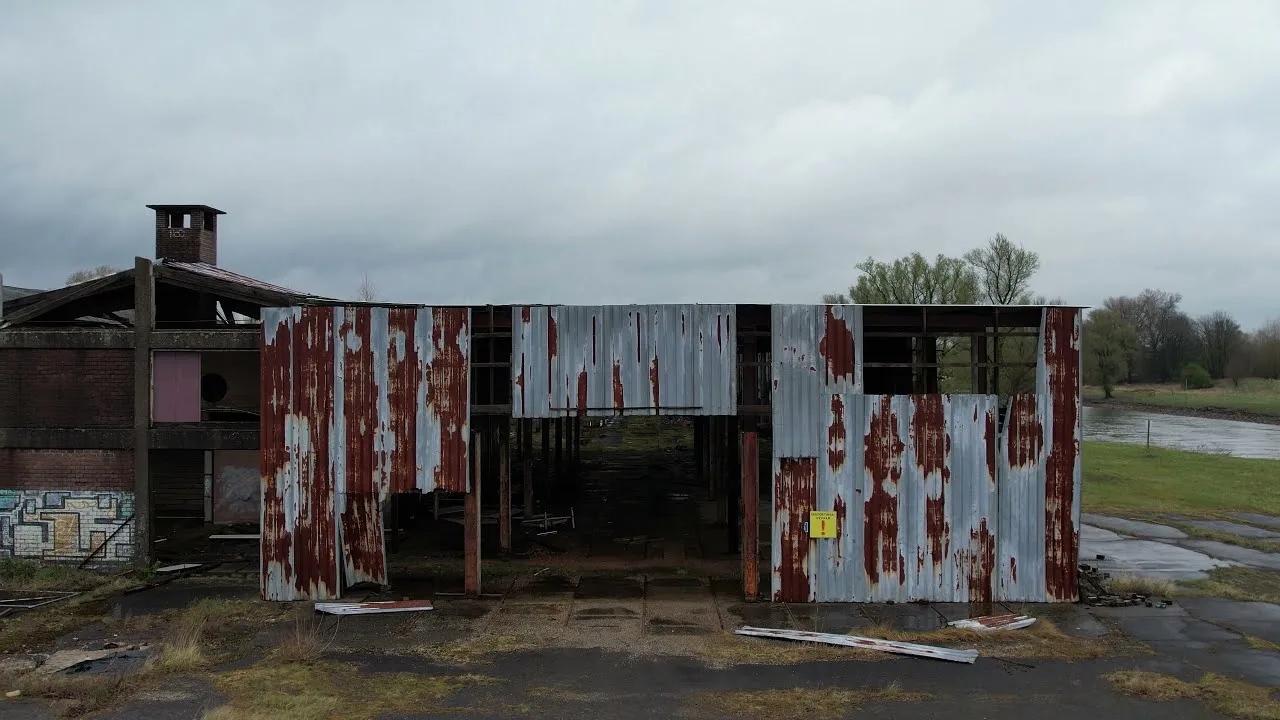
In the floodplains of the IJssel near Rheden, in Gelderland, stands the old De Groot brickworks, better known in urbex circles as "Riverstone". The factory fired bricks here until the kilns went out in 1987. Since then the complex, with its long halls and rust-eaten corrugated iron, has been decaying in the river landscape for almost forty years.
The factory has not been demolished and not redeveloped: plans for a River Climate Park in the IJsselpoort exist only on paper. The site is private, fenced off and guarded, and visits were still being documented up to early 2024. It is a fragile, collapse-prone place, so this is one to view from a distance or experience through photo and video, not to enter. A freely licensed photo is missing for this place; the image above is therefore a credited still from a drone video, with attribution. More places on our urbex map of Gelderland.
FAQ - Urbex Netherlands
How many abandoned places are there in the Netherlands?
Thousands. Our map alone counts more than 1,700 abandoned places in the Netherlands, spread across all twelve provinces: factories, forts, churches, bunkers and derelict villas. This guide covers ten of the most striking; you will discover the rest on the urbex map of the Netherlands.
Is urbex legal in the Netherlands?
Looking and photographing from the public road is allowed. Entering private property or a building without permission is trespassing, and depending on the situation can be a criminal offence (vandalism, breaking and entering). We never encourage breaking in: you explore from permitted spots, you ask permission where you can, and you force nothing.
Are these abandoned places dangerous?
Yes. Abandoned buildings carry real risks: collapsing floors and roofs, asbestos, unstable structures such as Fort bij Velsen, and dizzying heights as at the ENCI quarry. The bunkers on the Kop van Schouwen can be flooded or unstable. Many places on this list are better viewed from the outside. Never go alone, let your loved ones know, bring a torch and a mask, and never enter a structure that looks unstable.
Where do I find more free urbex spots near me?
Every place in this guide has an "Add to my map" button that saves the GPS coordinates to your personal map for free, without a credit card. To search by area, use the provincial maps under each place, or start from the urbex map of the Netherlands and zoom in on your region.
What is the best season for urbex in the Netherlands?
Spring and autumn give the finest light and the least vegetation hiding buildings from view, while winter strips the trees bare and makes ruins like the Ruïnekerk of Oude Niedorp or Huize Ivicke more visible. Always check access beforehand: several places on this list are about to be restored, redeveloped or sold, and their surroundings can change from year to year.
How do I submit a spot to Urbex Maps?
Our community of more than 40,000 urbexers is constantly adding and checking places. Once you have a free account, you can submit a place with coordinates and photos; a regional moderator then checks whether the place exists and is still standing before it goes online. That double check is what makes our coordinates reliable.
Conclusion: a country that lets go of its heritage fast
The Netherlands has a peculiar relationship with its abandoned heritage: the country rarely leaves it alone for long. Early industrialisation left behind cement, brick, machine and strawboard factories in Limburg, Gelderland, Overijssel and Groningen; a dense defensive history left water-line forts and Atlantic Wall bunkers behind; and emptied churches and villas that became unaffordable decayed into ruins. At the same time the Netherlands redevelops faster than almost any other country, so the most famous names, from Zonnestraal to the Sphinx factory, have long since been restored or demolished. That makes every place that is still genuinely abandoned and standing all the more precious, and an up-to-date urbex map of the Netherlands all the more valuable.
Explore them with respect: almost all the places are private, protected or dangerous, and the point of urbex is to witness and document, never to damage or break in. To discover everything the Netherlands has to offer from Maastricht to the Oldambt, search the urbex map of the Netherlands and add your first free coordinates to your personal map.