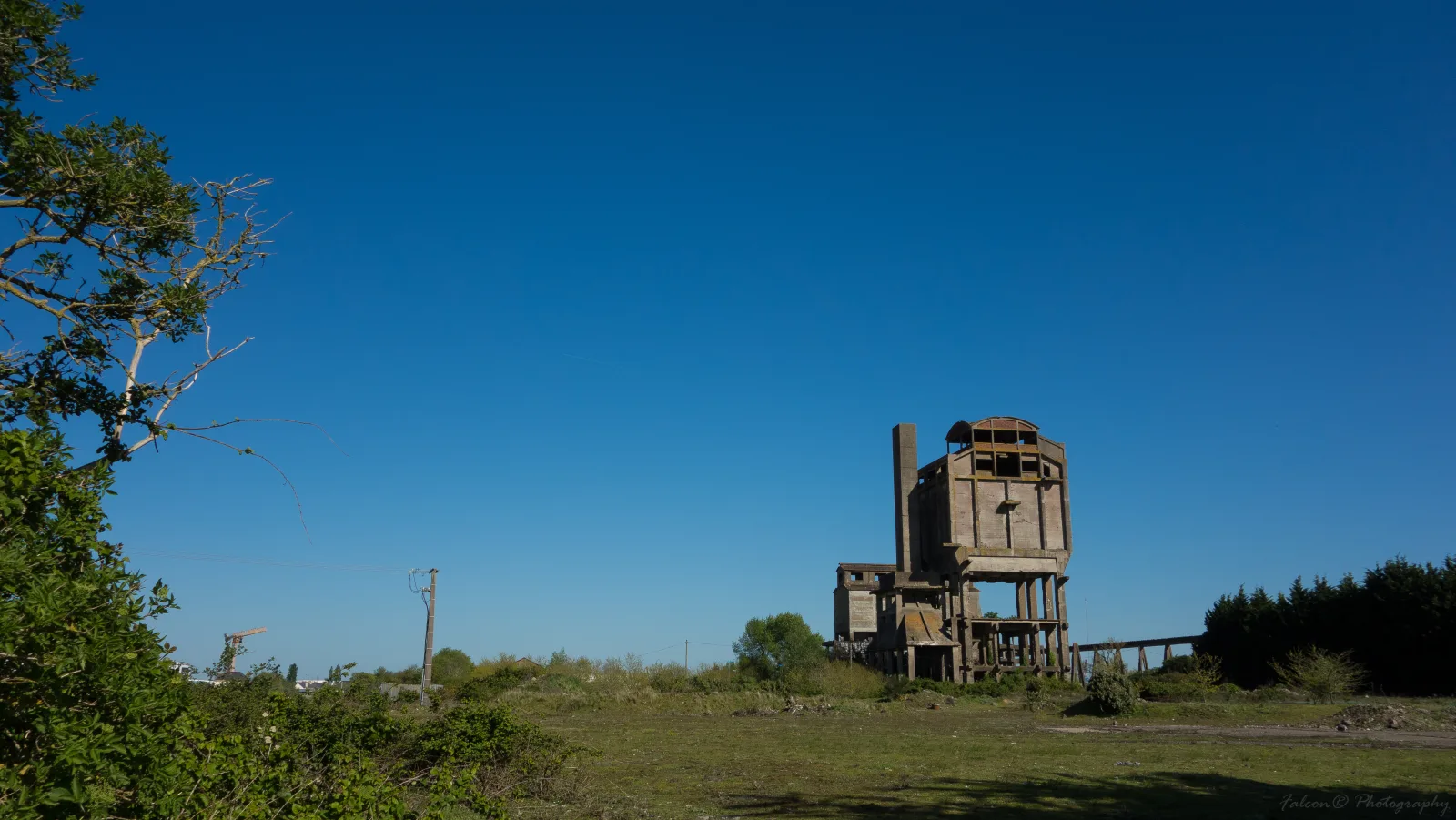
Urbex in Nantes has a misleading reputation: within the city, the metro area has redeveloped heavily, and most of the famous wastelands (the old Dubigeon shipyards, the Lieu Unique, disused stations) have been turned into cultural venues or housing. The real playground for Nantes urban exploration lies elsewhere: in the Loire estuary towards Saint-Nazaire, in the towns of the vineyard country and the pays de Retz, where the steel industry, the grand houses and the forgotten farms still resist demolition. On our map, hundreds of geolocated spots cover Loire-Atlantique and the whole Pays de la Loire region.
For this article we picked 3 places that are genuinely abandoned and still standing in 2026, each verified one by one: the monumental ruins of a 19th-century ironworks in the estuary, a chateau on the edge of Nantes wrecked by a recent fire, and the ruined medieval fortress of Gilles de Rais in the pays de Retz. No demolished spots, no redeveloped site passed off as a ruin. Under each entry, an "Add to my map" button saves the GPS coordinates to your personal account, for free and with no credit card.
The queries urbex Nantes, Nantes urbex map, abandoned places Nantes, urbex spot Nantes, urbex around Nantes and urban exploration Loire-Atlantique all point to the same reality: an industrial, aristocratic and rural heritage that history set aside (steel bankruptcies, rural exodus, fires, redevelopment schemes) and that photographers, urbexers and historians are rediscovering today. This guide gives you each site's dated history, its legal status and its real dangers, before handing you its coordinates.
Free Nantes urbex: why Urbex Maps changes the game
Before the spots, a word on what makes this guide different. Most sites that talk about free urbex in Nantes put "free" in the title, then redirect you to a paid forum or a closed Telegram group. Here the promise is concrete: under each place, an "Add to my map" button sends the GPS coordinates to your personal account, with no subscription and no credit card.
Behind the map is a community of more than 40,000 explorers, active since 2021. Every coordinate is checked at least twice: by the contributor who submits it, then by a regional moderator who confirms the spot still exists and has not been walled up. The places offered in this article are part of that catalogue; the rest of the hundreds of Loire-area spots are unlocked through packs that fund the moderation and field verification.
One reminder before you set off: urbex is not illegal in itself, but entering private property without permission is trespassing (article 226-4 of the French Penal Code, up to one year in prison and a 15,000 euro fine). We document these places for their history; we never encourage breaking in. Helmet, torch, ankle boots and caution on the floors: most of the spots below carry real collapse risks.
1. Trignac ironworks: the steel cathedral of the estuary (Trignac)

About thirty kilometres west of Nantes, just before Saint-Nazaire, stand the ruins of the Trignac ironworks (forges de Trignac). Commissioned in 1879, they became one of the main industrial works of the Saint-Nazaire basin before closing for good in 1943. Bombed during the Second World War and abandoned for more than eighty years, the site has kept its two huge charging hoppers and its red-brick walls, now a landmark of the estuary landscape and one of the most photographed urbex spots in Loire-Atlantique.
The tall brick-and-steel structures, the arches, the tanks and the vegetation-covered foundations make up an almost Piranesi-like backdrop that photographers love. Be aware, though: following a structural assessment, the town began the demolition of one of the two hoppers in late 2025, judged dangerous. The rest of the site remains standing and abandoned in 2026, and a plan to open it to the public "as is" (park, trails) is under study. The face of the place is therefore changing, all the more reason to document it now.
The site is not officially open and remains dangerous: weakened structures, falling bricks, unstable ground and active demolition works. A helmet, ankle boots and keeping your distance from overhanging walls are essential. It sits in Trignac, on the edge of the estuary, a few minutes from Saint-Nazaire and about forty minutes by road from Nantes. Find the other spots in the area on the Saint-Nazaire map.
The Trignac ironworks remain the most iconic urbex spot of the Nantes estuary: the best entry point to understand the region's industrial past.
2. Chateau de Bougon: the ruin under the planes (Bouguenais)
In Bouguenais, immediately south of Nantes and right inside the Nantes-Atlantique airport grounds, the Chateau de Bougon is a 19th-century house abandoned for decades. Hemmed in by the runways and the airport zone, the building had become a classic of Nantes urbex: a bourgeois facade, gutted rooms and nature taking over, all against a backdrop of departing aircraft.
On 3 August 2025, a major fire ravaged the ruins of the chateau, mobilising more than fifty firefighters. Since then, the DRAC (regional cultural-affairs directorate) has approved a partial demolition, keeping the 19th-century facade deemed "of heritage interest", and surveillance of the site has been stepped up. The structure threatens to collapse and is eventually to be folded into a metropolitan urban-forest project. In other words: the facade is still standing in 2026, but the window is closing. It is a spot to observe and photograph from the outside, never to enter.
Bougon illustrates the fate of many peri-urban wastelands: a fire, an administrative decision, and the scene changes in a matter of months. Worth seeing while something remains, and with the utmost caution given the surveillance and the unstable structure.
3. Chateau de Machecoul: the fortress of Gilles de Rais (pays de Retz)
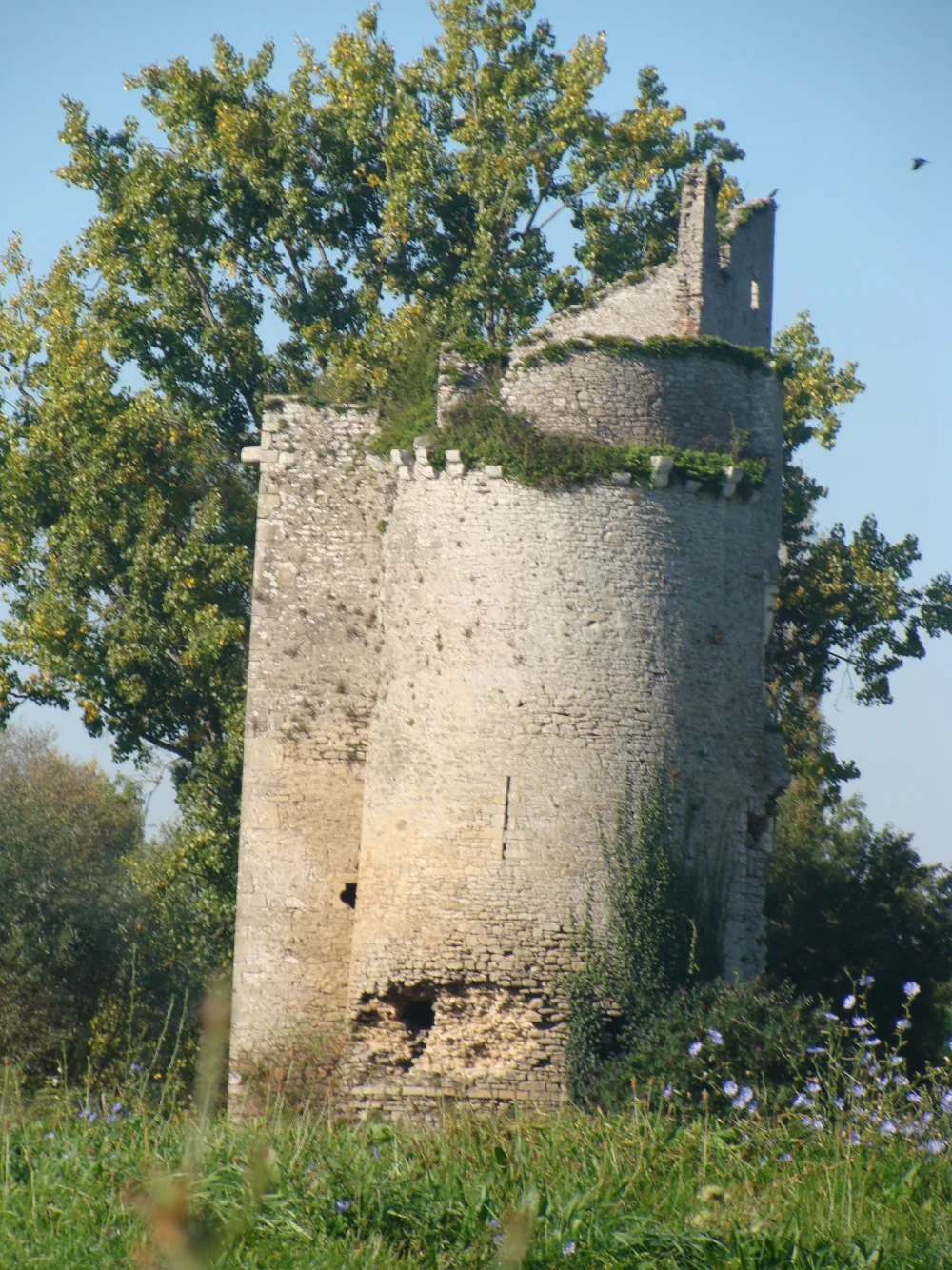
About forty kilometres south-west of Nantes, in the pays de Retz, at Machecoul-Saint-Meme, stand the ruins of the Chateau de Machecoul. This powerful medieval fortress was one of the residences of Gilles de Rais, a brother-in-arms of Joan of Arc who became one of the most notorious criminals of the Middle Ages, the direct inspiration for the Bluebeard legend. Burned and dismantled during the Vendee wars in 1792, the chateau has been a ruin ever since: the keep walls, sections of curtain wall and the cellars survive, surrounded by vegetation. The site is listed as a Historic Monument.
What strikes you is the sheer mass of the remains: a gutted keep, walls several metres high, openings gaping at the sky, all charged with the dark history of Gilles de Rais. In 2024 the chateau was selected by the French heritage lottery (Mission Patrimoine) for a campaign to consolidate and weatherproof the remains: the aim is to stabilise the ruin, not to rebuild or transform it. The place therefore remains an open ruin, but its access and condition may change as the works proceed.
The remains sit on the edge of Machecoul-Saint-Meme, about forty minutes by road from Nantes. A consolidated but dangerous ruin: unstable walls, falling stone, moats and cavities hidden by vegetation. With stabilisation works potentially underway, respect the site barriers and observe the remains without climbing the masonry. Find every spot in the area on the Loire-Atlantique map.
Machecoul is the most history-laden spot of the Nantes ring: a genuine medieval fortress in ruins, where great History meets the legend of Bluebeard.
FAQ - Urbex Nantes
Is urbex legal in Nantes?
Urban exploration is not illegal in itself, but entering private property without permission is trespassing (article 226-4 of the French Penal Code). Most Nantes spots are private or under surveillance: we document them for their history, without ever encouraging break-ins. For more, read our guide is urbex legal in France.
Where can I find other abandoned places around Nantes?
Our map lists hundreds of spots across Loire-Atlantique and the Pays de la Loire region, from the Nantes vineyard to the pays de Retz and the estuary towards Saint-Nazaire. You can add the three places in this article to your personal map for free via the button under each entry, then unlock the rest through our regional packs.
Do I need special gear to explore around Nantes?
For industrial ruins like the Trignac ironworks, a helmet and ankle boots are essential because of falling material. For old houses, watch the floors and possible asbestos. Our urbex gear guide covers the essentials to start safely.
Can I visit the Trignac ironworks legally?
The site is not officially open and partial demolition works took place in late 2025. The town and the department have, however, signed a contract aiming to reopen the place to the public "as is" in the long run. In the meantime, it is a spot to approach with the utmost caution, keeping your distance from the threatening structures.
Conclusion: Nantes, an exploration played out in the estuary and the vineyard
From the steel of the Trignac ironworks to the fire-gutted ruins of Bougon and the fortress of Gilles de Rais at Machecoul, Nantes urbex tells the end of heavy industry, the fragility of peri-urban wastelands and the dark hours of the pays de Retz. These places are not stage sets: they are open-air history books, fragile and threatened, to be explored with respect and without damage. Add them to your map, and carry on your exploration with our guide urbex in Lyon or the free urbex map.