Urbex in Brussels has a reality few guides own up to: in a capital under heavy real-estate pressure, the truly abandoned places are rare and fragile, and the most famous - Tour & Taxis, the Joseph Lemaire sanatorium - have been redeveloped. The real playground is the brewery wasteland in Anderlecht, a metro station that never opened, an old Gothic choir in ruins in Laeken and the forgotten castles of the outskirts. On our map, thousands of geolocated spots cover all of Belgium and the Brussels-Capital Region.
In this guide, I selected 6 places that are genuinely abandoned and still standing in 2026, verified one by one: a listed Art Deco brewery, a premetro ghost station that was never inaugurated, a historic cemetery and its Gothic ruin, a neo-Renaissance castle left to decay, a World War II bunker-hospital handed over to squatters, and a castle ruin mirrored in its moat. No demolished site dressed up as a living spot, no renovated attraction disguised as a ruin - this article sits in the line of our full feature on urbex in Belgium. Under each entry, an "Add to my map" button saves the GPS coordinates to your personal space, for free and with no credit card.
The searches urbex Brussels, Belgium urbex map, abandoned place Brussels, urban exploration Brussels and lost places Brussels-Capital all point to the same reality: an industrial, railway and aristocratic heritage that history set aside - brewery bankruptcies, aborted metro lines, wars, successive abandonments - and that photographers, urbexers and historians are rediscovering today. This guide gives you the dated history of each place, its legal status and its real dangers, before handing you its coordinates.
Free urbex in Brussels: why Urbex Maps changes the game
Before the spots, a quick word on what makes this guide different. Most sites that talk about free urbex in Brussels put "free" in the title, then send you to a paid forum, a closed Facebook group or a map sold for 50 euros. Here, the promise is concrete: under each place, an "Add to my map" button sends the GPS coordinates to your personal space, with no subscription and no credit card.
Behind the map there is a community of over 40,000 explorers, active since 2021. Every coordinate is verified at least twice - by the contributor who submits it, then by a regional moderator who confirms the spot still exists and hasn't been walled up or demolished. The places offered in this article are part of that catalogue; the rest of the thousands of Belgian spots go through packs that fund moderation and on-the-ground verification.
A reminder before you set off: urbex is not illegal in itself, but entering private property without authorization is trespassing, punishable in Belgium under articles 439 and following of the Criminal Code. We document these places for their history; we never encourage you to break in. Helmet, headlamp, sturdy boots and caution on the floors: several of the spots below carry real risks of collapse and asbestos, and one of them runs directly alongside the tracks of a railway yard in service.
1. Atlas Brewery - the Art Deco cathedral of beer (Anderlecht)
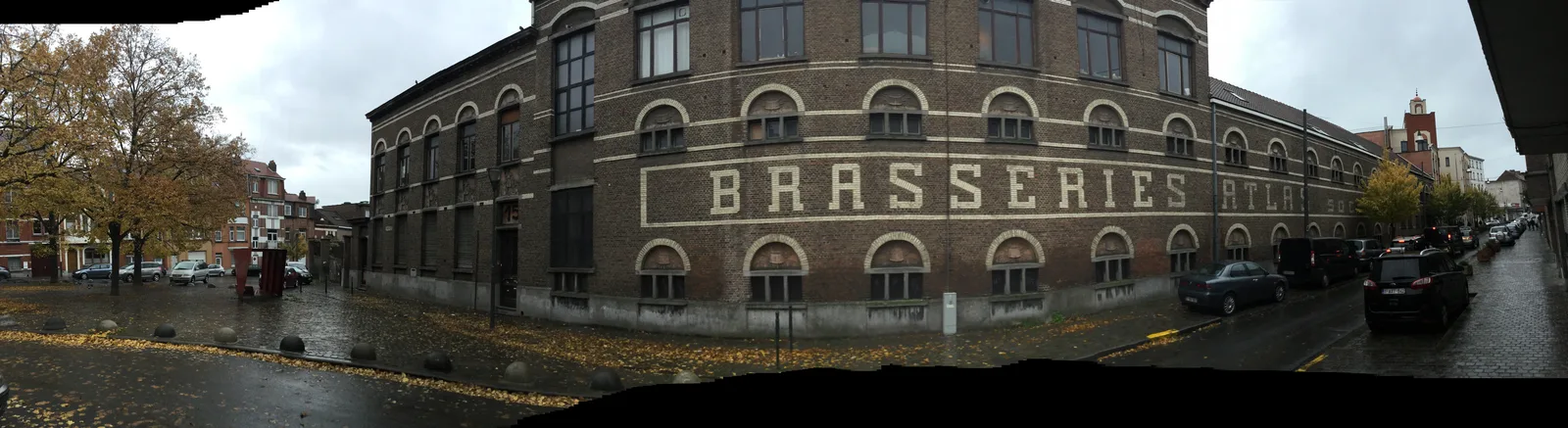
In the heart of the Cureghem district, in Anderlecht, on rue du Libre Examen, the former Atlas brewery is the finest abandoned monument in Brussels. Founded in 1912 under the name Saint-Guidon brewery and fitted with an Art Deco tower raised between 1924 and 1926, it merged with other firms to become Atlas in 1925. Beer production ceased there around 1949-1952; the tower and the street facades were listed on 1 February 2001, but the whole complex, some 15,000 m², has been abandoned ever since.
For years the site hosted a collective of artists; the last public visits date back to October 2023, before the collective left the premises. A word of honesty about this spot: its window is closing. A redevelopment project into housing, student rooms and offices - keeping the listed tower and facades - went before the consultation committee in June 2026, contested by neighbourhood associations. No work has started yet, but the brewery will not remain an empty shell for much longer.
It is private property awaiting a permit: access is not allowed. The dangers are those of a large industrial hall left open for seventy years - collapsed floors, shattered glass roofs, metal staircases eaten away by rust. The facade, however, can be photographed perfectly from the street and the small square facing it. The Atlas brewery remains the most emblematic spot of Brussels urbex: an open-air history book, to be seen before the redevelopment closes it.
2. Sainctelette Station - the premetro ghost that never opened (Brussels-City)
Beneath the place Sainctelette, on the edge of Brussels-City and Molenbeek, sleeps one of the best-kept secrets of the Brussels underground: Sainctelette station, a premetro station fully built but never opened. Constructed between 1980 and 1986, it was meant to serve the future line 2; when the line opened in 1988, the STIB judged it too close to the Yser and Ribaucourt stations and never inaugurated it.
The result is a concrete shell of about 5,000 m² frozen in the 1980s: unfinished platforms, stairs that lead nowhere, bare walls. Passengers on the trains crossing the tunnel catch a glimpse of its deserted platforms in passing. Several reopening projects have been floated (2018, 2023), without ever coming to fruition: in 2026, the station remains a dead volume, sealed beneath the traffic of the square.
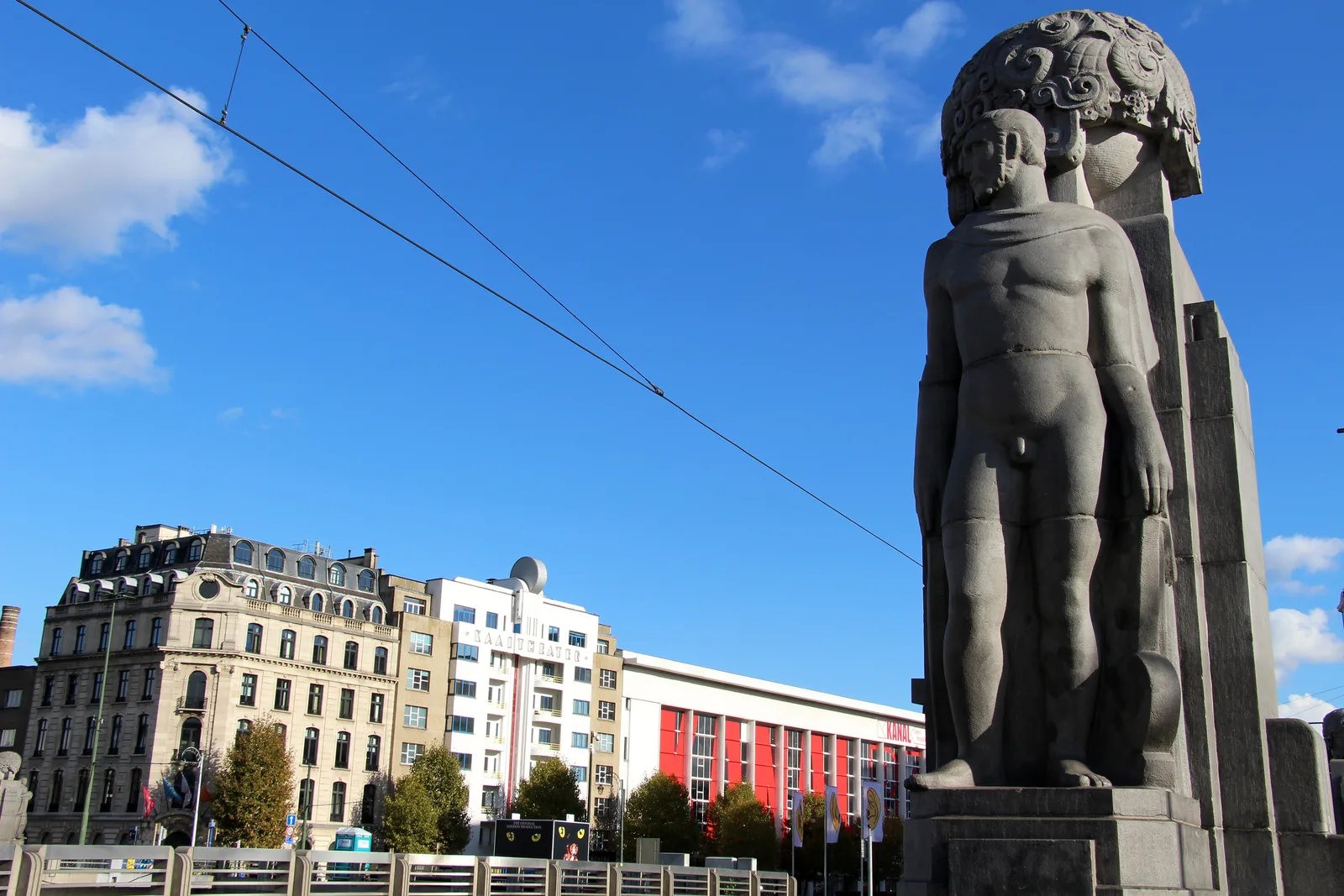
It is a closed infrastructure owned by the STIB: access is strictly forbidden and the interior cannot be visited. We document this place for what it is - a rare ghost station in the very centre - without ever encouraging anyone to go down onto tracks in service, which is both dangerous and illegal. From the surface, the landmark is the Sainctelette Bridge and its Art Deco statues, just above the buried volume. Sainctelette is the ghost of the Brussels metro: invisible, intact, and out of reach.
3. Laeken Cemetery - the old Gothic choir and its galleries (Laeken)
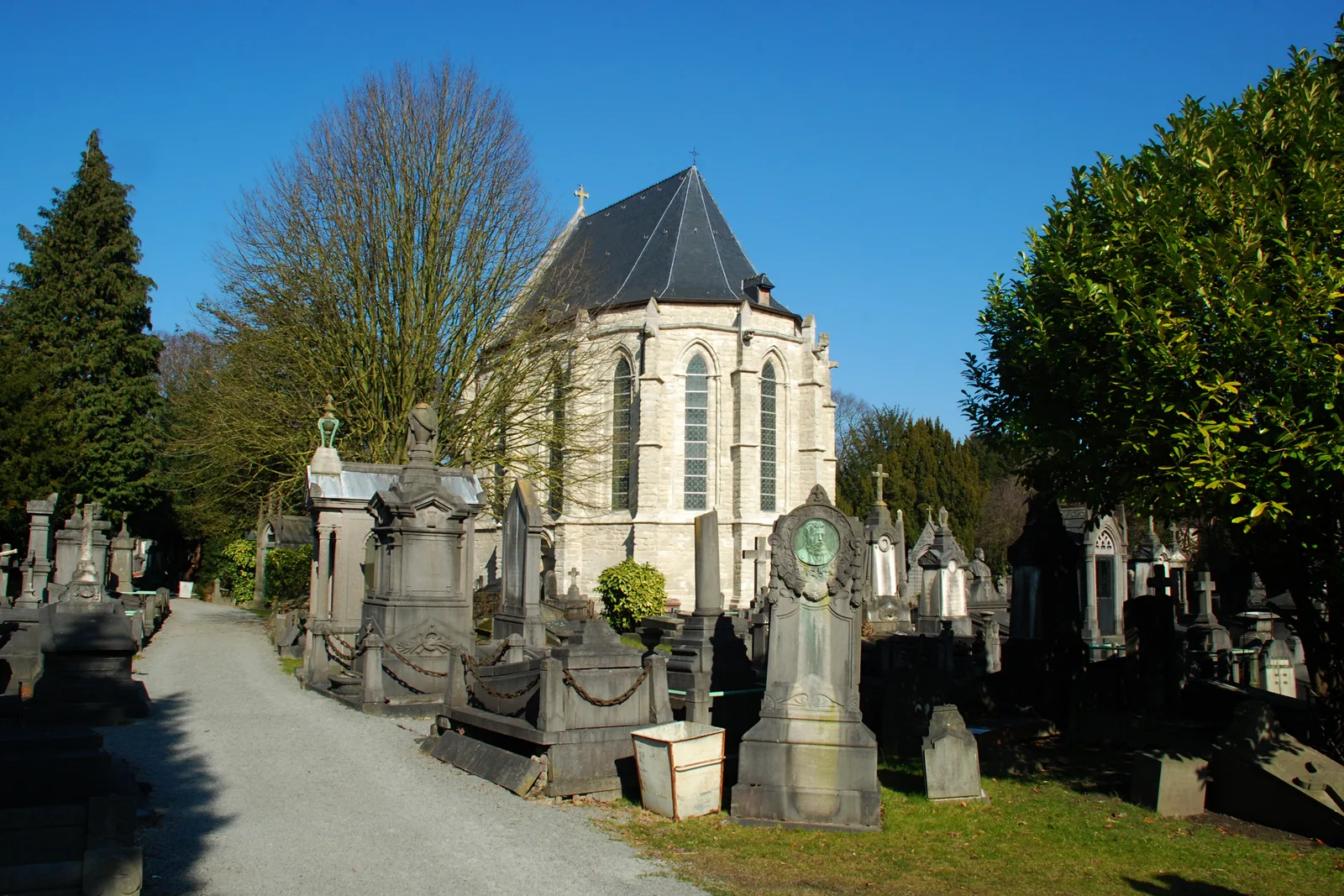
North of Brussels, Laeken cemetery is the country's oldest still-active cemetery - and one of the most atmospheric places in the capital. At its heart stands the old Gothic choir of the former Notre-Dame church, a 13th-century remnant. The old church was demolished from 1894 onward, but its choir was deliberately preserved in its state of ruin; it has been listed since 9 March 1936 and still watches, open to the sky, over the graves.
The cemetery is also home to the only underground funeral galleries in Belgium, a network dug from 1876, brought into service in 1878 and extended into the 1930s. Long partly sealed off due to water infiltration, they were restored between 2012 and 2017 and can now only be visited by reservation: they are no longer wild urbex territory, but they deserve to be known. This is also where the architect Joseph Poelaert and the mayor Émile Bockstael rest.
Unlike the other spots on this list, the cemetery is a public place, open during the day (Tuesday to Sunday): you can freely admire the old choir from the paths, without crossing a single fence. The rule here is not physical caution but respect - it is a place of active remembrance. Laeken cemetery is the most accessible spot in this selection, and the one where the history of Brussels reads most directly, carved in stone.
4. Kasteel Ter Meeren - the castle with the golden bell tower (Sterrebeek)
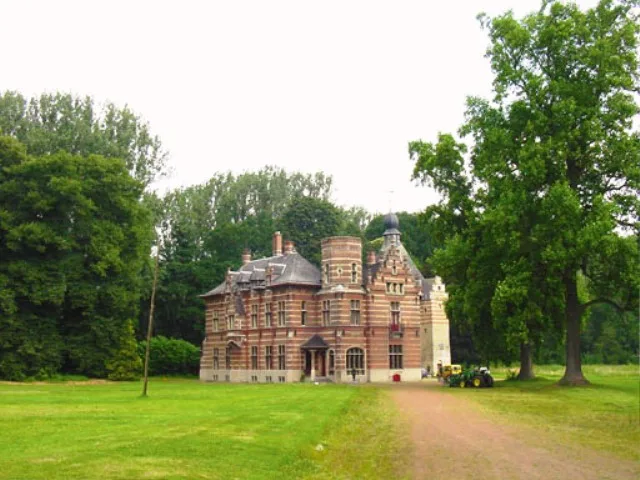
About ten kilometres east of Brussels, in Sterrebeek (municipality of Zaventem), Kasteel Ter Meeren is one of the best-known abandoned castles of the outskirts. Its square keep dates back to the end of the 14th century (first mentioned in 1381), but the current castle, in Flemish neo-Renaissance style, was rebuilt and enlarged in 1865-1866. Its last resident owner left the premises in 1992.
The recent history of Ter Meeren explains its strange silhouette. A partial restoration of the exterior was carried out between 2007 and 2015 - hence the gold-leaf spire and the clock of the bell turret - but the work stopped dead at the death of the owner in June 2017. Since then the interior has been deteriorating and the outbuildings collapsing; the estate was put up for sale around 2021 and then, according to local associations, bought by a discreet owner. In 2026, it is an open-air paradox: a gilded exterior over an interior left to ruin.
It is private property: access is not allowed. The dangers are those of a large building whose interior has not been maintained for decades - rotten floors, weakened staircases, ruined outbuildings. The south facade, however, can be photographed from the park's driveway. Ter Meeren is the most photogenic abandoned castle in the Brussels area: a fairy-tale facade hiding a ruin, to be respected without forcing anything.
5. Schaerbeek-Formation Bunker-Hospital - the secret of the marshalling yard (Haren)
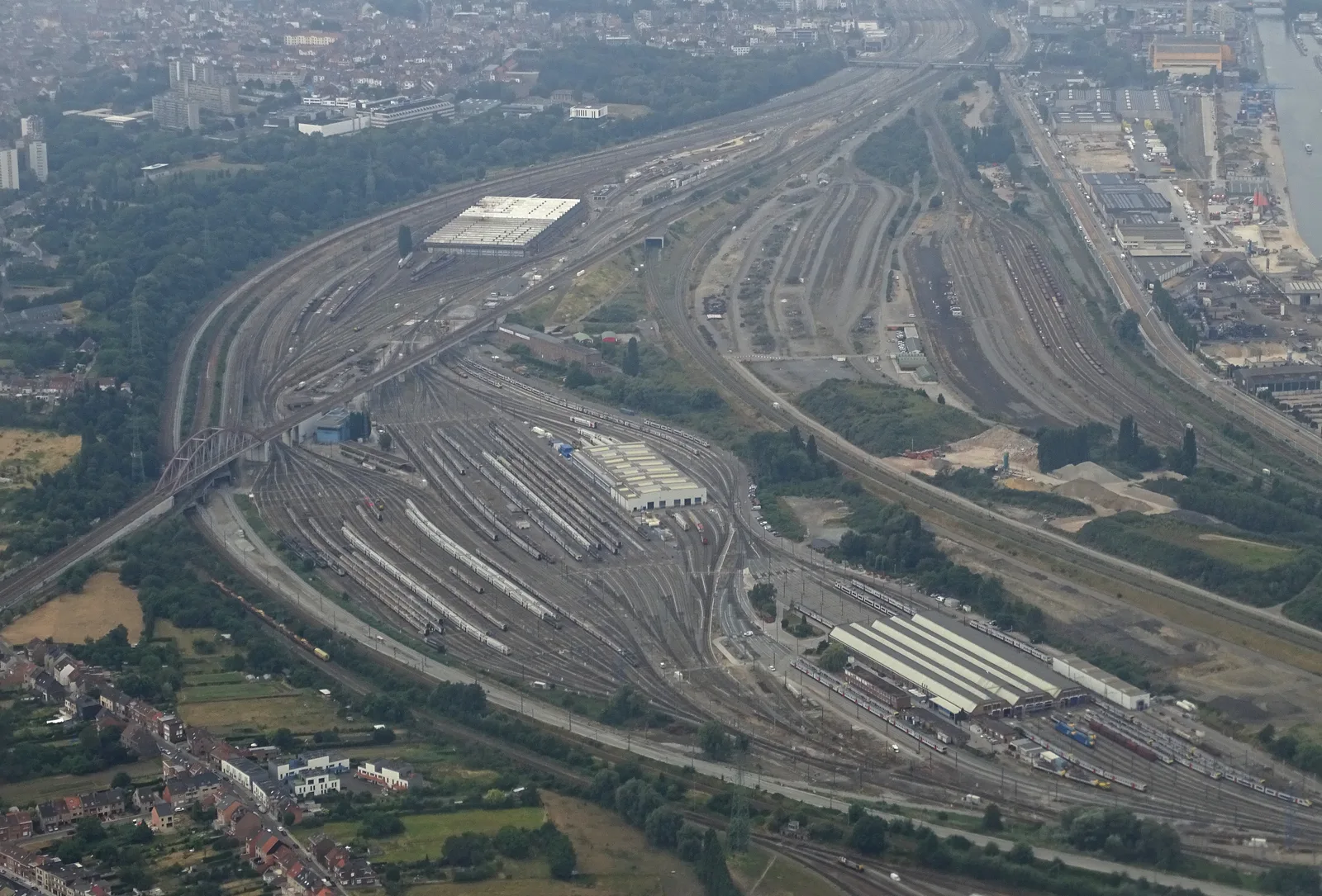
North of Brussels, in Haren, the vast railway yard of Schaerbeek-Formation conceals a rare relic: a World War II bunker-hospital. Built in reinforced concrete, probably around 1938 at the initiative of the SNCB, this block of roughly 26 metres by 12 with 17 rooms served as a shelter and field hospital to treat wounded or gassed railway workers while they awaited transfer. It survived the 814 bombs that fell on the site between March and August 1944.
Listed as a monument since July 2019 as a unique witness to passive railway protection, the bunker is nonetheless utterly left to itself. An RTBF report from April 2024 describes it as squatted, looted, vandalized: "absolutely nothing is being done to protect this listed building". Original equipment still lies inside, amid the graffiti and the water infiltration. It is the rawest spot in this selection - and the most paradoxical, a protected monument crumbling in indifference.
Warning: the bunker sits inside Infrabel's railway perimeter, alongside tracks in service. Access is forbidden and genuinely dangerous: railway hazard, degraded structure, possible presence of asbestos. We document it for its history, never to encourage entering a railway right-of-way - one of the riskiest transgressions there is. The Schaerbeek-Formation bunker is the buried memory of Brussels at war, to be seen from a distance and recounted rather than explored.
6. Prinsenkasteel - the ruin in its moat (Grimbergen)
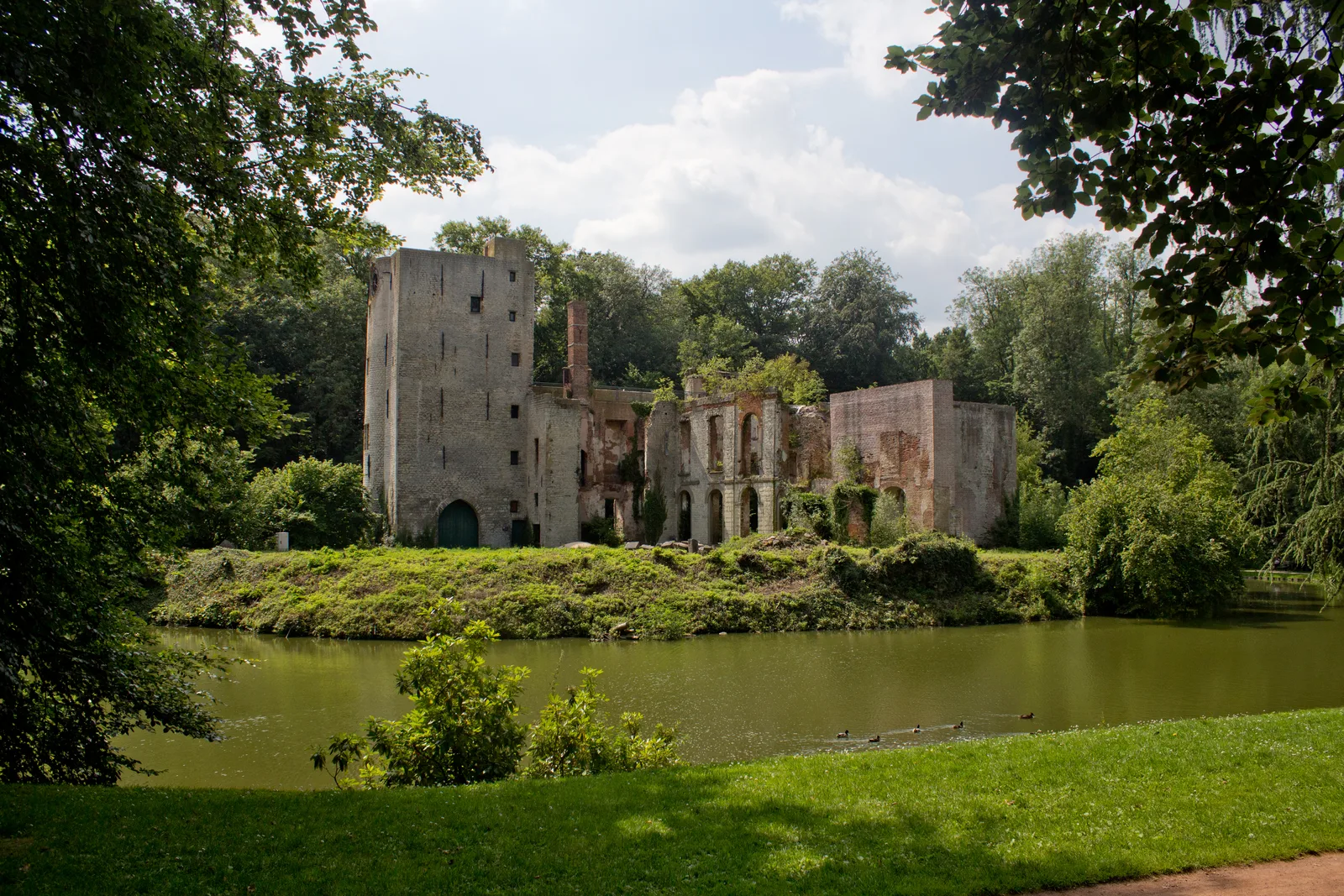
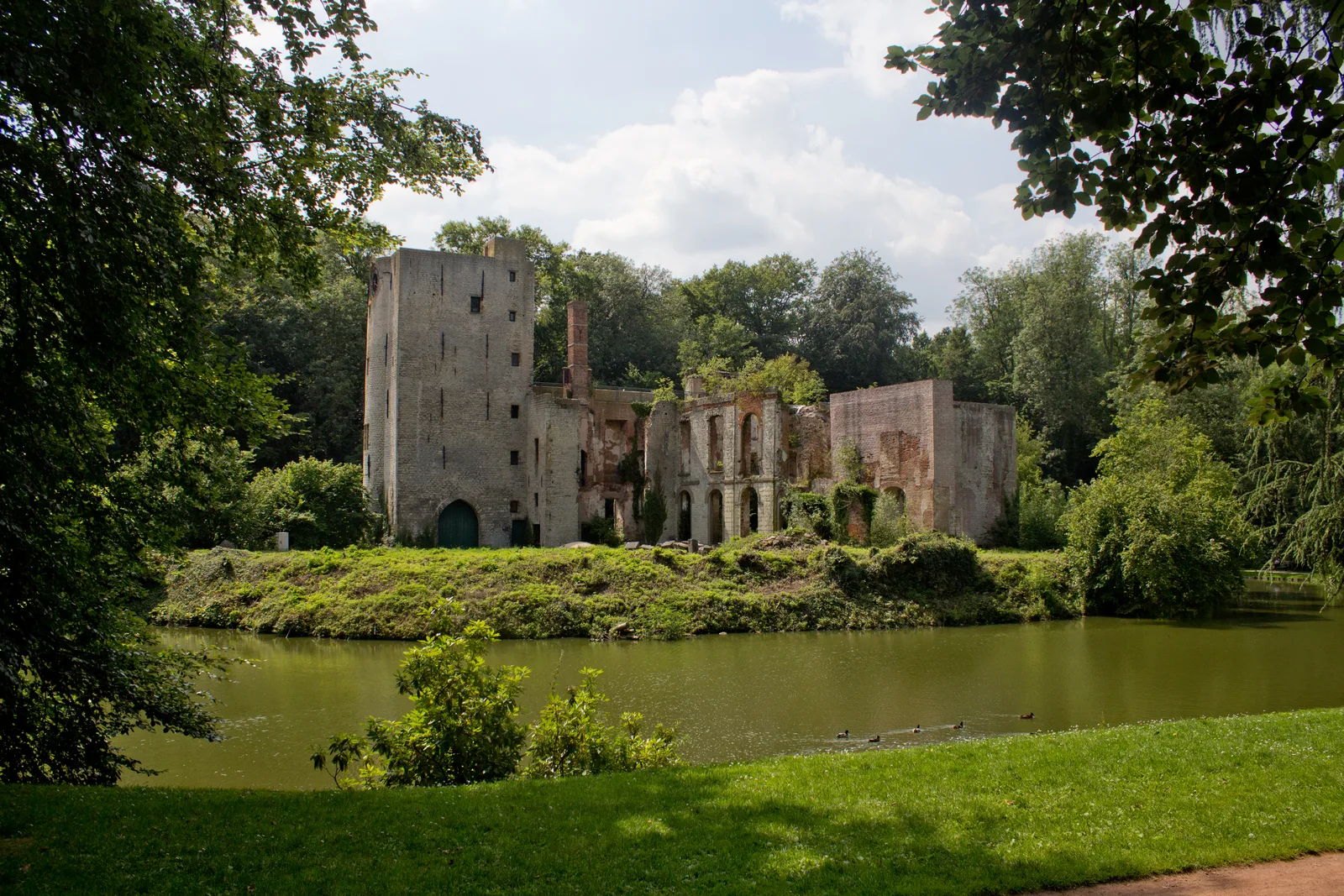
About ten kilometres north of Brussels, in the wooded Prinsenbos park in Grimbergen, stands the romantic ruin of the Prinsenkasteel (castle of the Princes). Built around 1500 on an older fortified site - its keep dates from the early 15th century - and then remodelled in the 17th, the castle met a brutal end: it was set on fire by retreating German troops on 4 September 1944, and was never rebuilt.
What remains are roofless stone walls and a massive keep, planted on an island in the middle of a water-filled moat, in a setting of woods and ponds. Bought by the municipality in 1947 and listed since 1959, the site is today a maintained ruin: a campaign to consolidate the masonry is in fact under way from summer 2024 to 2026. It is less a clandestine urbex spot than a ruin you can admire legally - but the setting is every bit as evocative as any abandoned castle.
Good news for 2026: the Prinsenkasteel sits in a public park freely accessible, and you can walk around it along the moat without crossing any fence. The only risks are those of old masonry under works: stay clear of the scaffolding and the unstable stones. The Prinsenkasteel closes this selection with the finest image of abandonment in the Brussels outskirts - a burned fortress that the park has turned into a painting. For the complete map, head to our Belgium urbex map.
What is NOT on this list (and why)
To keep our promise - only places that are genuinely abandoned and standing in 2026 - we ruled out several sites that other guides still recycle. Tour & Taxis was entirely renovated into offices, shops and event halls between 2016 and 2020. The famous Joseph Lemaire sanatorium (Tombeek) reopened in 2017 as a care home. The Victoria biscuit factory (Koekelberg) was converted into lofts and a chocolate museum. The former veterinary school of Cureghem was restored into housing around 2009. And the Boitsfort racecourse has become the Drohme recreational park.
We also ruled out the demolished sites - such as Miranda Castle (razed in 2017, and far from Brussels anyway) - and all the "anonymized" spots that forums circulate without verifiable coordinates. Our rule is simple: if we can't prove a place is still standing and locate it precisely, it doesn't make it into the guide. That is what sets a serious urbex map apart from a list of postcards.
FAQ - Urbex Brussels
Is urbex legal in Brussels?
Urban exploration is not illegal in itself, but entering private property without authorization is trespassing under Belgian law (articles 439 and following of the Criminal Code), and entering a railway right-of-way is an additional offence. Most Brussels spots are private property or listed sites: we document them for their history, without ever encouraging breaking in. To go further, read our feature on urbex in Belgium.
Are there really abandoned places within central Brussels?
Fewer than you'd think. Real-estate pressure means few buildings stay abandoned for long in the very centre, and the most famous have been redeveloped (Tour & Taxis, Victoria biscuit factory). The real spots survive in industrial districts like Cureghem, underground (the Sainctelette ghost station) or in the outskirts - castles of Brabant, ruins in the woods. That is exactly the point of widening the radius rather than selling you renovated places.
Where can you find more abandoned places around Brussels?
Our map lists thousands of spots across all of Belgium and in the Brussels-Capital Region. You can add the places in this article to your personal map for free via the button under each entry, then unlock the rest through our regional packs. To go further, see also our full feature on urbex in Belgium.
Do you need special gear to explore these spots?
For the abandoned buildings (Atlas brewery, Ter Meeren, Haren bunker), bring a lamp, sturdy boots and constant vigilance on rotten floors and weakened staircases. A dust mask (ideally FFP3) is useful on old sites where asbestos can't be ruled out. The public places on this list (Laeken cemetery, Prinsenkasteel) only ask for respect. Our urbex gear guide details the essentials for getting started safely.
What is the best spot for a beginner in Brussels?
Laeken cemetery and the Prinsenkasteel of Grimbergen are the easiest and safest: they are public places, accessible during the day, that you admire and photograph without crossing a single fence. The facade of the Atlas brewery, visible from the street, is the other ideal entry point for discovering Brussels urbex with no risk at all.
Conclusion: Brussels, a capital that hides its ruins
From the Atlas brewery to the moat of the Prinsenkasteel, Brussels urbex tells a different story from the one on the postcards: industries that brought whole neighbourhoods to life, an aborted metro line, a forgotten bunker beneath a marshalling yard, castles that war or abandonment left behind. These places are not stage sets: they are open-air history books, fragile, to be explored with respect and without damaging anything - several are in fact public or listed sites. Add them to your map, and continue your exploration with our feature on urbex in Belgium or the free urbex map.