Belgium is an urbex playground with no equal in Western Europe: a cooling tower where rust has drawn a giant tree near Charleroi, a concrete and half-timbered sanatorium crumbling in the Ardennes woods, a Napoleonic fort left to the brambles at the gates of Liège, a gutted neo-Gothic castle in Flemish Brabant and an entire village frozen in the shadow of the nuclear reactors near Antwerp. Our map lists more than 3,000 geolocated abandoned places in Belgium alone, spread across Wallonia, Flanders and Brussels, and that is the pool we drew from.
In this guide, we have selected 10 abandoned places in Belgium to explore in 2026: a power plant, a sanatorium and a derelict castle, a blast furnace and a colliery, a disused cinema and a theatre, a church swallowed by ivy and a ghost town. Each one has been verified individually: we kept only the places that are genuinely abandoned, still standing and not turned into a museum, hotel or housing by the summer of 2026. Under each entry, an "Add to my map" button saves the GPS coordinates to your personal account, free of charge and with no credit card.
The phrases urbex in Belgium, abandoned places Belgium, lost places, urban exploration and free Belgium urbex map all point to the same passion: finding, photographing and documenting the buildings that no one occupies any more and that nature is slowly reclaiming. Whether you are after an abandoned power plant in Wallonia, an abandoned castle in Flanders, a disused church in the Namur region or a ghost town near Antwerp, this ranking covers all three regions of Belgium.
Discover thousands of abandoned places across Belgium on the interactive urbex map →
Free Belgium urbex: why Urbex Maps is a game changer
Most lists of "abandoned places in Belgium" promise free coordinates in their title, then send you off to a closed Facebook group, a forum or a paywall. We do the opposite. Under each of the ten places that follow, you will find a real spot from our database, with a button that drops the GPS coordinates into your profile for free. No subscription, no credit card, no hidden conditions.
Behind that promise sits a verification model. A community of more than 40,000 explorers has been logging places since 2021, and every set of coordinates is checked at least twice: once by the person who reports the spot, and once by a regional moderation team that confirms the place still exists. The spots featured in this guide come from that catalogue; the rest, thousands of other Belgian places, are accessible through themed packs that fund the moderation work.
This ranking is ordered by visual impact and historical weight, not by region. We open on the absolute icon of Belgian urbex, the Charleroi cooling tower, then move through a ghost town, a sanatorium, a fort, a blast furnace, a castle, a cinema and a theatre, a church and a great glassworks. For each place, a link points to the map of the matching province. And an honest warning: many of the places below are private property, listed buildings or dormant building sites. Exploring does not mean breaking in: you look, you photograph from authorised access points, you force nothing and you damage nothing.
What is NOT on this list (and why)
When you search "abandoned places Belgium" on Google, you quickly land on names that are no longer real urbex spots. We deliberately left them out, after checking. The Château de Noisy (Miranda) in Celles, the country's most famous neo-Gothic ruin, was completely demolished between October 2016 and October 2017: nothing is left of it. The Hasard de Cheratte colliery in Visé, with its neo-Gothic Malakoff tower, is no longer freely explorable: it has been fenced off and under restoration since 2017, with a 124-home eco-district project and a new Walloon subsidy granted in late November 2025.
The same goes for several other icons: the HF6 blast furnace in Ougrée was dynamited on 16 December 2016, the ACEC site in Charleroi made way for Aerospacelab's mega-factory, the Joseph Lemaire sanatorium in Tombeek was turned into assisted-living residences, and Tour & Taxis in Brussels has reopened as offices and housing. Sites such as Blegny-Mine or the Grand-Hornu have become UNESCO-listed heritage museums. A place only earns its spot in this ranking if it is genuinely abandoned in 2026, still standing and not turned into a museum, hotel or building site. That is what sets us apart from the copy-pasted lists that have been circulating the same stale names for years.
1. Power Plant IM: the Charleroi cooling tower
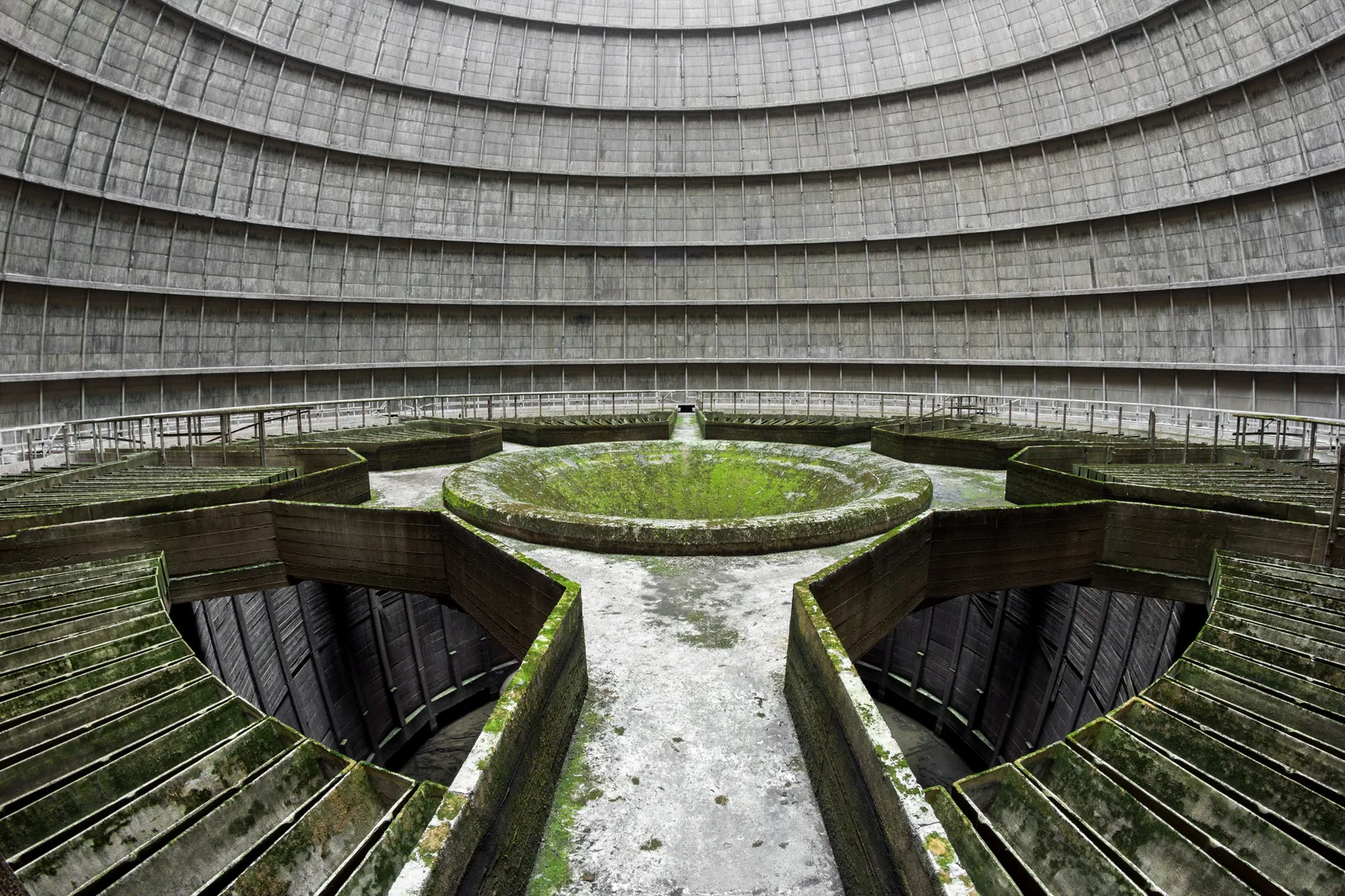
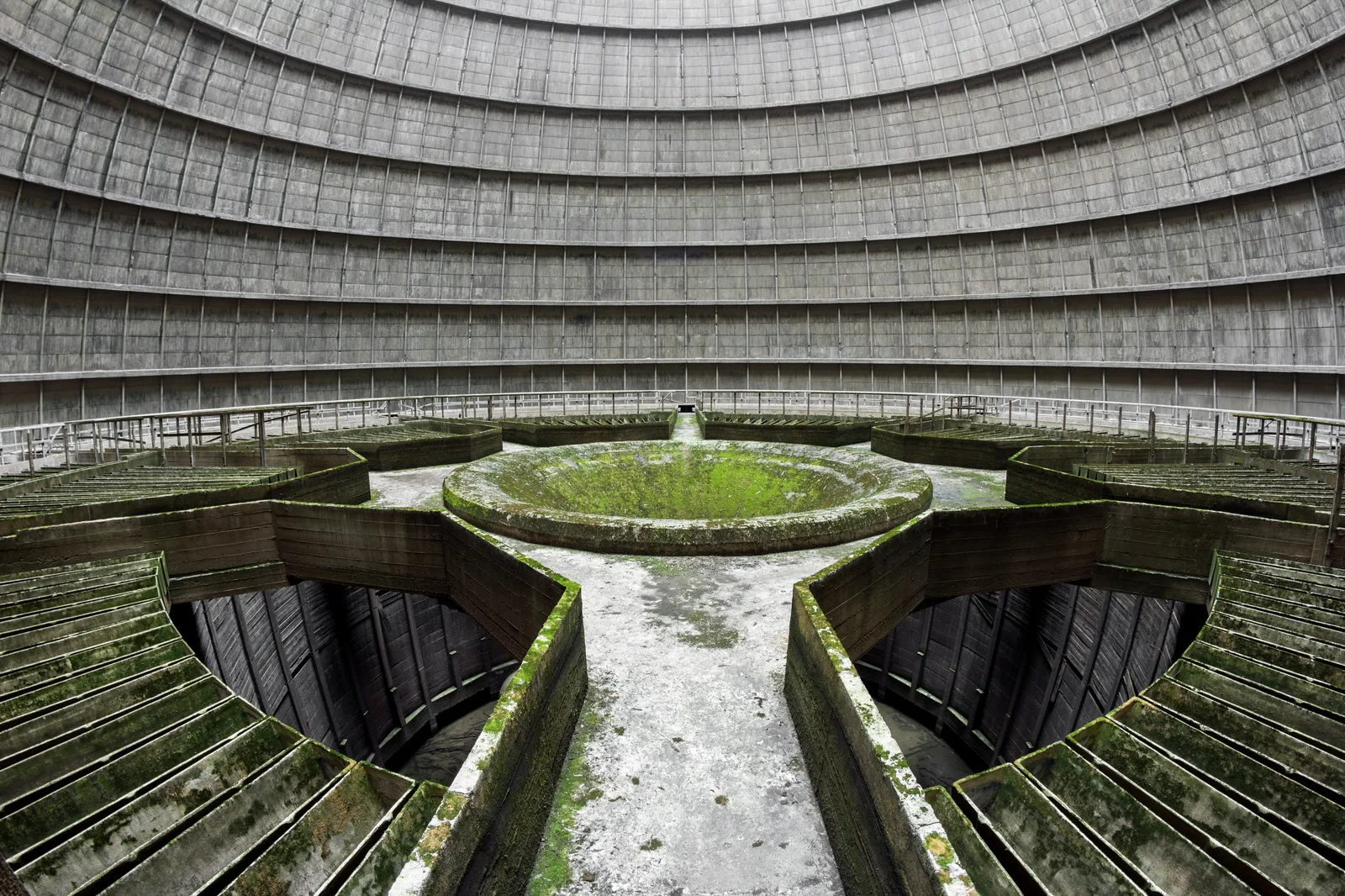
In Monceau-sur-Sambre, west of Charleroi, the IM power plant, known as "Power Plant IM", holds the most recognisable urbex photo in Europe. Built in 1921 by Intercom and later run by Electrabel, it was one of the largest coal-fired plants in Belgium. In 2006 it became a Greenpeace target for its share of national CO2 emissions, before closing in 2007 and shutting down for good around 2010.
The buildings and machine halls were gradually demolished from 2014, but the 57-metre hyperbolic cooling tower still stands, and it is what made the place a legend: inside, the trickling water and moss have drawn a four-pointed star on the concrete that looks like a giant tree. The access staircase was removed in 2020 and the site remains a dangerous private property, but the tower was still being explored and photographed in spring 2026. This is a place to understand from the outside, not to climb. More spots on our Hainaut urbex map.
2. Doel: the ghost town at the gates of Antwerp
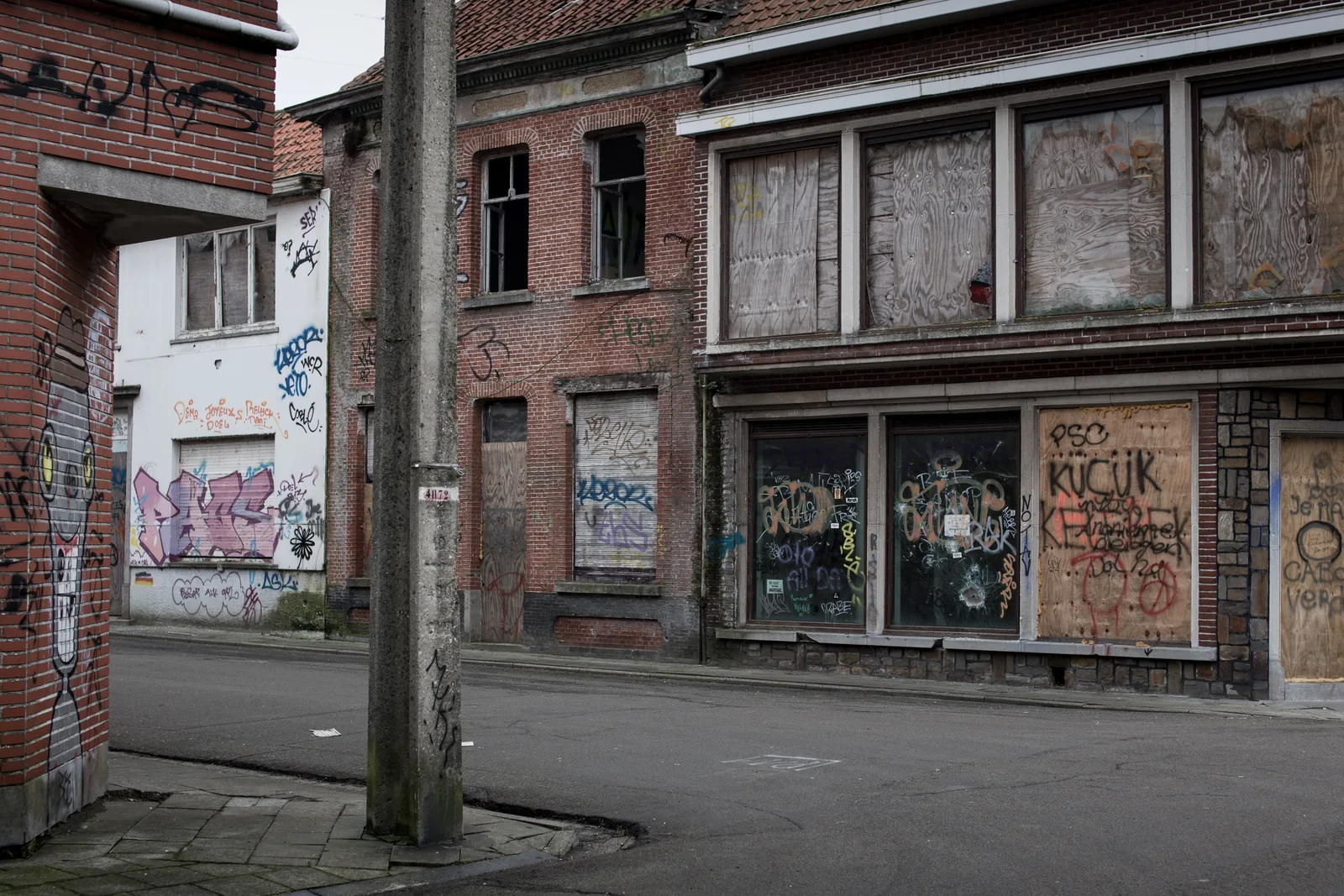
On the left bank of the Scheldt, in the shadow of the nuclear power plant's reactors and the cranes of the port of Antwerp, the village of Doel, in East Flanders, is the most famous ghost town in Belgium. Documented as early as 1267, it is home to the oldest stone mill in the country (1611). From the late 1990s onwards, the Port of Antwerp scheduled its demolition in order to expand, which emptied the village of almost all its inhabitants.
The demolition order was finally cancelled on 30 March 2022, in a Flemish compromise that preserves the village while allowing the port expansion. But the buyout of the houses by the company Maatschappij Linkerscheldeoever and the departure of residents have left Doel as a near-deserted hamlet: fewer than twenty residents, whole streets of bricked-up façades covered in murals by artists from around the world. The press still described it as a ghost town in September 2025. The village remains accessible by road: you walk around on foot, with respect for the last inhabitants. More places on our East Flanders urbex map.
3. Sanatorium du Basil: the concrete giant of Borgoumont
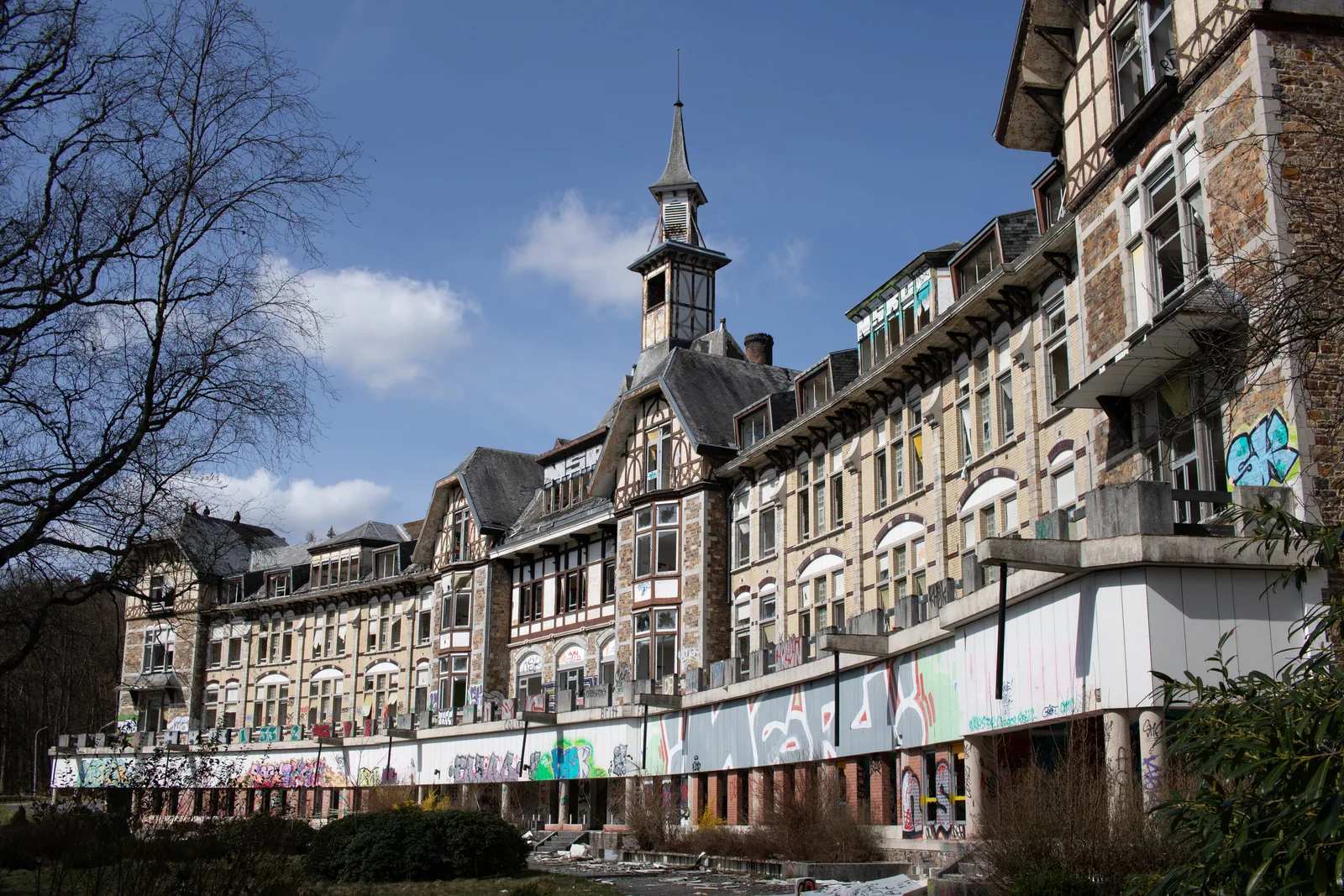
At Borgoumont, on the heights of Stoumont, in the province of Liège, the Sanatorium du Basil is one of the largest abandoned places in Wallonia. Built between 1899 and 1903 by the architect Remouchamps in reinforced concrete using the Hennebique process, it opened on 13 September 1903 as a provincial sanatorium to treat tuberculosis in the fresh air of the Ardennes. Its long façade blends local stone, half-timbering and turrets over nearly a hundred metres.
Converted into a centre for asylum seekers, it was abandoned for good around 2013 and has since become a major Belgian urbex landmark: endless corridors, gutted bathtubs, a lift frozen between two floors. A plan to convert it into a high-end hotel (around 40 million euros) has been announced, with works expected from 2026: the exploration window is closing. The site is a guarded private property, to be admired from the surroundings. More places on our Liège province urbex map.
4. Fort de la Chartreuse: the ghost barracks of Liège
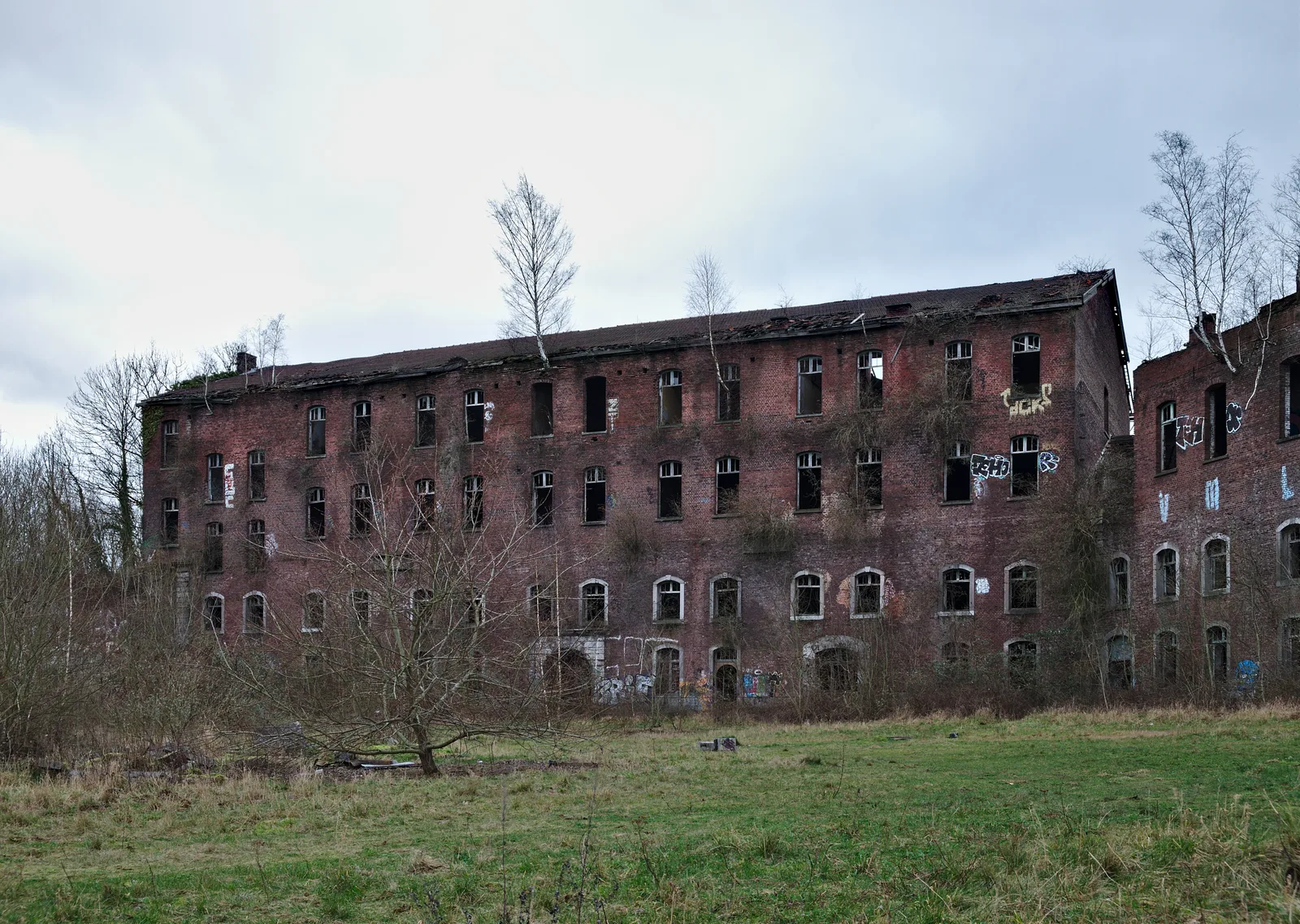
On a hill overlooking Liège, the Fort de la Chartreuse stands on the site of a former Carthusian monastery. Built between 1817 and 1823 by the Kingdom of the Netherlands, it was downgraded from a fort to barracks in 1891, served as a German prison during the First World War, then as an American hospital in 1944-1945. Demilitarised in 1981, it was left by the army in 1988.
Since then, the long brick buildings have been falling apart: collapsed roofs, cracked walls, vegetation reclaiming the courtyards. Around forty hectares were listed in 1991, which protects the site from outright demolition, but no redevelopment project has yet been carried out: in December 2025, the City of Liège merely launched a public consultation for a "site to be redeveloped" status. Access is dangerous and partly guarded: you observe it from the surroundings. More spots on our Liège province urbex map.
5. HF4: the last blast furnace of Charleroi
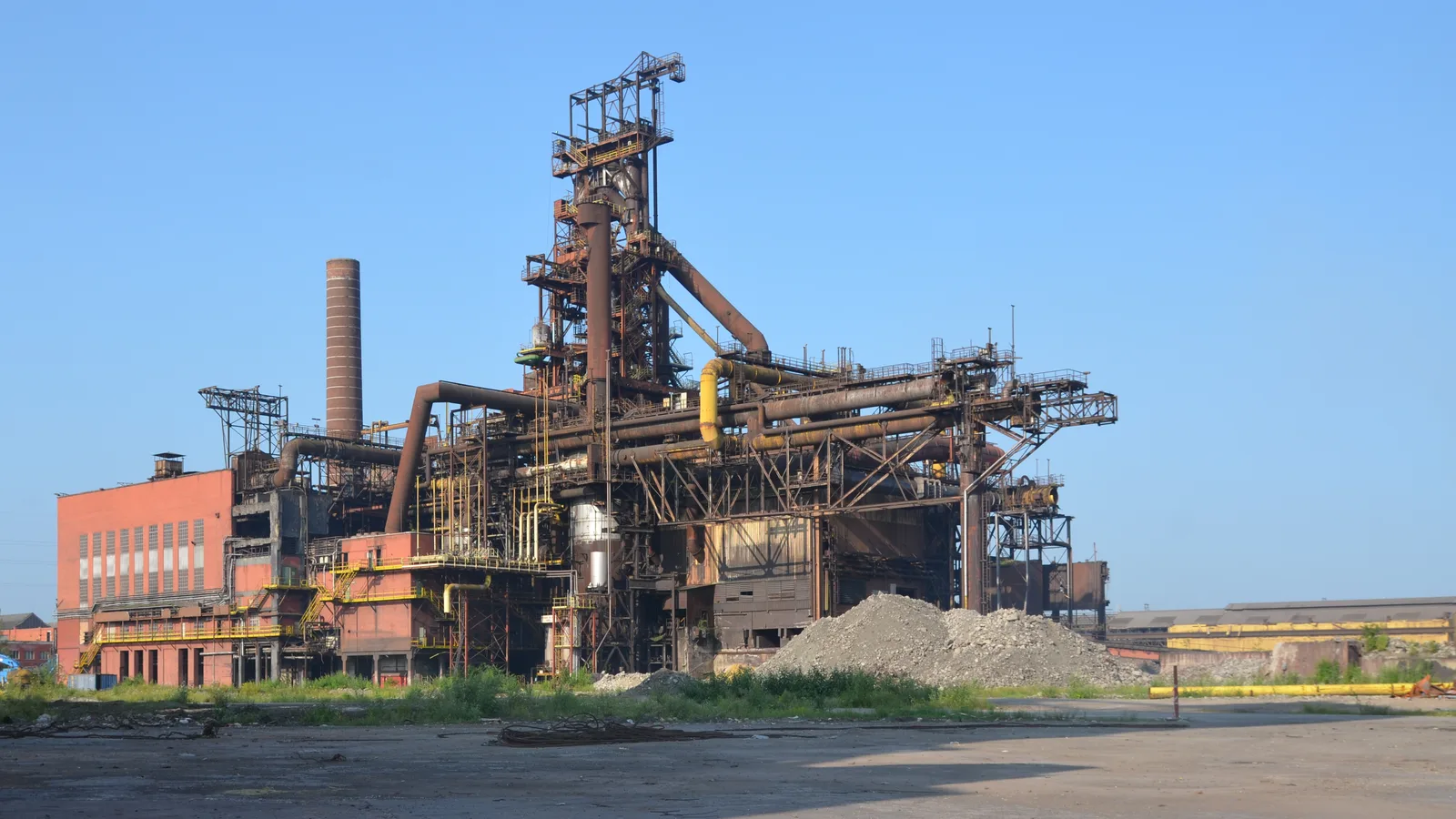
In Marchienne-au-Pont, on the site of the former Carsid steelworks, the HF4 blast furnace still raises its silhouette of metal and pipework above Charleroi. Inaugurated in 1963 by Thy-Marcinelle, then operated by Cockerill-Sambre and Duferco, it is the last blast furnace standing in the Charleroi basin, a witness of the "Black Country" that built the wealth of industrial Wallonia. Its production stopped in 2008 and the site closed in 2012.
Provisionally safeguarded in March 2019 and now publicly owned, HF4 has remained abandoned, surrounded by slag heaps and steel wasteland. But its future is uncertain: on 7 February 2026, the Walloon Region refused to list it as a monument, leaving the threat of a future demolition hanging over it. Make the most of it while it stands, but stay careful: it is a dangerous and private site, to be photographed from the surroundings rather than entered. More places on our Hainaut urbex map.
6. Kasteel Hogemeyer: the abandoned neo-Gothic castle
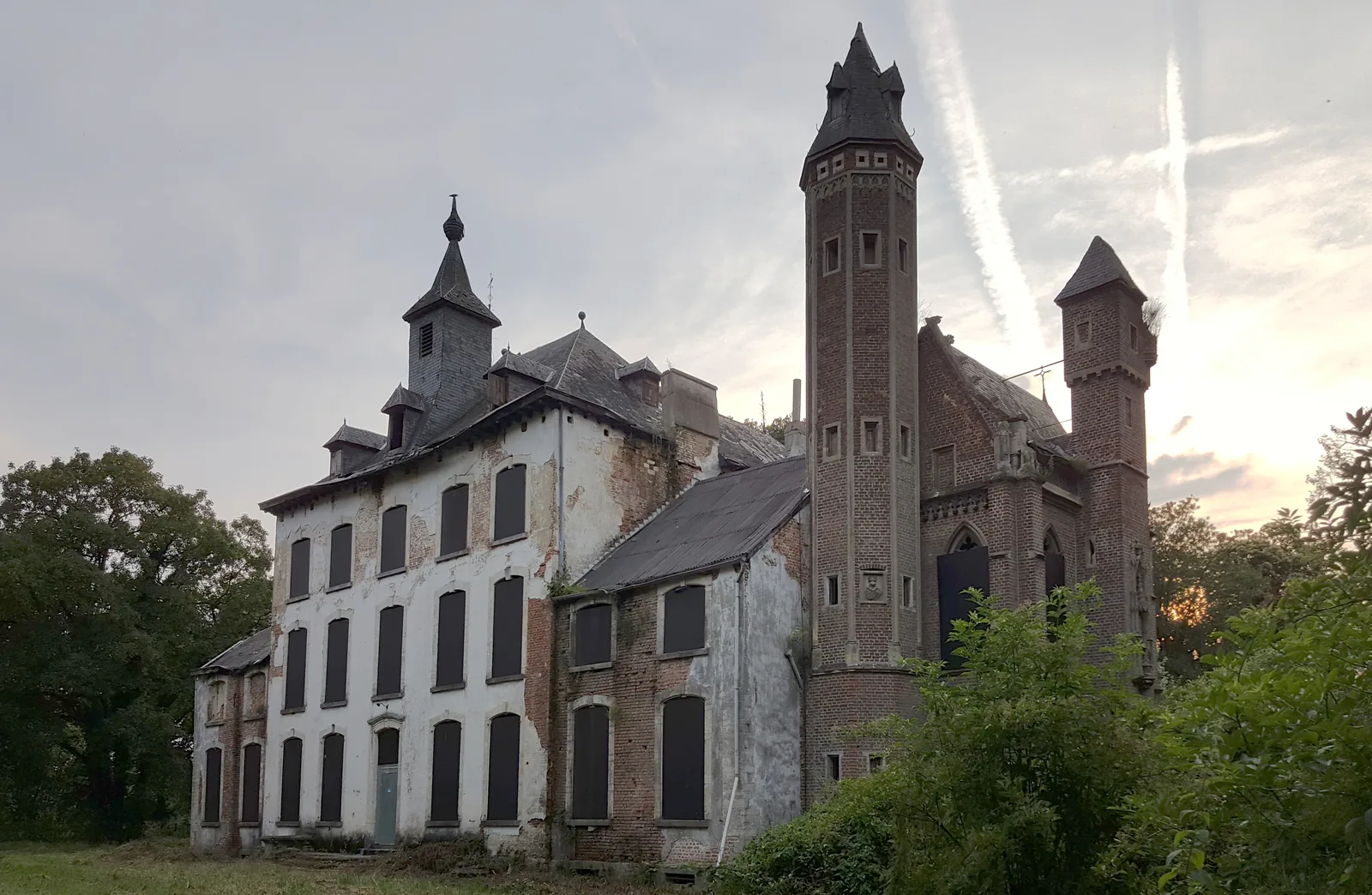
In Kortenaken, in Flemish Brabant, the Kasteel Hogemeyer is one of the few genuinely abandoned and still-standing castles in Flanders. The site is attested since 1323; a country house was built there around 1750, then turned into a castle in 1859-1860 by Baron De Turck de Kersbeek, who added its neo-Gothic tower and chapel.
A renovation attempt failed in 1999, and the castle has been left empty, looted and vandalised ever since. Listed as a monument in 2001, it was sold in 2019 with redevelopment ambitions, but the Flemish heritage inventory still describes, in 2026, a devastated interior with no completed restoration. The façade and the tower are still standing, caught in the vegetation. Private property to be respected and observed from the outside. More spots on our Flemish Brabant urbex map.
7. Varia cinema-theatre: the frozen venue of Jumet
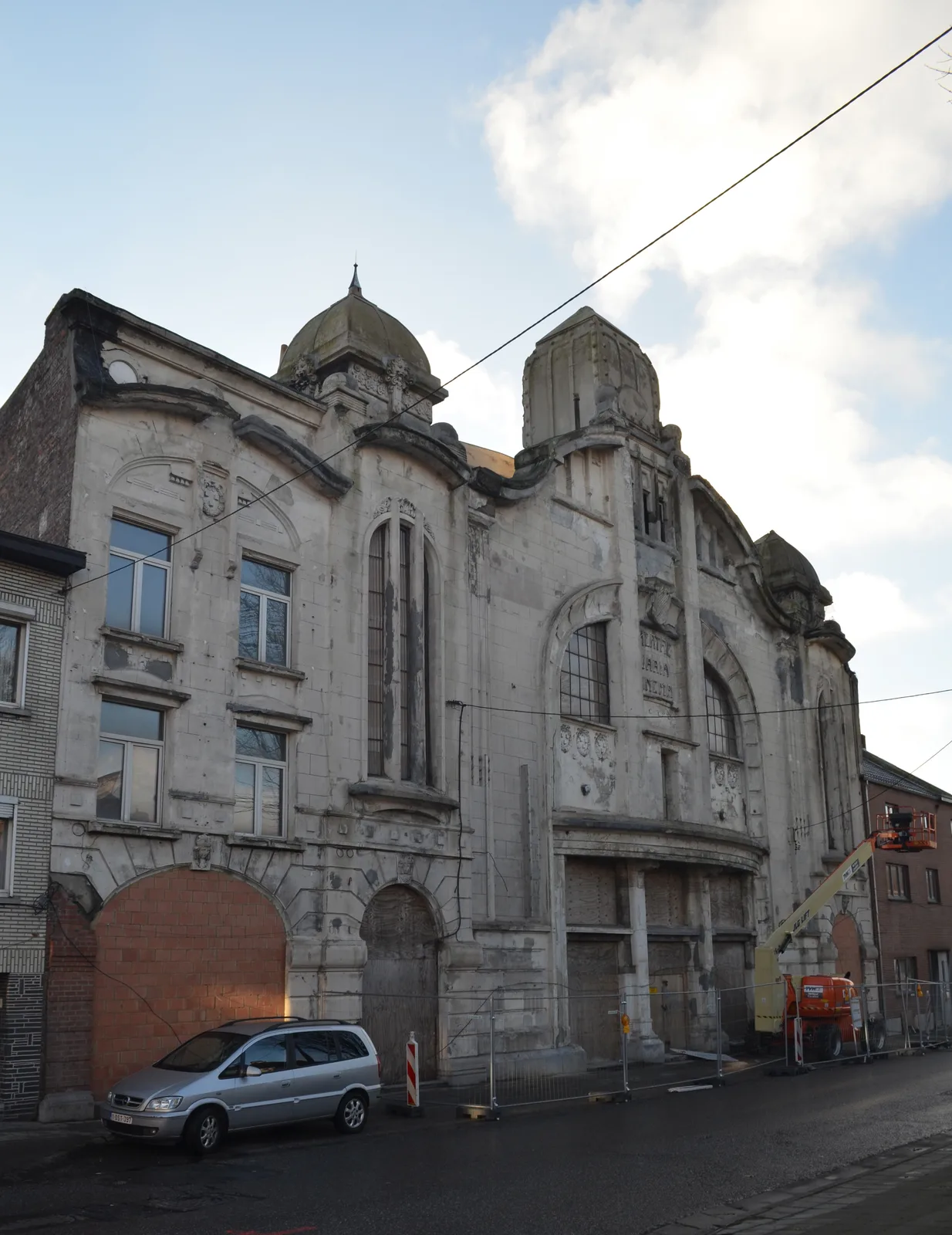
In Jumet, on the outskirts of Charleroi, the Varia cinema-theatre is an abandoned venue of about 1,500 seats. Built between 1910 and 1913 by the architect Émile Claes, it saw Jacques Brel and Bourvil pass through before cycling through uses: theatre, cinema, dance hall, until its closure in the 1980s.
Its façades and roof were listed in 1992, and the Walloon Heritage Institute bought it in 2000 for around 200,000 euros. Despite some 315,000 euros of consolidation works, no full restoration could be carried out for lack of funding: tarpaulins still hold back the materials threatening to fall, while the auditorium remains frozen in its décor. It is a fragile, closed building, to be admired from the street. More places on our Hainaut urbex map.
8. The Aegidium: the abandoned theatre of Saint-Gilles
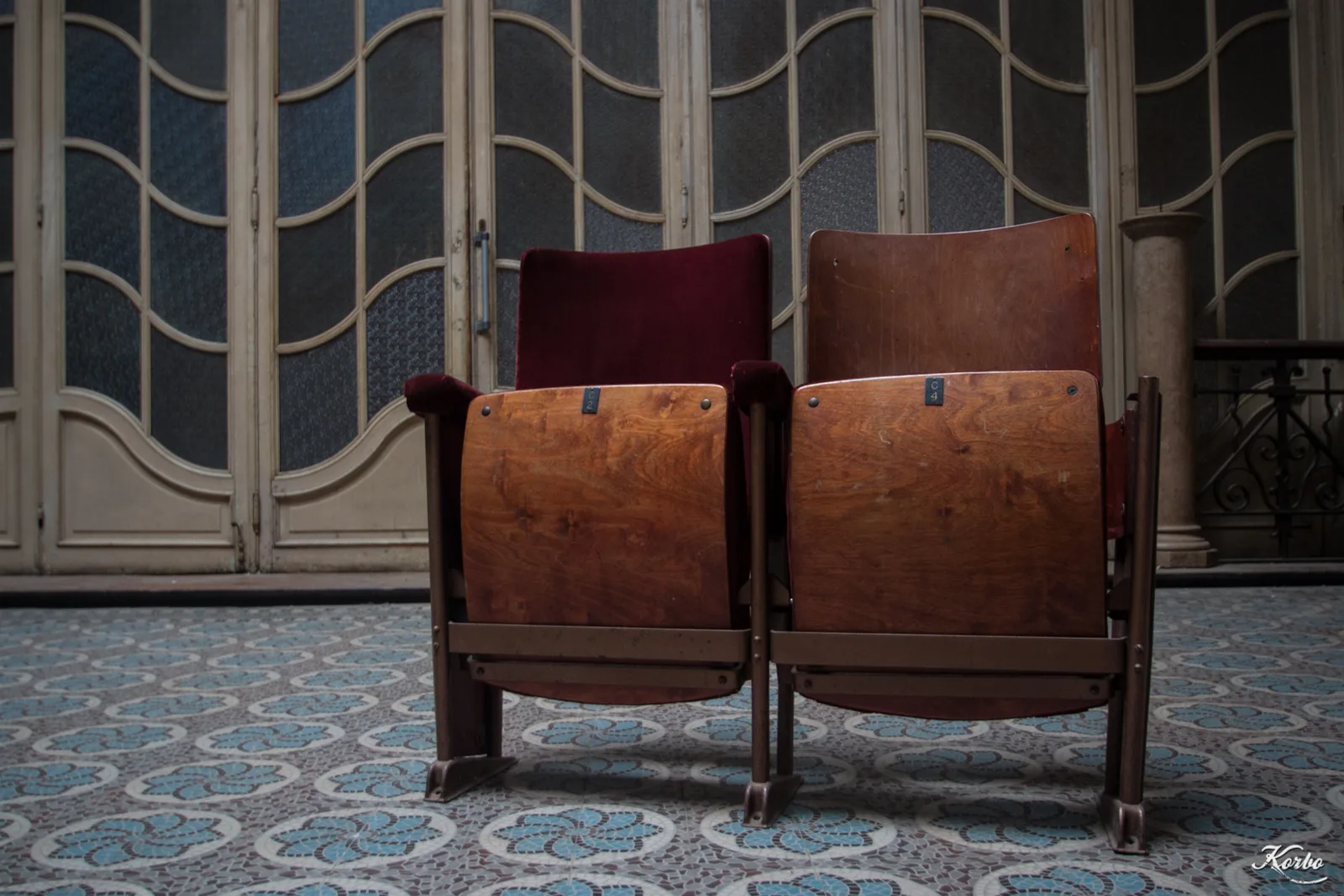
In the heart of Saint-Gilles, in Brussels, the Aegidium is a splendid Art Nouveau entertainment complex that has stood abandoned since 1985. Built in 1905-1906 by the architect Guillaume Segers under the name "Diamant Palace", it served as a concert hall, a cinema from 1933, then a parish centre, before being closed for fire-safety reasons.
Behind its discreet façade hide a Moorish ballroom, mosaics and stained-glass windows that dust has covered for forty years, making it one of the most photographed abandoned interiors in the capital. Listed as a monument in 2006, the Aegidium was bought in May 2026 by a Georgian family who say they want to restore it while preserving its soul: works have not yet begun. The place is private and closed to the public. More spots on our Brussels urbex map.
9. Église des Alouettes: the chapel lost in the fields
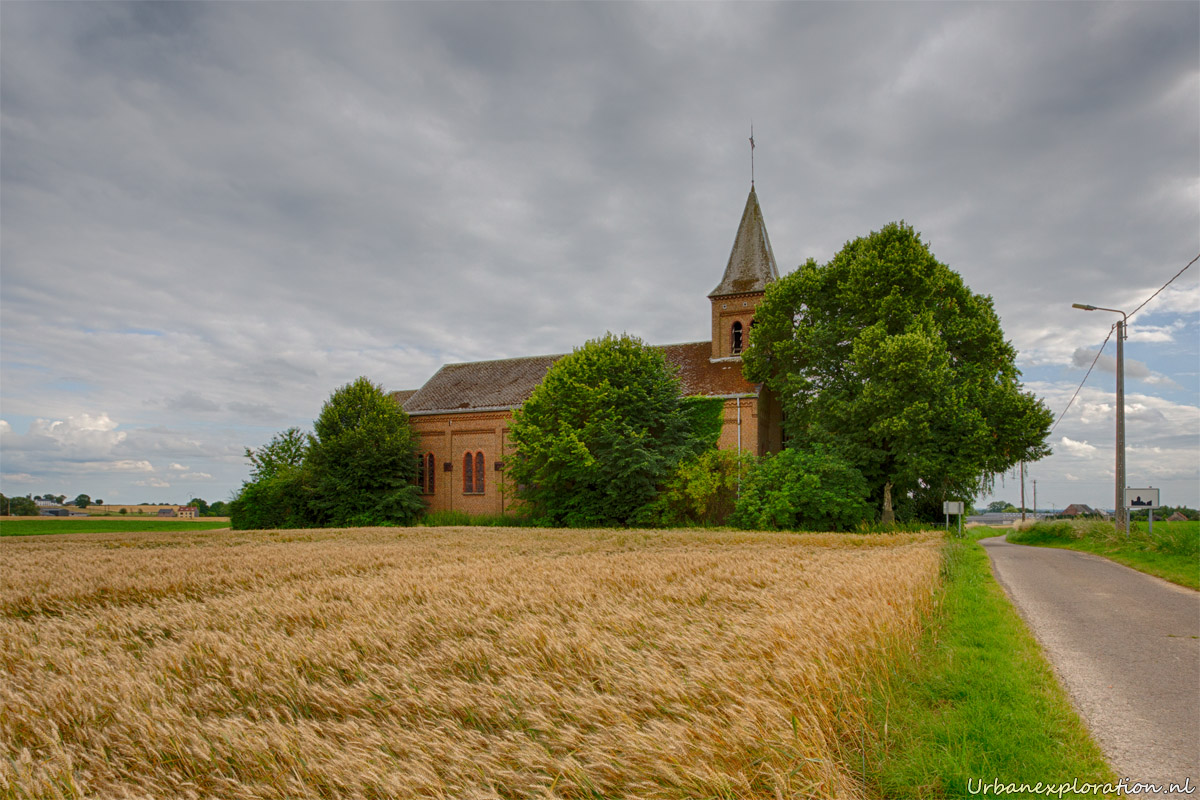
At Encombrie, a hamlet of Sombreffe in the province of Namur, the Église des Alouettes, officially the Church of the Immaculate Conception, stands alone in the middle of the fields. Consecrated on 24 December 1907 to serve several scattered hamlets, its services ceased in 1994. Since then it has been looted and overrun by ivy.
The nave's interior is now held together by metal tie rods that keep the walls from spreading apart, and the vegetation has almost swallowed the brick building. A fatal fall inside in 2016 led to a steel door being fitted around 2023, but no restoration project has come to fruition: it is a fragile, closed place, isolated and silent, to be photographed from the outside. More places on our Namur province urbex map.
10. Val Saint-Lambert: the abandoned glassworks of Seraing
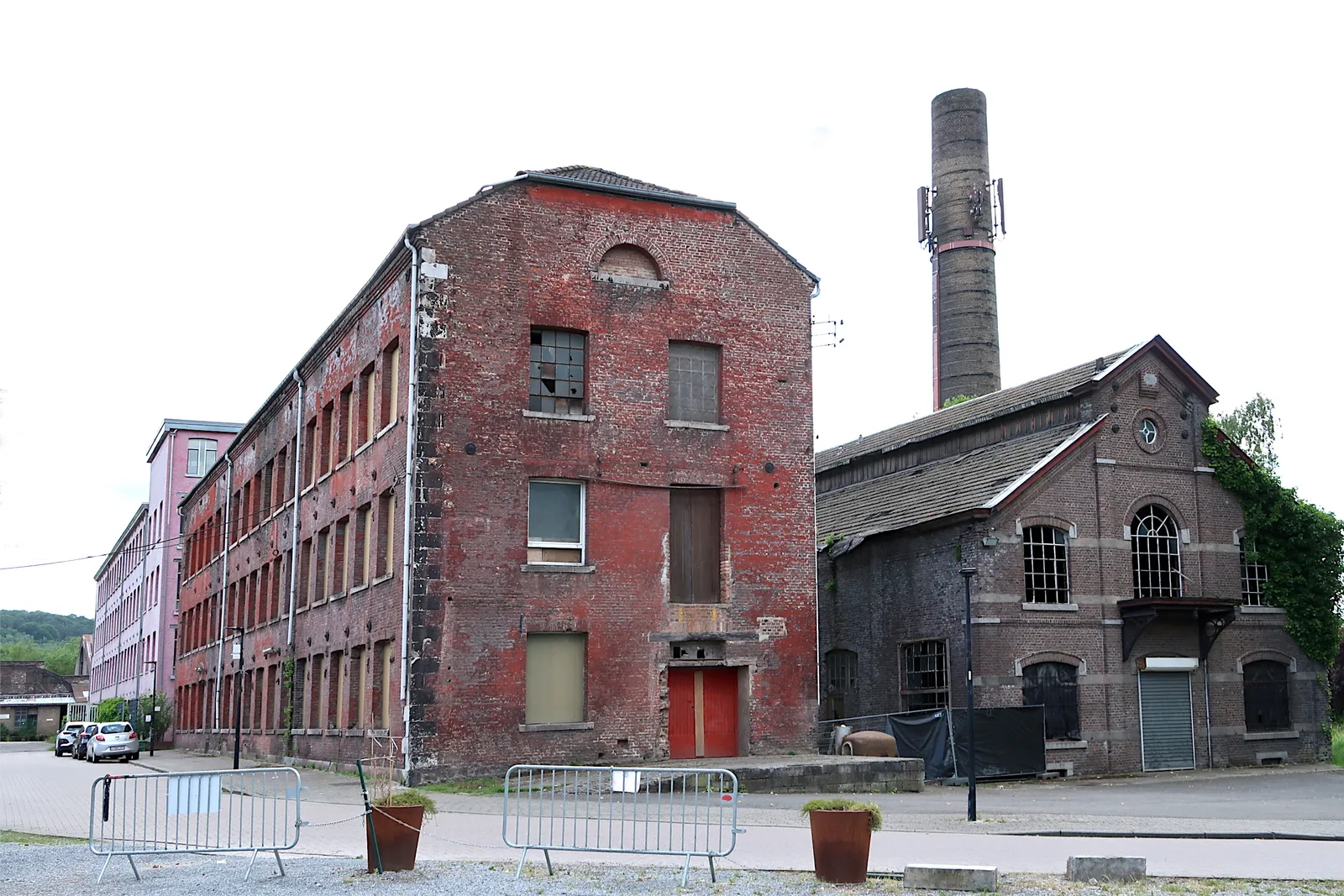
In Seraing, in the province of Liège, the Val Saint-Lambert crystalworks were founded in 1825-1826 by Kemlin and Lelièvre on the site of a former Cistercian abbey. Having become one of the largest glassworks in the world, the factory employed more than 5,000 workers and produced up to 120,000 pieces of crystal a day at its peak, between 1880 and 1914.
The château and a small crystalworks have been restored and now house the "Cristal Discovery" museum, but next to them the vast 19th-century industrial halls remain abandoned, bare brick and dead chimneys. The grand "Cristal Park" redevelopment project went bankrupt in December 2022, and in October 2025 the City of Seraing voted to buy back the heritage buildings (around 4 million euros) to preserve them: the explorable part could therefore shrink, so check access before you go. Never confuse the public, living museum with these abandoned halls. More spots on our Liège province urbex map.
FAQ - Urbex Belgium
How many abandoned places are there in Belgium?
Thousands. Our map alone lists more than 3,000 geolocated abandoned places across Wallonia, Flanders and Brussels: sanatoriums, castles, collieries, power plants, churches and ghost towns. This guide covers ten of the most emblematic; the rest can be explored on the Belgium urbex map.
Is urbex legal in Belgium?
Looking at and photographing buildings from public space is legal. Entering a private property without permission is trespassing, which can also become an offence (damage, intrusion) depending on the circumstances. We never encourage breaking in: you explore from authorised access points, you ask for permission when possible, and you force nothing.
Are these abandoned places dangerous?
Yes. Abandoned buildings present real risks: collapsing floors and roofs, asbestos, unstable structures like the Fort de la Chartreuse, dizzying heights like the Power Plant IM tower or the HF4 blast furnace. Several sites on this list are better seen from the outside. Go with company, tell your loved ones, take a torch and a mask, and never enter a structure that looks unstable.
Where can I find more free urbex spots near me?
Every place in this guide has an "Add to my map" button that saves its GPS coordinates to your free personal map, with no credit card. To explore by area, use the province maps linked under each entry, or start from the Belgium urbex map and zoom in on your region.
What is the best season to explore in Belgium?
Spring and autumn offer the most beautiful light and the least vegetation hiding the buildings, while winter strips the trees bare and shows off ruins like the Kasteel Hogemeyer or the Église des Alouettes. Also remember to check access before you set off: several sites on this list are about to be restored or bought back, and their surroundings can change from one year to the next.
How do I submit a spot to Urbex Maps?
Our community of more than 40,000 explorers adds and verifies places continuously. Once you have created your free account, you can submit a place with its coordinates and photos; a regional moderator then checks that the place exists and is still standing before it goes live. It is this double verification that makes our coordinates reliable.
Conclusion: a country of industrial ruins
Few countries abandon as much heritage as Belgium, and for reasons that tell its history: an early industrial revolution that left behind collieries, blast furnaces and power plants along the Sambre-and-Meuse valley; a religious heritage too vast for emptying parishes; great sanatoriums and castles that became impossible to maintain; and, at Doel, a village sacrificed then saved at the last minute against the expansion of a port. From the Power Plant IM tower to the Val Saint-Lambert halls, these ten places tell the story of modern Belgium in ruins.
Explore them responsibly: most are private, listed or dangerous, and the whole point of urbex is to witness and document, never to damage or break in. To discover everything Wallonia, Flanders and Brussels have to offer, browse the Belgium urbex map and add your first free coordinates to your personal map.