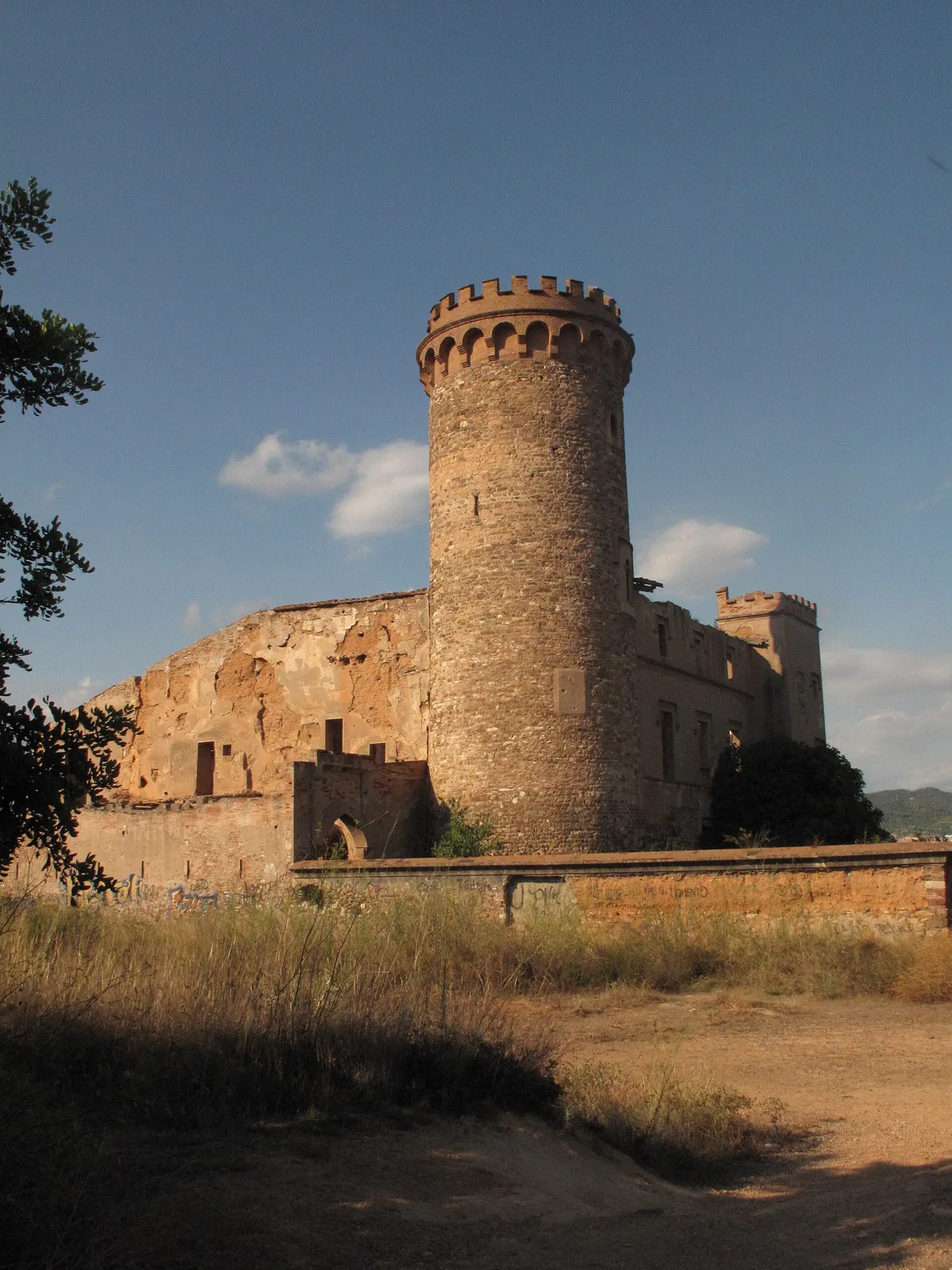
Beyond the Sagrada Familia, the province of Barcelona hides abandoned places packed with history: the Torre Salvana, a ruined medieval tower nicknamed "the Castle of Hell", and a strange modernist sanatorium by Joan Rubió in Collserola that never went into service. Our map gathers thousands of abandoned places in Catalonia, and these are just a stone's throw from Barcelona.
In this guide we picked 3 abandoned places near Barcelona for 2026. Each one is verified: we only keep what is still standing and abandoned (and we flag it when a site has been converted). Under each entry, an "Add to my map" button saves the GPS coordinates to your account, free and with no card. Discover every abandoned place in the province of Barcelona on the urbex map →
Urbex Barcelona for free: why Urbex Maps changes the rules
Most lists of abandoned places end up in a closed group where the coordinates are handed out "through contacts". We put an "Add to my map" button under each place that saves the GPS point to your account, free and with no card, in your personal space. Behind it is a community of more than 40,000 explorers since 2021, and every coordinate is checked at least twice. The free points are free; the paid packs fund the moderation.
Why some places are not on this list
Let's be honest: several classics of Barcelona urbex are no longer "wild" ruins. You will find the Balneario de la Puda de Montserrat in our national guide to abandoned places in Spain, not here. The Vil·la Joana is now a museum, the Carmel bunkers a tourist viewpoint, and the Asland factory a cement museum. We only keep places that in 2026 are still truly abandoned, and we include the Hospital del Tórax while warning that it is now a film studio.
1. Torre Salvana: the "Castle of Hell"
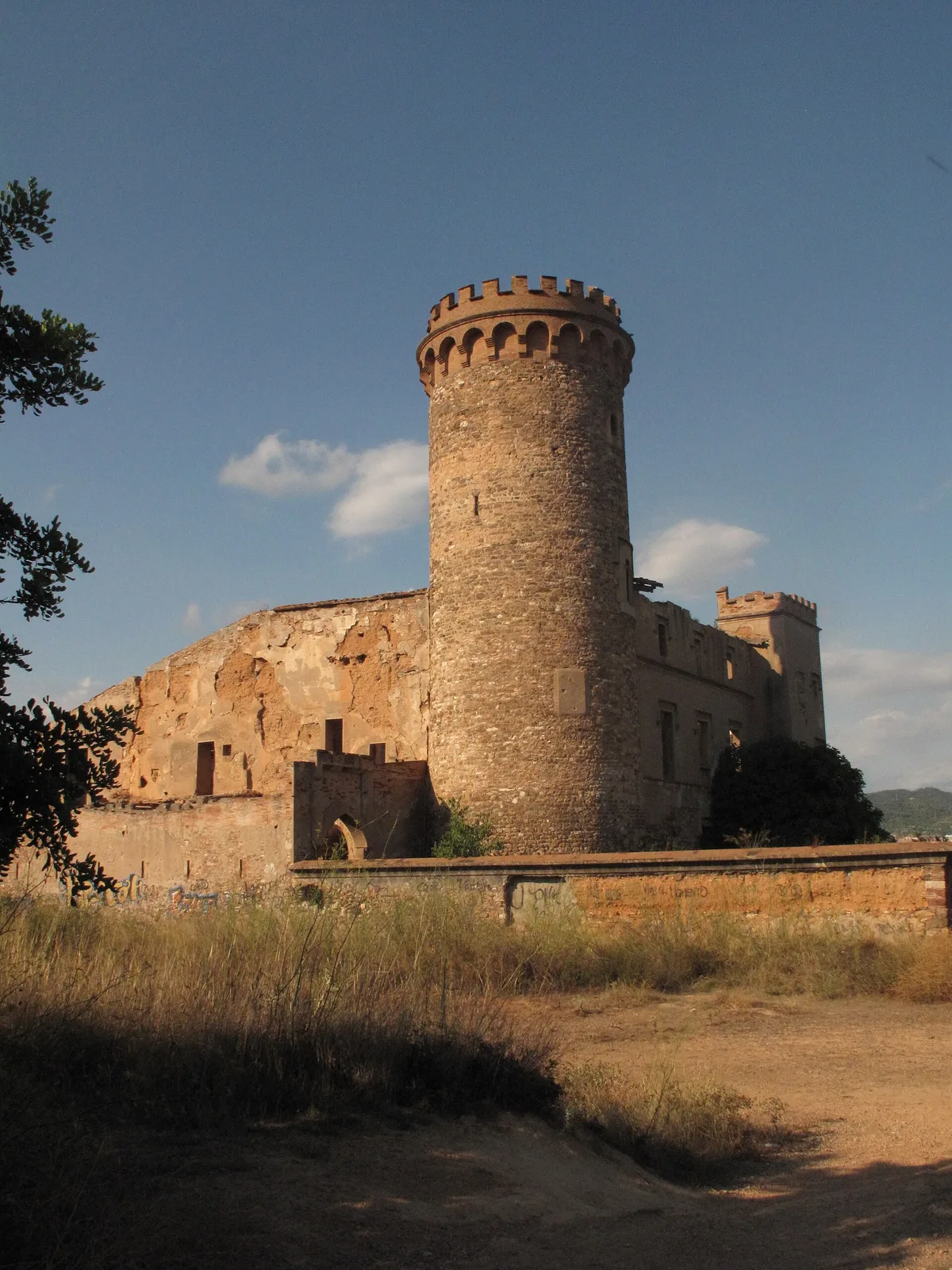
In Santa Coloma de Cervelló, in the Baix Llobregat, next to the Colònia Güell and about 15 km from Barcelona, stands the Torre Salvana, nicknamed "the Castle of Hell". Documented as far back as the year 992 as Torre d'Eles, its circular tower comes from an 11th-century rebuild, set into a Gothic mansion remodelled in the late 19th century.
After the War of the Spanish Succession it was confiscated (1719) and left abandoned. Today it is a Cultural Asset of National Interest but it lies in ruins, with no upkeep, unstable floors and covered in graffiti; access is free but dangerous. It is one of the most photographed places in Catalan urbex. More places on our urbex map of the province of Barcelona.
2. Sanatori del Tibidabo: Rubió's modernist "El Castell"
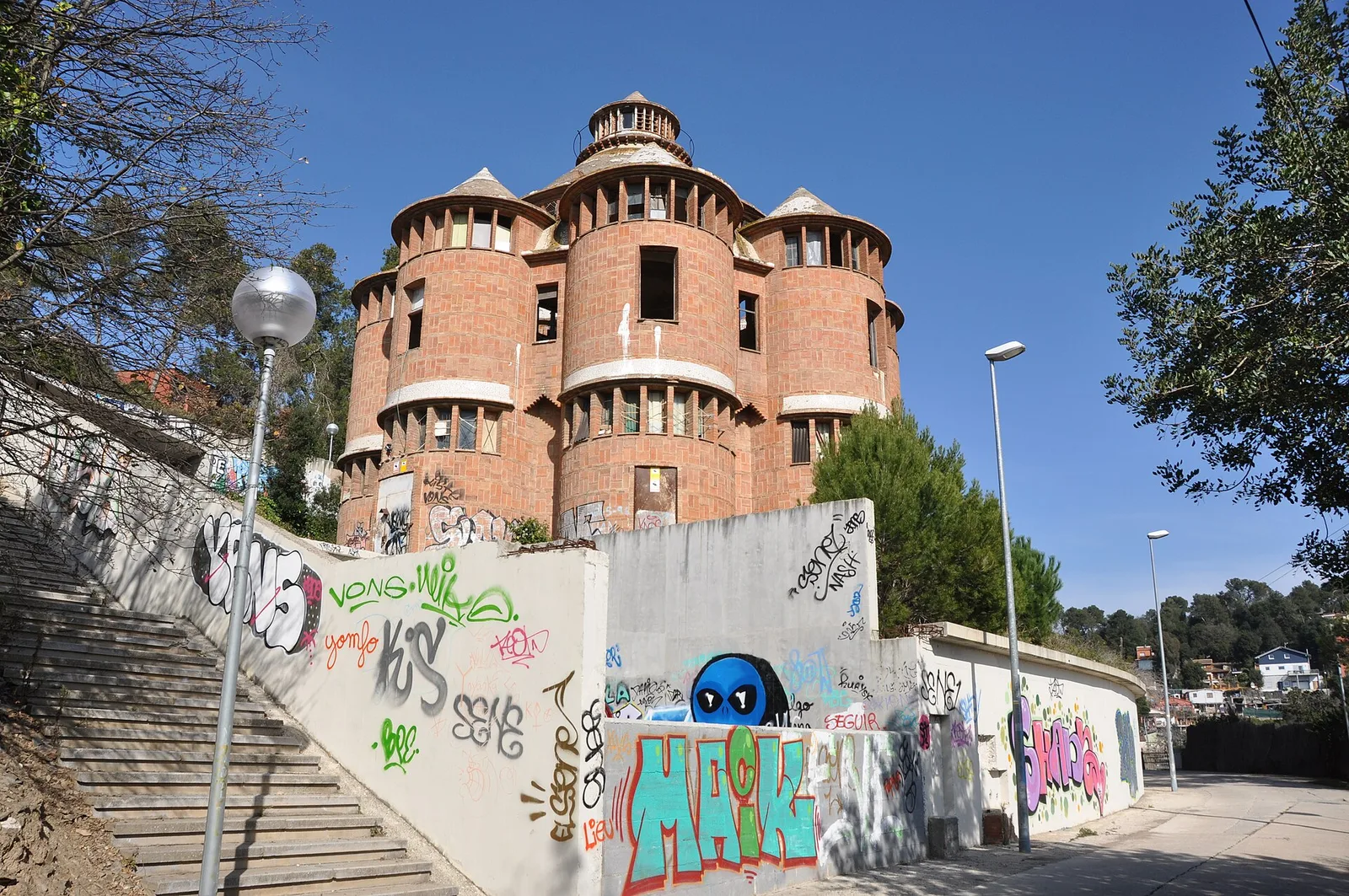
In the Can Rectoret neighbourhood, deep in the Collserola range (Barcelona), the pavilion known as "El Castell" survives, the only remnant of the Sanatori Antituberculós del Tibidabo. It was designed by the modernist architect Joan Rubió i Bellver (a disciple of Gaudí) and built between 1903 and 1905, with a circular plan and eight cylindrical towers topped with trencadís.
The sanatorium never went into service as such; during the Civil War it served as a hospital for the International Brigades, and the rest of the complex was never built. Today the pavilion stands abandoned, walled up and covered in graffiti, in the middle of the forest. More places on our urbex map of Barcelona.
3. Hospital del Tórax in Terrassa: from "cursed place" to film studio
In Terrassa (Vallès Occidental) stands the imposing Hospital del Tórax, opened on 8 June 1952 as a tuberculosis sanatorium with up to 1,600 beds. After the closure of the pulmonology unit in 1986 and of a small psychiatric unit in 1997, it earned a reputation as a "cursed place" because of its high number of suicides.
An honest warning: since 2004 the main building has been the Parc Audiovisual de Catalunya, an active film studio complex (REC 2 and The Machinist were shot here). It is no longer "wild" urbex: access is only by booking or guided tour. We include it for its history and legend, not as a ruin you can enter. More places on our urbex map of Barcelona.
FAQ - Urbex Barcelona
How many abandoned places are there near Barcelona?
On our urbex map of the province of Barcelona you will find hundreds of verified points: ruined towers and farmhouses, sanatoriums, industrial colonies of the Llobregat and bunkers.
Is urbex legal in Barcelona?
Exploring is not a crime, but entering private or fenced property can be trespassing. The Torre Salvana has free access but is dangerous, and the Hospital del Tórax can only be visited by booking. Respect the signs, do not force your way in and do not damage anything.
Are these places dangerous?
Yes. The Torre Salvana has unstable floors and the Tibidabo sanatorium is walled up and in ruins. Do not explore alone, carry a flashlight and a charged phone, and do not step on damaged floors.
Where can you find more abandoned places near Barcelona?
On our free urbex map and on the map of the province of Barcelona there are hundreds of points. Under each free point, tap "Add to my map" to save the GPS coordinates to your account.
Conclusion: the other face of Barcelona
Behind touristy Barcelona there are medieval towers, modernist sanatoriums and industrial colonies that time left behind. These three places are only the beginning. Explore responsibly: respect the bans, do not step on floors that might give way and leave no trace. To discover more, head to our urbex map of Barcelona and save your coordinates for free on your personal map.