Spain is one of the best urbex grounds in Europe: the old town of Belchite flattened by the Civil War, the walled medieval village of Granadilla, the church tower of Mediano rising out of a reservoir, and a palace that once belonged to Franco rotting on a hilltop. Our map gathers thousands of geolocated abandoned places all across Spain, and that is where we pulled this selection from.
In this guide we picked 10 abandoned places in Spain to explore in 2026: four ghost towns, three tuberculosis sanatoriums, a train station, a spa and a palace. Each one is individually verified: we only kept the ones that in 2026 are still genuinely abandoned and standing, not turned into a museum, hotel or housing. Under each entry, an "Add to my map" button saves the GPS coordinates to your account, free and with no card.
The phrases abandoned places, abandoned villages of Spain, abandoned sites, urbex Spain and abandoned places near me all point to the same passion: finding, photographing and documenting what nobody occupies anymore. Whether you are after a ghost town in Aragon, an abandoned sanatorium in Murcia or the Canary Islands, or a ruined palace in the Madrid mountains, this ranking sweeps across the whole peninsula and the islands. Discover thousands of abandoned places all over Spain on the interactive urbex map →
Free urbex Spain: why Urbex Maps changes the rules
Most "abandoned places in Spain" lists end up pointing you to a closed group where coordinates are obtained "through contacts." We do the opposite. Under each place there is an "Add to my map" button that saves the exact GPS point to your account, free and with no card, in your personal space. Behind it sits a concrete verification model: a community of more than 40,000 explorers since 2021, and every coordinate is checked at least twice before it goes on the map. Free points are free; the paid packs fund the moderation. We ranked the ten places by visual power and historical importance.
Why some famous places are not on this list
Let's be honest: several Spanish urbex "classics" are no longer abandoned. Canfranc Station reopened in 2023 as a five-star hotel; the Tórax Sanatorium in Terrassa is now the Parc Audiovisual de Catalunya; the villages of Búbal and Jánovas are being restored; and the Royal Artillery Factory of Seville is now a cultural center. You won't find Belchite and Granadilla here as "wild" ruins either: they are still standing and spectacular, but they are managed (Belchite can only be visited with a paid guide). We only kept what in 2026 is still genuinely in ruins.
1. Belchite: the most famous ghost town in Spain
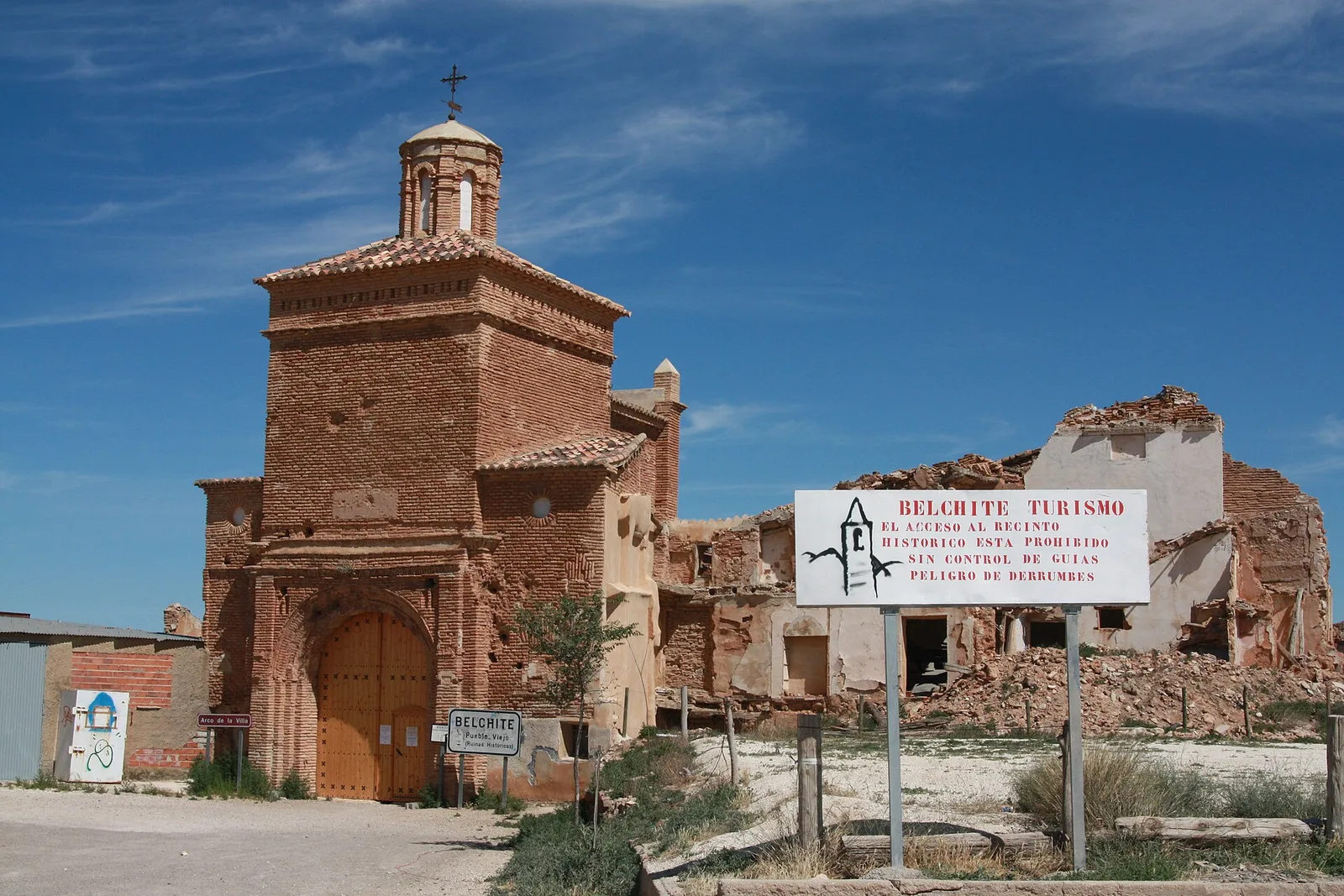
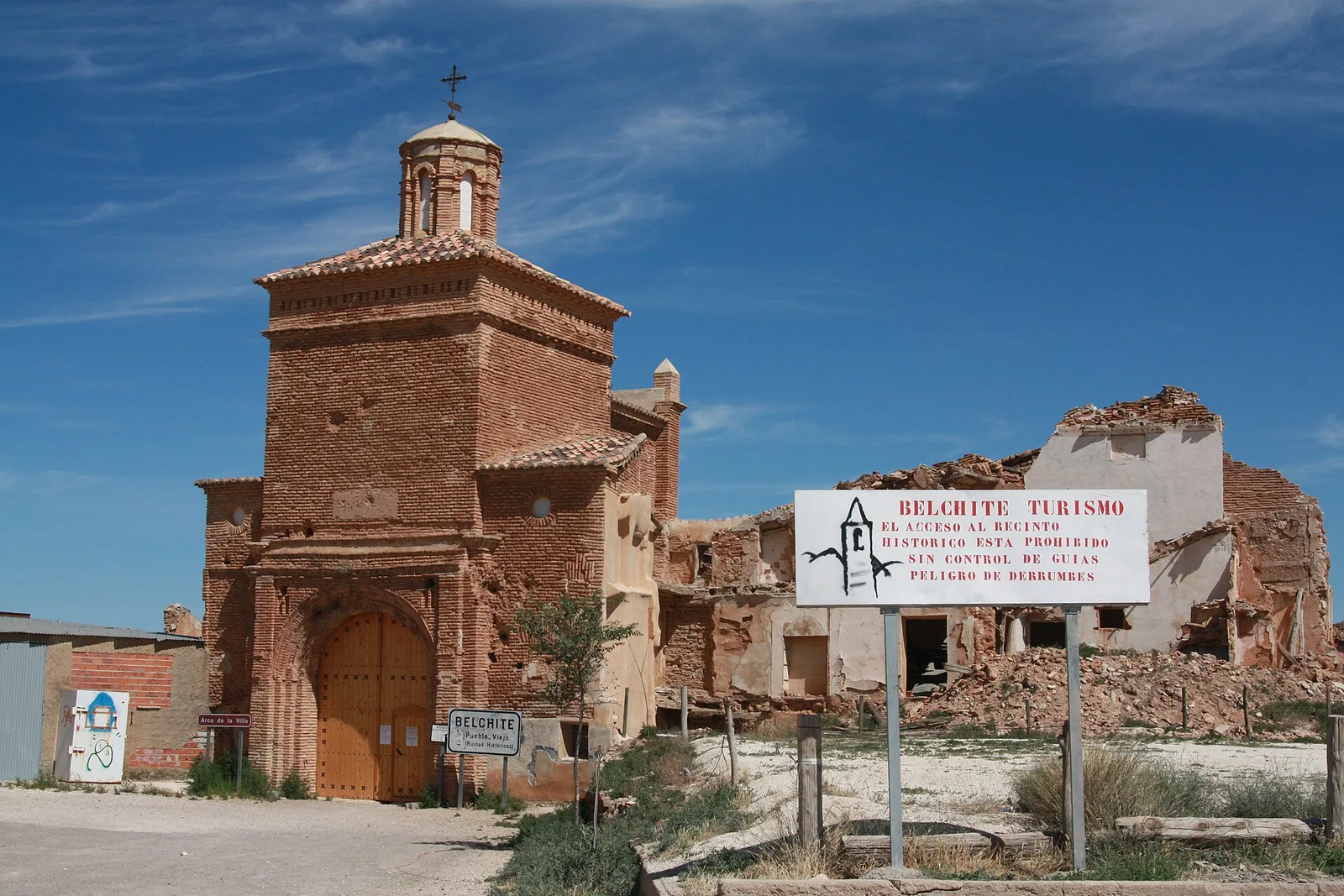
In the province of Zaragoza, the Old Town of Belchite is the most famous ghost town in Spain. The old village was destroyed during the Battle of Belchite (August 24 to September 7, 1937), between Republican forces and Franco's troops. After the war, Franco ordered a new village to be built alongside it and left the old one in ruins as a testimony.
It has stayed frozen in time ever since: the church of San Martín de Tours, the Arco de la Villa and entire streets of gutted houses survive. It is a place of memory, not a "wild" ruin: for safety, the site is fenced off and can only be visited on a paid guided tour (there are also nighttime legend tours). Treat it with respect. More places on our Zaragoza urbex map.
2. Granadilla: the walled medieval village left empty
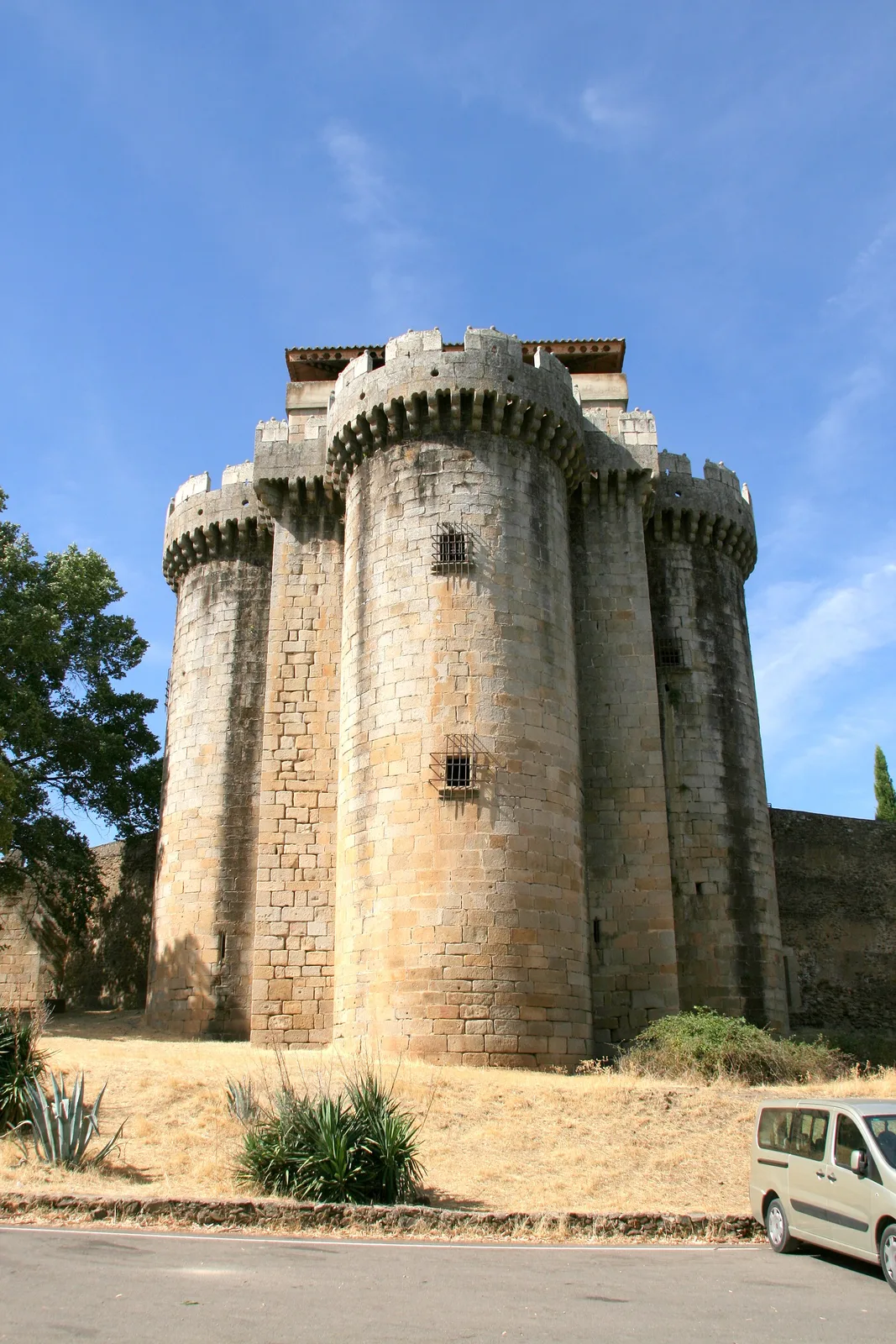
In the province of Cáceres, Granadilla is an abandoned but astonishingly well-preserved walled medieval village: walls, castle, church and cobbled streets are all still standing. Founded in the 9th century as a Muslim defensive enclosure, its castle was raised in the 15th century by the first Duke of Alba.
On June 24, 1955 the regime decreed its expropriation for the Gabriel y Galán reservoir and the last residents left in late 1964, although the town center was never actually flooded. Today it is a Historic-Artistic Site and part of the Abandoned Villages Recovery Program: it is managed, with free entry Tuesday to Sunday, but with no permanent inhabitants. More places on our Cáceres urbex map.
3. Ochate: the cursed village of the legends
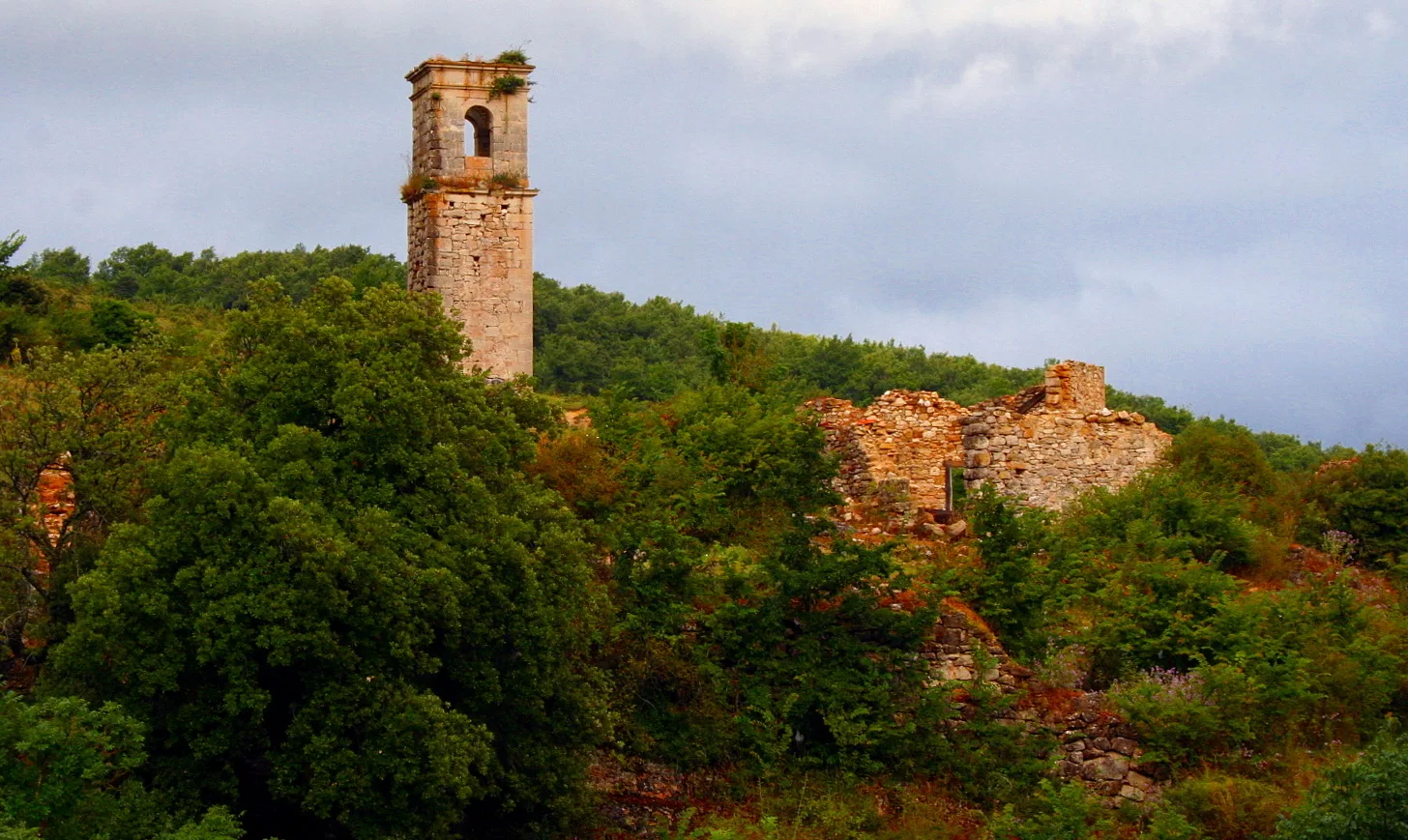
In the Treviño enclave, province of Burgos, Ochate is a genuine ruined ghost town, overrun by vegetation. The half-collapsed tower of the Romanesque church of San Miguel and remains of houses survive. Inhabited since the Bronze Age, it was already abandoned by the late 13th century and repopulated in the 16th.
The opening of the Royal Road from Vitoria to Laguardia in the early 19th century diverted trade and ruined the village; in the 1920s, the Spanish flu and bad harvests depopulated it almost entirely, and the last resident left in 1936. Famous for its paranormal legends (studied on the show Cuarto Milenio), it is neither fenced nor managed. More places on our Burgos urbex map.
4. Mediano: the church rising out of the reservoir
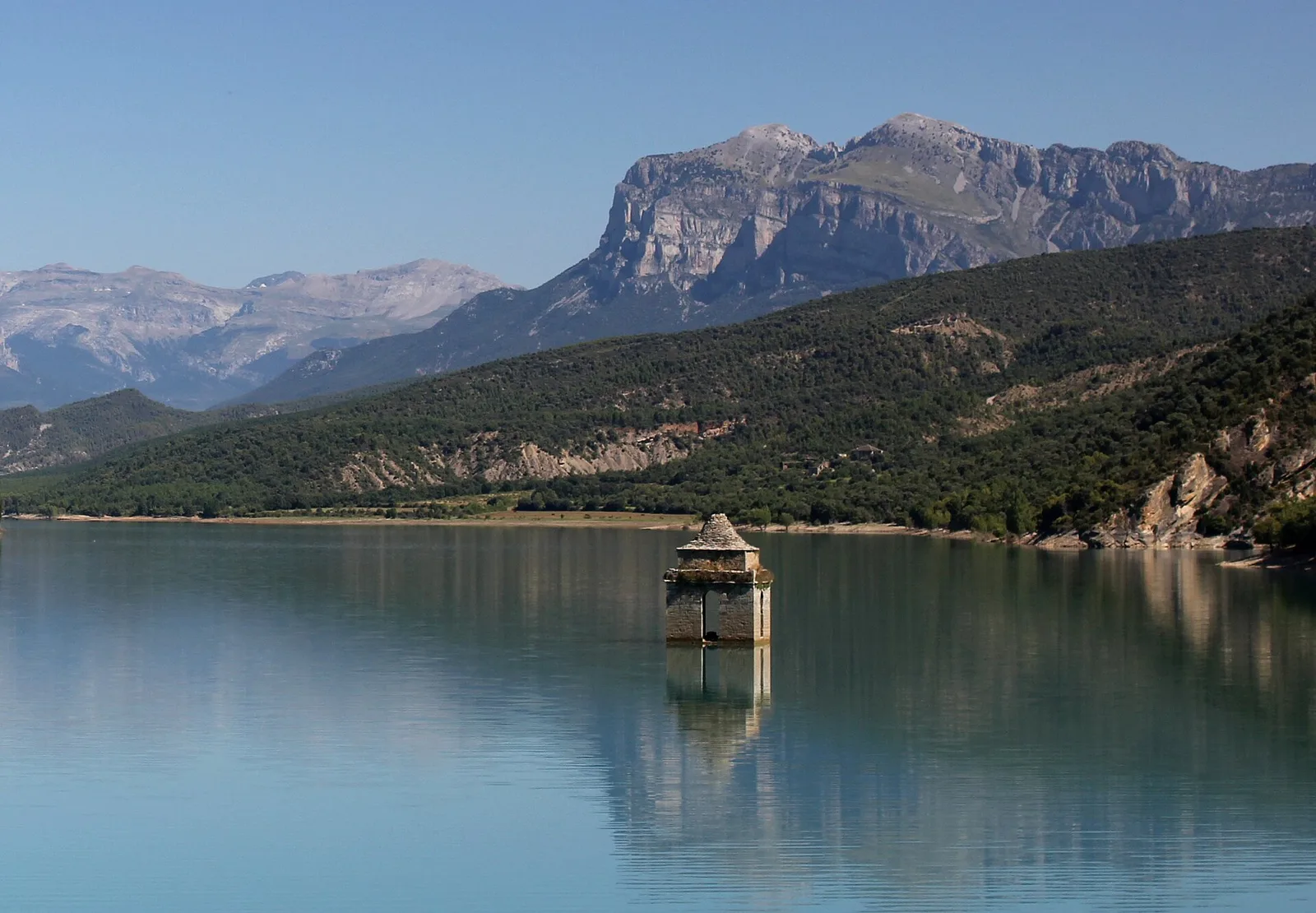
In La Fueva, in the Sobrarbe district, province of Huesca, the village of Mediano is a unique case: it was submerged under its reservoir and only the tower of the Asunción church (16th century), nicknamed "the lady of the lake," still pokes out.
Work on the dam began in 1929; on April 29, 1969, the opening of the reservoir together with heavy rain flooded the village while residents were still there, and they fled with almost nothing. When the water drops, the streets and ruins reappear and you can walk among them, and even step inside the church. It is an iconic, unmanaged ghost point. More places on our Huesca urbex map.
5. Agramonte Sanatorium: the tuberculosis giant of Aragon
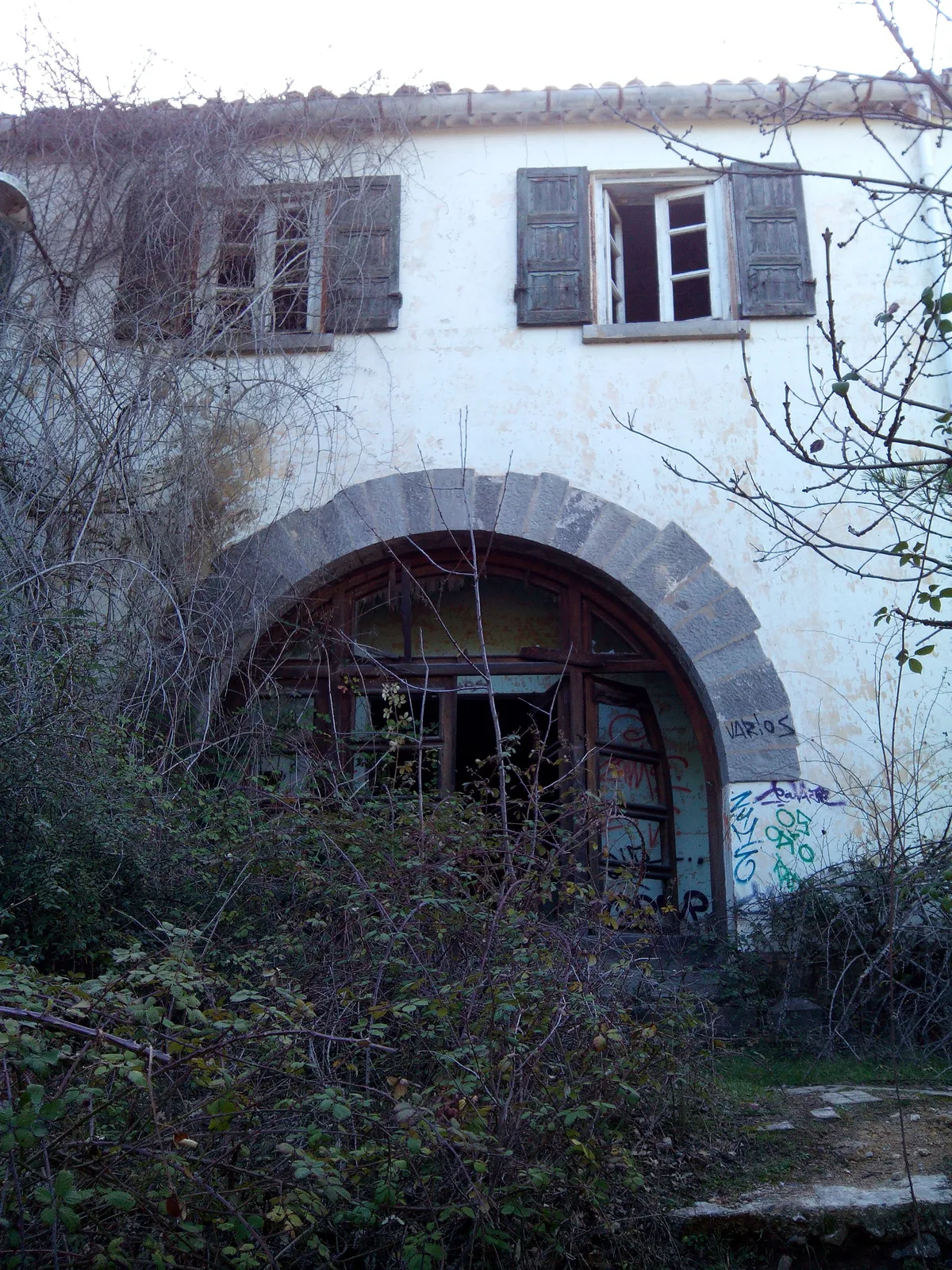
Near Tarazona, in the province of Zaragoza, the Agramonte Tuberculosis Sanatorium is one of the most iconic urbex spots in Aragon. It was built in 1934, during the Second Republic, and opened around 1938-39 as a sanatorium for women and children without resources, making use of the air from the Moncayo mountains.
It closed on September 30, 1978, when tuberculosis treatment was folded into the Social Security system, and it has been a total ruin ever since: collapsed roofs, corridors full of rubble and graffiti. It is private property and entering is dangerous, so admire it from the outside. More places on our Zaragoza urbex map.
6. Abades Sanatorium: the leprosarium that never opened, in Tenerife
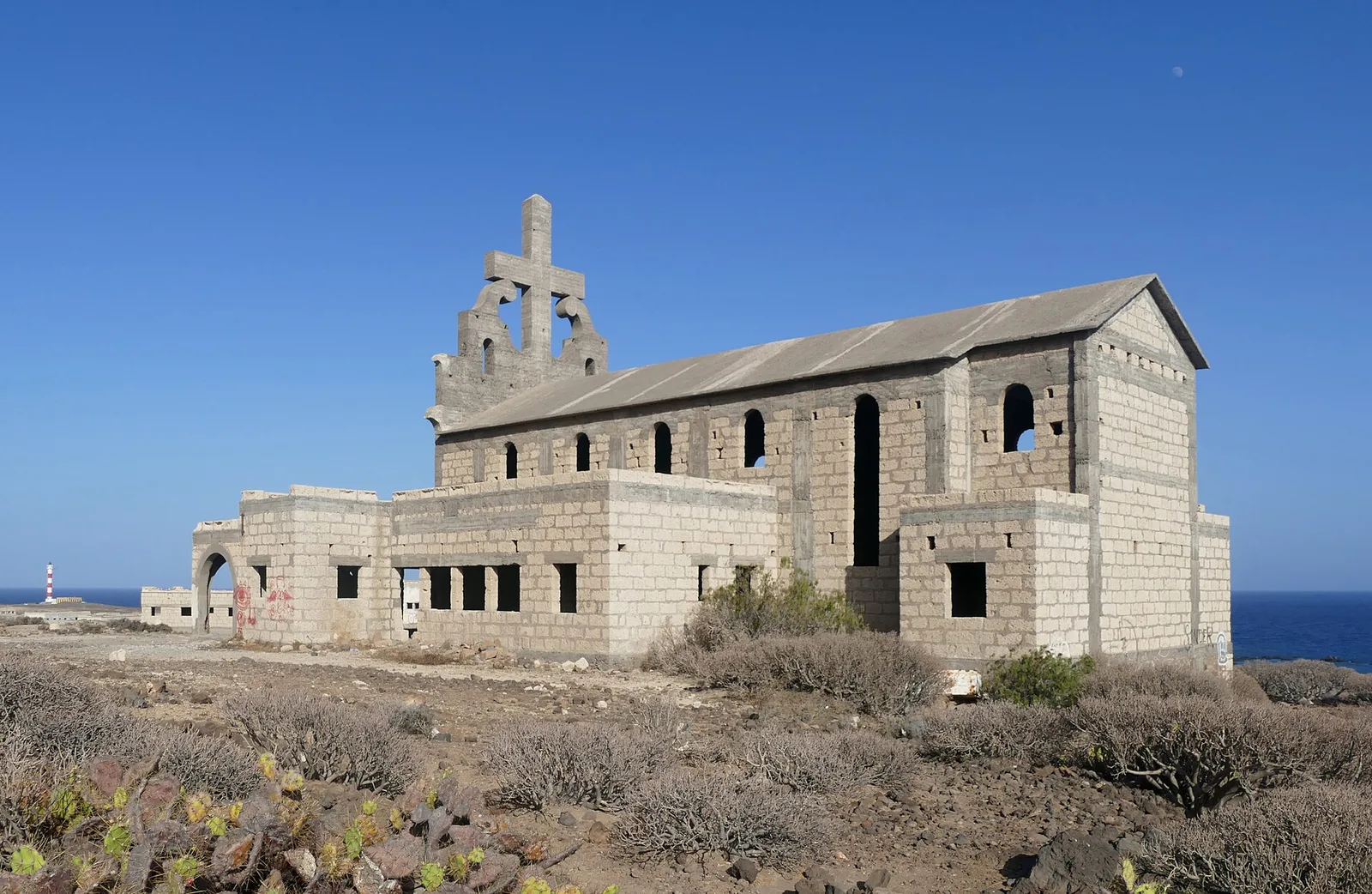
In Arico, next to the village of Abades, in Tenerife, stands the Abona Sanatorium, a small town of around 30-40 buildings that never actually opened. It was designed in 1943 by architect José Enrique Marrero Regalado, commissioned by the Cabildo, as a self-sufficient leprosarium to isolate leprosy patients.
When it was almost finished, sulfone drugs made isolation unnecessary and the complex was left empty; it saw some occasional military use and has been abandoned for over 70 years, with its concrete church and its cross as the iconic image. A restoration project has been announced, but never carried out. More places on our Tenerife urbex map.
7. Sierra Espuña Sanatorium: ruins among the pines in Murcia
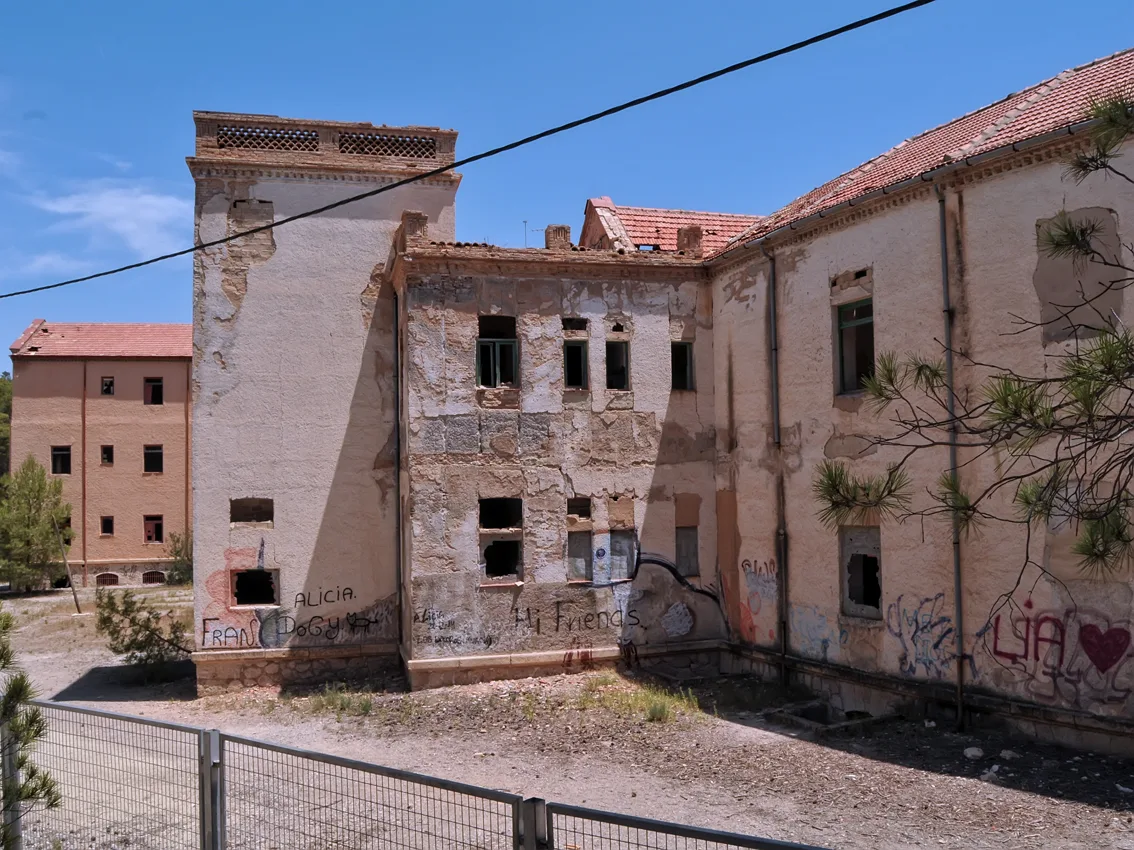
In the heart of the Sierra Espuña Regional Park, in Alhama de Murcia, the Old Tuberculosis Sanatorium is an imposing ruined building. The first stone was laid on July 8, 1917, to a design by architect Pedro Cerdán, and it opened on November 17, 1935 with 200 beds.
Streptomycin (1949) made it obsolete and it closed in 1962. In the 1980s there was an attempt to turn it into a hostel (only one wing was restored) and in 1997 security was withdrawn. Today it is fenced off, with the roofs destroyed, and listed on the Heritage Red List. More places on our Murcia urbex map.
8. Algodor Station: the ghost station of Aranjuez
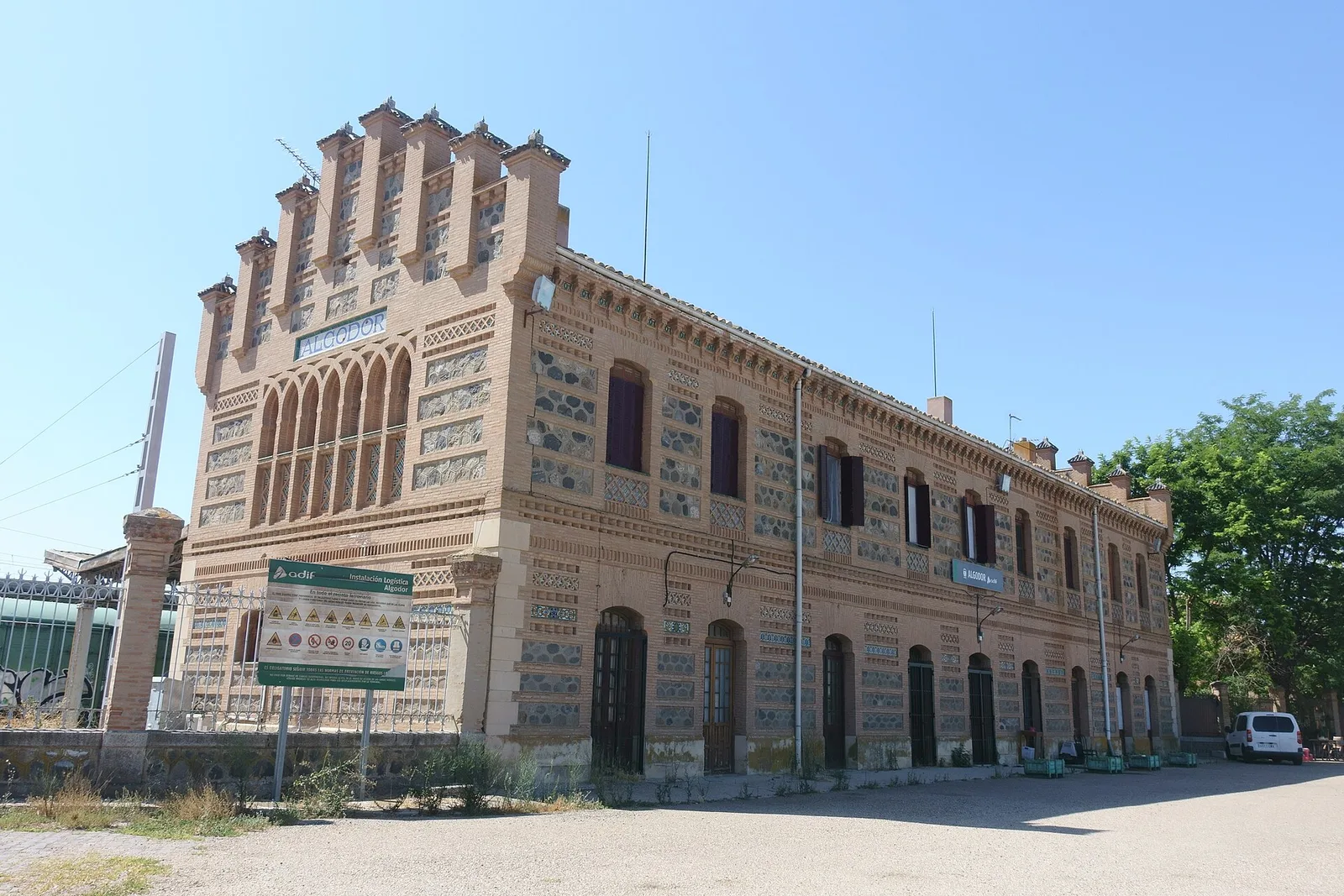
In the municipality of Aranjuez, in the south of the Community of Madrid, Algodor Station is one of the prettiest ghost stations in Spain. Opened as a halt in 1858, in 1879 it became a junction when the Madrid-Ciudad Real branch was added; between 1921 and 1924 around 60 railway workers' homes and a Neo-Mudéjar building were added.
The last passenger train passed on November 15, 2005, after the arrival of the Madrid-Toledo high-speed line, and the settlement gradually emptied out. Platforms, depots and rusty carriages remain on the tracks. One or two families still live there, so it is not 100% uninhabited: respect that coexistence. More places on our Madrid urbex map.
9. La Puda de Montserrat Spa: the ruined spa of the Llobregat
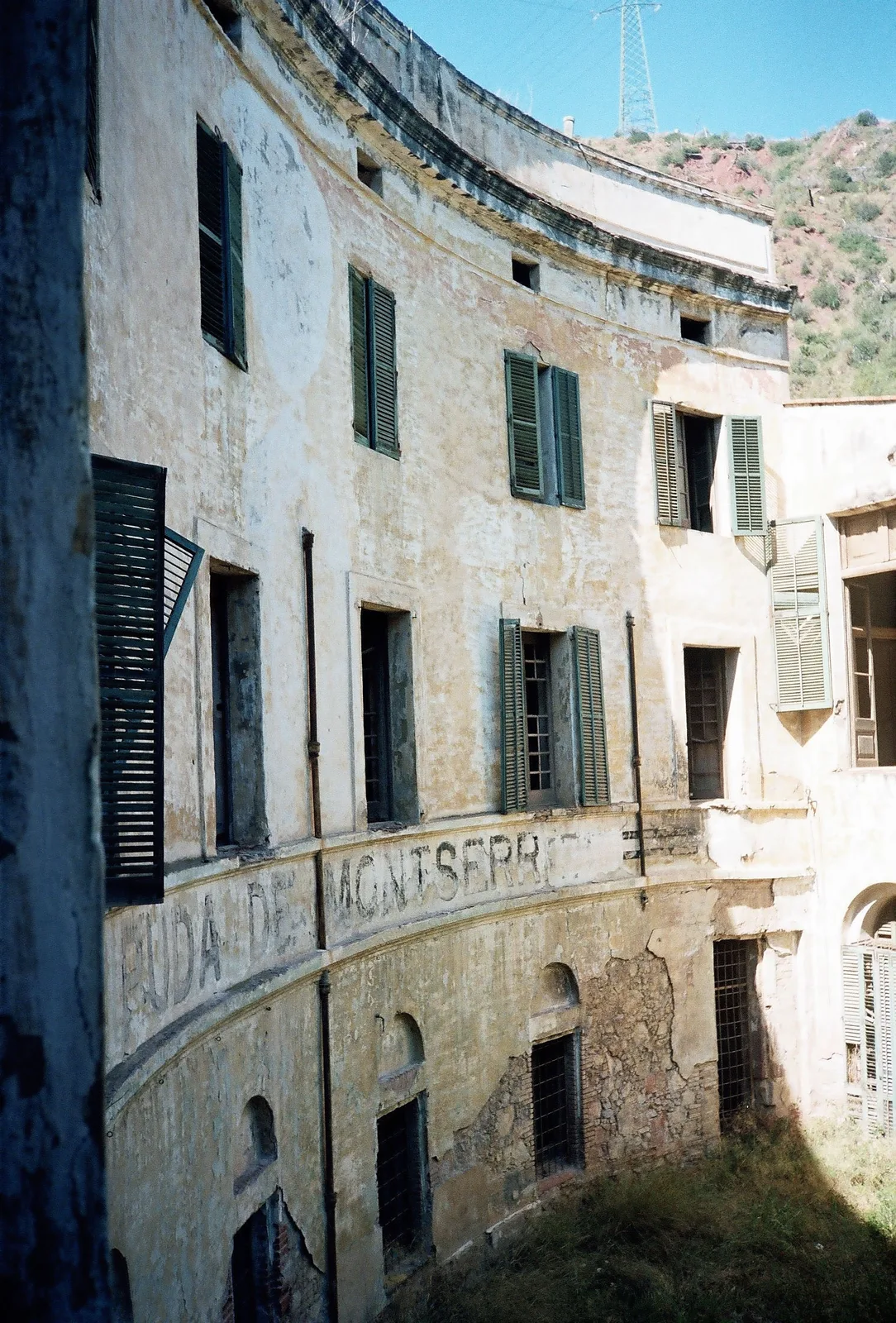
In Esparreguera, province of Barcelona, on the banks of the Llobregat and at the foot of Montserrat, the La Puda de Montserrat Spa is a spectacular ruin. The thermal complex was built in 1870-71 over sulfurous waters, and lived its golden age with the Barcelona bourgeoisie at the end of the 19th century.
Built almost at river level, it suffered several floods; the 1958 flood caused its definitive closure, and it has since been a ruin covered in graffiti (a set for horror film shoots). It is a Cultural Asset of Local Interest, unrestored. More places on our Barcelona urbex map.
10. Canto del Pico Palace: Franco's palace in ruins
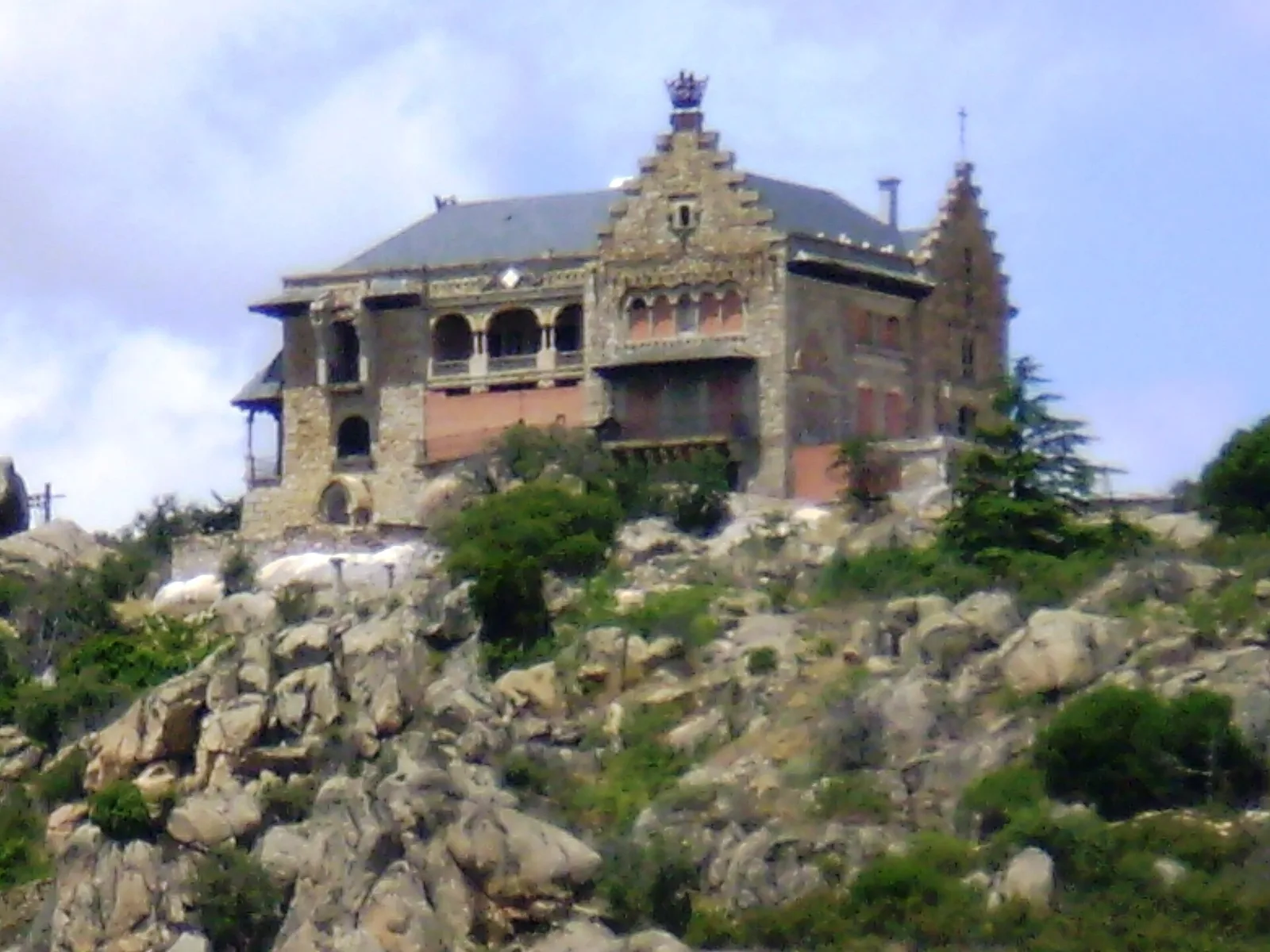
On a hill in Torrelodones, in the mountains of Madrid, the Canto del Pico Palace stands in ruins. It was built between 1920 and 1922 as a house-museum for the collection of José María del Palacio, Count of Las Almenas, incorporating a Gothic cloister. It was declared a monument in 1930 and served as a Republican command post in 1937.
On the count's death (1940) it was bequeathed to Franco, who used it for 35 years. After 1975 the Franco family abandoned it; it suffered looting and a roof fire in 1998. It is a Cultural Asset of Interest and private property, today sealed off and at serious risk of collapse, on the Heritage Red List. More places on our Madrid urbex map.
FAQ - Urbex Spain
How many abandoned places are there in Spain?
It is hard to give a figure, but on our Spain urbex map you will find thousands of verified points: abandoned villages, sanatoriums, factories, stations and palaces across every region.
Is urbex legal in Spain?
Exploring is not a crime, but entering private or fenced property can be trespassing, and many of these places are private property or protected. Respect no-entry signs, don't force your way in and don't wreck anything: this guide is for documenting and admiring, not for breaking the law.
Are these places dangerous?
Yes. Sanatoriums and palaces have floors and staircases that can give way, and the ruined villages have unstable walls. Never explore alone, bring a flashlight and a charged phone, and don't step on damaged roofs or floors.
Which abandoned village in Spain can you visit?
Belchite and Granadilla can be visited in a managed way (Belchite with a paid guide; Granadilla with free entry). Ochate and Mediano, on the other hand, are free, unmanaged ruins. Always check the condition and ownership before you go.
Where can you find more abandoned places in Spain?
On our free urbex map and on the Spain map there are thousands of verified points. Under each free point, click "Add to my map" to save the GPS coordinates to your account, with no card.
When is the best time of year for urbex?
Spring and autumn: the light is softer and the vegetation doesn't cover the facades. Mediano looks best in summer, when the reservoir drops and the village reappears, and the interiors of sanatoriums and palaces call for a good flashlight in any season.
Conclusion: why Spain is an urbex paradise
Spain's abandoned places mirror a turbulent century: the Civil War that flattened Belchite, the reservoirs that swallowed entire villages like Mediano, the fight against tuberculosis that filled the mountains with sanatoriums, and the rural depopulation that emptied medieval villages like Granadilla. These ten places are just the beginning. Explore responsibly: respect no-entry signs, don't step on floors that may give way and leave no trace. To discover the rest, head to our Spain urbex map and save your coordinates for free on your personal map.