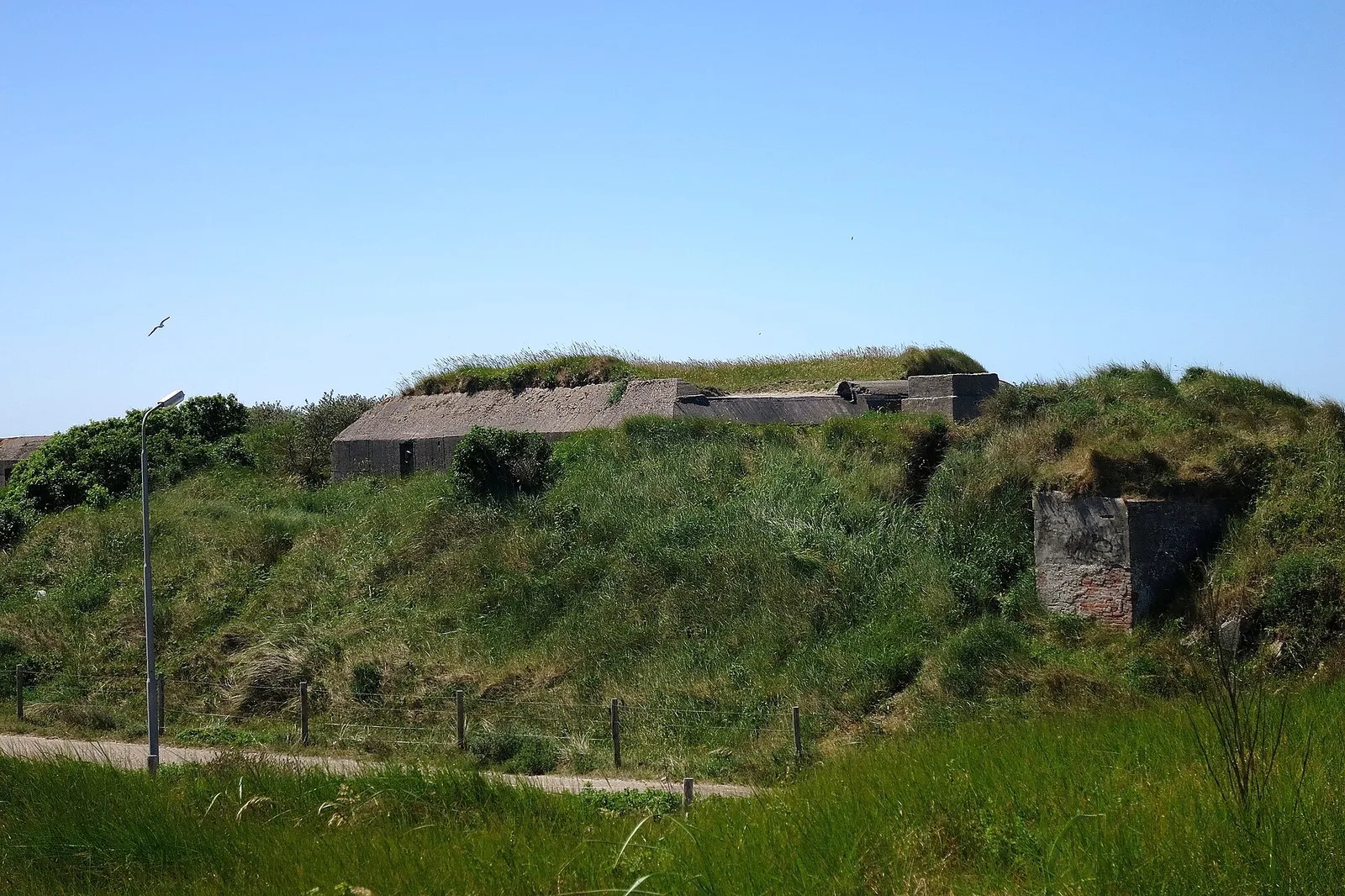
Urbex Amsterdam is a challenge in itself: the capital is so densely built and the land so expensive that vacant buildings here are demolished or redeveloped within a few years. The Citroën buildings are now offices, the NDSM wharf a cultural hotspot and the Hembrug site is turning into a residential district. The real abandoned places therefore lie just outside the city, in the dunes of the North Holland coast and on the edge of the polder, where the concrete is too heavy to remove. Our map counts thousands of geolocated spots across North Holland and the rest of the Netherlands.
In this guide we have selected 6 places that are genuinely abandoned and still standing in 2026, each one checked individually: four crumbling Atlantikwall bunkers in the dunes of IJmuiden and Wijk aan Zee, an emptied-out fort of the Defence Line of Amsterdam covered in wall art, and a greenhouse ruin on the edge of the Haarlemmermeer. No demolished icons sold off as living spots, no restored museum pretending to be a ruin. Under each entry a "Add to my map" button saves the GPS coordinates to your personal account, free and without a credit card.
The search terms urbex Amsterdam, abandoned places Amsterdam, urbex North Holland, lost places Amsterdam and abandoned bunkers Netherlands all point to the same reality: a military and industrial heritage that history has set aside, and that photographers, urban explorers and historians are now rediscovering. If you really want to explore this city, you have to head for the coast: the Festung IJmuiden and the dunes of Wijk aan Zee form the only lasting urbex landscape in the Amsterdam region.
Read our full guide to the top 10 abandoned places across the whole of the Netherlands →
Urbex Amsterdam for free: why Urbex Maps makes the difference
Most lists of "abandoned places in Amsterdam" promise free coordinates in the title, then send you off to a private Facebook group, a forum or a paywall. We do the opposite. Under each of the six places below you will find a real spot from our database, with a button that drops the GPS coordinates into your profile for free. No subscription, no credit card, no hidden conditions.
Behind that promise sits a verification model. A community of more than 40,000 urban explorers has been mapping abandoned places since 2021, and every set of coordinates is checked at least twice: once by the person who reports the spot, and once by a regional moderator who confirms the place still exists. The spots in this guide come from that catalogue; the rest, thousands of other Dutch places, sit behind themed packs that fund the moderation work.
A word of warning first, because almost everything in this guide is special. Urban exploration is not illegal in itself, but entering a closed-off site or private land without permission is trespassing, and becomes a punishable offence as soon as you cause damage or ignore signs and fences. Four of the six places are raw concrete bunkers in protected dune areas: watch out for collapse hazards, flooded chambers, sharp debris and steep dune slopes. We document these places to record their history; we never encourage breaking in. Bring a torch and sturdy shoes, and never enter a structure that looks unstable.
What is NOT on this list (and why)
Anyone who googles "abandoned places Amsterdam" quickly runs into names that stopped being real urbex spots a long time ago. Amsterdam redevelops at lightning speed, and after checking we have deliberately left those places out. The Hembrug site in Zaandam, once the region's most famous industrial ghost site, is now an active construction zone with more than 950 homes and a museum; the blast forest is permanently closed off. The Lichtfabriek in Haarlem has been an events venue since 2000, and the NDSM wharf has become a living cultural centre.
The same goes for the forts of the Defence Line of Amsterdam. Almost all of them have been restored or repurposed: Fort bij Aalsmeer houses the CRASH Air War Museum, Fort bij de Liebrug is a multi-business building, Forteiland IJmuiden is a guided-tour museum, and the famous Fort bij Spijkerboor is run as a museum by Natuurmonumenten. Large psychiatric complexes such as Duin en Bosch in Castricum and Sint Willibrordus in Heiloo have likewise been converted into housing and businesses. A place only earns its spot on this list if it is genuinely abandoned in 2026, still standing and not turned into a museum, a hotel or a building site. That is what sets us apart from the copy-pasted lists that have been recycling the same outdated names for years.
1. Batterij Heerenduin: the coastal battery in the dunes of IJmuiden
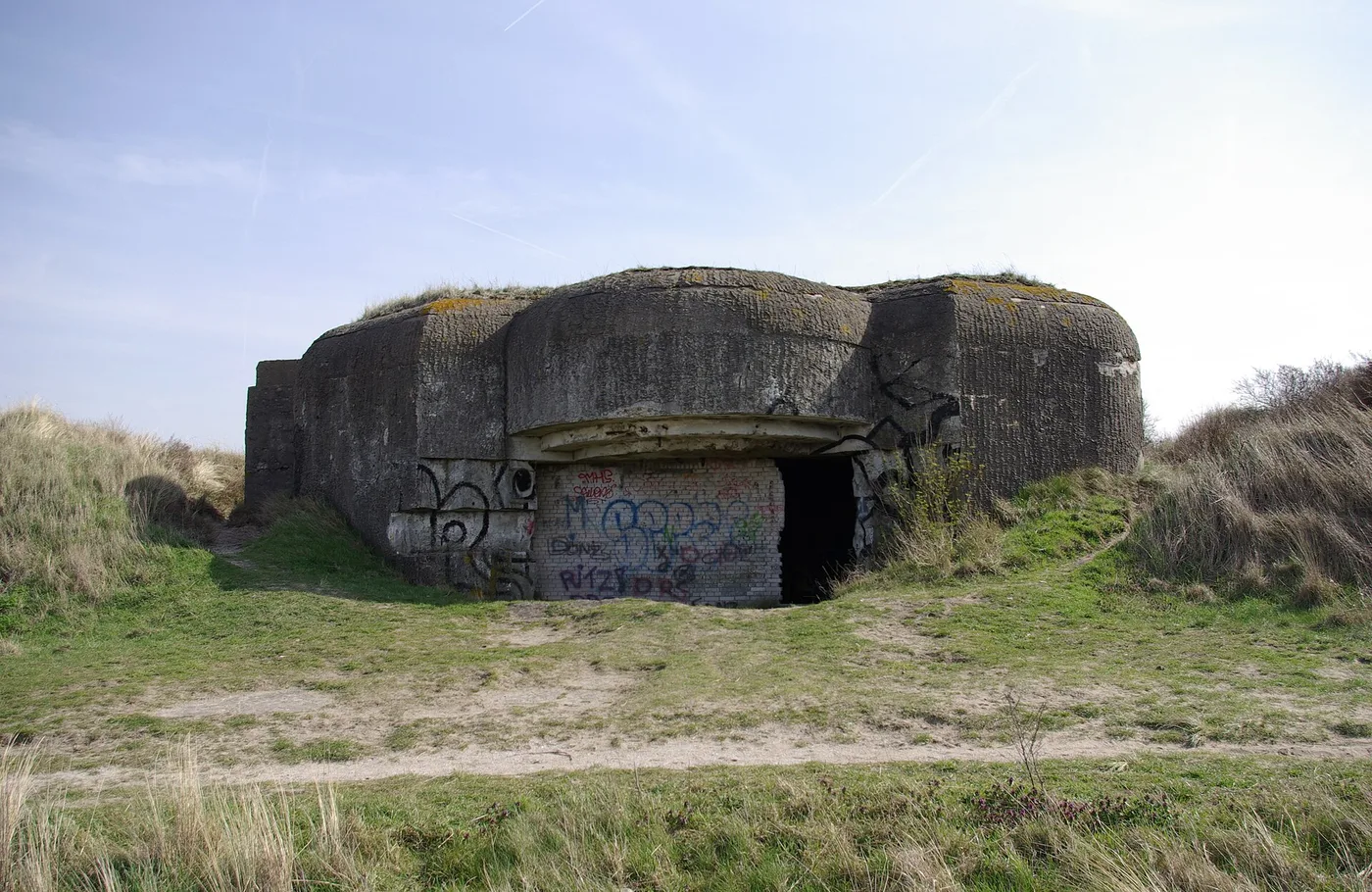
In the dunes south of the harbour mouth of IJmuiden lies Marine-Küsten-Batterie Heerenduin (Widerstandsnest 81), built by the German Kriegsmarine from 1942 as part of the Atlantikwall. The battery was meant to seal off access to the North Sea Canal and with it the port of Amsterdam. Its heart consisted of four M272 gun bunkers with 17 cm guns that fired more than 20 kilometres, plus a colossal M178 command bunker, one of only four in the entire Atlantikwall.
The battery lost its function after the war and was then left largely untouched. The heavy concrete casemates are now listed national monuments, but no one maintains them: they are smeared with graffiti, surrounded by sand and rubble, and on some walls original German wartime drawings still survive. Be careful not to wander into the Bunkermuseum IJmuiden, which occupies a corner of the old crew bunkers; the real crumbling gun bunkers are scattered across the open dune beside it. This is the most impressive freely accessible concrete colossus in the whole region. You will find more spots on our urbex map of North Holland.
2. Batterij Olmen: the anti-aircraft battery with wall art
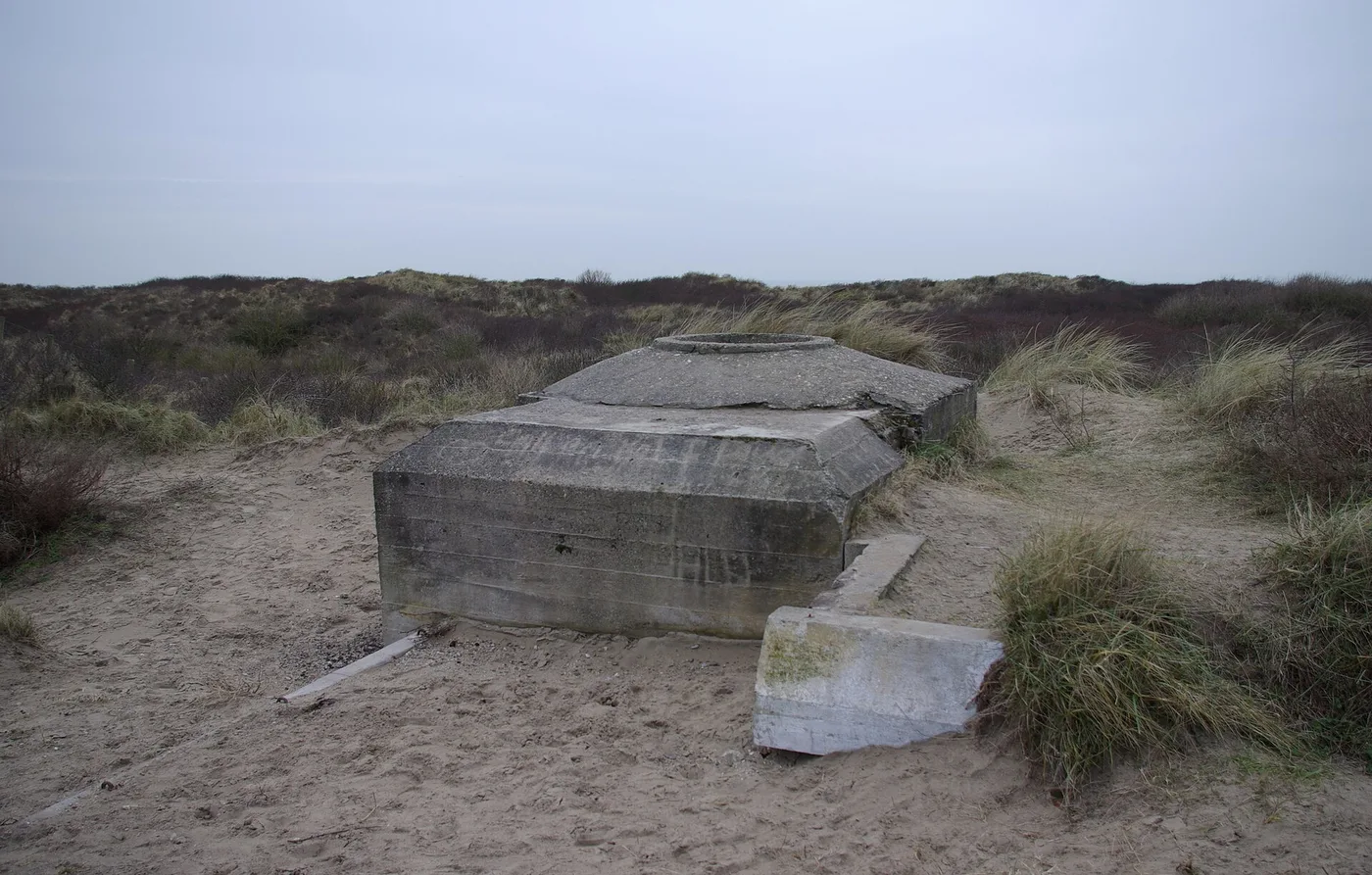
Right next to Heerenduin, hidden in the dune area "De Olmen", lies Marine-Flak-Batterie Olmen (Widerstandsnest 82), the naval anti-aircraft battery that the Kriegsmarine built in 1943 to defend the airspace above the port. The battery had seven heavy anti-aircraft guns: four modern 10.5 cm SK/C-32 guns in Regelbau bunkers of the FL243/FL249 type, and three in open emplacements. Behind them sat two ammunition bunkers (FL246), a fire-control bunker (FL244), crew quarters and even a skittle alley and a sports field.
Olmen is reasonably well preserved, freely accessible and unmistakably derelict: heavily tagged, full of litter, but with a remarkable number of original wall paintings from the occupation that make it a genuine photographic draw. Water stands under an M183 machine room; the poternes connect the bunkers underground. It is listed national monument 532119, but no one restores it, and that is exactly what gives it that raw urbex atmosphere. Where Heerenduin is about heavy coastal guns, Olmen is about anti-aircraft defence and painted concrete. Explore the whole region on our urbex map of North Holland.
3. Bunkerlinie Velsen-Noord: the concrete above the harbour
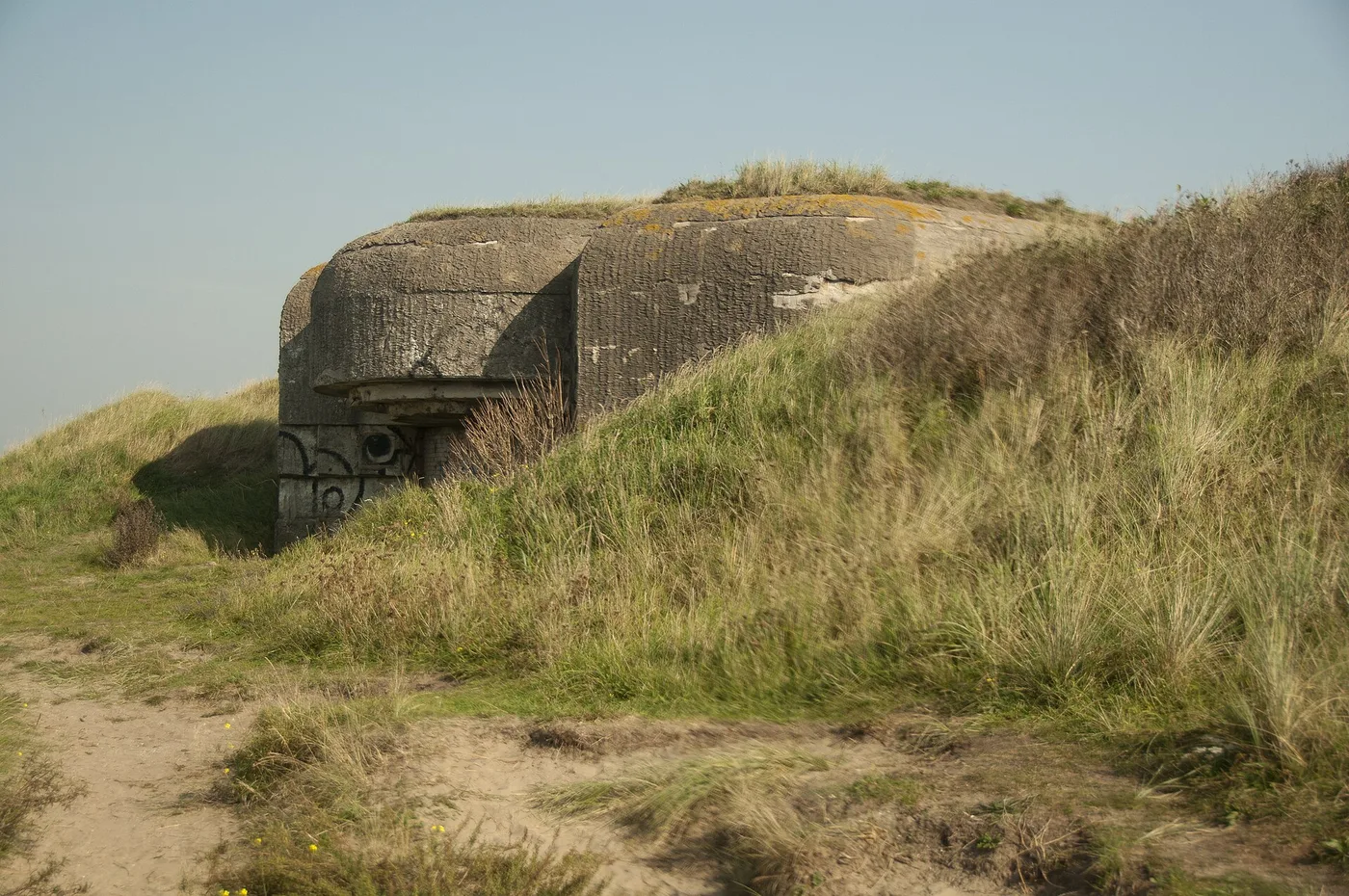
North of the North Sea Canal, in the dunes above Velsen-Noord, runs the lesser-known northern flank of the Festung IJmuiden. From 1942 the Germans built a chain of gun and support bunkers, Tobruks and crew quarters here to be able to fire on the northern harbour pier and the access to Amsterdam. Unlike the southern batteries, these bunkers lie scattered and half-hidden in the dune, sunk into the sand.
The beauty of this line is that it was never tidied up: blocks of concrete jut crookedly out of the slope, embrasures stand open, and the rubble of 1944 still lies where it fell. It is a rawer, lonelier alternative to the busier southern side, and that is exactly why bunker photographers love it. Stay on the paths where you can, because the protected dune flora is fragile, and watch out for flooded cellars. For the full map, see our urbex map of North Holland.
4. Bunkers in the dunes of Wijk aan Zee
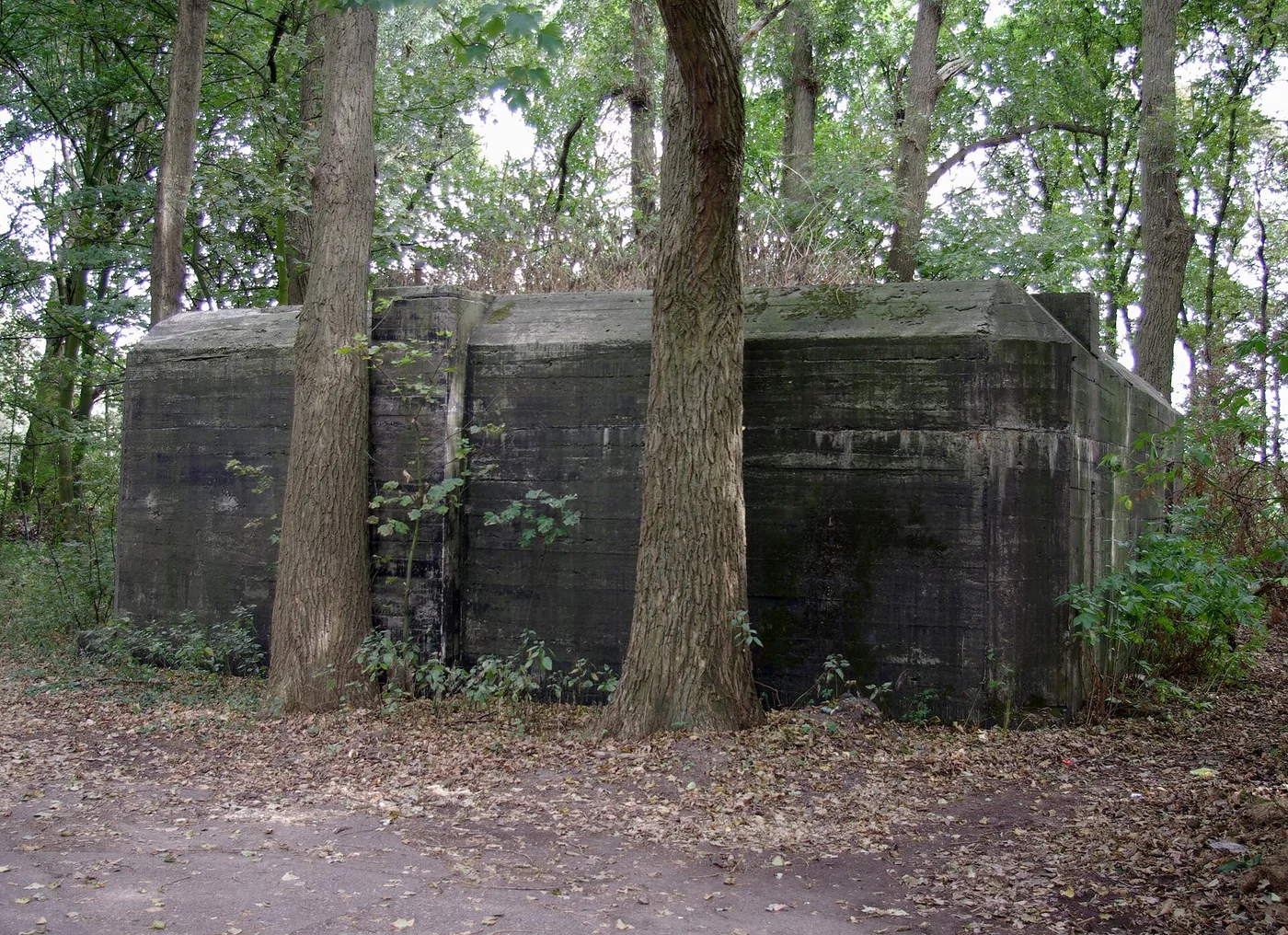
A little north of IJmuiden, in the Vuurbaakduin and the Heemskerkerduin between Wijk aan Zee and the Noordpier, dozens of bunkers lie scattered across the open dune. The well-known batteries on the edge of the village have since been repurposed, but this dune area is an exception: there are no strict access rules, you are free to roam because foot traffic actually benefits the rare "seaside village" flora. It is not a single famous bunker, but a whole bunker landscape slowly disappearing under the sand.
Some bunkers are half-buried, others you can still walk into; none of them are maintained. That gives a different feeling from the clustered gun batteries: here you wander from one concrete relic to the next, with the sea at your back and the IJmuiden blast furnaces in the distance. It may well be the most atmospheric stretch of the entire Festung IJmuiden, precisely because it is so diffuse and quiet. Avoid the restored museum bunkers and the guided-tour radar bunker, and seek out the wild dune. Explore further via our urbex map of North Holland.
5. Fort benoorden Spaarndam: the empty fort full of wall art
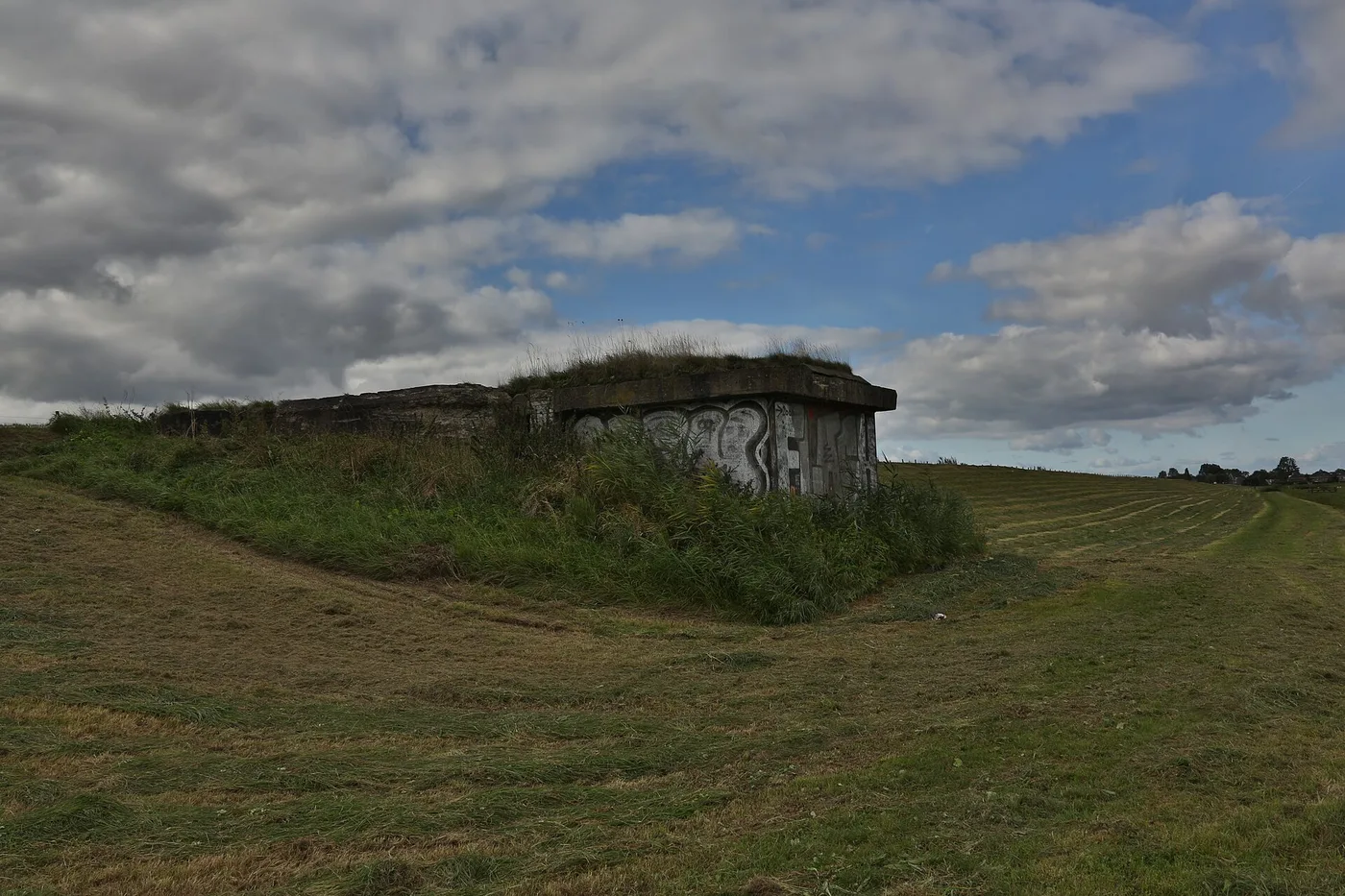
On the western edge of the region, near Velserbroek, lies Fort benoorden Spaarndam, part of the western front of the Defence Line of Amsterdam (a UNESCO World Heritage Site). The earthworks were completed around 1887, the bombproof buildings in 1901. The fort lost its military role, served as an ammunition depot until around 1950 and was then left empty, exactly in the state in which it was abandoned.
What makes this fort unique was discovered by volunteers around the year 2000: beneath the whitewash lay more than 230 wall paintings and drawings, made by Dutch and German soldiers during both world wars, with portraits, cartoons and texts. The roof was repaired in the 2010s to protect the interior, but otherwise the fort has not been restored: it sits overgrown, ringed by a wild moat. Note: there is a redevelopment plan for a small museum and a little hotel, with works starting at the earliest in late 2026, so this window is closing. Free roaming is not allowed; access is via booked guided tours. View the whole province on our urbex map of North Holland.
6. The abandoned greenhouses of Rijsenhout
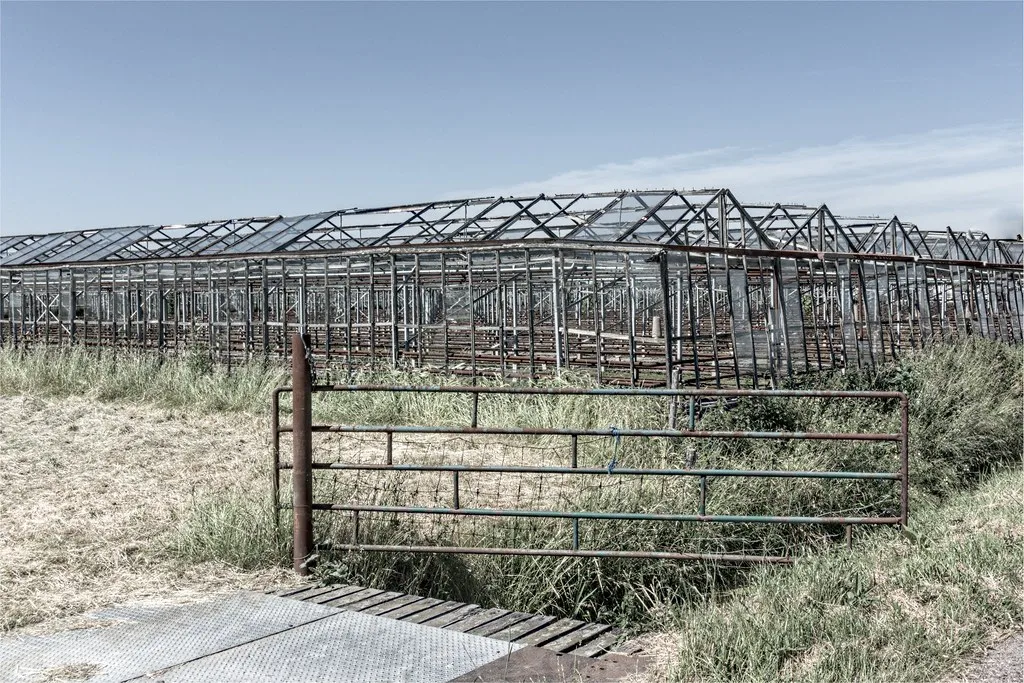
For anyone tired of concrete, a completely different kind of decay lies on the southwestern edge of the region. Rijsenhout, a horticultural village in the Haarlemmermeer right next to Schiphol and Aalsmeer, was once a village of small glasshouse growers. When horticulture concentrated into large complexes and the noise zoning around Schiphol made many plots unsellable, small growers went bankrupt or moved away. What remains are greenhouse ruins: empty glass-and-steel skeletons, collapsed roofs and overgrown plots, scattered among the houses.
It is a melancholic, almost post-apocalyptic landscape: rows of bare frames stripped of their glass, rusting fences and grass pushing up through the concrete floors. The restructuring of the area is slow, so in 2026 there is still plenty standing empty. It is not a single famous building but a whole derelict greenhouse belt, making it the most un-military, un-Amsterdam place in this guide. Respect that it is private land: look and photograph from the public road, enter nothing without permission. More across the wider area on our urbex map of North Holland.
FAQ - Urbex Amsterdam
Are there still any genuinely abandoned places in Amsterdam itself?
Hardly any. Amsterdam and its surroundings are so densely built and the land so expensive that vacant buildings are demolished or redeveloped within a few years. The Citroën buildings, the NDSM wharf and the Hembrug site have all been repurposed. The real abandoned places therefore lie in the dunes of the North Holland coast and on the edge of the polder, like the six places in this guide. You can explore the rest of the province on our urbex map of North Holland.
Is urbex legal in the Netherlands?
Looking and photographing from the public road or a freely accessible dune area is allowed. Entering a closed-off site or private land without permission is trespassing, and it becomes a punishable offence as soon as you cause damage or ignore fences and signs. We never encourage breaking in: you explore from permitted places, ask permission where you can, and force nothing.
Are these abandoned places dangerous?
Yes. The Atlantikwall bunkers are raw concrete with sharp debris, open shafts and sometimes flooded cellars, in protected dune areas with steep slopes. Fort benoorden Spaarndam is dark and old. Preferably don't go alone, let someone know where you are, bring a torch and sturdy shoes, and never enter a structure that looks unstable.
Where can I find more free urbex spots near me?
Every place in this guide has an "Add to my map" button that drops the GPS coordinates onto your personal map for free, without a credit card. To search by area, use the map links under each entry, or start from the urbex map of the Netherlands and zoom in on your region.
What is the best season for urbex in North Holland?
For the dune bunkers, spring and autumn are ideal: clear light, less vegetation and no breeding-season restrictions. In winter the trees are bare and overgrown places like Fort benoorden Spaarndam stand out better. Always check access beforehand, because several places on this list lie in protected Natura 2000 areas or are heading for redevelopment.
How do I report a spot to Urbex Maps myself?
Our community of more than 40,000 urban explorers constantly adds and checks places. Once you have created your free account, you can submit a place with coordinates and photos; a regional moderator then verifies that the place exists and is still standing before it goes online. That double check is what makes our coordinates reliable.
Conclusion: a city too rich to fall into ruin
Few major cities preserve as few ruins as Amsterdam, and that in itself tells a story: the capital is simply too rich and too densely built to let anything decay for long. Whatever falls vacant is demolished or repurposed. The region's lasting urbex landscape is therefore the concrete that was too heavy to remove, the Atlantikwall in the dunes of IJmuiden and Wijk aan Zee, complemented by an empty fort full of soldiers' drawings and the greenhouse ruins of the polder. From the M272 casemates of Heerenduin to the glass skeletons of Rijsenhout, these six places tell the city from its margins.
Explore them with respect: almost everything lies in protected dune areas, is private or is dangerous, and the whole point of urbex is to witness and document, never to damage or break in. To discover what North Holland and the rest of the country have to offer, browse the urbex map of the Netherlands and add your first free coordinates to your personal map.