Abandoned places in Glasgow tell the story of a city that built ships, treated its sick on the edge of the moor and dreamed in glass and iron, then watched whole industries fall away. Between the silent dry docks of Govan on the Clyde, the rusting Victorian glasshouse of Springburn, and the brutalist ruin of St Peter's Seminary just down the Clyde coast, Glasgow and its fringes are one of the richest urbex grounds in Scotland. Our map lists thousands of geolocated spots across Glasgow City and the wider Scotland.
For this guide we picked 4 places that are genuinely abandoned and still standing in 2026, each verified one by one: Scotland's most famous modern ruin, a Category A dry-dock complex frozen since the late 1980s, a roofless Victorian winter garden, and a derelict asylum block on the eastern edge of the city. No demolished landmarks passed off as live spots, no restored attraction dressed up as a ruin. Under each entry, an "Add to my map" button saves the GPS coordinates to your personal account, for free and with no credit card.
The searches abandoned places Glasgow, abandoned buildings Glasgow, urbex Glasgow, urban exploring Glasgow and derelict buildings Glasgow all point to the same reality: a maritime, industrial and Victorian heritage that history set aside through shipyard closures, the end of the old asylum system and changing tastes, and that photographers, urbexers and historians are rediscovering today. This guide gives you each site's dated history, its legal status and its real dangers, before handing you its coordinates.
Free urbex Glasgow: why Urbex Maps changes the game
Before the spots, a word on what makes this guide different. Most pages about abandoned places in Glasgow put "free" in the title, then send you off to a closed Facebook group, a forum or a paywall. Here the promise is concrete: under each place, an "Add to my map" button drops the GPS coordinates into your personal account, with no subscription and no credit card.
Behind the map is a community of more than 40,000 explorers, active since 2021. Every set of coordinates is checked at least twice - by the contributor who submits it, then by a regional moderator who confirms the spot still exists and has not been walled up or demolished. The places offered in this article are part of that catalogue; the rest of the thousands of Scottish and British spots are unlocked through packs that fund the moderation and field verification.
One reminder before you set off: urban exploration is not illegal in itself, but entering private property without permission is trespass, and in Scotland it can become a criminal matter if you cause damage or ignore signs and fences. We document these places for their history; we never encourage breaking in. Helmet, head torch, sturdy boots and caution on the floors: several of the spots below carry real collapse and asbestos risks, and the Govan docks sit right on the deep water of the Clyde.
1. St Peter's Seminary - the brutalist ruin near Glasgow (Cardross)
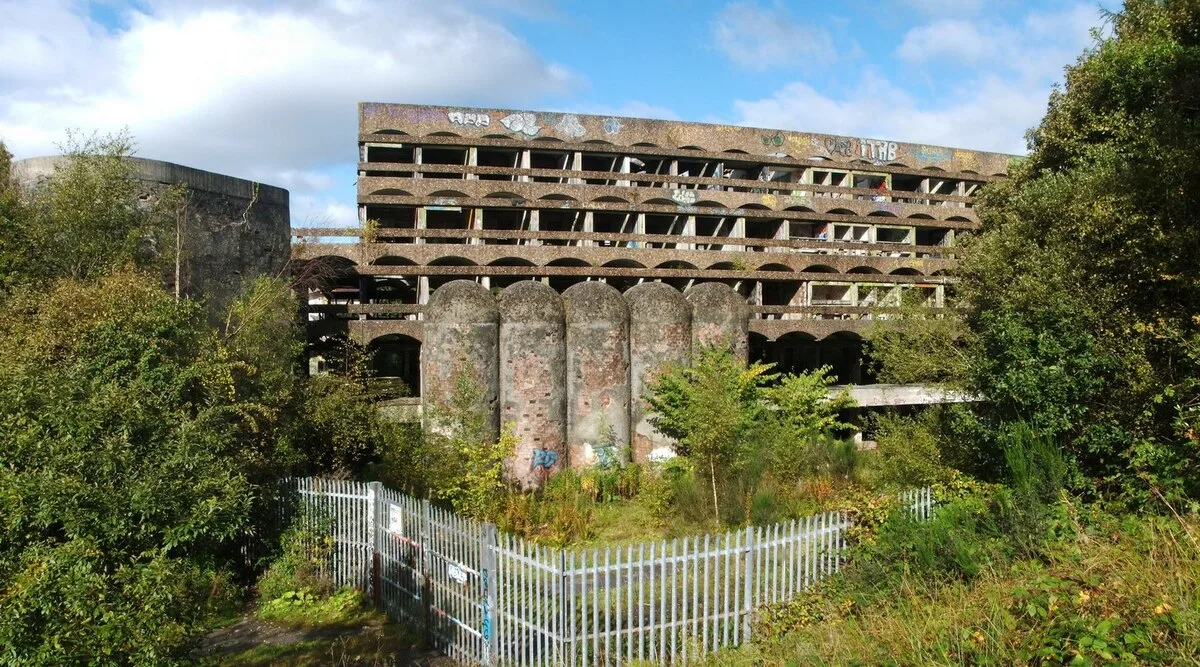
About 30 kilometres down the Clyde from central Glasgow, in Kilmahew woods just north of Cardross in Argyll and Bute, the St Peter's Seminary is the most famous modern ruin in Scotland and an easy day trip from the city. Built between 1961 and 1966 by the architects Isi Metzstein and Andy MacMillan, of the Glasgow firm Gillespie, Kidd and Coia, in a Le Corbusier-influenced concrete style, it was a Roman Catholic college for training priests. It worked for barely fourteen years.
Falling vocations closed the seminary in 1980; it served briefly as a drug-rehabilitation centre, then was fully abandoned by 1987. Despite being Category A listed and named by Docomomo a modern building of world significance, it decayed through water, fire and vandalism into the cathedral-like concrete shell explorers know today. In July 2020 the site passed to the Kilmahew Education Trust, which as of 2025 is running managed conservation - new fencing, padlocks and film-location income, including a major Bollywood shoot - rather than a full rebuild.
The estate is private and officially closed to visitors, with security observation in place; access to the ruin is not authorised. Real risks here: a roofless structure, crumbling concrete, open levels and standing water. Look at it for what it is - a brutalist cathedral slowly returning to the wood - and you understand why it remains the headline abandoned place of the Glasgow area.
2. Govan Graving Docks - the silent dry docks of the Clyde (Govan)
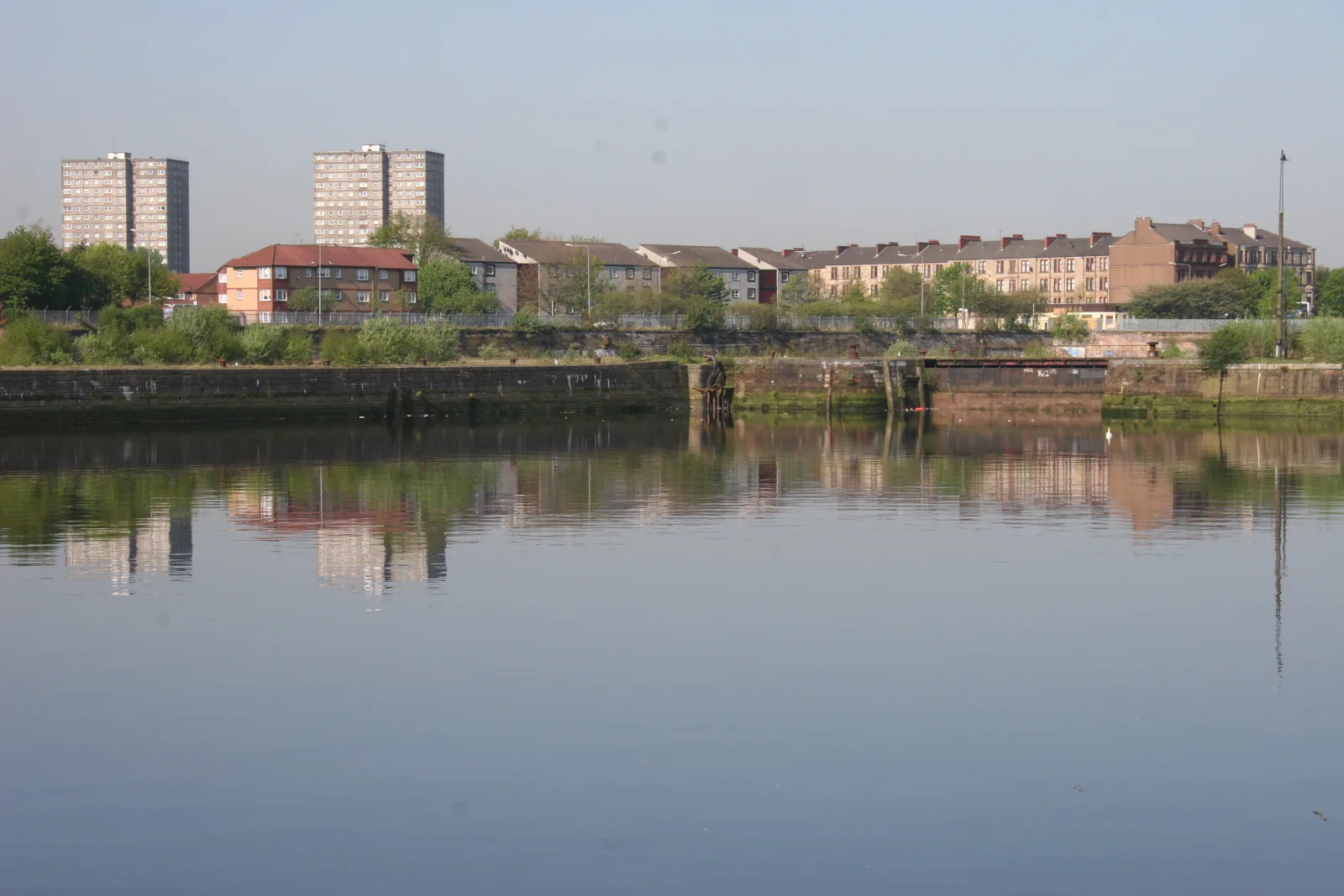
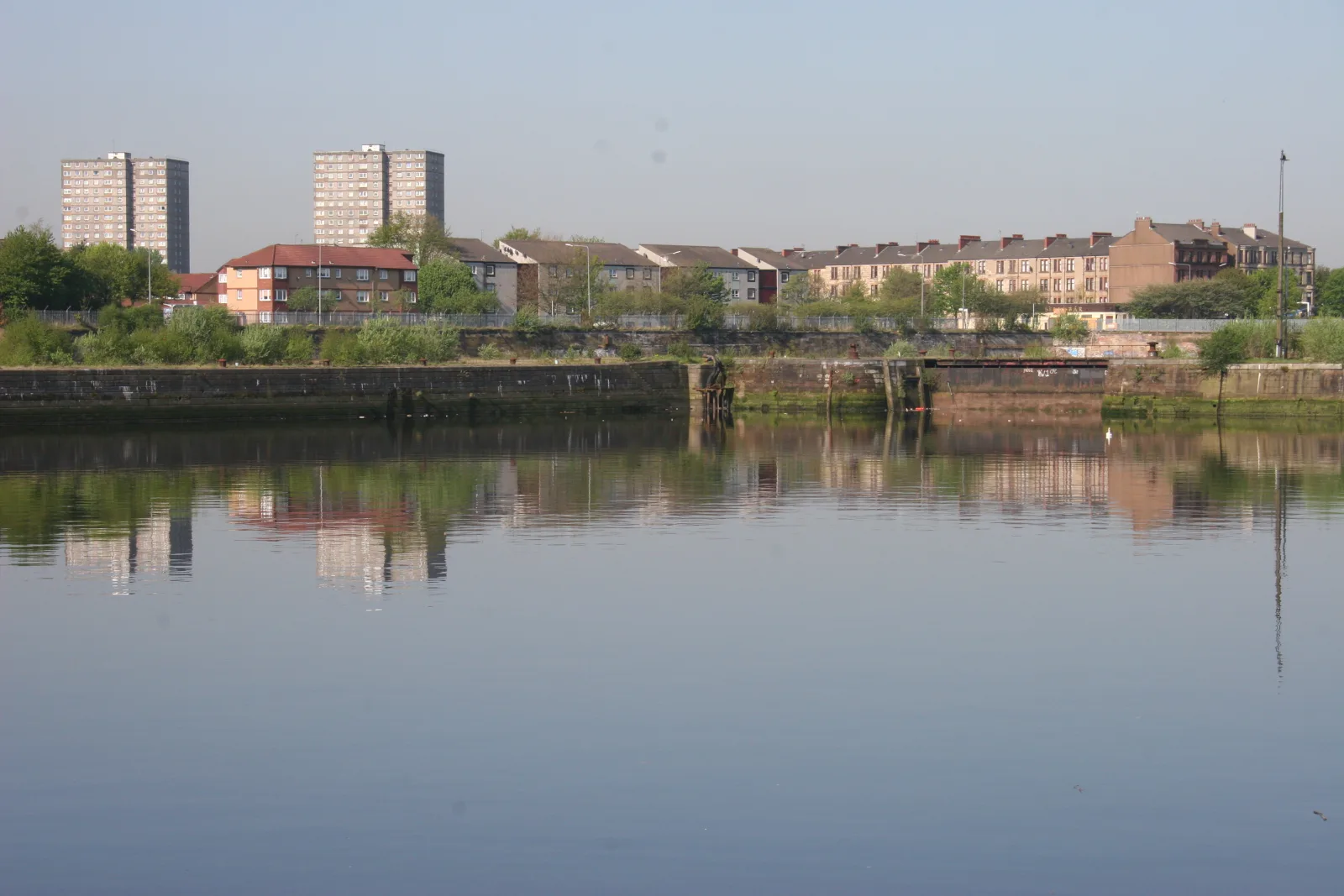
On the south bank of the Clyde in Govan, the Govan Graving Docks are the great abandoned monument of Glasgow's shipbuilding age. Built by the Clyde Navigation Trust between 1869 and 1898, the three stone dry docks could take the largest ships of their day and, with their pump house and caissons, formed one of the busiest ship-repair sites on the river. Historic Environment Scotland calls the complex "without parallel in Scotland", and it is Category A listed.
The docks closed in 1988 and have lain derelict for about forty years, slowly filling with water and graffiti while their future was fought over. That fight is now ending: in March 2025 Glasgow City Council approved a regeneration scheme of 304 new homes, a riverside walkway and public square, with plans to bring dock one back into use as a working dry dock for historic ships. The window to see the docks as a raw ruin is closing.
This is private land slated for development, fenced in places and genuinely dangerous: the docks are deep, the edges are unguarded and the water is cold. It is a spot to read from the quaysides and the riverbank rather than to climb into. Govan Graving Docks remain the single most evocative industrial ruin in the city - Glasgow's shipbuilding history written in stone and rust.
3. Springburn Winter Gardens - the rusting glasshouse (Springburn Park)
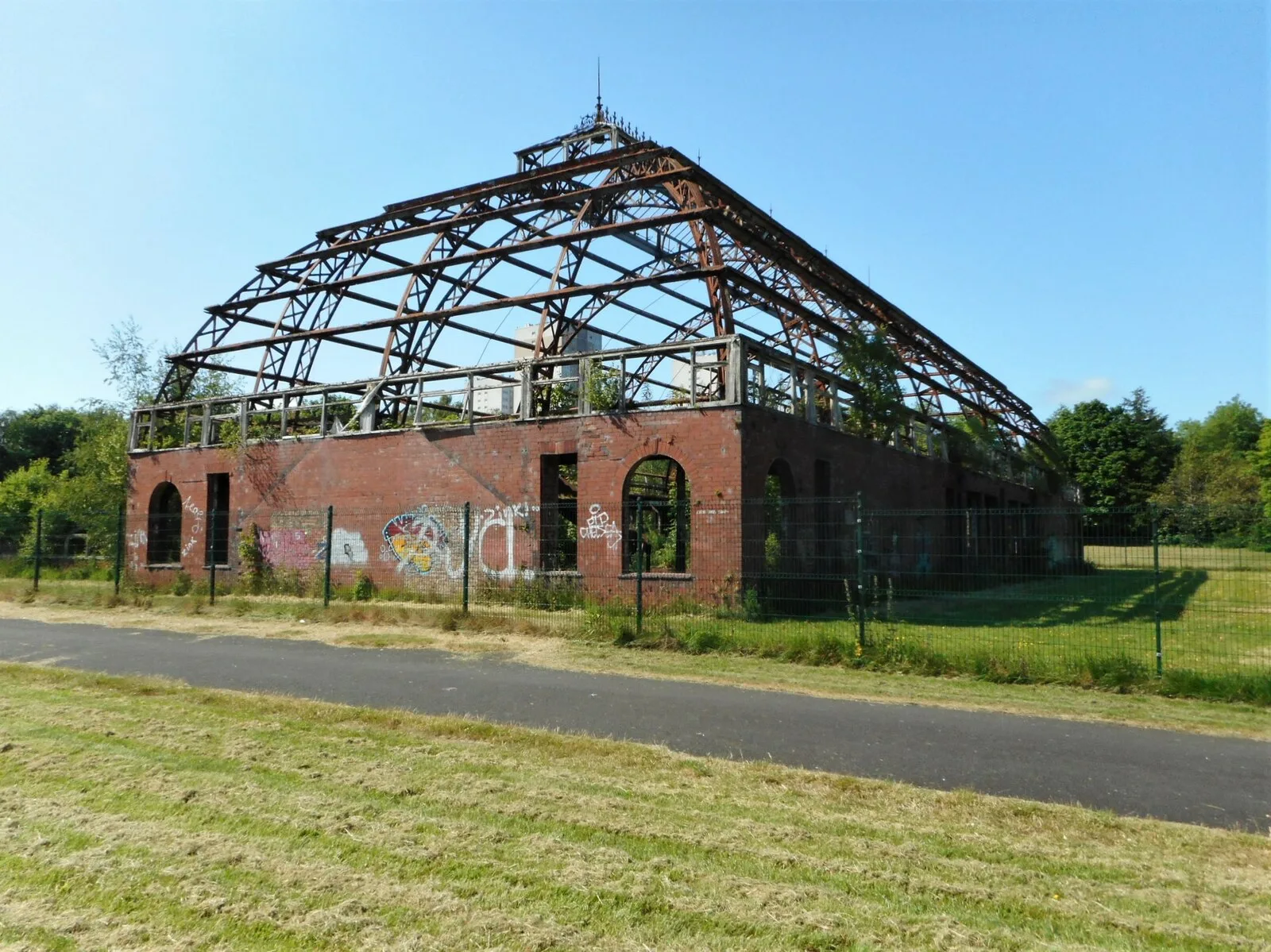
In Springburn Park, in the north of the city, a vast skeleton of rusted iron and broken glass marks the Springburn Winter Gardens. Built in 1900, this was once the largest glasshouse in Scotland, the showpiece of a park laid out for a district then booming on the back of its railway works. It is Category A listed and a striking piece of Victorian Glasgow.
Storm damage in 1983 took the glasshouse out of use, and it has stood as a roofless ruin ever since, its great curved frame open to the sky. It is one of the most photographed derelict structures in the city. There is good news for 2026: in April 2026 the restoration secured a 1.13 million pound grant for a "living ruin" phase, with the Springburn Winter Gardens Trust set to take a 25-year lease, stabilise the structure and reopen it to the community. For now, the frame still stands open and empty.
The shell sits in a public park but is fenced for safety, with falling glass and unstable ironwork; it is best viewed and photographed from outside the hoardings. The Winter Gardens are the gentlest spot on this list and the easiest to reach, a five-minute walk through the park - a Victorian dream slowly being brought back from ruin.
4. Gartloch Hospital - the asylum on the moor's edge (Gartloch)
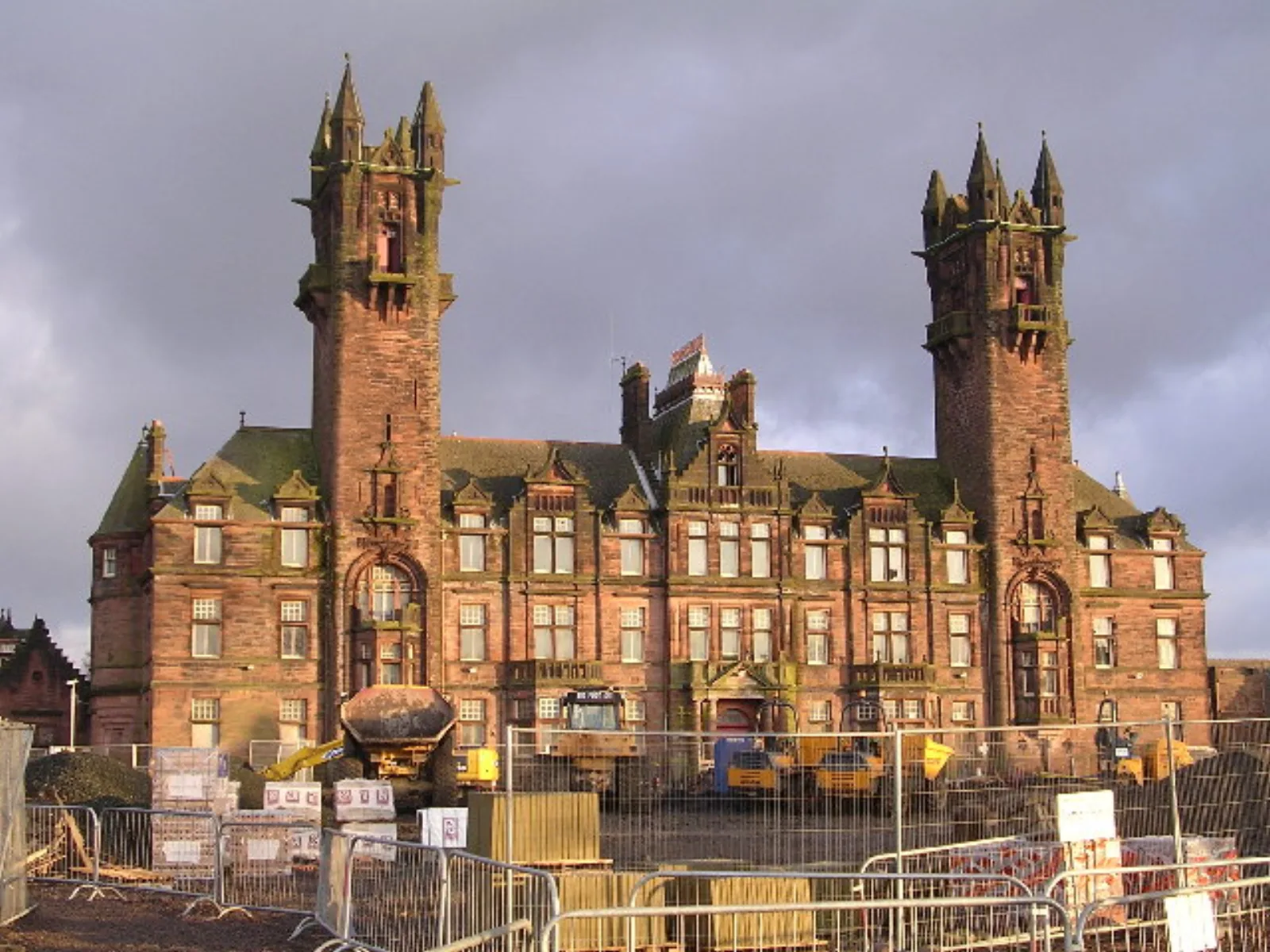
On the far eastern edge of the city, near Gartcosh in Glasgow City, Gartloch Hospital opened in 1896 as the Glasgow District Lunatic Asylum, a vast Scottish-Baronial complex built out on the moor by Bishop Loch, complete with its own railway siding and a landmark twin-towered water tower. It later treated tuberculosis and served as a general hospital, and it played David Tennant's hospital radio station in the 1994 BBC drama "Takin' Over the Asylum".
The hospital closed in 1996. Much of the estate was redeveloped into the housing of Gartloch Village from the mid-2000s, and some wards were demolished, but the Category A listed administration building still stands derelict on the Buildings at Risk Register, along with the old mortuary, an empty centrepiece among the new homes. It is the clearest survivor of Glasgow's great asylum era, where so many similar hospitals have been flattened.
The derelict block is private property, fenced and watched, set among occupied housing, so discretion and respect matter here more than anywhere. Typical asylum risks apply: rotten floors, falling masonry and likely asbestos. Gartloch closes this list with the long shadow of the Victorian asylum, a building too grand to knock down and too far gone to easily save. Find more spots on our Glasgow urbex map.
FAQ - Abandoned places in Glasgow
Is urbex legal in Glasgow?
Looking at and photographing buildings from public ground is legal. Entering private property without permission is trespass, and in Scotland it can become a criminal matter if you cause damage or ignore fences and warning signs. Most spots here are private, listed or council-owned: we document them for their history, without ever encouraging break-ins. For more, read our guide on abandoned places in the UK.
Where can I find other abandoned places around Glasgow?
Our map lists thousands of spots across Glasgow City and the rest of Scotland. You can add the four places in this article to your personal map for free via the button under each entry, then unlock the rest through our regional packs.
Are these abandoned places dangerous?
Yes. St Peter's Seminary is a roofless concrete shell, Gartloch has rotten floors and likely asbestos, the Springburn glasshouse drops glass and ironwork, and the Govan dry docks are deep and sit on the cold Clyde. Several are best seen only from outside the fences. Go with someone, carry a head torch, and never enter a structure that looks unsafe. Our urbex gear guide covers the essentials.
Which is the best abandoned place to start with in Glasgow?
Springburn Winter Gardens is the easiest and safest: it sits in a public park, a short walk from the road, and can be admired and photographed from outside the safety fence with no real difficulty. Govan Graving Docks give the most spectacular industrial views, but demand far more caution near the open water.
Conclusion: Glasgow, a city written in ruins
From the dry docks of Govan to the asylum towers of Gartloch, the abandoned places of Glasgow tell the story of a city of shipbuilders, railway workers and Victorian dreamers - and of the closures, the storms and the changing world that left these landmarks behind. They are not stage sets: they are open-air history books, fragile, to be explored with respect and without damage, several of them now slowly being rescued. Add them to your map, and carry on with our guide to the top 10 abandoned places in the UK or the full Scotland urbex map.