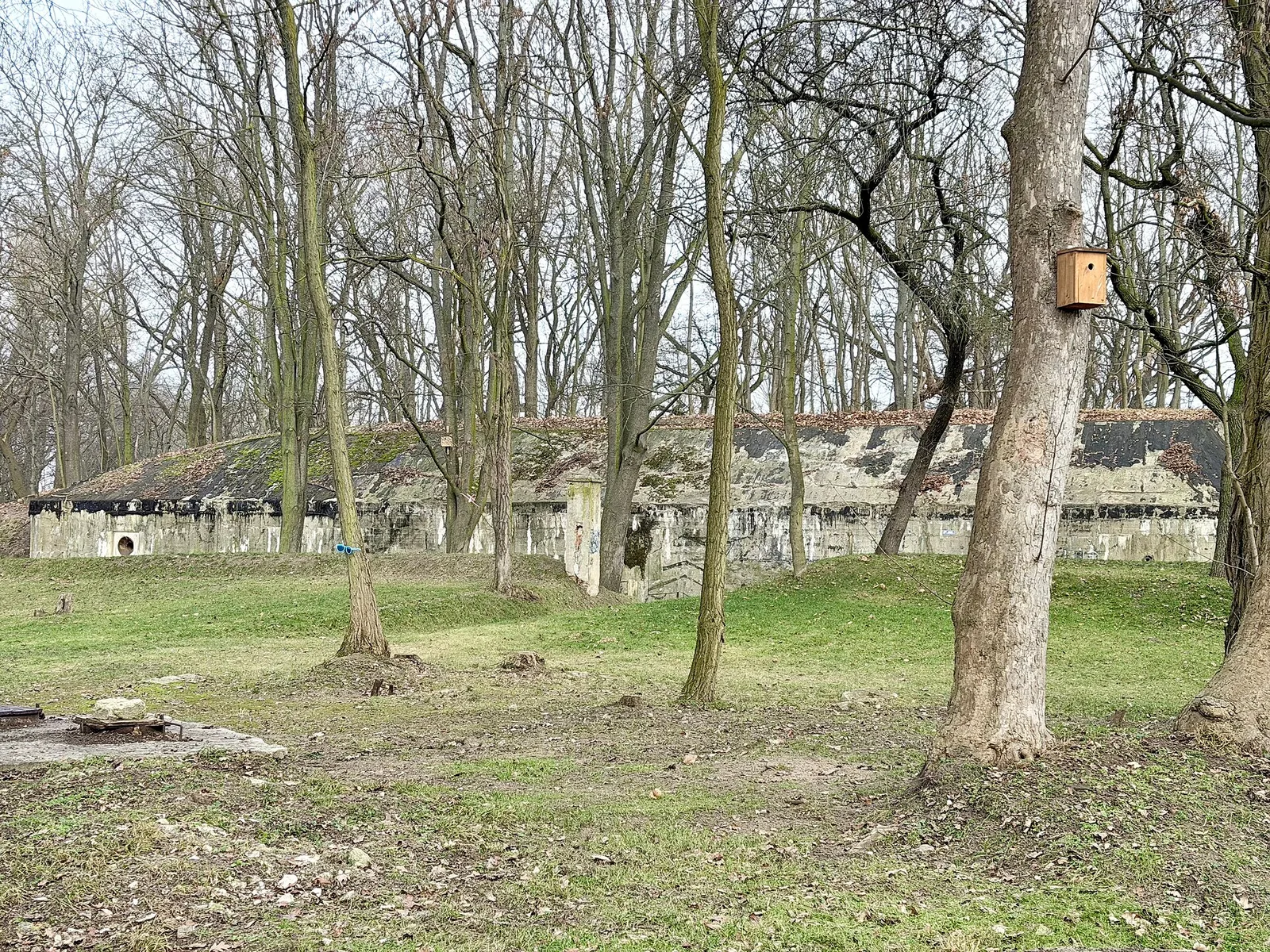
Wrocław is a city built on forts, factories and shelters, many of which still stand abandoned. In this guide we picked the three strongest: the overgrown Lisia Gora Infantry Fort from the ring of Fortress Wroclaw, the monumental former paper mill in Zakrzow and a concrete air-raid shelter from the days of Festung Breslau. Our map covers more than a thousand abandoned places in Lower Silesia, and these three sit right inside Wrocław.
We checked each of them individually: all are genuinely abandoned and still standing in 2026, unlike many of Wrocław's "classics" that have been converted into lofts or museums. Under each entry, the "Add to my map" button saves the GPS coordinates to your account, for free and with no payment card. See every abandoned place in Wrocław on the interactive urbex map →
Urbex Wrocław for free: why Urbex Maps changes the game
Most lists of "abandoned places in Wrocław" end by sending you to a closed group where you only get the coordinates if you know the right people. With us, under every spot there's an "Add to my map" button that saves the GPS point to your account, for free and with no card. Our community counts more than 40,000 explorers and has been running since 2021, and every coordinate is checked at least twice before it lands on the map. Free spots are free; paid packs fund moderation.
Why some places didn't make this list
Let's be honest: many of Wrocław's urbex "classics" are no longer abandoned. The bunker at Plac Strzegomski has housed the Contemporary Museum since 2011, the Dabie depot has become the "Czasoprzestrzen" cultural space, the former railway hospital on Aleja Wisniowa was rebuilt into the Sudea housing estate, and the Lower Silesian brewery is in the middle of a development project. So we kept only the sites that, in 2026, really do stand abandoned.
1. Lisia Gora Infantry Fort: an overgrown fort of Fortress Wroclaw
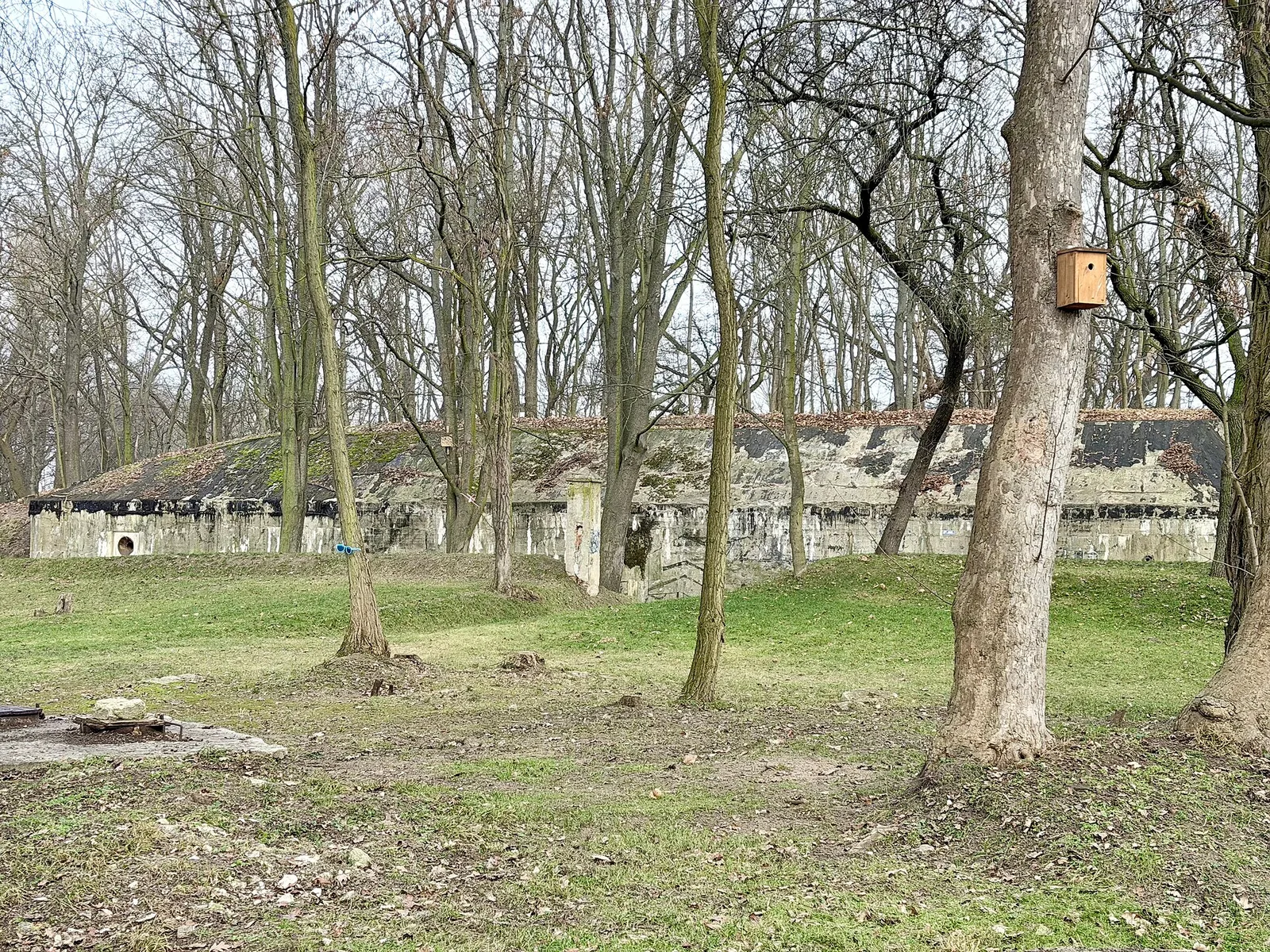
In Soltysowice, on the edge of the forest, hides Infantry Fort No. 4 "Lisia Gora", part of the ring of fortifications of Fortress Wroclaw. The decision to build it was taken in 1889, the main shelter went up in 1890-1891, and in 1910 a guardhouse and a concrete line of trenches were added. The fort was reinforced once more during the defence of Festung Breslau in 1945.
It's the smallest of Wrocław's surviving infantry forts, structurally well preserved (the walls didn't suffer during the war), though the surroundings are turning into a wild dump. The side entrances are open, the main shelter is closed; it's a popular and photogenic target for explorers. More places on our Wrocław urbex map.
2. Former paper mill in Zakrzow: a brick giant by the river
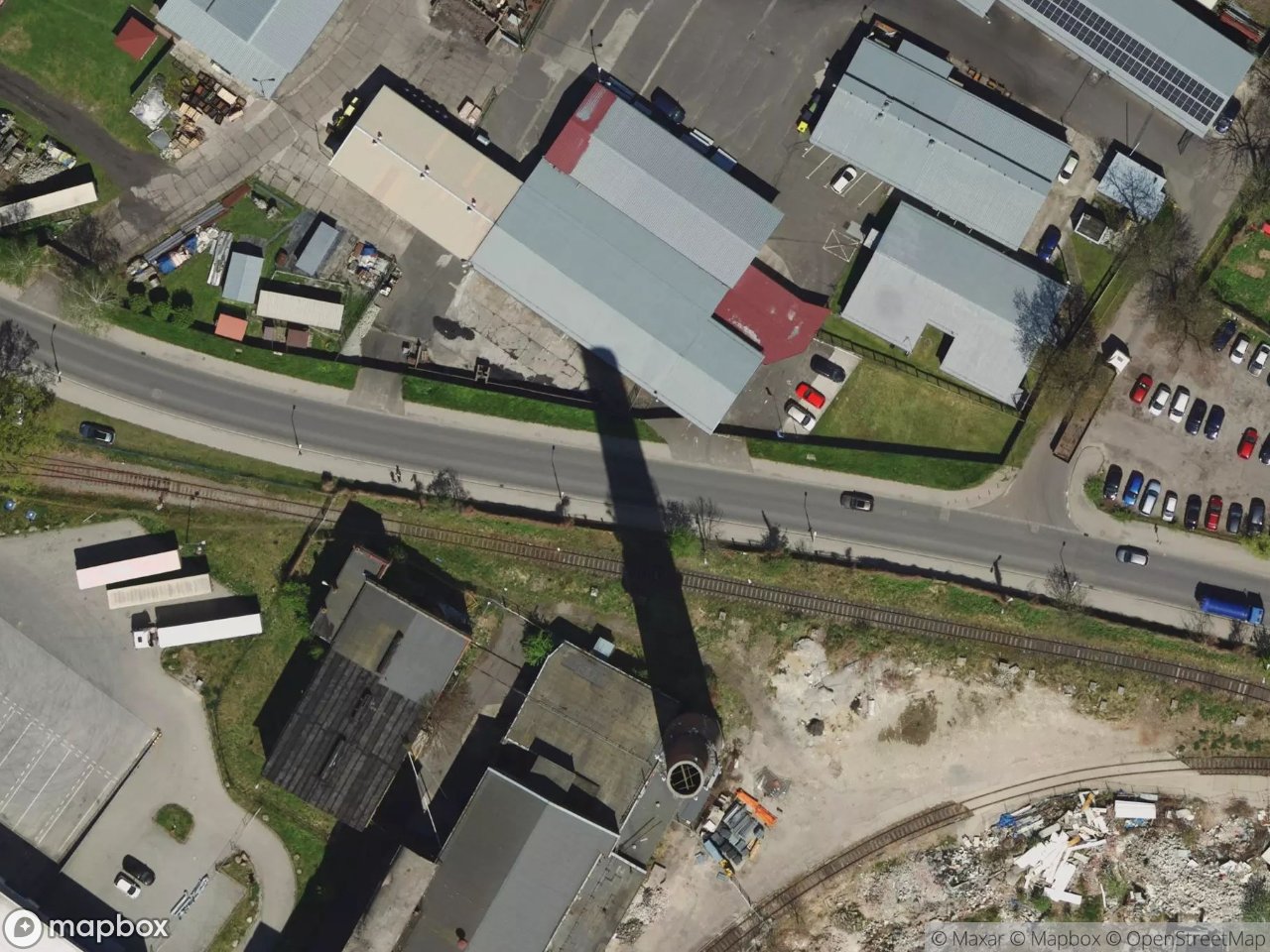
In Zakrzow, on Przedwiosnie street, by the small Dobra river, stands the monumental former paper mill (Papierfabrik Sacrau). A medieval water mill was turned into a paper mill here at the start of the 19th century; after 1858, when the site belonged to the von Korn family, it became the largest paper mill in Lower Silesia (120 workers, specialising in wallpaper). It was registered as "Papierfabrik Sacrau GmbH" in 1893.
After the 1929 crisis and the war (the Soviets carted off the machines in 1945), production moved to Chojnow, and the halls were later used for metalworking. Today it's an abandoned ruin, partly at risk of collapse, but protected: a court refused permission to demolish one of the buildings because "it's a heritage monument". It's the most iconic abandoned industrial site in Wrocław. More places on our Wrocław urbex map.
3. Air-raid shelter in Olbin: concrete from the Festung Breslau era

In Olbin, around Olbinska and Slowianska streets, stands a cylindrical air-raid shelter, one of four surviving in Wrocław. It was built in 1943 as part of the Nazi shelter-building programme, to a design by the architect Richard Konwiarz (the creator of Wrocław's Olympic Stadium). The roof is about 2 metres thick, the walls about 1.1 metres.
During the siege of Festung Breslau in 1945, the shelter served as a fortress hospital. Today it stands abandoned and unused, with a partly bricked-up entrance - it's more of a site to look at from the outside than to go into. Unlike the two other Wrocław cylinders, repurposed for other functions, this one has stayed untouched. More places on our Wrocław urbex map.
FAQ - Urbex Wrocław
How many abandoned places are there in Wrocław?
On our Wrocław urbex map and across all of Lower Silesia (more than a thousand spots) you'll find abandoned forts, shelters, factories and railway sites.
Is urbex in Wrocław legal?
Exploration itself isn't a crime, but entering private or fenced-off land can be an offence. Forts and shelters usually belong to the city or the State Treasury. Respect no-entry signs, don't break in and don't vandalise.
Are these places dangerous?
Yes. The fort and the shelter are pitch dark, with wells and flooded corridors, and the paper mill risks collapsing ceilings. Never explore alone, carry a torch and a charged phone.
Which Wrocław forts are abandoned?
The ring of infantry forts of Fortress Wroclaw includes several sites in varying condition. Fort "Lisia Gora" in Soltysowice is abandoned and accessible, as is Fort I.St.-7 on Sulowska. Always check the current status of a given fort.
Where can I find more abandoned places in Wrocław?
On our free urbex map and on the Wrocław map you'll find hundreds of spots. Under each free point, click "Add to my map" to save the GPS coordinates to your account.
When is the best time for urbex in Wrocław?
Early spring and late autumn, when the lack of leaves reveals the forts hidden in the forest. The interiors of the shelters and the factory need a good torch at any time of year.
In summary: a city under concrete
Beneath modern Wrocław lies a layer of Prussian forts, Nazi shelters and former German factories that war and time left at the mercy of nature. These three places are only the start. Explore responsibly: respect no-entry signs, don't step onto ceilings at risk of collapse and leave no trace. To discover more, head to our Wrocław urbex map and save the coordinates for free on your personal map.