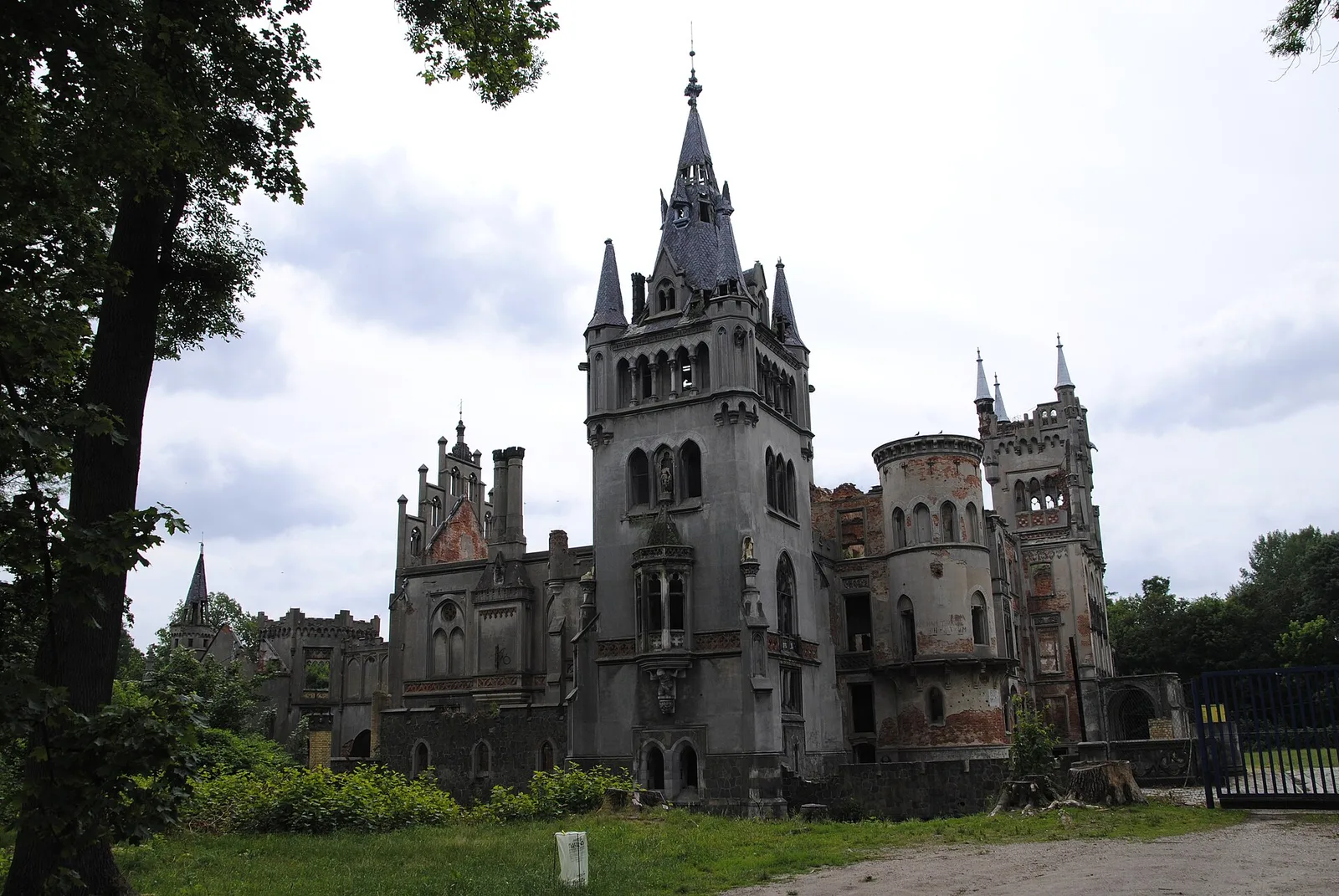
Poland is one of the richest urbex grounds in Europe: the roofless neo-Gothic Kopice Palace, which lights up the photos of explorers from all over the continent, the Jewish Zofiowka sanatorium near Warsaw, the "industrial cathedral" Szombierki power plant in Bytom, and the real ghost town of Klomino, once wiped off the maps. Our map covers more than 5,500 geolocated abandoned places in Poland alone, spread across every voivodeship, and it is from that pool that we picked these ten.
In this guide we picked 10 abandoned places in Poland to explore in 2026: four palaces and castles, a sanatorium, a modernist power plant, Poland's oldest cement works, cotton mills, and two ghost towns. We checked each one individually: we kept only those that are genuinely abandoned in 2026, still standing and not turned into a museum, a hotel, or apartments. Under every entry, the "Add to my map" button saves the GPS coordinates to your account, for free and with no card required.
The terms urbex Poland, abandoned places, lost places, urban exploration, and abandoned places near me all describe the same passion: finding, photographing, and documenting buildings that nobody occupies anymore and that nature is slowly reclaiming. Whether you are after an abandoned palace in Lower Silesia, an abandoned factory in Lodz, an abandoned sanatorium in Mazovia, or a ghost town in Pomerania, this ranking covers all of Poland, from the Opole region to West Pomerania.
Discover thousands of abandoned places across Poland on the interactive urbex map →
Urbex in Poland for free: why Urbex Maps changes the game
Most sites about abandoned places in Poland end the same way: a list of "the most beautiful ruins", a vague little map, and a link to a closed Facebook group or forum where you only get the coordinates "if you know the right people". We do the opposite. Under each of the ten places you will find an "Add to my map" button that saves the exact GPS point to your account, for free and without entering a card. You can have it on your phone the same evening, in your personal space.
Behind that promise sits a concrete verification model. Our community counts more than 40,000 explorers and has been running since 2021; every coordinate is checked at least twice, first by the person who submits it, then by a moderator who knows the region. Free spots are free; paid packs fund the moderation and let us keep the database quality high. We ranked the ten places below by visual power and historical weight: we open with the most famous ruin in the Opole region and close with two ghost towns. With each entry you will find a link to the regional map with the number of spots nearby.
Why some famous "abandoned places" did not make this list
An honest ranking is also a list of who is missing. Borne Sulinowo, a former secret Soviet town wiped off the maps, is no longer abandoned: since 1993 it has been alive again with over 5,000 inhabitants, which is why real urbex moved next door, to Klomino. The Miedzyrzecz Fortified Region, the underground galleries of Project Riese in the Owl Mountains, and the Wolf's Lair at Gierloz are now ticketed, guided tourist routes (and the MRU tunnels are a bat reserve, closed in winter), so they are not "free exploration". The sanatorium in Sokolowsko, the cradle of tuberculosis treatment, has been rebuilt after a 2005 fire and operates as a cultural center. We also skipped Pstraze near Boleslawiec: dismantled since 2016 and absorbed into an active military training ground, with unexploded ordnance and a no-entry order, it is too dangerous to recommend.
1. Kopice Palace: the neo-Gothic gem that burned down
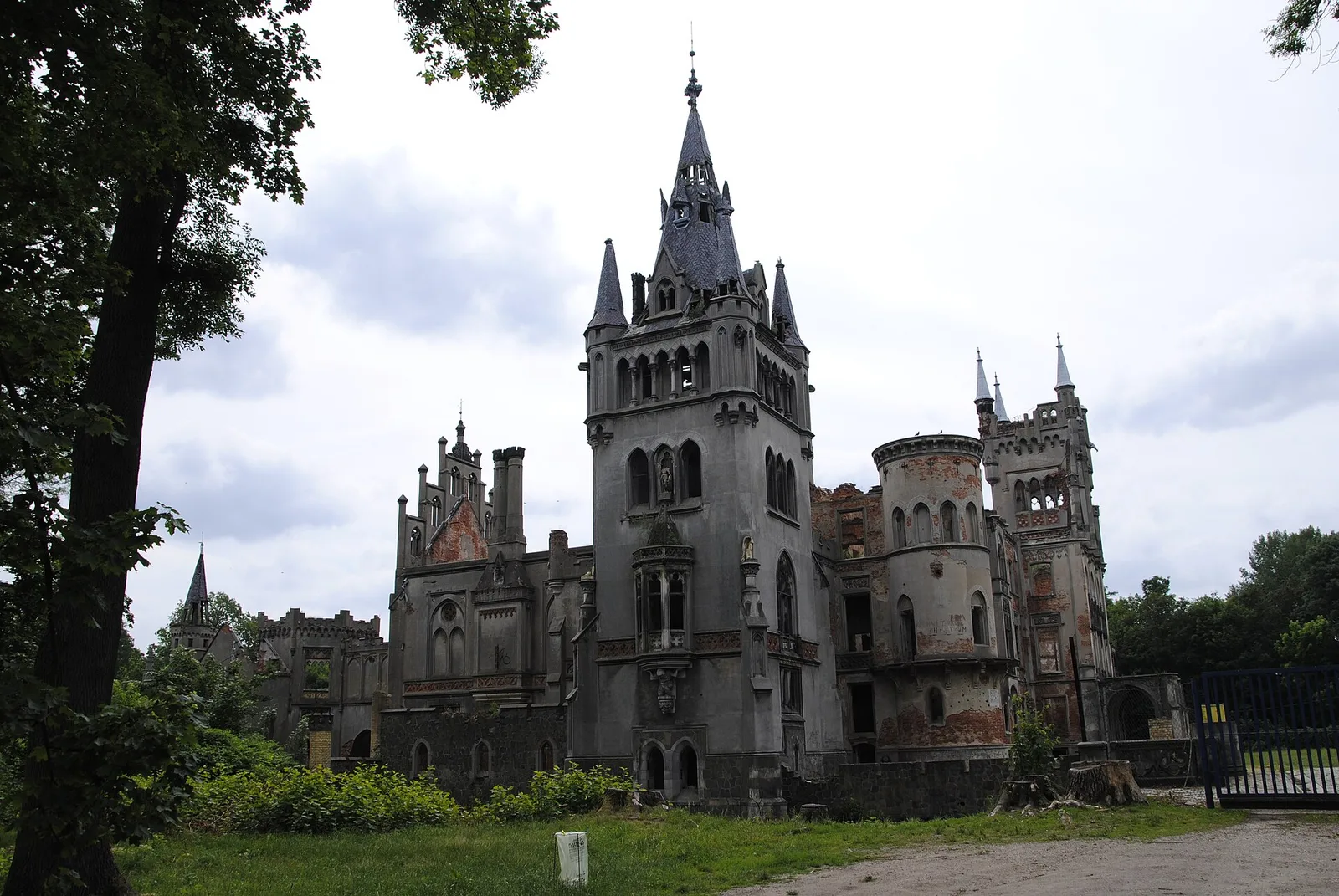
In Kopice near Grodkow, in the Opole voivodeship, stands the most famous ruin in the Opole region: Kopice Palace (German Schloss Koppitz). A knight's seat already existed here in 1360, and a Classicist palace was built in 1783. In 1859 the estate was bought by Hans Ulrich von Schaffgotsch and Joanna Gryzik, the "Silesian Cinderella", heiress to the fortune of Karol Godula, and in 1864 the architect Carl Ludecke rebuilt the residence in the neo-Gothic spirit, adding a soaring tower and a terrace over the pond.
The Schaffgotsch family ruled Kopice until February 1945. On the evening of 7 October 1956 the palace was gutted by a deliberately set fire that destroyed the roof and the floors; over the following decades the ruin was plundered. Things changed on 28 January 2022, when a private investor, Joachim Wiesiollek, bought the site and began securing the walls; in 2024 the palace received a 500,000 zloty grant from the Ministry of Culture, in 2025 it regained the ceiling of the Knights' Hall, and from spring 2025 it can be visited as part of the organized "Kopice Palace Meetings". So the wild exploration is over, but this is exactly where the legend of Polish urbex was born. You will find more spots on our urbex map of the Opole region.
2. Zofiowka Sanatorium: an abandoned hospital near Warsaw
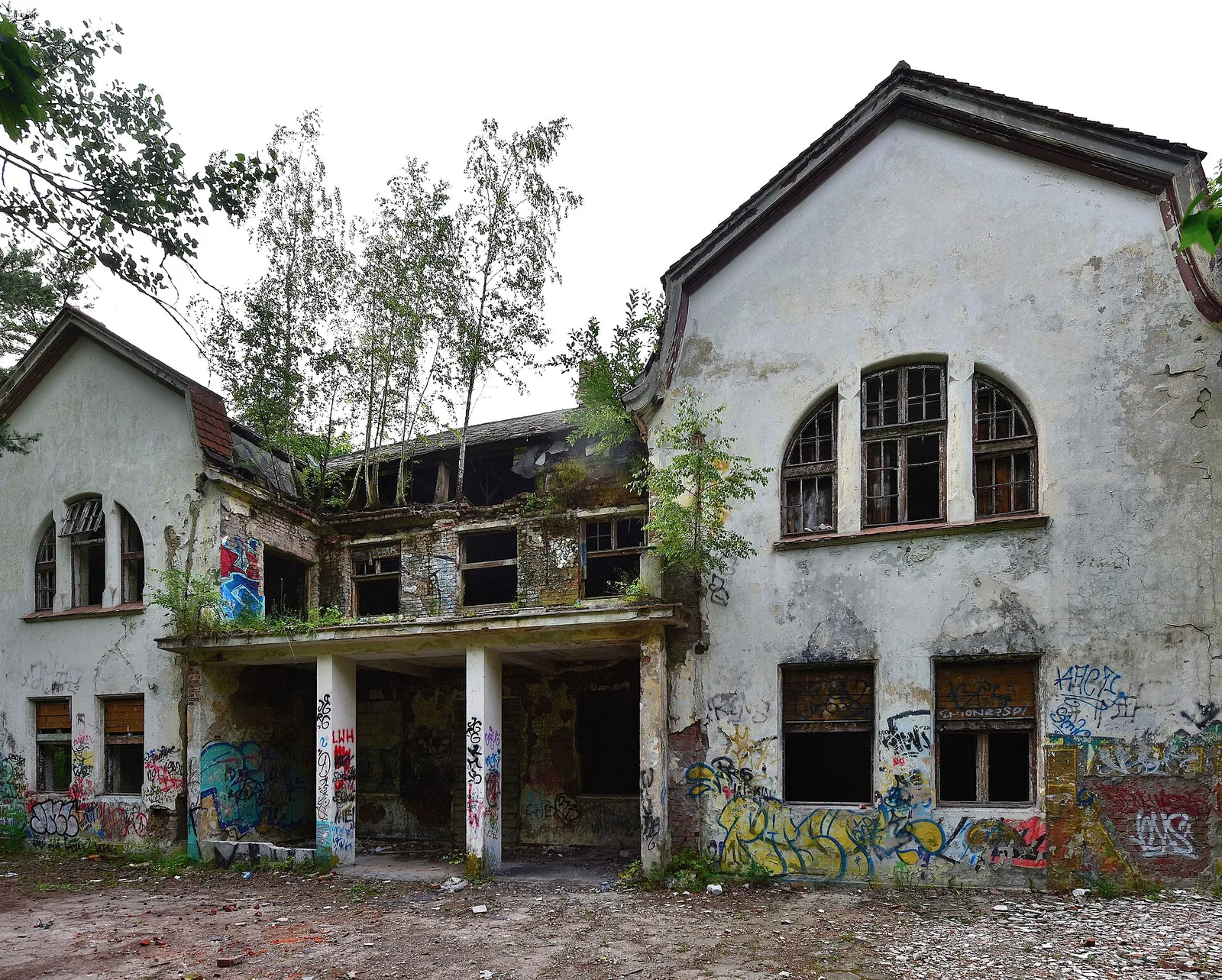
In Otwock, in the pine forests southeast of Warsaw, stands Zofiowka, the former Institution for Nervously and Mentally Ill Jews. The society for the care of poor patients was founded in 1906 by the neurologist Samuel Goldflam, and the construction was made possible by a donation from the philanthropist Zofia Endelman, whose name the center bears. The first pavilion opened in 1908; in the 1930s it was one of the most modern psychiatric institutions in Europe, with nearly 275 beds.
Zofiowka's history was marked by the Holocaust: on 19 August 1942 Germans and Trawniki guards murdered between 100 and 140 patients on the spot, and the rest were deported to Treblinka. After the war the center still operated as a neuropsychiatric and addiction treatment ward until the mid-1990s, when it was finally closed. Since then the building has been decaying: empty windows, peeling plaster, pines growing into the roof. Entry is officially forbidden for safety reasons, and the fragmented ownership of the plot blocks any renovation; it is one of the most photographed abandoned sites in Mazovia.
3. Szombierki Power Plant: an industrial cathedral in Bytom
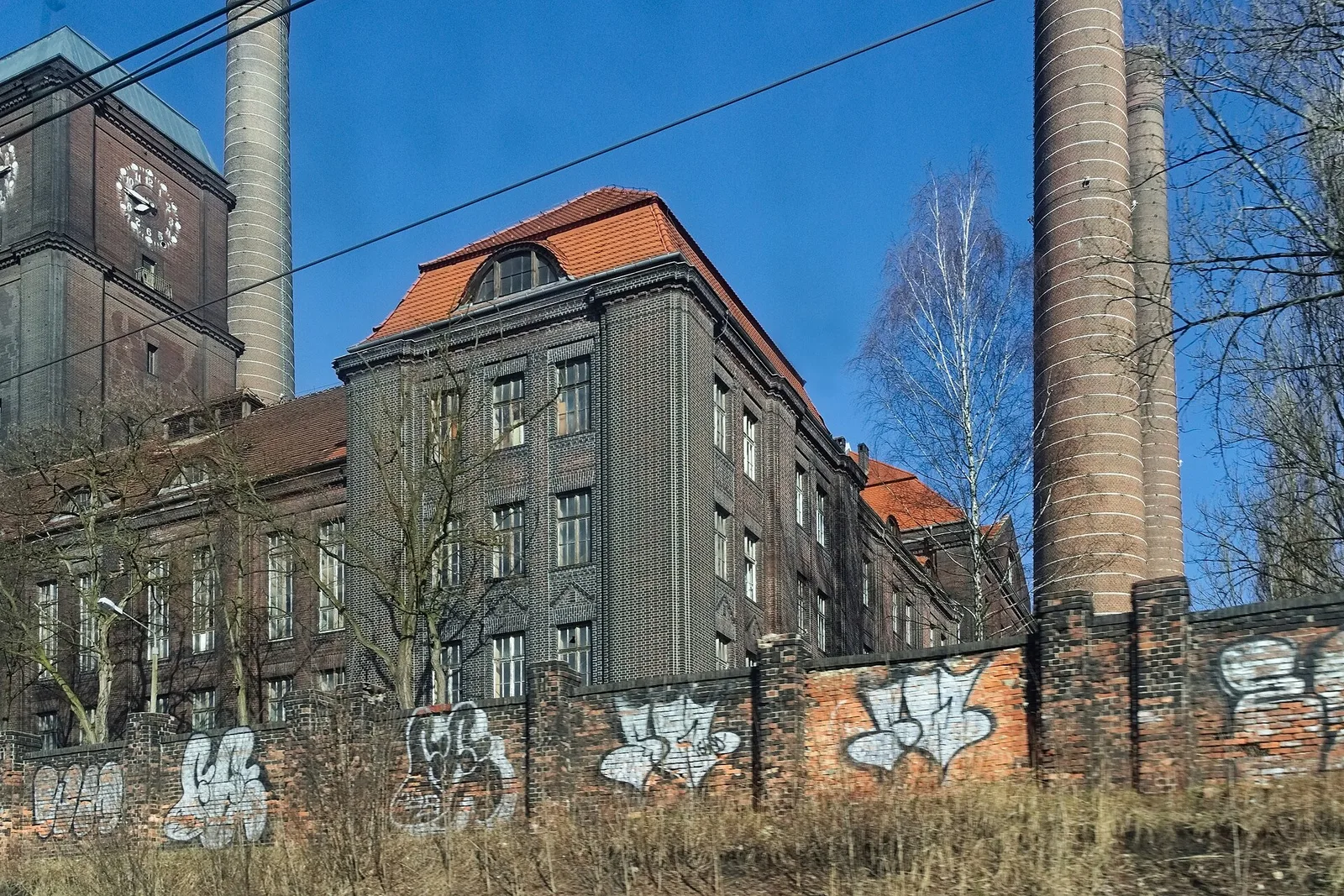
In the Szombierki district of Bytom stands one of the most beautiful industrial monuments in Silesia: the Szombierki power plant. Commissioned on 29 November 1920, it was designed by the German architects Georg and Emil Zillmann, the creators of Upper Silesia's company housing estates. Between 1939 and 1944, with an output of around 100 MW, it was one of the largest power plants in Europe, and its machine hall with brick arches is still sometimes called the "industrial cathedral".
After years of running at reduced capacity, the plant ended production, and its characteristic clock tower became a symbol of the Bytom skyline. The building is listed in the register of monuments and made it onto the Europa Nostra "7 Most Endangered" list, but it remains privately owned and closed; the owner opens it only occasionally, for organized photo sessions and events (for example during Industriada). This is a place to admire from the outside and during official openings, not for a wild climb. More sites on our urbex map of Bytom.
4. Laka Prudnicka Castle: a wild ruin by the river
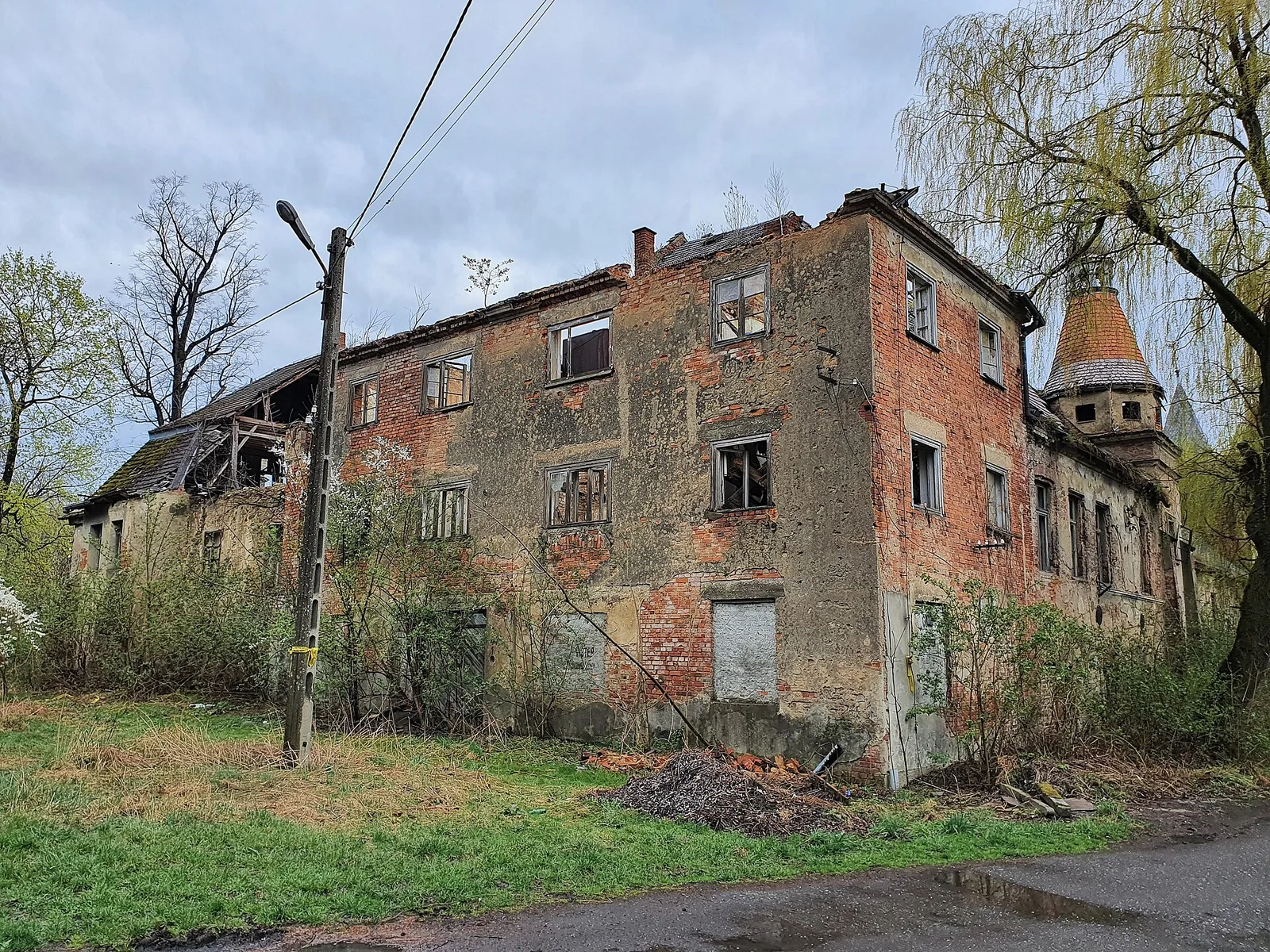
In Laka Prudnicka, in the Prudnik municipality of the Opole region, on the Prudnik river stands a picturesque ruin known to explorers as the "Castle of the Hanged" (German Schloss Wiese). The first castle was built here in the 14th century, and between 1525 and 1530 it was expanded in the Renaissance style. For more than two hundred years, from 1592 to 1825, it belonged to the Tschentschau-Mettich family, who gave it its three-winged shape, and between 1875 and 1883 the whole castle received its neo-Gothic, romantic look with the characteristic turret.
The last owner, Hermann von Choltitz, left the castle in March 1945; after the war it housed a state horse stud, and then the building started falling into ruin. In 2006 it was bought at auction by Przemyslaw Krokowski, who lives in the USA and has carried out no work for nearly twenty years. The roof has collapsed, the interiors were plundered, and the hollowed-out neo-Gothic tower looms over the river. It is one of the few sites on this list that you can freely walk up to, although going inside is dangerous. More places on our urbex map of the Prudnik district.
5. Bozkow Palace: residence of the von Magnis family
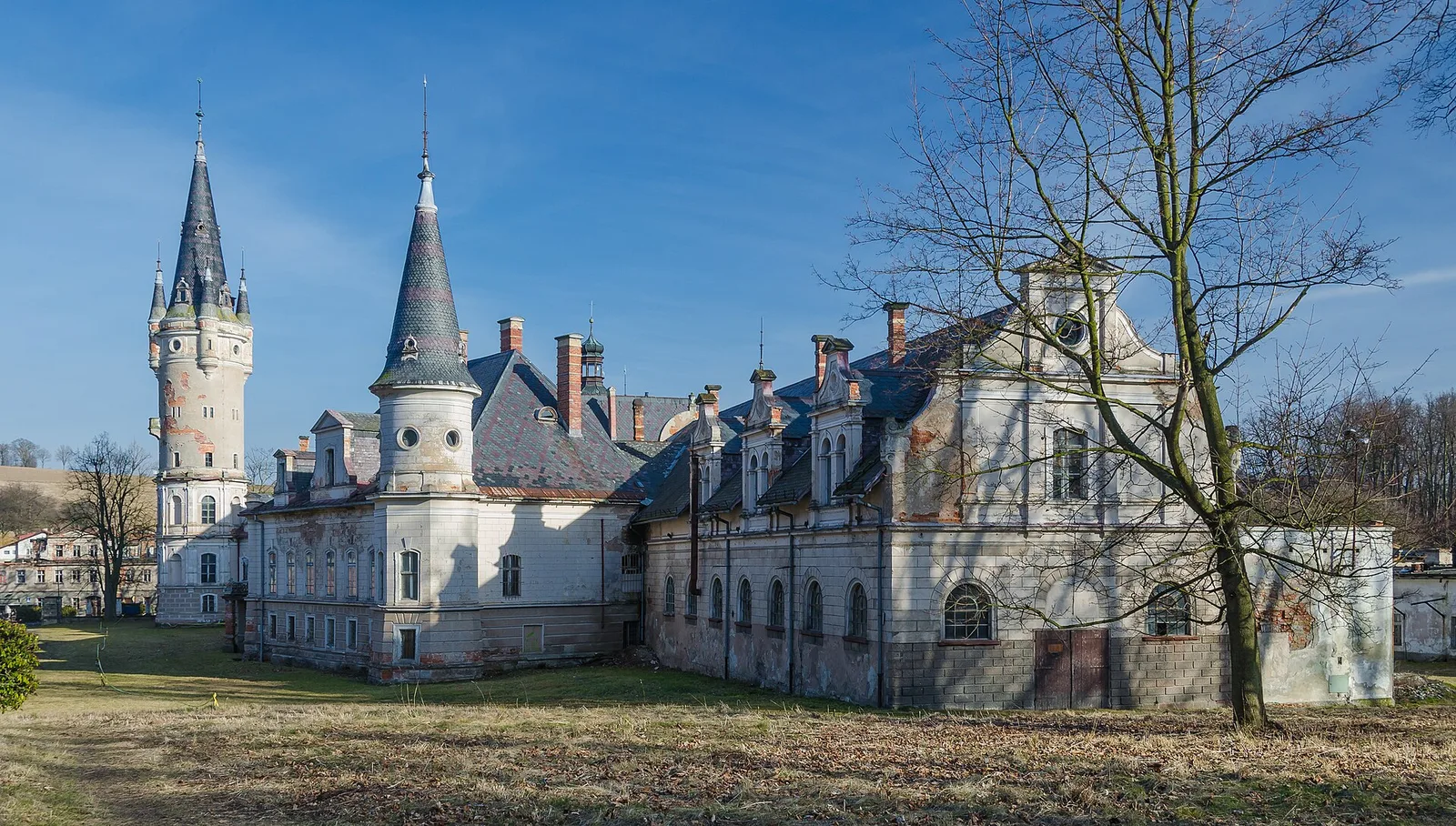
In Bozkow near Nowa Ruda, in the Klodzko County of Lower Silesia, stands the imposing Bozkow Palace (German Eckersdorf). The Renaissance manor of the von Raueck family was built here around 1570, and in 1780 the estate was taken over by Count Anton Alexander von Magnis, who between 1787 and 1791 rebuilt it into a Baroque-Classicist residence, with a park decorated with artificial ruins. After a fire in 1870, Wilhelm von Magnis rebuilt the palace in the neo-Renaissance style, adding a tall lookout tower.
The von Magnis family ruled Bozkow until 1945, and after the war the palace housed agricultural schools, which moved out in 2004. Since then the building has stood empty and is being systematically vandalized: in autumn 2025 and again in March 2026, parts of the roof collapsed, and the case of the disappearing monument is being investigated by the prosecutor's office. The palace is secured and inaccessible from inside, but its silhouette with the tower still makes an impression. More sites on our urbex map of the Klodzko region.
6. Grodziec Cement Works: the first cement works in Poland
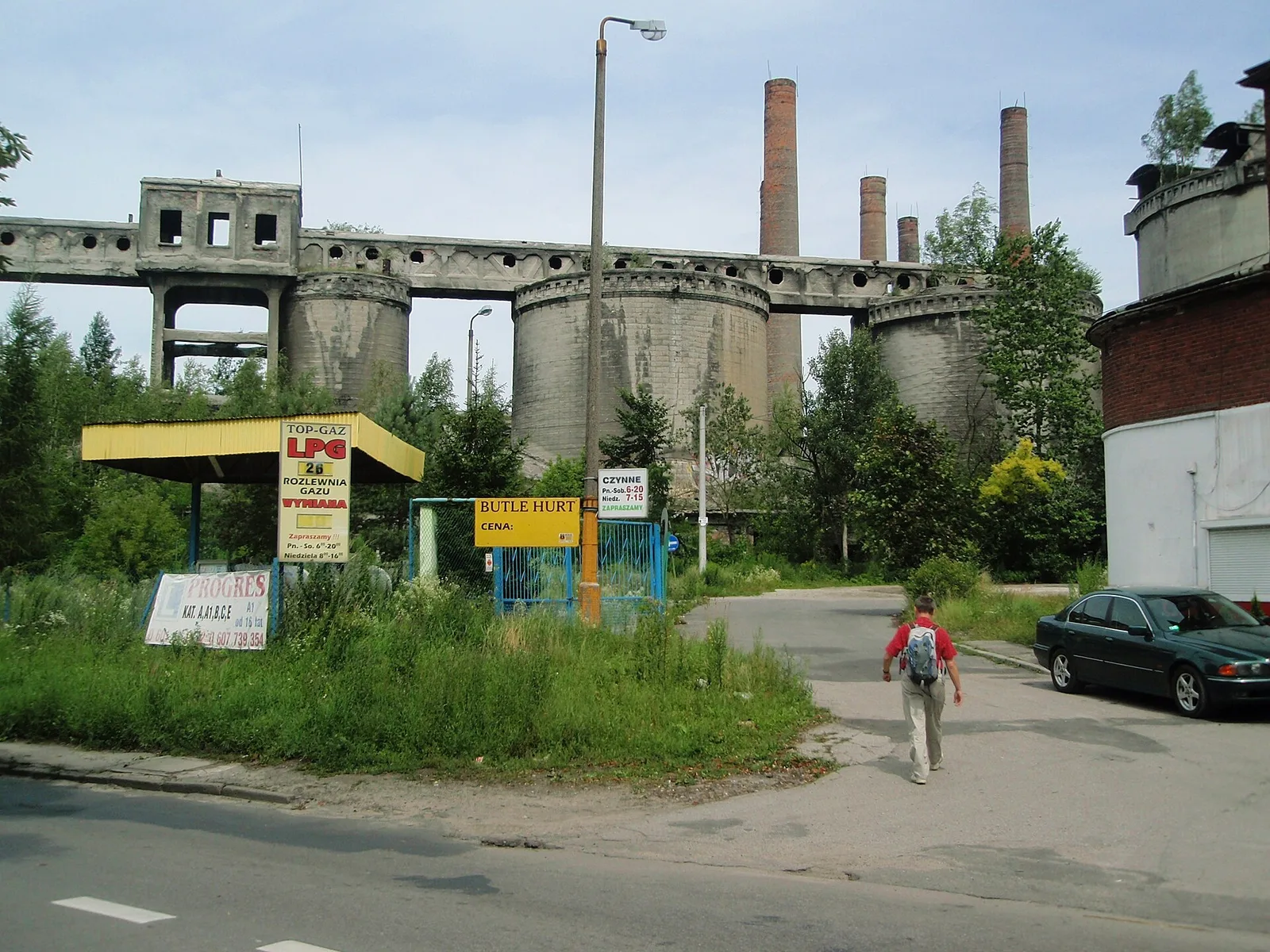
In the Grodziec district of Bedzin stand the remains of the Grodziec cement works, the oldest cement works in Poland. Commissioned in 1857, it was the fifth in the world to start producing high-quality Portland cement. Production was stopped on 31 July 1979, and the decision to liquidate it was issued in December of that same year. The historic silos and the transport bridge were entered into the register of monuments in 2021.
The cement works is considered one of the most dangerous sites in Poland: in places the concrete slabs are held up only by reinforcing bars. At the end of 2024 the city secured around 82.5 million zloty for the revitalization of the area (a terraced park), and on 26 June 2025 one of the chimneys was demolished, so the window for exploration is slowly closing, and the site is guarded. This is a place to view from a distance, not to enter. More spots on our urbex map of the Bedzin district.
7. Grohman Mill (Uniontex): the brick heart of textile Lodz
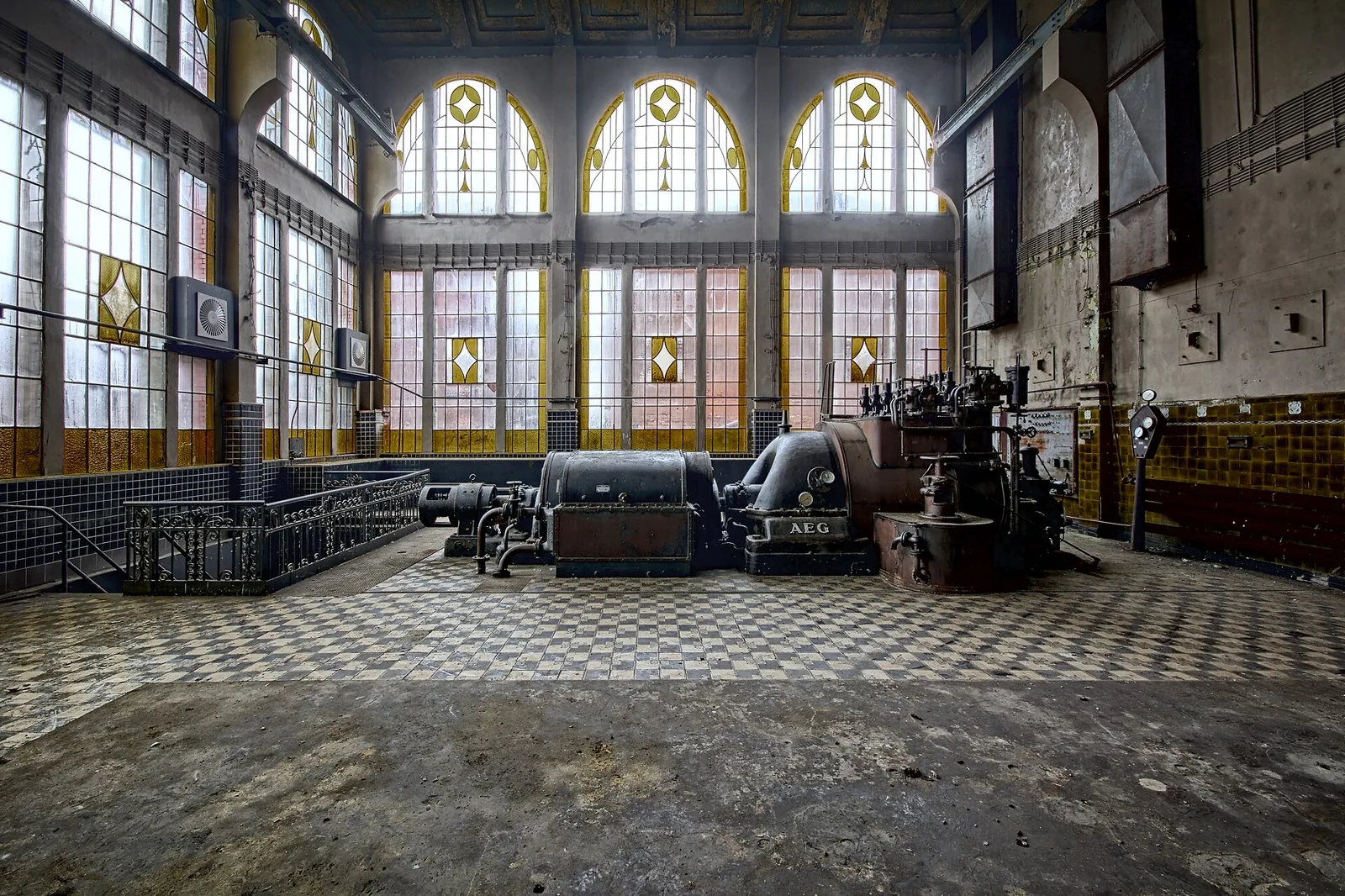
In Ksiezy Mlyn in Lodz, on Tymienieckiego Street, stands the former Grohman spinning mill, later part of the Uniontex combine. The four-story cotton mill was built in 1888 for Henryk Grohman, son of the manufacturer Traugott, to a design by the architect Hilary Majewski. Together with the neighboring Scheibler empire, it was the heart of the late-19th-century textile boom of Lodz, and its red brick and rows of arched windows are still a hallmark of the city.
After the war the plant was nationalized and incorporated into the Lodz Cotton Industry Works "Uniontex", which was still operating in the early 21st century. Today the company is in liquidation, the halls stand empty and are systematically robbed by scrappers; as recently as January 2025 they were being photographed by explorers. The city has announced plans to turn the area into housing and services, so this is one of those sites that may vanish from the urbex map within a few years. More places on our urbex map of Lodz.
8. Dobrowo Palace: the seat of the von Kleist family
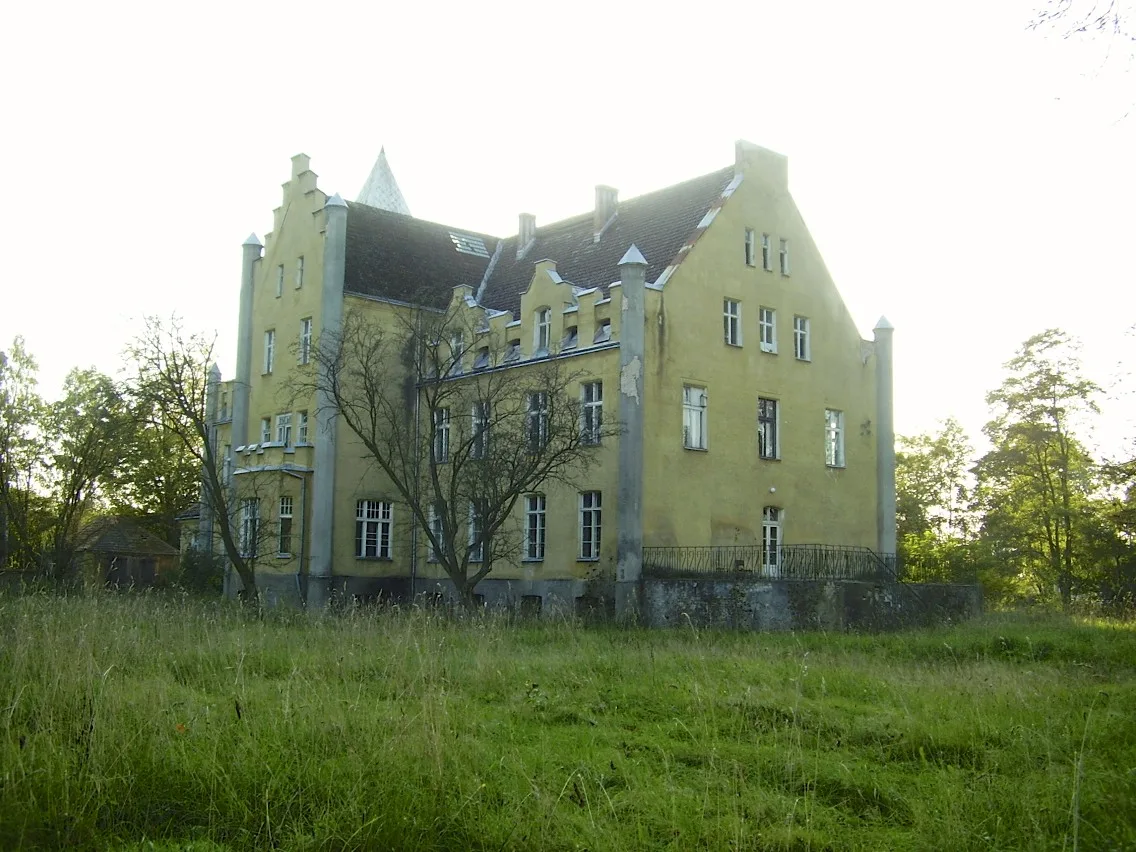
In Dobrowo, in the Tychowo municipality of the Bialogard County in West Pomerania, stands the abandoned palace of the von Kleist family (German Gross Dubberow). The village had for centuries been the seat of an old Pomeranian Junker family, and the present neo-Gothic palace with two towers was built around 1900 on older foundations. It is a place of historical weight: in 1890 Ewald von Kleist-Schmenzin was born here, a conservative opponent of Hitler, and his son Ewald-Heinrich took part in the 20 July 1944 plot; the father was executed in Berlin on 9 April 1945.
After 1945 a state farm (PGR) operated in the palace, and between 1965 and 2000 a primary school. In 2000 the building was bought by Michael John Oczko, who died childless in 2010, and the palace returned to the Tychowo municipality. Successive auctions ended without a buyer; the most recent sale was announced for 27 May 2025 at around 250,000 zloty. Today it is a genuine, abandoned ruin, officially closed for safety reasons. More sites on our urbex map of the Bialogard district.
9. Klomino (Westfalenhof): the only ghost town in Poland
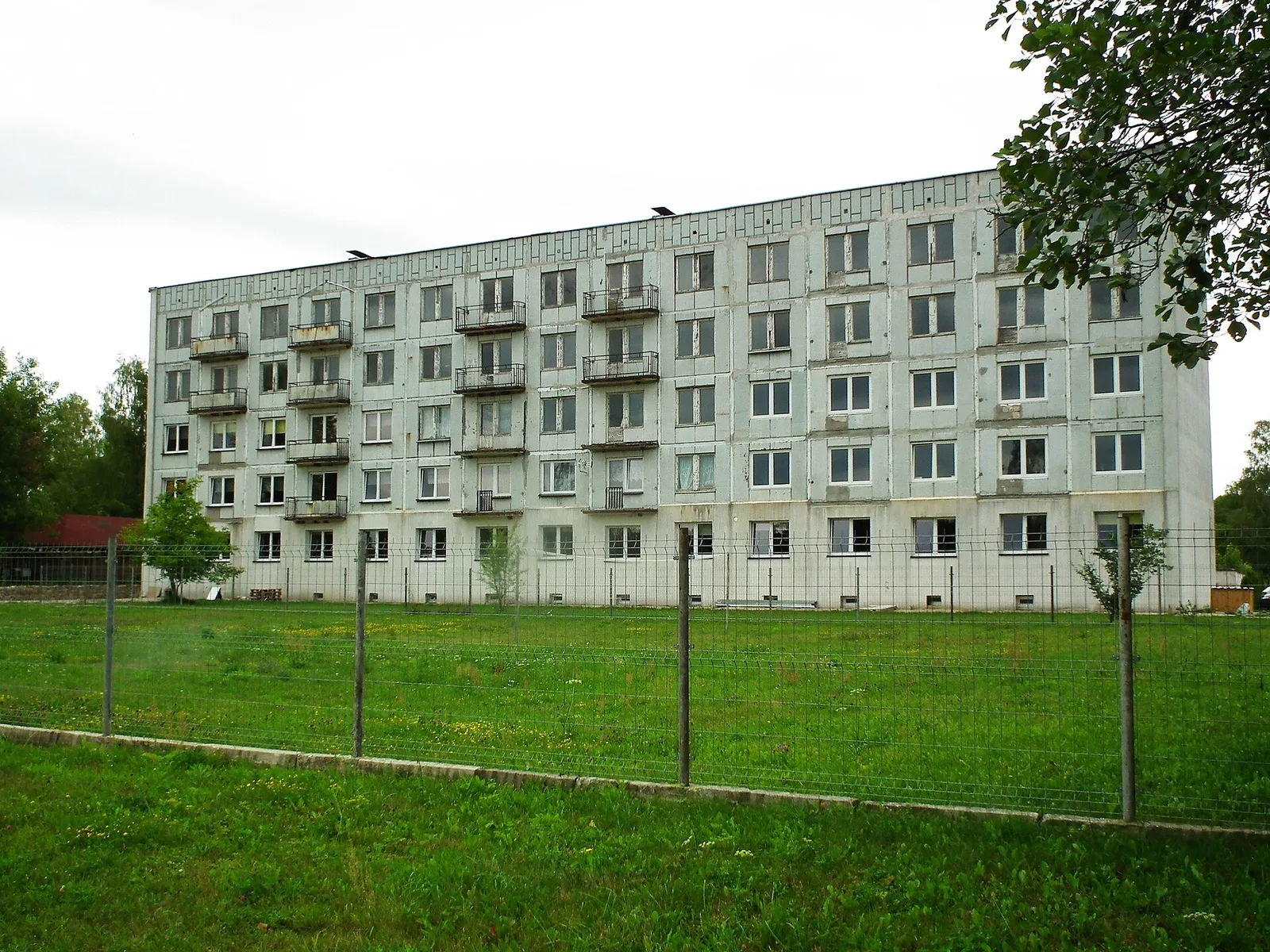
Near Borne Sulinowo, in the Szczecinek County of West Pomerania, lies Klomino (German Westfalenhof), widely regarded as the only official ghost town in Poland. The garrison was built in the 1930s by the German Wehrmacht next to the Gross Born training ground; during the war the Oflag II-D Gross Born prisoner-of-war camp operated here, passing Polish and French officers through it. In January 1945 the place was taken by the Red Army.
After the war Klomino became a closed Soviet base, renamed Grodek and wiped off Polish maps, with a population reaching several thousand soldiers. The Russians left in 1992, and the town was handed over to the Polish administration in 1993; with no work and no people it quickly emptied out, and the demolition of the blocks began in 2008. Today only a handful of people live here, and the abandoned blocks are being taken over by the forest. The place is accessible but physically dangerous because of structures at risk of collapse. More spots on our urbex map of the Szczecinek district.
10. Miedzianka: the town that disappeared underground
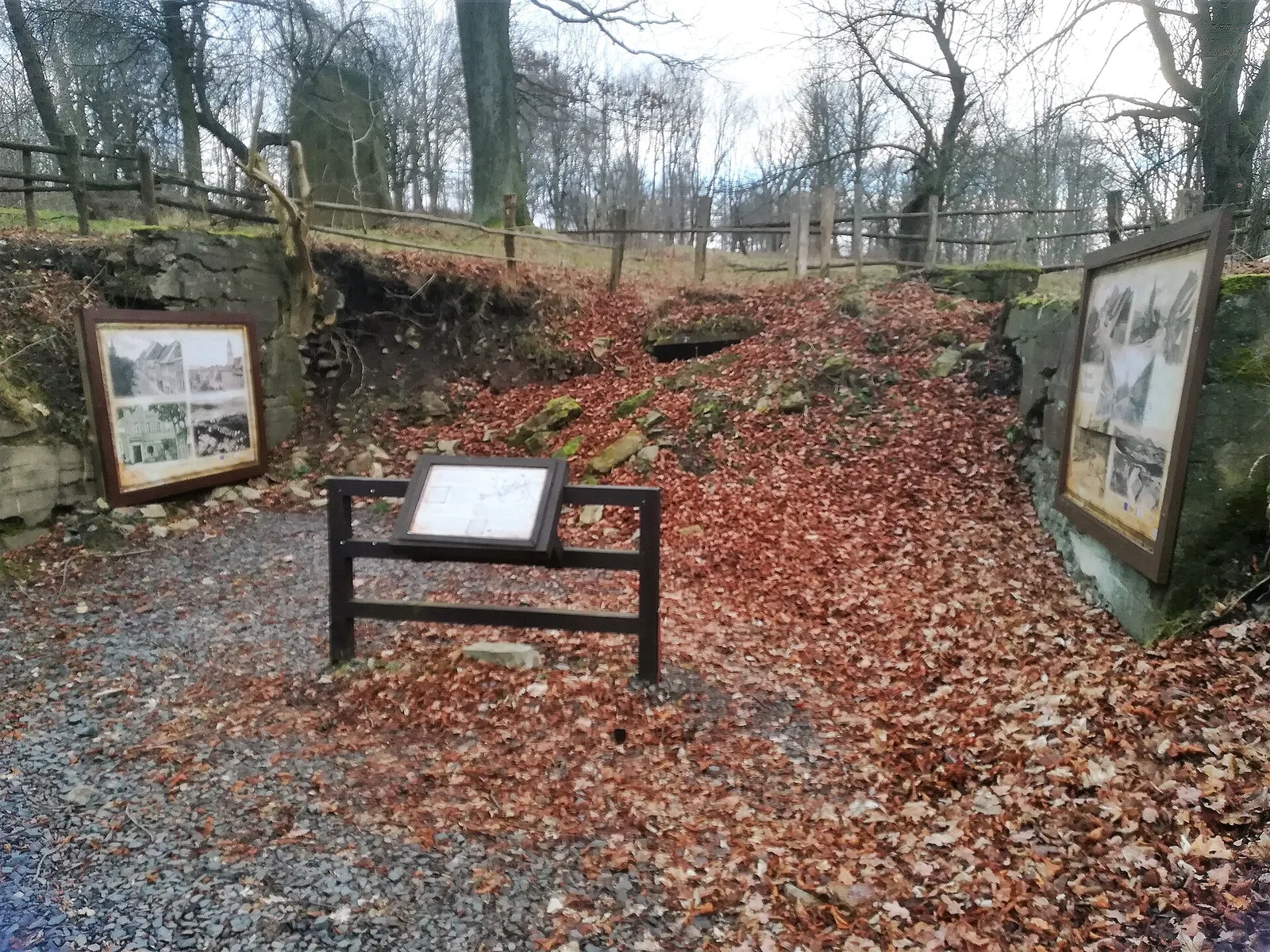
In the Rudawy Janowickie mountains, in the Janowice Wielkie municipality near Jelenia Gora, lies Miedzianka (German Kupferberg), a town that literally disappeared. Copper and silver were mined here from 1311, and town rights were granted in 1519. After the war, between 1948 and 1952, the Soviet-Polish R-1 works carried out secret uranium mining here, hauling around 600 tons of ore to the USSR and riddling the town with hundreds of tunnels.
The intensive mining led to mining damage: buildings began to crack and subside, in 1967 the Protestant church was blown up, and the residents were resettled to Jelenia Gora. Of the old town, all that remains today is the church of St. John the Baptist from 1824-1841, a former inn, and a few houses. The story of the disappearance was told by Filip Springer in his acclaimed book "Miedzianka. A History of Disappearing" (2011), and in 2015 a brewery opened in a rebuilt building. This is not a single ruin but a whole dead town and an underground labyrinth. More places on our urbex map of the Jelenia Gora area.
FAQ - Urbex Poland
How many abandoned places are there in Poland?
It is hard to give a single number, because abandoned sites are constantly added (deindustrialization, rural depopulation) and removed (demolitions, renovations). Our urbex map of Poland covers more than 5,500 verified spots in all voivodeships, the most in Lower Silesia, Lubusz, and West Pomerania.
Is urbex legal in Poland?
Exploration itself is not a crime, but entering private or fenced land can be treated as trespassing, and entering military land is forbidden. Many of the sites on this list are private or guarded property. Always respect no-entry signs, do not break in, and do not destroy anything; this guide is for documenting and viewing from a reasonable distance, not for breaking the law.
Is visiting abandoned places dangerous?
Yes. Floors at risk of collapse (as in the Grodziec cement works or the Klomino blocks), unsecured shafts, asbestos, and unexploded ordnance on former military land are real dangers. Never explore alone, carry a flashlight and a charged phone, do not step onto damaged floors and roofs, and view collapsing buildings only from the outside.
Which abandoned town in Poland can you visit?
The best known is Klomino (Westfalenhof) in West Pomerania, regarded as the only official ghost town in Poland, accessible but dangerous. Also exceptional is Miedzianka in Lower Silesia, a town that collapsed after uranium mining. Borne Sulinowo, often confused with them, has on the other hand been resettled and is no longer abandoned.
Where can you find more free abandoned places in Poland?
On our free urbex map and on the map of Poland you will find thousands of verified spots. Under every free point, just click "Add to my map" to save the GPS coordinates to your account, with no payment card.
What is the best time of year for urbex?
The best times are early spring and late autumn: the bare branches reveal the buildings, the light is soft, and the vegetation does not block the entrances. In summer many sites drown in greenery, while in winter the days are short, snow covers the paths and makes it harder to get back before dark.
How do you explore abandoned places with respect?
The rule is "take only photos, leave only footprints": take nothing, destroy nothing, do not break windows or paint graffiti. Many of these places are memorials (Zofiowka, Dobrowo), so treat them with seriousness. That way they will remain accessible for the explorers who come after you.
Can I add my own abandoned spot?
Yes. The Urbex Maps community is built by explorers, and every submitted coordinate is verified at least twice before it lands on the map. That way the database stays current and reliable, and you can add to it the places you know from your own area.
Conclusion: why Poland is a paradise for explorers
Poland's abandoned places are a record of a turbulent 20th century like nowhere else in Europe. After 1945, the flight and expulsion of the Germans left hundreds of ownerless palaces and manors across Lower Silesia, the Opole region, and Pomerania; the communist-era economy took them over as state farms and schools, and after 1989 abandoned them. The Cold War added Soviet bases and towns, wiped off the maps and abandoned after the troops left in 1992-1993, like Klomino. Deindustrialization closed the factories of Lodz and the mines of Silesia, and mining damage literally swallowed whole towns, like Miedzianka.
These ten places are only the beginning. Explore responsibly: respect no-entry signs, do not step onto floors at risk of collapse, never explore alone, and leave no trace. To discover all the rest, head to our urbex map of Poland with more than 5,500 abandoned places and save your coordinates for free in your personal map.