Łódź is the capital of Polish urbex: a city built in the 19th century on cotton, where the collapse of the textile industry left behind hundreds of red-brick factories, industrialists' palaces and workers' tenements. Some of them have been turned into lofts and malls (Manufaktura, Księży Młyn, EC1), but many still stand empty and crumbling. Our map covers thousands of abandoned places in the Łódź region, and in this guide we picked four that are genuinely abandoned and still standing in 2026.
You'll find the Art Nouveau Adam Osser spinning mill, two palaces of Łódź industrialists (Rudolf Keller and Leon Allart) and the former Helena Wolf hospital with its tragic ghetto history. We checked every place individually: none of them was demolished or converted into apartments by the summer of 2026. Under each entry, the "Add to my map" button saves the GPS coordinates to your account, for free and with no payment card.
The terms urbex Łódź, abandoned places Łódź, abandoned factories of Łódź and lost places Łódź all describe the same passion: documenting what's left of the city's textile glory before it vanishes under property developments. See all the abandoned places in Łódź on the interactive urbex map →
Urbex Łódź for free: why Urbex Maps changes the game
Most "abandoned places in Łódź" lists end by pointing you to a closed group where you only get the coordinates if you know the right people. With us, under every place there's an "Add to my map" button that saves the GPS point to your account, for free and with no card. There's a concrete model behind this promise: our community counts more than 40,000 explorers and has been running since 2021, and every coordinate is checked at least twice before it lands on the map. Free spots are free; paid packs fund the moderation. We ranked the four places below by visual impact and historical weight.
Why some famous places didn't make this list
Let's be honest: a lot of Łódź urbex "classics" no longer exist or have been converted. Księży Młyn and the Scheibler spinning mills are now largely lofts and museums, EC1 is a science center, and Manufaktura is a shopping mall. The old Łódź Fabryczna station (1868) was demolished in 2012 for a new underground station. The most famous abandoned spot, the EC-2 power plant from the Taconafide music video, however legendary, has been under demolition for a housing estate since late December 2025. So we kept only the buildings that, in 2026, are truly standing empty.
1. Adam Osser Factory: an Art Nouveau spinning mill falling apart downtown
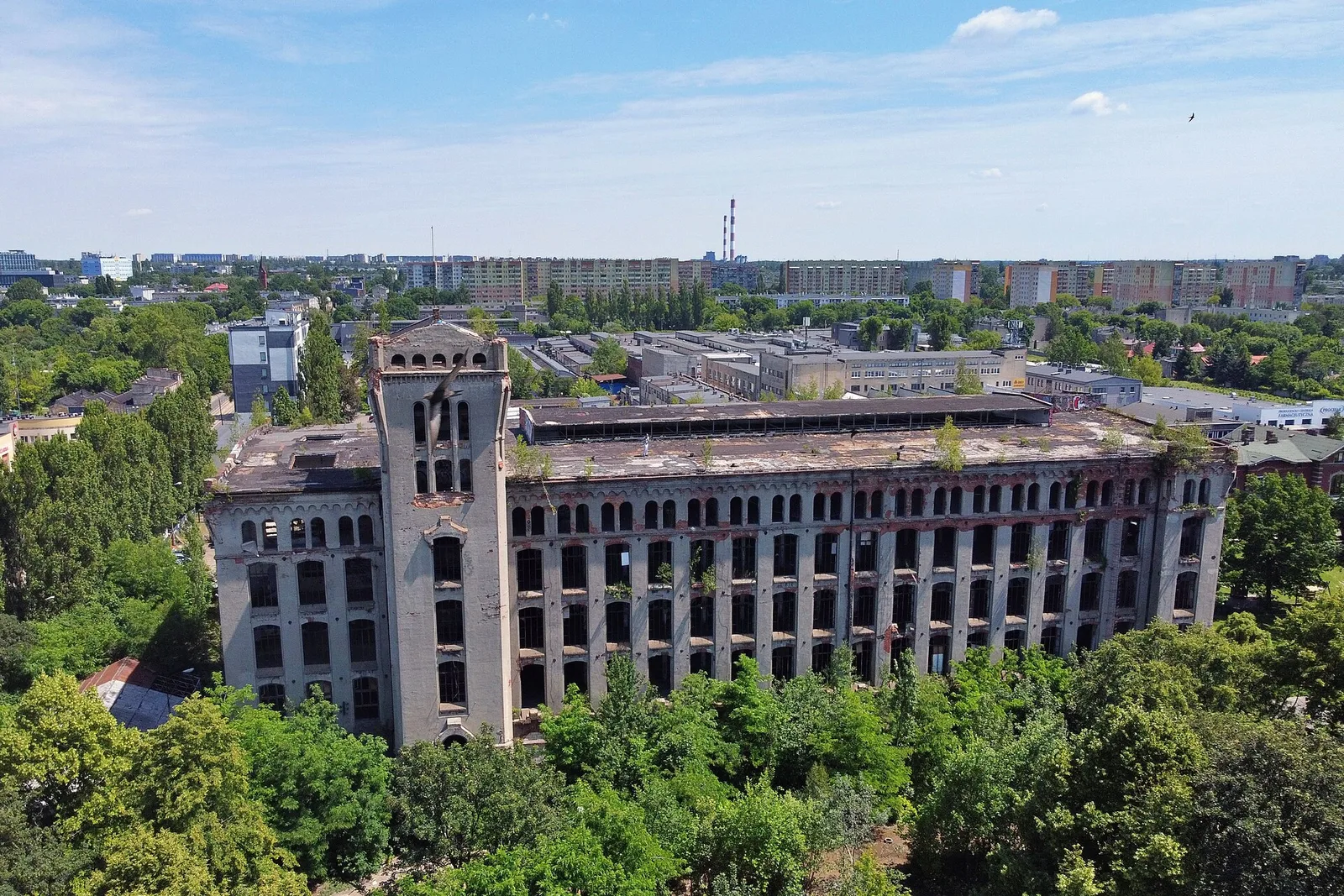
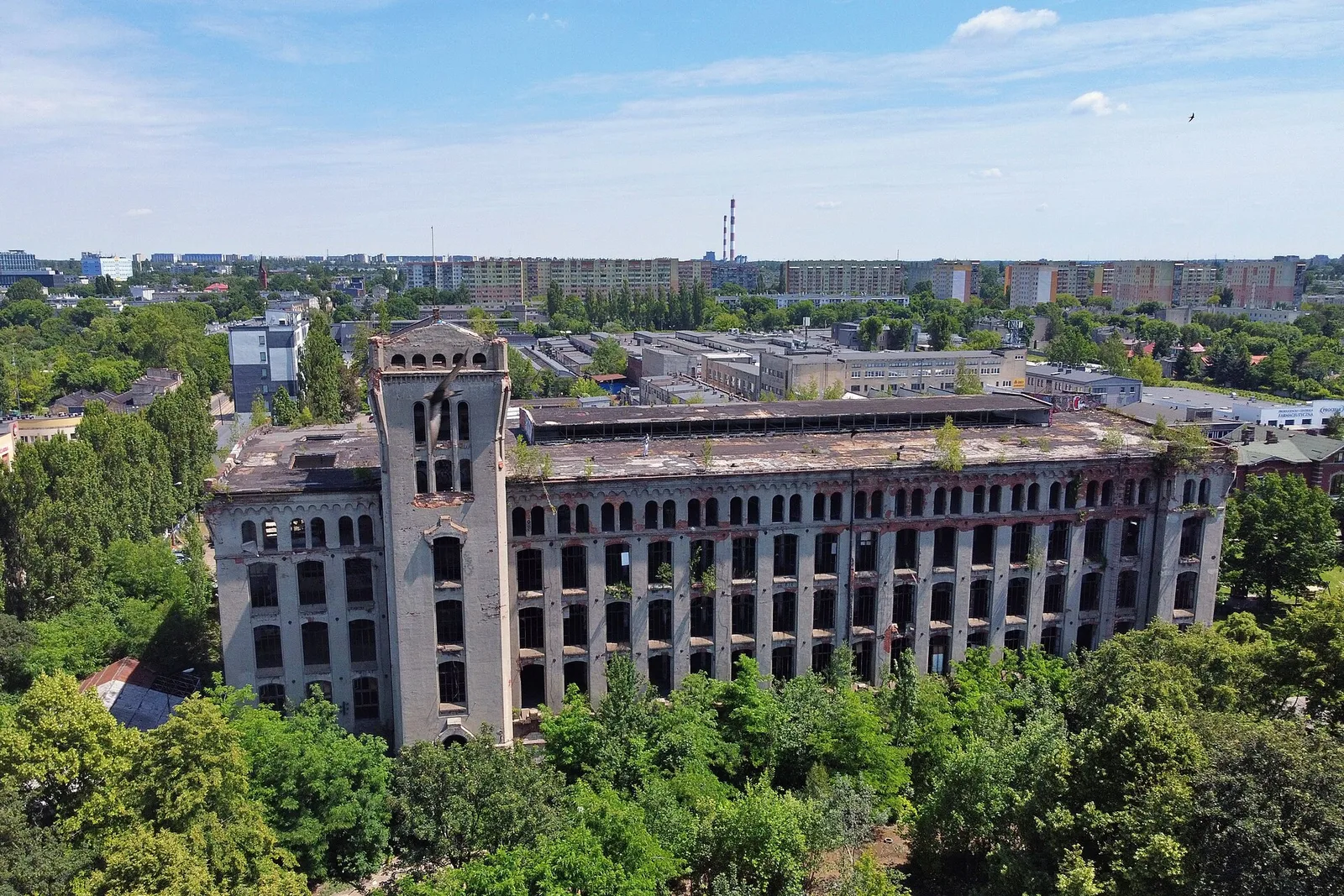
At 222 Kilińskiego Street, on the corner of Przybyszewskiego, stands one of Łódź's most recognizable ruins: the former Adam Osser spinning mill. Adam Osser, a merchant from Warsaw, opened a cotton warehouse in Łódź in 1886, and the imposing Art Nouveau / neo-Gothic spinning mill was built in 1903 (for the Feinkind, Jarociński and Osser company, 364 workers). After the war, car parts were made here at the "Polmo" plant, until the mid-1990s, when the factory was privatized and abandoned.
For more than thirty years the building has stood empty and, as the press wrote in 2025, "is falling apart before the eyes of the people of Łódź": it's systematically stripped by scrap thieves, and the private owner stays silent even though the site has been put up for sale. Despite being listed on the register of monuments (2008), the conservator had to issue a decision to secure the building. It's still one of the most photographed empty buildings in the city, but going inside is dangerous. More places on our Łódź urbex map.
2. Rudolf Keller Palace: a burned-out residence on Gdańska Street
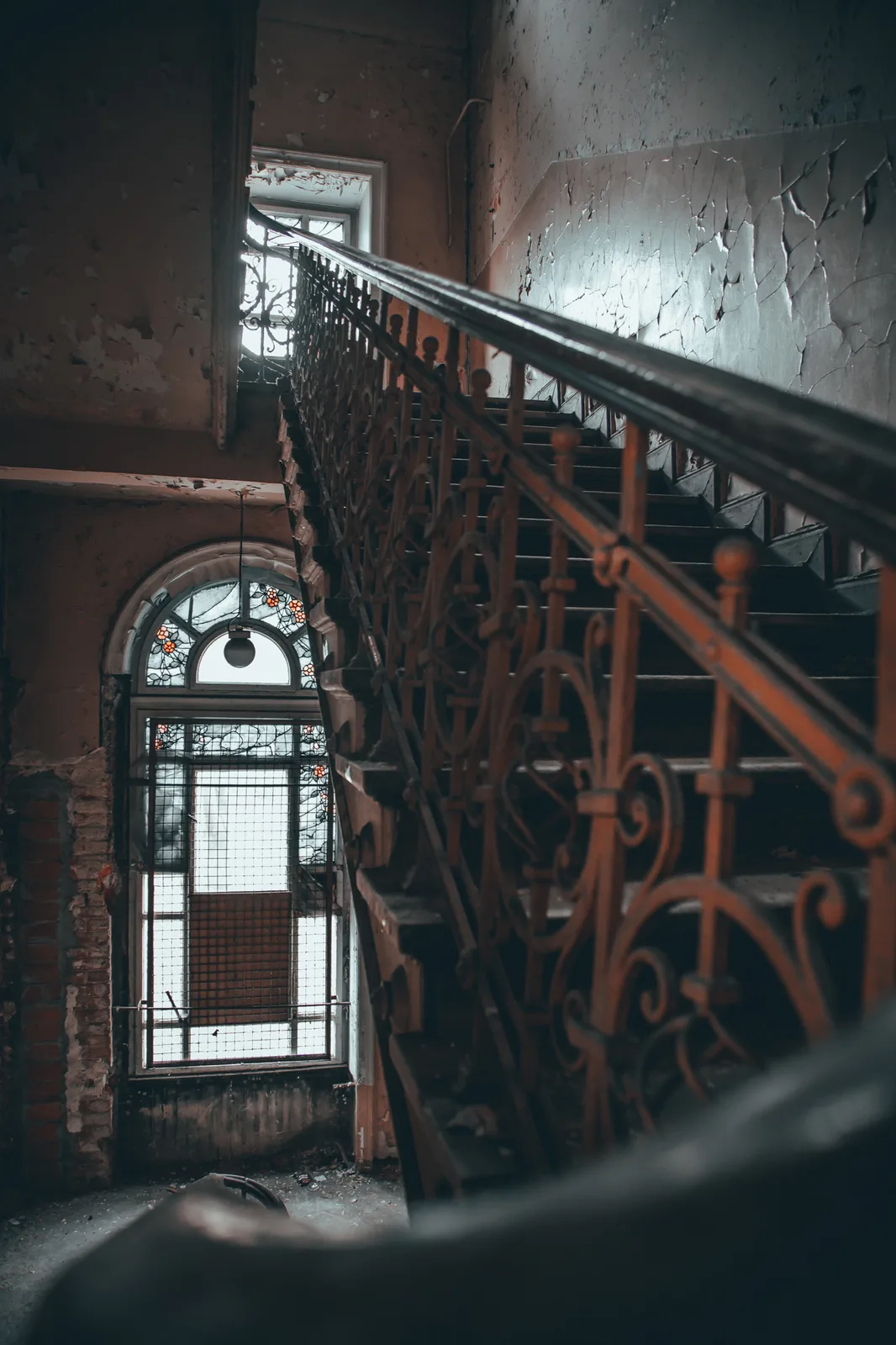
At 49/53 Gdańska Street, in Stare Polesie, stands the Rudolf Keller Palace, one of the most beautiful abandoned residences in Łódź. The luxury villa was built in 1890-1892 for the Prussian-born industrialist Rudolf Keller, designed by architect Hilary Majewski in the Nordic neo-Renaissance style. In 1907 it was bought by Emil Eisert, who added Art Nouveau stained-glass windows; after the war the building housed a company nursery.
After 1989 the palace fell into the hands of an Italian company and started to decay. In 2010 a fire consumed the roof and the corner tower, and in September 2020 the fire brigade took down an unstable turret. The state of ruin and devastation was still confirmed by the press in March 2025. Since 2020 a grassroots collective called "KelleReakcja" has been fighting to save the building, but the palace still stands empty, with no renovation. More buildings on our Łódź urbex map.
3. Helena Wolf Hospital: a modernist hospital under the shadow of the ghetto
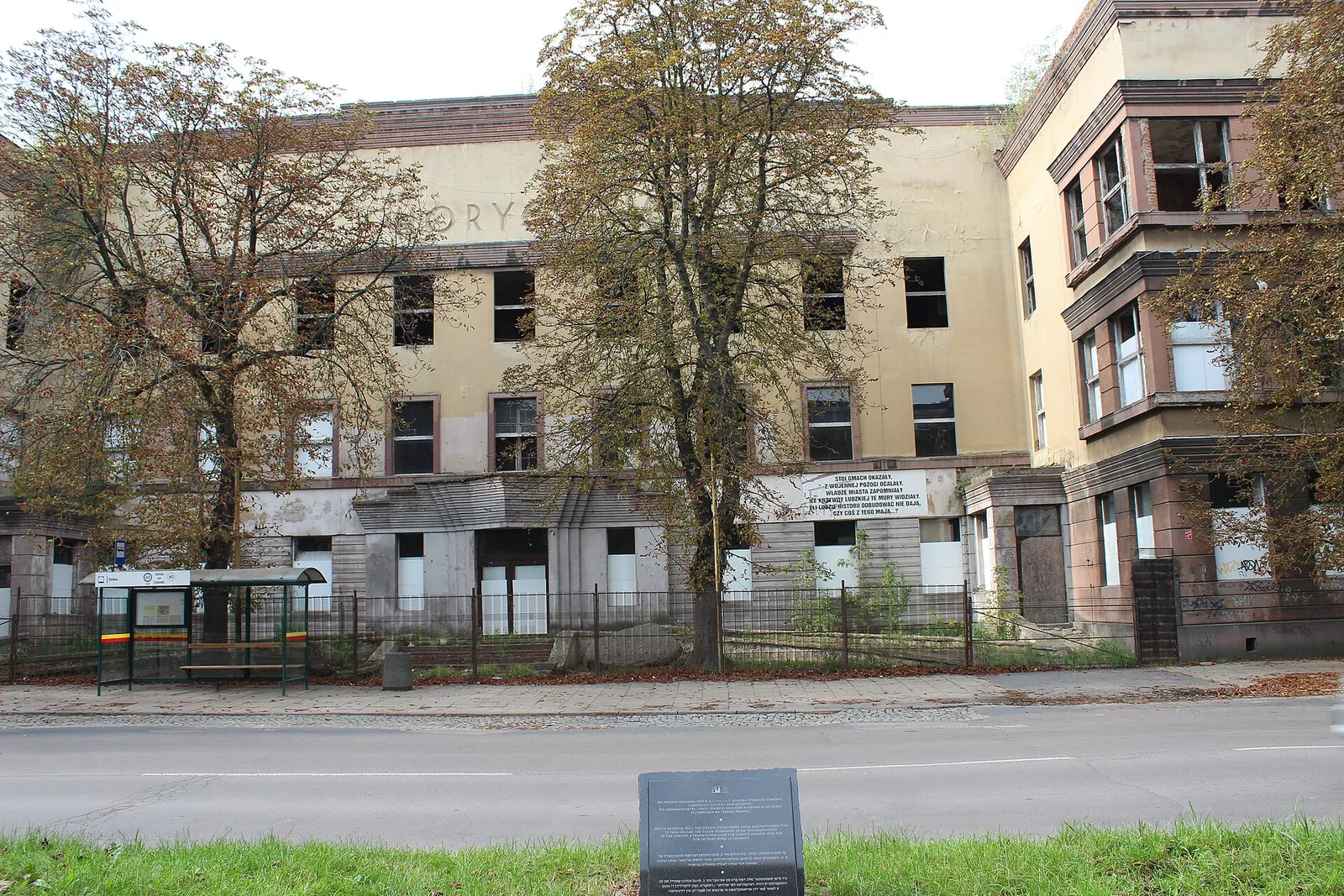
At 34/36 Łagiewnicka Street in Bałuty stands the abandoned Helena Wolf hospital, originally the Sick Fund hospital of the city of Łódź. The modernist art deco building was constructed in 1927-1930 to a design by architect Henryk Hirszenberg. During the war the building lay within the boundaries of the Litzmannstadt ghetto and operated as "Hospital No. 1"; it was liquidated on 15 September 1942, and the patients were deported and murdered at the Chełmno camp.
After the war a maternity clinic operated here, named after Doctor Helena Wolf; the last babies were born here around 1980. Since then the building has stood empty and crumbling, with smashed windows and graffiti. In 2026 a developer announced a conversion into apartments, but the work hasn't started yet (waiting for the conservator's approval), so the building is still abandoned. Its listing on the register of monuments protects it from demolition. More places on our Łódź urbex map.
4. Leon Allart Villa: a French industrialist's residence
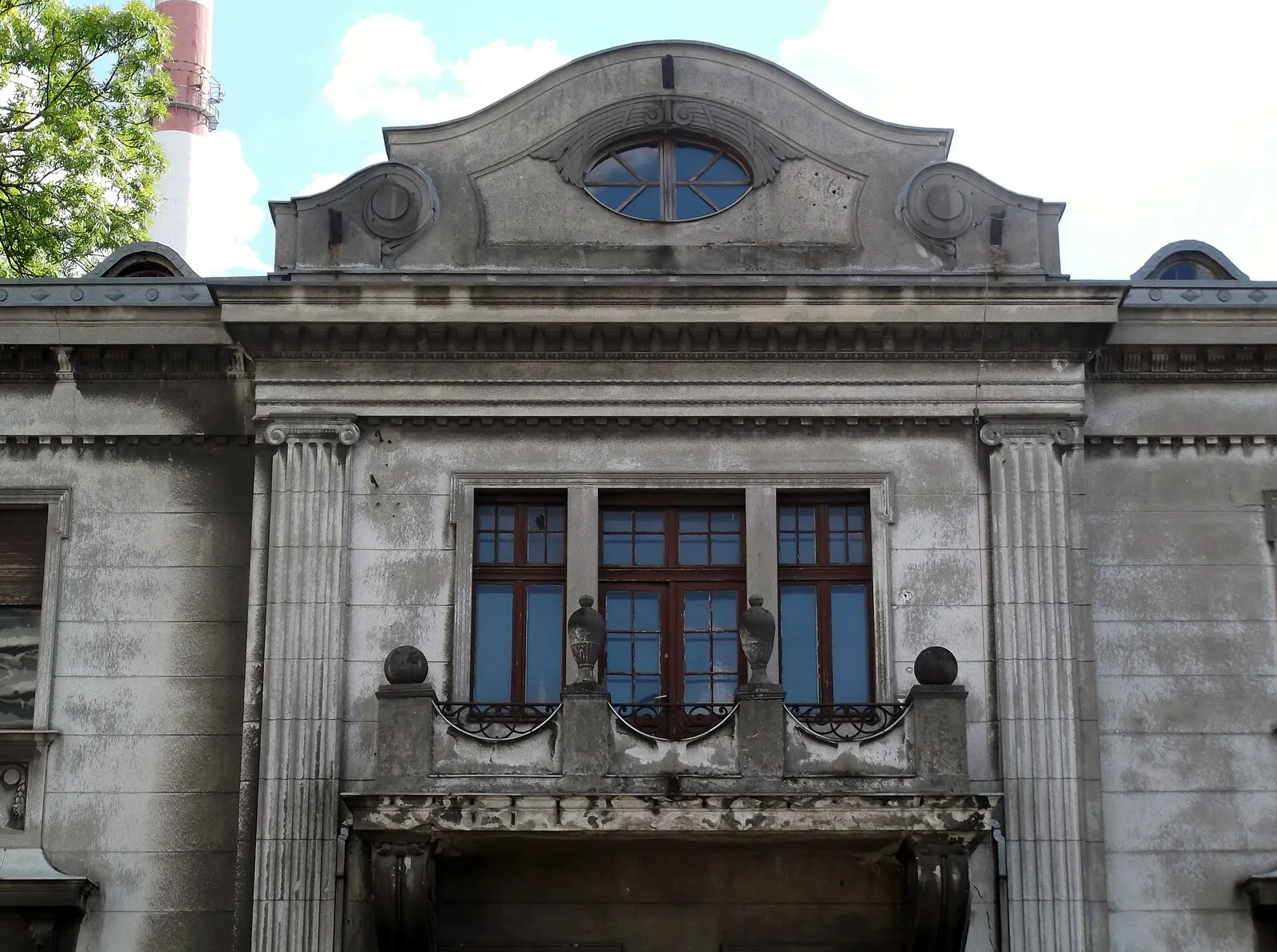
At 38 General Walery Wróblewski Street stands the Leon Allart villa, the residence of a French industrialist who came to Łódź from Roubaix in 1878 and founded the "Allart, Rousseau & Co." company. The villa was built in 1882 and rebuilt in 1925-1926 in a neoclassical style, with an imposing balcony on Ionic pilasters; stained-glass windows from Kraków's Żeleński workshop, dated 1926, have survived.
For years the villa stood empty and was looted: in September 2019 thieves carried off a chandelier, 19th-century door handles and around fifty brass ornaments, and the interiors fell victim to break-ins and drinking parties. The owner put on a new roof and announced a conversion into a private kindergarten, but real progress on the work in 2026 remains unconfirmed, and the building is still empty. Don't confuse it with the neighboring, already renovated tenements. More buildings on our Łódź urbex map.
FAQ - Urbex Łódź
How many abandoned places are there in Łódź?
It's hard to give a single number, because many old factories are gradually being converted into lofts or demolished. On our urbex map of Łódź and the Łódź region you'll find hundreds of verified spots, from spinning mills and industrialist palaces to hospitals and water towers.
Is urbex in Łódź legal?
Exploration itself isn't a crime, but entering private or fenced-off property can be treated as trespassing. Most of the buildings described here are private property. Respect no-entry signs, don't break in and don't vandalize; this guide is for documenting and viewing, not for breaking the law.
Are these places dangerous?
Yes. Old factories have floors and stairwells at risk of collapse, and scrap thieves leave behind holes and protruding rods. Never explore alone, carry a flashlight and a charged phone, and don't step onto damaged floors and roofs.
Haven't the factories of Łódź been turned into lofts?
Some have (Księży Młyn, Scheibler, Manufaktura, EC1), but far from all. The buildings on this list are still standing empty in 2026, although some of them (the Wolf hospital, the Allart villa) have conversion plans hanging over them that could soon close them to explorers.
Where can you find more abandoned places in Łódź?
On our free urbex map and on the Łódź map you'll find hundreds of verified spots. Under each free point, click "Add to my map" to save the GPS coordinates to your account.
What's the best time for urbex in Łódź?
Early spring and late autumn: with no leaves the facades are exposed, and the light is soft. The interiors of factories and palaces are best photographed on an overcast day, when the light from the big windows is even.
Summary: a city that refuses to disappear
Łódź grew out of nothing in the 19th century, as the "promised land" of textile makers from Germany, France and the Jewish world, and after the collapse of industry it left behind the largest collection of factories and palaces in Poland. Some have already come back to life as lofts and museums, some are disappearing under bulldozers, but the buildings on this list still stand empty and waiting. Explore responsibly: respect no-entry signs, don't step onto floors at risk of collapse, and leave no trace. To discover more, check out our Łódź urbex map and save the coordinates for free in your personal map.