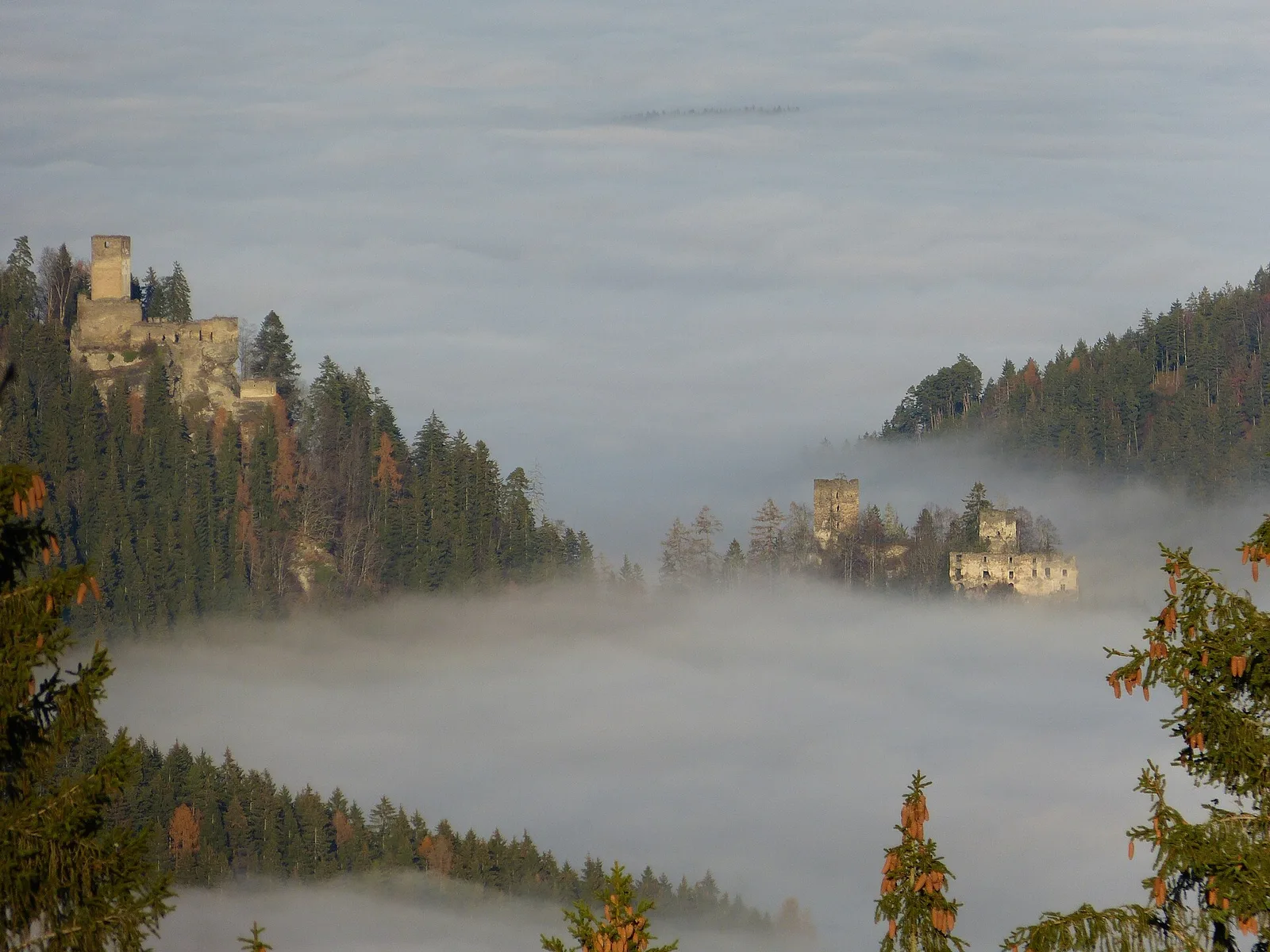
The most famous lost places in Austria are the Sanatorium Wienerwald (Lower Austria), the Forst Villa in Vienna's Dehnepark, the Grand Hotel Hochfinstermünz in Tyrol, the ghost village of Döllersheim cleared in 1938, and the tuberculosis sanatorium at Hirschenstein in Burgenland, abandoned since 2012. This overview lists 10 real abandoned places – ideally one per province – with type, dated history and free GPS coordinates (as of June 2026). See all 2,100+ lost places on the interactive urbex map of Austria →
Austria has a reputation for being tidy, alpine and well-kept, yet between Lake Constance and Lake Neusiedl stands a surprising number of abandoned places: a tuberculosis sanatorium where Franz Kafka spent his final weeks and which later became the Nazis' only birth-only Lebensborn home, a neo-Gothic ruin villa in the middle of the Vienna Woods, an entire village cleared in 1938 to make way for a military training ground, and a luxury hotel in Tyrol slowly being reclaimed by the mountains. From the Sanatorium Wienerwald near Pernitz to the ghost village of Döllersheim in the Waldviertel, a genuine geography of decay runs across all nine provinces.
The key facts in brief: this pillar lists the 10 most worth-seeing lost places in Austria, ideally one per province, ranked by visual impact and historical weight. Every site is real, dated and backed by sources. Under each entry you'll find a free spot from our map: one click on Add to my map drops the GPS coordinates into your profile, with no credit card and no subscription. Our map lists over 2,100 geolocated lost places in Austria (as of June 2026), from the Waldviertel to Vorarlberg.
The terms lost places Austria, abandoned places Austria, urbex Austria and lost places map all mean the same thing: buildings that no one uses anymore and that nature is slowly reclaiming. That map is exactly what we provide.
See the interactive map of all abandoned places in Austria
If you want to compare Austria's inventory with the rest of the German-speaking world, we also have dossiers on the lost places of Switzerland and on further countries via our worldwide urbex map.
Urbex Austria for free: why Urbex Maps makes the difference
Most lost-places lists online promise free coordinates in the headline and then link you to a forum, a Facebook group or a paywall costing around 50 euros. We do it differently. Beneath each of the ten sites sits a real spot from our database, with a button that drops the coordinates into your profile for free. No subscription, no credit card, no hidden catch.
Behind that promise stands a verification model. A community of more than 40,000 explorers has been compiling sites since 2021, and every coordinate is checked at least twice: once by the person who reports the spot, once by a regional moderation team that confirms the site still exists. The ten spots given away here come from that catalogue. The rest, well over 2,000 further Austrian sites, is accessible through themed packs that fund the moderation.
This list is ranked by visual impact and historical weight. We open with the Sanatorium Wienerwald, arguably Austria's most photographed ruin, and close with the former tuberculosis sanatorium at Hirschenstein near Rechnitz in Burgenland. Each site links to the relevant regional map of its province.
Why some famous "lost places" are missing here
Anyone who googles abandoned places Austria quickly runs into names that are no longer genuine lost places. The Zwentendorf Nuclear Power Plant in Lower Austria was never put into operation after the 1978 referendum (50.47 percent against), but it has been owned by EVN since 2005, houses a safety training centre and a photovoltaic research centre of TU Wien, and is rented out for tours and events, so it is anything but abandoned. The Südbahnhotel on the Semmering stood empty for decades, but it was bought by a private foundation in early 2022, has been running as an active cultural and event venue since the summer of 2022, and is heading toward reopening as a grand hotel. And the bunker complex at the Wurzenpass in Carinthia has been a public bunker museum with opening hours and an admission fee since 2005, not a freely accessible urbex site.
We deliberately leave such places out. A lost place belongs on this list only if it is genuinely abandoned in 2026, still standing, and not turned into a museum. That sets us apart from the recycled listicles that have been passing around the same outdated names for years.
Austria's abandoned places at a glance
| No | Site | Province | Type | Status 2026 |
|---|---|---|---|---|
| 1 | Sanatorium Wienerwald | Lower Austria | Tuberculosis sanatorium | abandoned since 2002, entry banned |
| 2 | Forst Villa, Dehnepark | Vienna | Ruin villa | empty, listed, fenced off |
| 3 | Grand Hotel Hochfinstermünz | Tyrol | Mountain hotel | ruin, partial demolition planned |
| 4 | Badlwand Gallery | Styria | Railway gallery | partly collapsed, climbing banned |
| 5 | Döllersheim | Lower Austria | Ghost village | cleared 1938, restricted zone |
| 6 | Wanghausen Castle | Upper Austria | Castle ruin | ruin |
| 7 | Thürndl Ruin | Salzburg | Castle ruin | ruin |
| 8 | Kraig Castles | Carinthia | Castle group | ruins |
| 9 | Jagdberg Castle Ruin | Vorarlberg | Castle ruin | ruin |
| 10 | Hirschenstein TB Sanatorium (Rechnitz) | Burgenland | Tuberculosis sanatorium | abandoned since 2012 |
1. Lower Austria: the Sanatorium Wienerwald, Austria's most photographed ruin
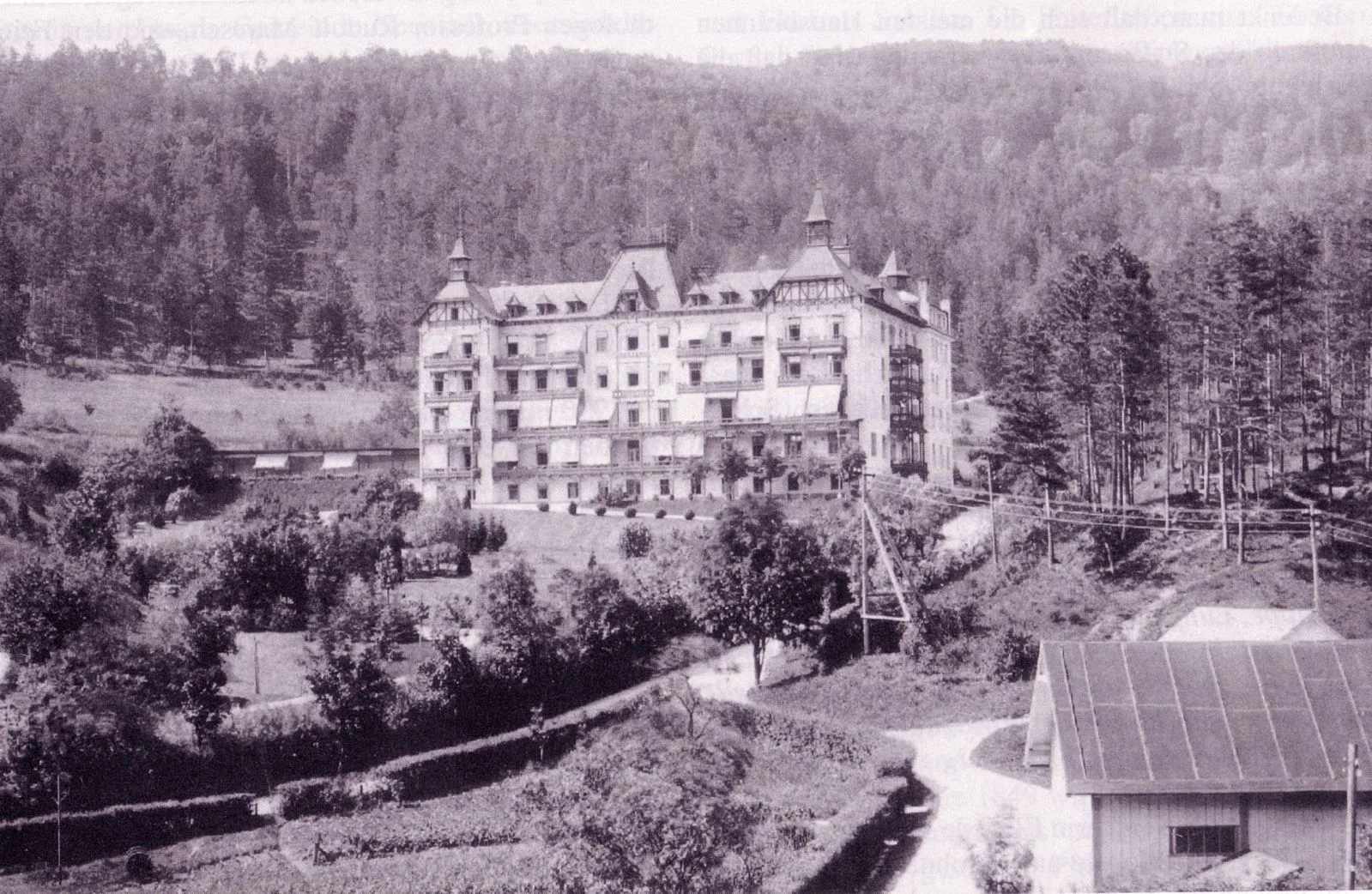
Above the village of Feichtenbach near Pernitz stands the most imposing building complex on this list. The Sanatorium Wienerwald opened in 1903/04, founded by doctors Hugo Kraus and Arthur Baer as a modern lung and tuberculosis sanatorium, an architecture of long resting halls and sun therapy of the kind that turn-of-the-century medicine demanded. During the First World War it served as a hospital for soldiers. Franz Kafka spent part of his final weeks here in April 1924, before dying in Kierling.
From 1938 the National Socialists ran the only birth-only Lebensborn home on Austrian soil in this building, a dark chapter that marks the site to this day. After the war the complex continued as a hotel and rehabilitation centre until it closed for good in 2002. Since then the building has been decaying, accelerated by vandalism. Nothing has been demolished; the walls still stand. Since January 2020 an official entry ban with cameras and motion sensors has been in force: photographing from outside is possible, but entering is prohibited and dangerous.
Lower Austria is by far the most urbex-rich province in Austria. Several hundred spots are listed on our regional map of Lower Austria.
2. Vienna: the Forst Villa in the Dehnepark, a ruin in the middle of the woods
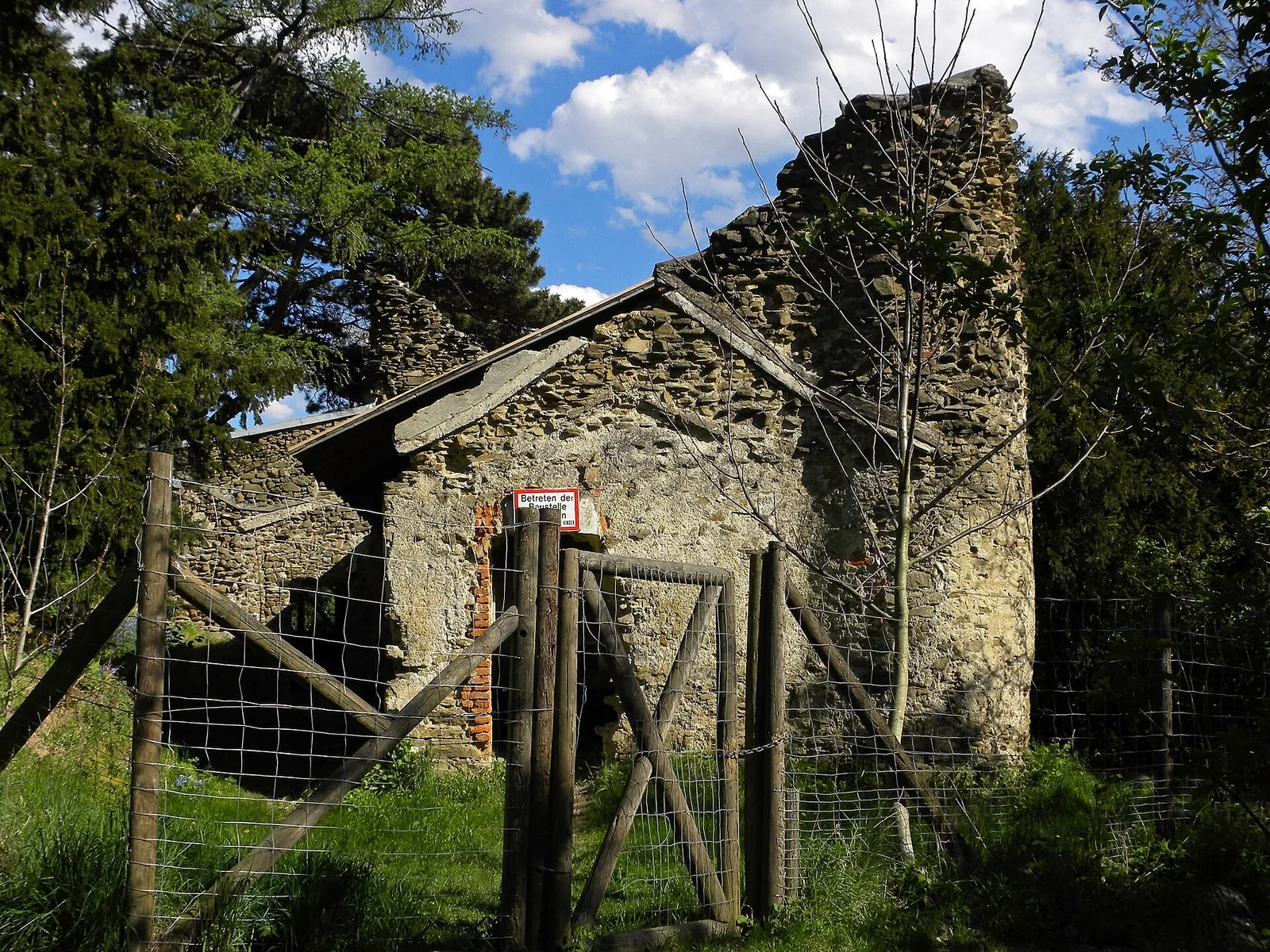
That Vienna has a genuine lost place in the middle of the greenery is something many Viennese themselves don't even know. In the Dehnepark in Penzing, the 14th district, stands a neo-Gothic ruin villa from the late 18th century, the only surviving garden building of a former estate. It became known through the film director Willi Forst, who had the property extended and gave it its nickname.
The City of Vienna bought the grounds from Forst in 1969 and opened the surrounding park to the public in 1973. The villa itself, managed by the forestry department (MA 49) and protected as a historic monument, remained empty and has been decaying for decades; one wing was either dismantled or collapsed on its own. A massive construction fence and the sign Entering the building site prohibited are meant to prevent accidents. Plans for a museum or forest school came to nothing: the current concept of MA 49 and the Federal Monuments Office deliberately aims to preserve the villa as a ruin. It is clearly visible from the adjoining city hiking trail.
You'll find more abandoned corners of the capital on our urbex map of Vienna.
3. Tyrol: the Grand Hotel Hochfinstermünz, decayed luxury above the Inn
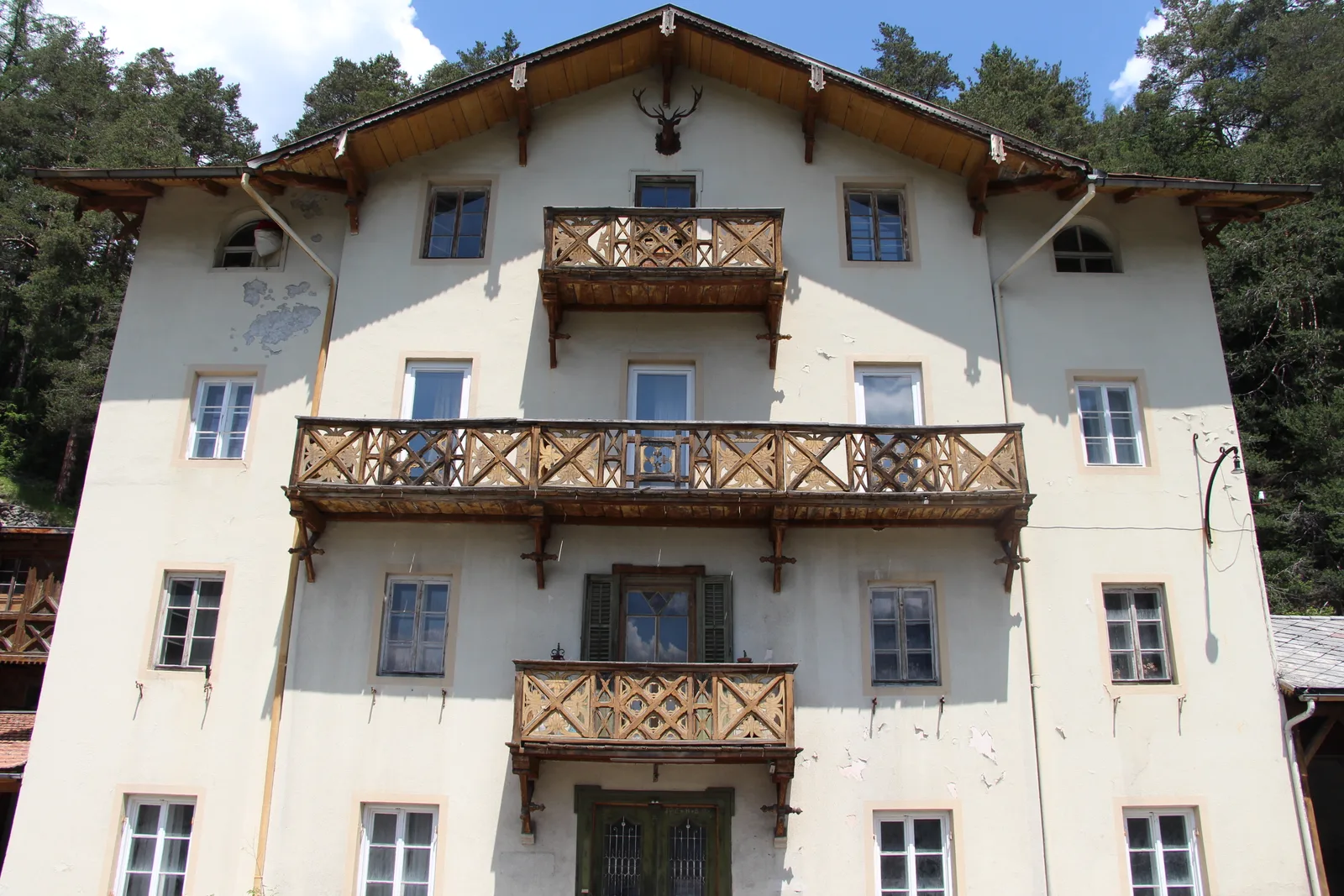
High above the upper Inn valley, near Nauders in the Landeck district, stand the ruins of a once top-tier hotel. The Grand Hotel Hochfinstermünz was a Tyrolean luxury address from the 1920s into the 1950s, with around 60 beds and a swimming pool, and served as a backdrop for the mountain films of the era. After the war the place lost its guests, decay set in, and in 2008 the last resident left the building.
It has been a ruin ever since, a repeated target of vandalism, which is why the owner has secured access. Note, time-sensitive: there are concrete plans to dismantle roughly half the building (an excavation dump and a controversial inclined lift to the Altfinstermünz fortress). Until then the ruin stands, but it could lose its status as a lost place in the coming years.
Tyrol, with its mountain regions, is well covered on our regional map of Tyrol.
4. Styria: the Badlwand Gallery, a railway ruin from 1844
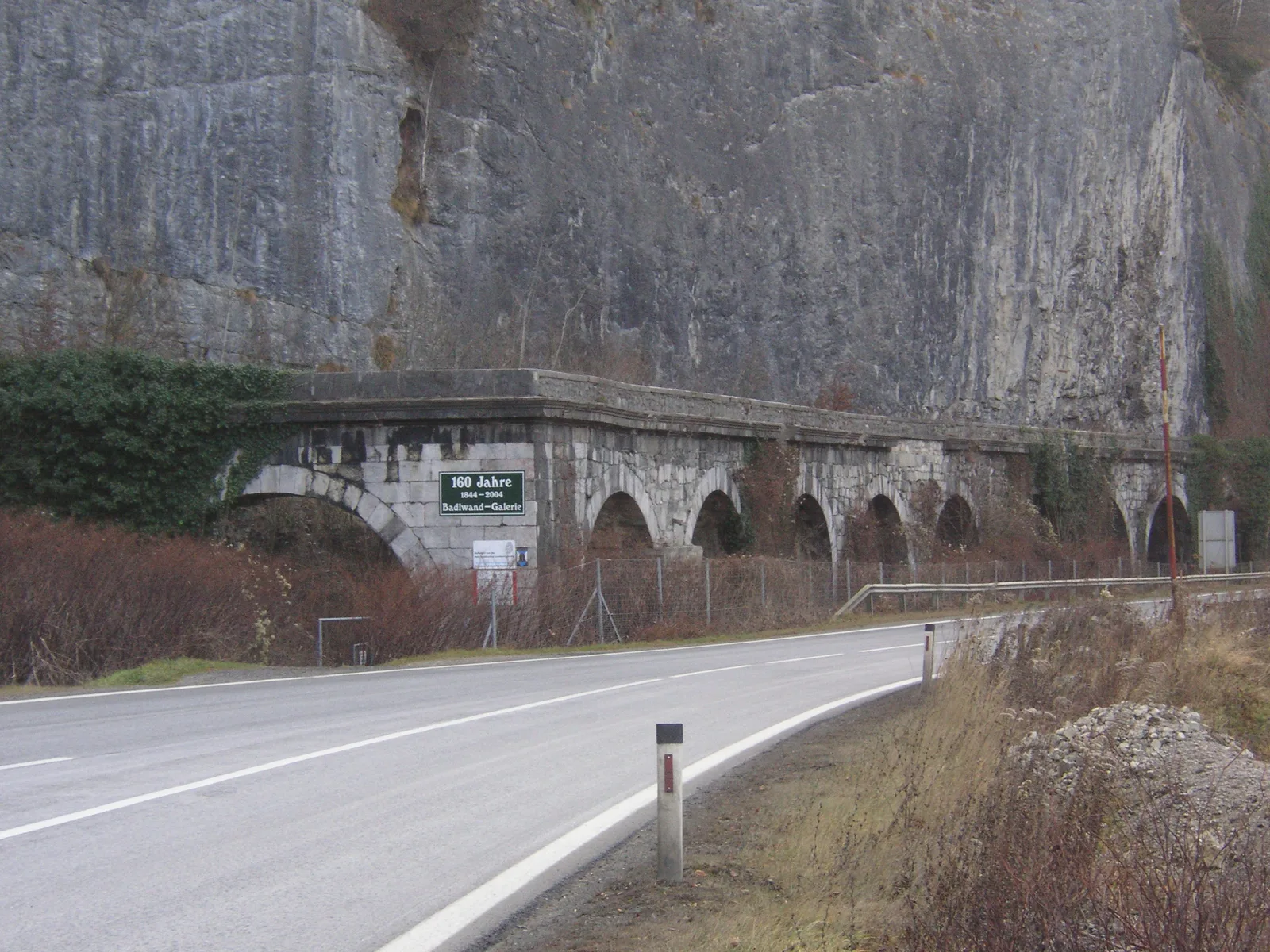
In the middle Mur valley between Peggau and Frohnleiten, about 30 kilometres north of Graz, lies the Badlwand Gallery, a historic rockfall gallery of the Austrian Southern Railway. It opened on 21 October 1844 and protected the rail line below the steep Badlwand cliff from falling rock. It has been closed to traffic since 1978.
Today the vaults have largely collapsed, but the outer stone arcades and portals still stand, making for an impressive, heavily weathered structure. Because of the acute risk of collapse there is a climbing ban, which climbers nonetheless unofficially ignore. Strictly speaking it is a gallery, not a tunnel, but visually it is one of the most striking industrial ruins in Styria.
After Lower Austria, Styria is the second richest urbex province; see our regional map of Styria.
5. Lower Austria: Döllersheim, the ghost village in the military training ground
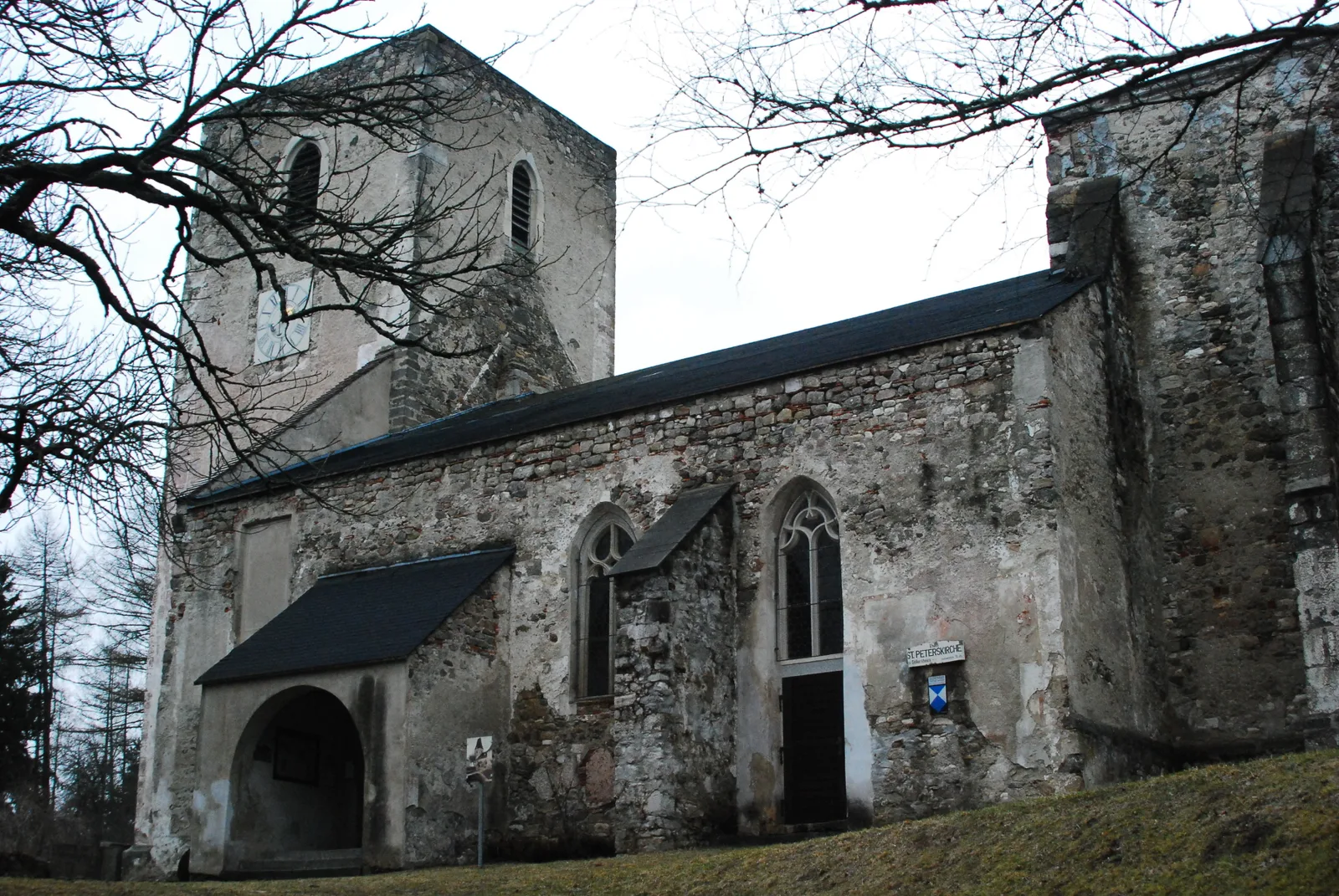
In the Waldviertel, about 110 kilometres northwest of Vienna in the Zwettl district, lies one of Austria's most striking deserted villages. Döllersheim was a thriving village until clearance began by order in 1938: by 31 October 1941 all roughly 2,000 inhabitants had been forcibly resettled to create the military training ground that today, as the Allentsteig Training Ground, is Austria's largest at around 157 square kilometres. In total, several thousand people from more than 40 villages lost their homes.
What survives is the ruin of the Romanesque church of Saints Peter and Paul, as well as the cemetery. A piquant detail: the father of Adolf Hitler was baptised in the parish of Döllersheim, which to this day surrounds the clearance with speculation in collective memory, even though the military purpose was the official justification. The grounds remain an active restricted zone of the Austrian Armed Forces; since 1981 the village square, church ruin and cemetery have been accessible, but only when no exercises are under way and the access road is open.
6. Upper Austria: Wanghausen Castle, the ruin on the Salzach

In the Innviertel, close to the Salzach and the Bavarian border opposite Burghausen, lie the ruins of Wanghausen Castle. Built in the 12th century, the noble seat was first documented in 1280 as "Wanchusen" in the verse epic Meier Helmbrecht; today it is a decayed castle complex whose walls vanish between trees and slopes, a classic lost place far from the tourist trails.
Away from its well-known lakes, Upper Austria offers a whole range of abandoned farms, industrial buildings and noble seats, gathered on our regional map of Upper Austria.
7. Salzburg: the Thürndl Ruin near Hallein

South of the city of Salzburg, near Hallein in the Tennengau, lies the Thürndl Ruin, the decayed remnant of a historic seat above the Salzach valley. The tower was probably part of Hallein's 13th-century town fortifications; the complex is still shown on a map from 1628, after which it fell into ruin, and in 1879 the tower passed into the ownership of the municipality of Hallein. Only stretches of wall remain of the former structure, slowly being overgrown by the forest, a quiet lost place in a region otherwise known for picture-postcard idyll.
Our regional map of Salzburg shows more abandoned places between the Tennengau, Pinzgau and Lungau.
8. Carinthia: the Kraig Castles
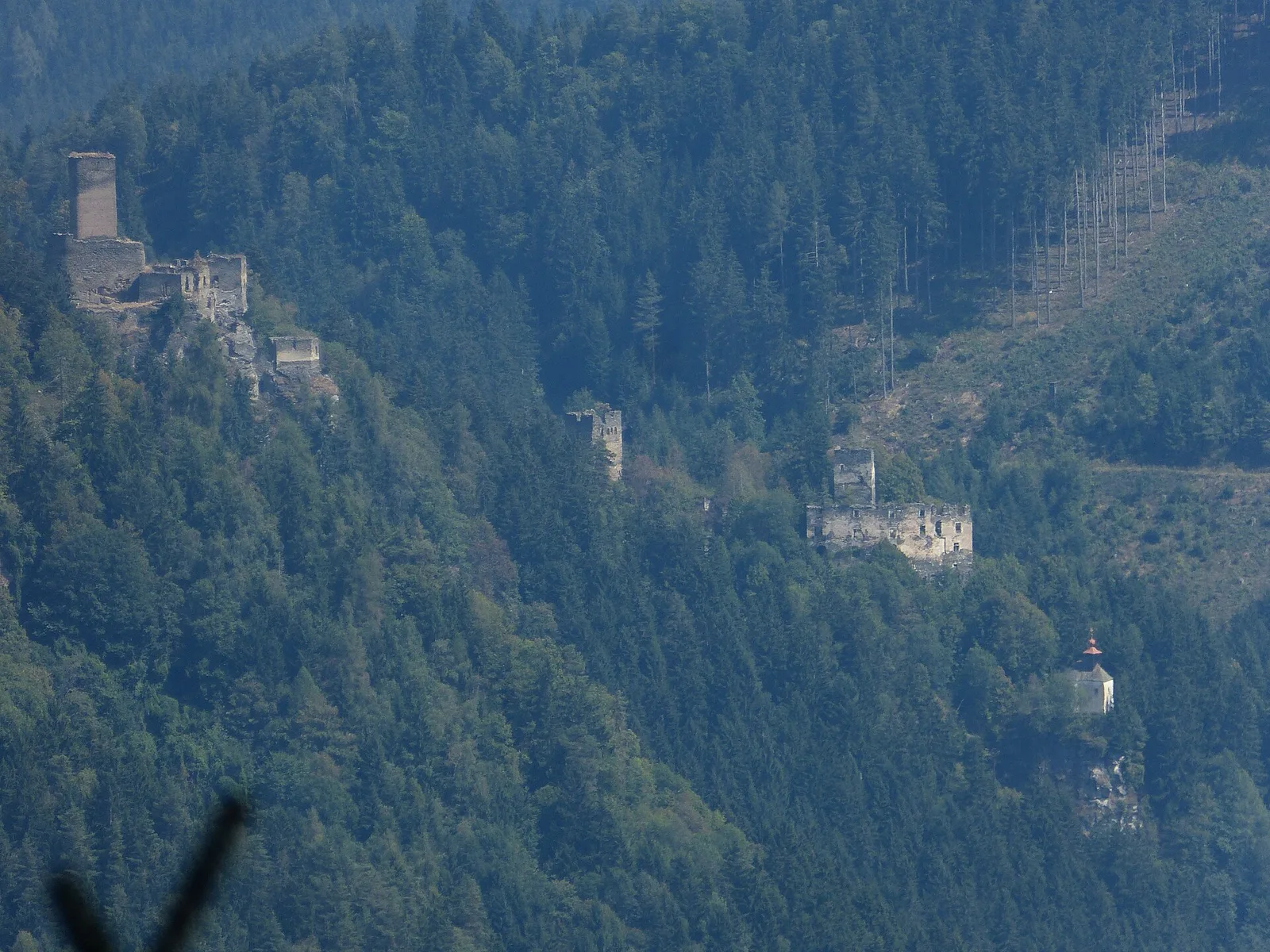
In central Carinthia, north of the Längsee, sits the striking group of ruins of the Kraig Castles, one of the largest medieval castle complexes in the province, first documented in the 12th century. Several structures on a ridge together form an extensive ruinous landscape of walls, towers and gates that rises, visible from afar, above the surrounding hills.
Carinthia combines lakes, mountains and a turbulent border history, all of which is reflected in its lost places; see our regional map of Carinthia.
9. Vorarlberg: the Jagdberg Castle Ruin near Schlins
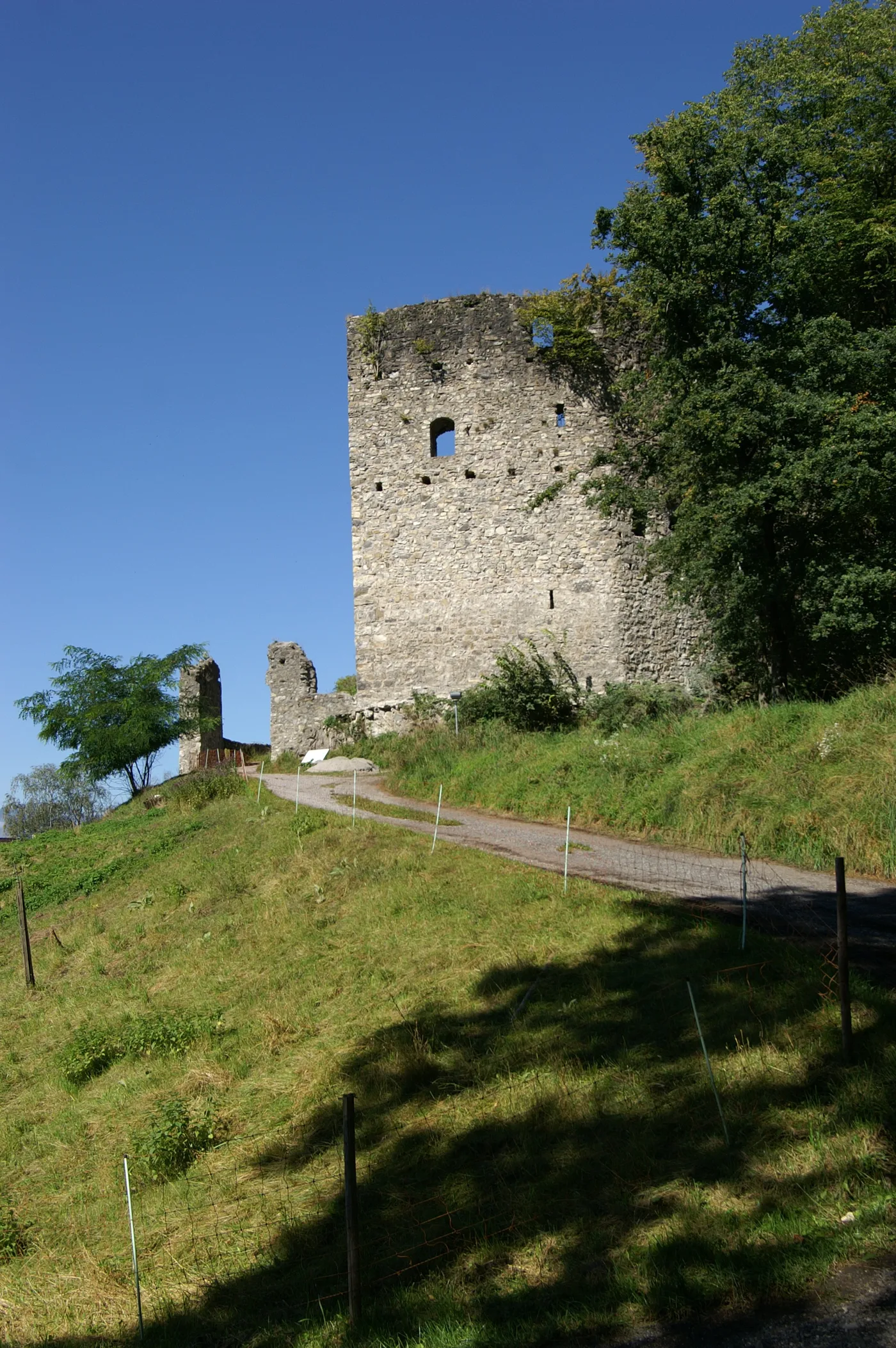
In the Walgau, near Schlins, the Jagdberg Castle Ruin sits on a hill, once the seat and court of an entire lordship. Probably built in the 12th century, the castle was destroyed on 28 September 1405 during the Appenzell Wars, rebuilt from 1408, and burned down again in 1499 during the Swabian War (Engadine War). Remains of walls survive above the valley, embedded in forest, Vorarlberg's contribution to a geography of ruins that is far rarer in the westernmost province than in the east of Austria.
Vorarlberg has fewer, but choice, lost places, gathered on our regional map of Vorarlberg.
10. Burgenland: the former tuberculosis sanatorium at Hirschenstein (Rechnitz)
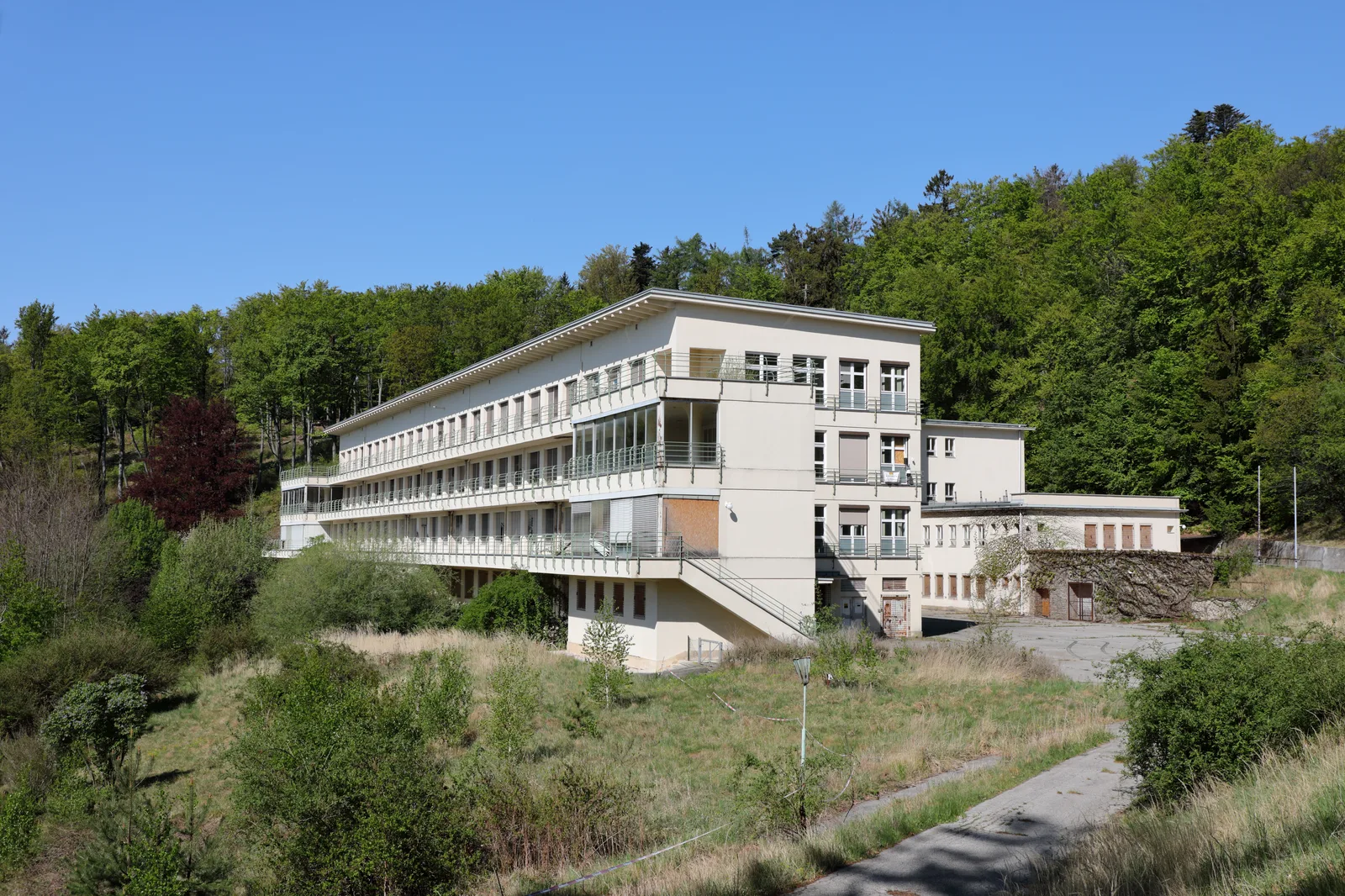
To close, the heaviest and quietest site on this list. High above Rechnitz in southern Burgenland stands the former tuberculosis sanatorium at Hirschenstein: built from 1949 to 1955 as a TB sanatorium, used from 1986 as a provincial care home, and abandoned since 2012. Its empty corridors and rooms carry an oppressive atmosphere; the grounds are now under video surveillance. Abandoned medical and care institutions are among the most striking lost places in Austria.
Burgenland is small in area but rich in history between Pannonia and the Iron Curtain; see our regional map of Burgenland.
FAQ - Urbex Austria
What are the most famous lost places in Austria?
The most famous abandoned places in Austria include the Sanatorium Wienerwald in Lower Austria, the Forst Villa in Vienna's Dehnepark, the Grand Hotel Hochfinstermünz in Tyrol and the ghost village of Döllersheim. All ten sites on this list are still standing in 2026 and are listed on our urbex map of Austria.
Is urbex legal in Austria?
Looking and photographing from outside is allowed. The criminal offence of trespass under Section 109 of the Austrian Criminal Code only applies if you force your way in with violence or threats; simply entering without authorisation and without force is not a criminal offence under that provision. Even so, civil consequences (disturbance of possession) can follow, and many sites have their own entry bans or lie in military restricted zones. We strongly advise against climbing fences or ignoring barriers.
Are abandoned places in Austria dangerous?
Yes. Ceilings at risk of collapse, rotten floors, asbestos in old sanatoriums, open shafts and rockfall are real hazards. The most dangerous site on this list, the Badlwand Gallery, has a climbing ban due to acute collapse risk, and the Sanatorium Wienerwald is officially closed off. Sturdy shoes, a torch and, if in doubt, a respirator mask belong to the basic kit.
Where can I find free GPS coordinates of lost places?
Urbex Maps provides a free spot for each of the ten sites in this guide, with an Add to my map button that drops the coordinates into your profile without a credit card. The complete map of abandoned places in Austria lists over 2,100 geolocated spots.
Which province has the most lost places?
In our database, Lower Austria leads clearly, followed by Styria, Tyrol, Upper Austria and Carinthia. In total over 2,100 Austrian lost places are recorded, spread across all nine provinces.
When is the best time for urbex in Austria?
In the Alps, summer is ideal, because many high-altitude sites like Hochfinstermünz lie under snow in winter and mountain pass roads are closed. In the lowlands and hills, and in the east, urbex is possible year-round; spring and autumn offer the most beautiful light for photography.
Why are Zwentendorf or the Südbahnhotel missing from this list?
Because they are no longer genuine lost places. The Zwentendorf Nuclear Power Plant is used for tours and events, the Südbahnhotel on the Semmering has been an active cultural venue heading toward reopening since 2022, and the bunker complex at the Wurzenpass is a museum. We list only places that are genuinely abandoned in 2026.
How can I contribute to the map?
If you know of an abandoned place, you can report it via our platform. Every coordinate is checked by the community and a regional moderation team before it appears on the map. That keeps the catalogue current and reliable.
Where did Franz Kafka spend his final weeks?
Franz Kafka spent part of his final weeks in April 1924 at the Sanatorium Wienerwald near Pernitz in Lower Austria, before he died on 3 June 1924 at the Kierling sanatorium.
Why was Döllersheim cleared?
Döllersheim was cleared from 1938 to build a Nazi military training ground. The village's roughly 2,000 inhabitants and several thousand people from more than 40 villages had to leave their homes. The area is today the Allentsteig Training Ground, Austria's largest at around 157 km², and remains a military restricted zone.
What is the largest lost place in Austria?
By area, the cleared zone around Döllersheim (today the Allentsteig Training Ground, around 157 km²) is the largest abandoned place in Austria. The most imposing single building complex on this list is the Sanatorium Wienerwald in Lower Austria.
Conclusion: a country that hides its ruins
Austria's abandoned places tell the story of the 20th century in stone: the medicine of the tuberculosis era in the sanatoriums, the ruptures of the Nazi years in Döllersheim and the Lebensborn home, the decline of alpine grand-hotel tourism in Hochfinstermünz, and the medieval lordships in the castle ruins from Carinthia to Vorarlberg. Much of this lies in restricted zones or under entry bans, because abandoned does not mean ownerless.
Anyone who explores respectfully and responsibly, documents from outside and climbs no barrier, keeps these places and their stories alive. You'll find the entire inventory on our urbex map of Austria with over 2,100 abandoned places.