Lost places in Munich are rare, and that is exactly what makes them special. No other large German city rebuilds itself as fast as the Bavarian capital, where every square metre of building land is worth a fortune. To find abandoned places here you have to look closely, and usually drive out into the Greater Munich area, into the forests and suburbs the bulldozers have not yet reached. Between the ghost station in the Olympic Park, the hundred-plus ammunition bunkers of the MUNA Hohenbrunn, and the blown-up explosives bunkers in the forest at Geretsried, there is an urbex Munich that the guidebooks ignore. Our map lists thousands of geolocated spots across Munich and the whole of Bavaria.
For this guide we picked 6 places that are genuinely abandoned and still standing in 2026, each checked one by one: a disused Olympic railway station, an ammunition depot in the woods, a derelict natural bathing place, an overgrown station on the city edge, and two separate World War II explosives plants in the same forest. No demolished landmark passed off as a live spot, no restored museum dressed up as a ruin. Under each entry, an "Add to my map" button saves the GPS coordinates to your personal account, for free and with no credit card.
The searches lost places Munich, abandoned places Munich, urbex Munich and abandoned places Bavaria all lead to the same truth: Munich itself has little to offer, but the surrounding region holds all the more military, industrial and railway history that war, structural change and shifting uses left behind. This guide gives each site its dated history, its legal status and its real dangers before handing you the coordinates. To compare the Munich stock with the rest of the country, read our big pillar on the lost places of Germany, one per federal state.
Free lost places Munich: why Urbex Maps changes the game
Before the spots, a word on what makes this guide different. Most pages about lost places in Munich put "free" in the title, then send you off to a closed Facebook group, a forum or a paywall. Here the promise is concrete: under each place, an "Add to my map" button drops the GPS coordinates into your personal account, with no subscription and no credit card.
Behind the map is a community of more than 40,000 explorers, active since 2021. Every set of coordinates is checked at least twice - by the contributor who submits it, then by a regional moderator who confirms the spot still exists and has not been walled up or demolished. The places offered in this article are part of that catalogue; the rest of the thousands of Bavarian and German spots are unlocked through packs that fund the moderation and field verification.
One reminder before you set off: urban exploration is not illegal in itself, but entering private property without permission is trespass under section 123 of the German Criminal Code, punishable by a fine or up to a year in prison, and causing damage adds section 303. We document these places for their history; we never encourage breaking in. Helmet, head torch, sturdy boots and caution on the floors: several of the spots below carry real collapse and asbestos risks, the Hohenbrunn depot may still hold unexploded ordnance, and the Geretsried bunkers sit in a fenced danger zone.
1. Geisterbahnhof Olympiastadion - the disused Olympic station (Munich)
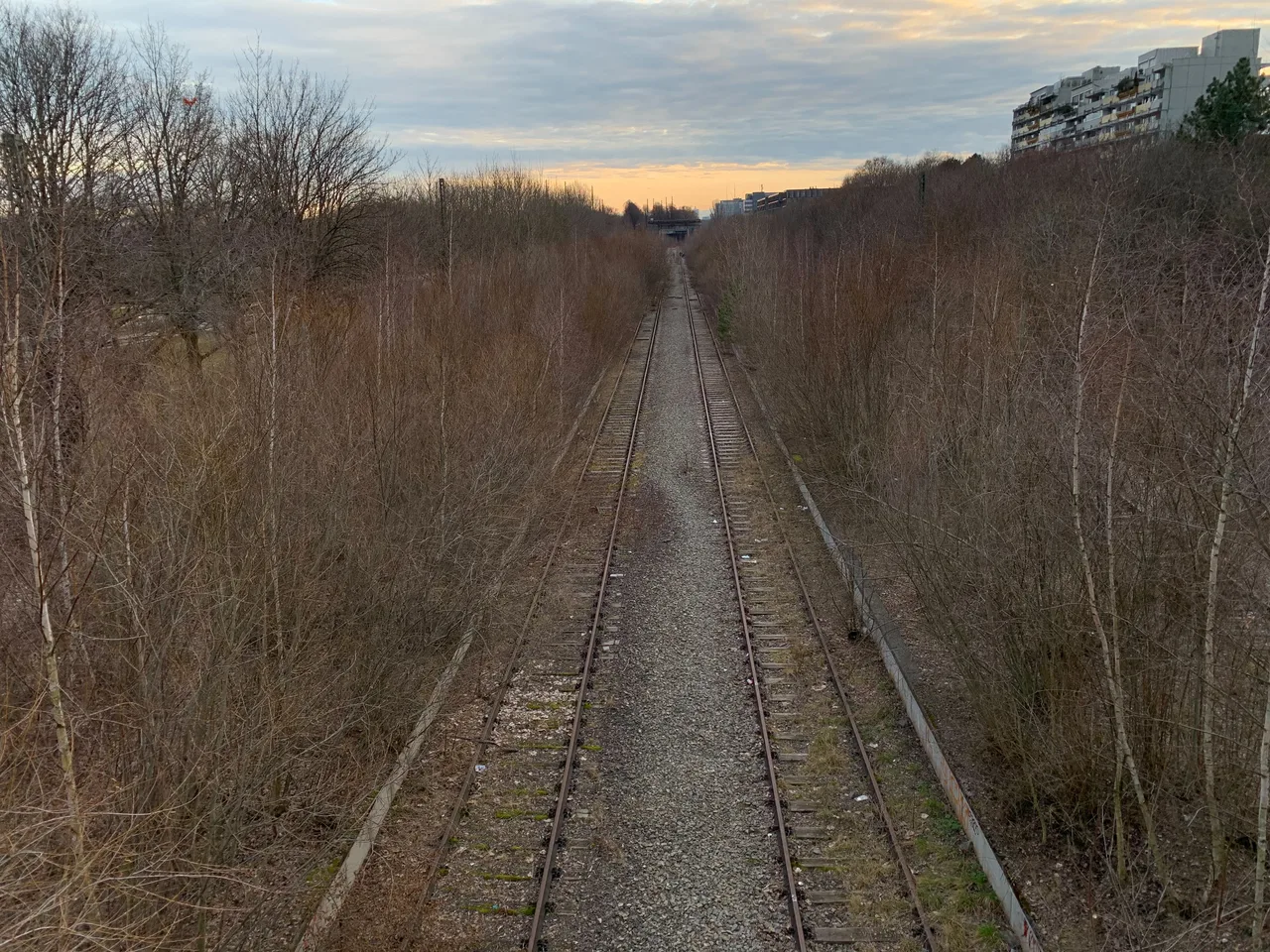
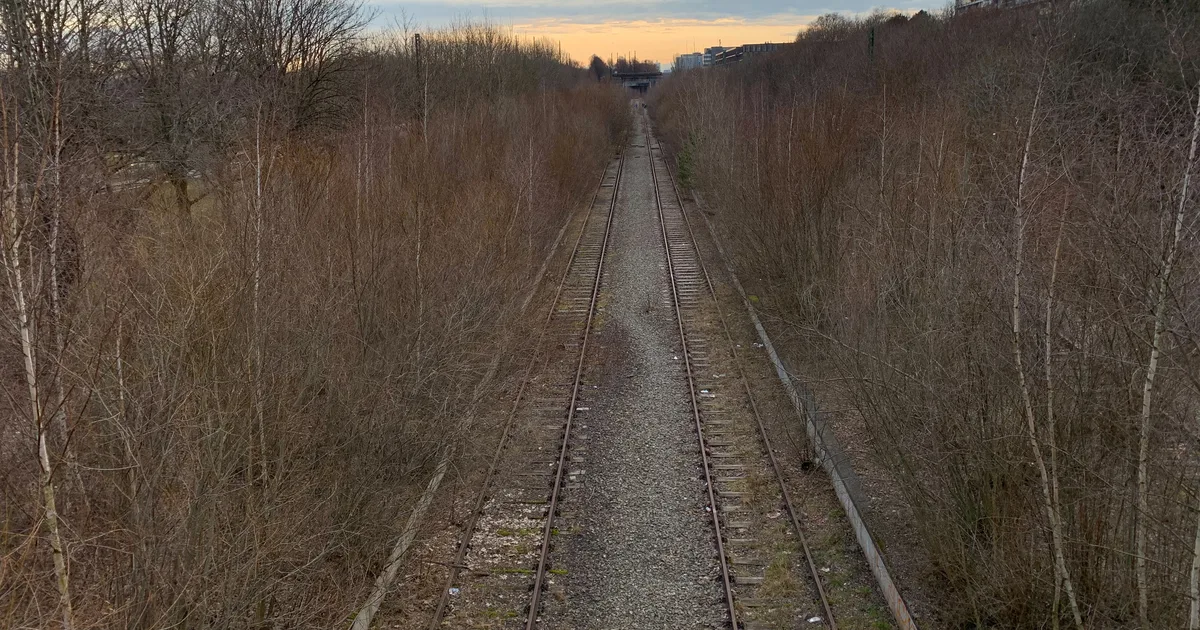
Right inside the Olympic Park, beside the A9 motorway and the Olympic Village, lies the München Olympiastadion station, known to everyone as the Geisterbahnhof (ghost station) and the most famous genuine lost place within the city limits. Built specially for the 1972 Summer Olympics, it was meant to handle the crowds heading to the Olympic Stadium with two island platforms about 400 metres long and four tracks.
After the Games, regular service ran only sporadically, on big event days, until the station was closed for good in 1988. It has decayed ever since and grown into a secondary biotope. It is listed as part of the Olympic Park ensemble and so cannot simply be demolished. The city of Munich bought the roughly 6.7-hectare site from the railway in 2011; plans for a cultural or park use are still stuck in early planning over contaminated soil. As of 2026 the station remains abandoned.
The site is private land owned by the city and officially closed; walking the tracks is not allowed and is historically charged, as the once live overhead line killed a child by electrocution here in 1988. Real risks: overgrown platform edges, rubble and unguarded drops. The ghost station remains the most iconic lost place in the heart of Munich, easy to view from the bridges and paths of the Olympic Park.
2. MUNA Hohenbrunn - the ammunition depot in the forest (Hohenbrunn)
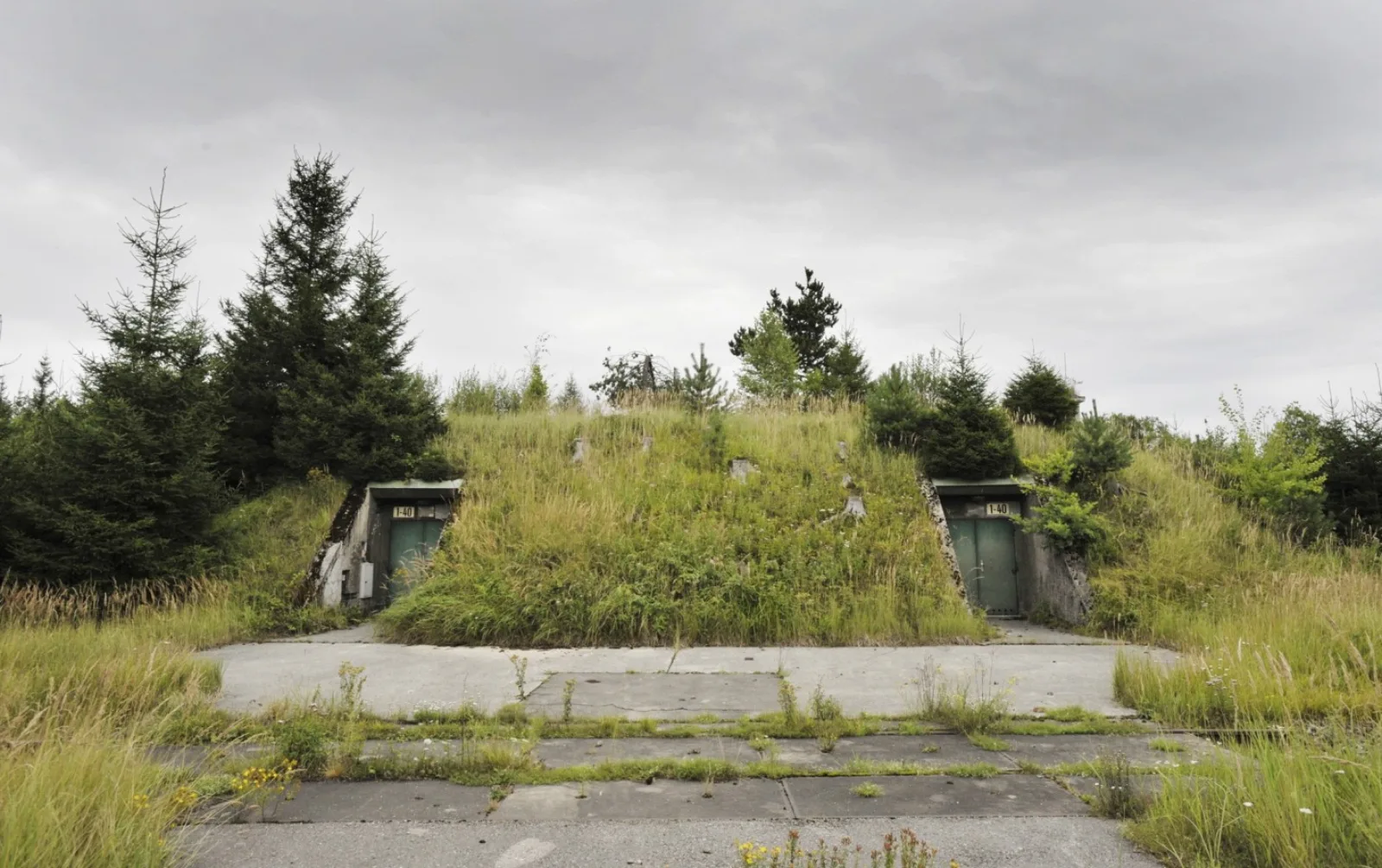
About 20 kilometres southeast of Munich, in the forest between Hohenbrunn and Höhenkirchen-Siegertsbrunn in Bavaria, lies the Heeresmunitionsanstalt Hohenbrunn, the MUNA for short. Across roughly 180 hectares, from 1938 the Nazi regime built a vast ammunition plant with about 110 to 120 bunkers, production halls, administrative buildings and its own rail siding. Towards the end of the war up to 4,000 people worked here, including 700 to 800 forced labourers.
After 1945 the US Army used the site first, the Bundeswehr took over in 1958, and the depot was decommissioned in 2007. In 2009 the federal property agency sold the now largely forested land to the two municipalities. The bunkers still stand and lie abandoned in the woods; the municipality plans to seal off part of them and reforest, but nothing has been demolished. It is one of the largest continuous lost-place areas in Greater Munich.
The grounds are private municipal land, fenced and watched by wildlife cameras at the main entrance; entering outside the official tours is forbidden. Instead, the municipality of Hohenbrunn runs an open MUNA day with guided tours, the safe way to see the bunkers. Real dangers: possible munitions remnants, collapse-prone ceilings and deep, unguarded entrances. The MUNA is the most striking military relic on the city's doorstep.
3. Familienbad Floriansmühle - the derelict natural bath (Munich-Freimann)
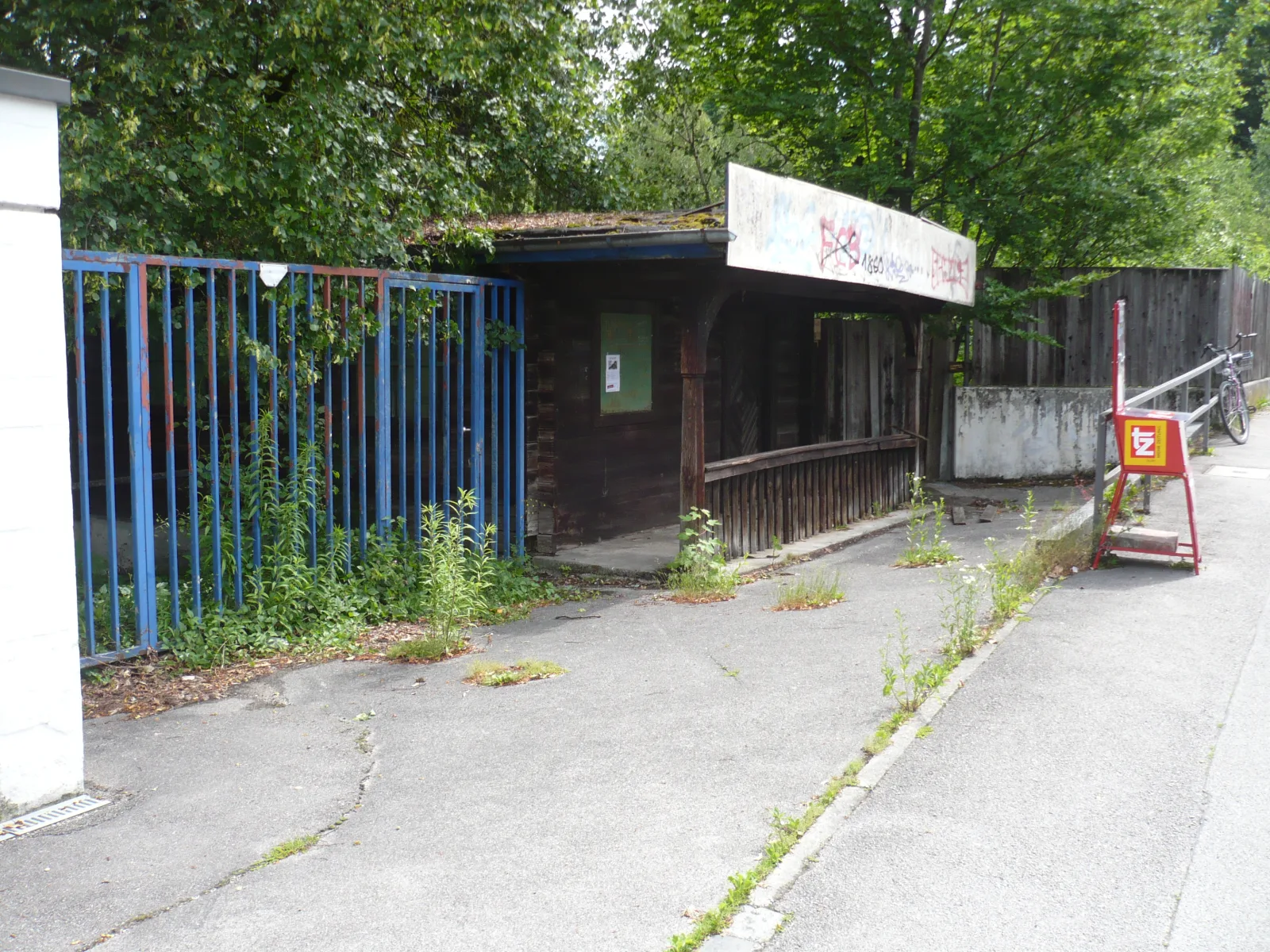
In the north of the city, in Munich-Freimann on Floriansmühlstraße, lies the Familienbad Floriansmühle, an old natural bathing place fed by the Garching mill stream. Opened in 1932 by former Olympic swimmer Karl Kaltenbach, it had a masonry swimmers' pool and a non-swimmers' pool, changing rooms and a striking wooden ticket kiosk.
Bathing stopped at the end of the 1980s; in 1991 the plot passed to a bank and went unsold for years. The bath has lain as an overgrown ruin by the canal ever since, its pools, changing rooms and showers decaying under birches and nettles. The current owner, a large Munich developer, has a housing scheme of several hundred units in planning. According to the latest reports from 2026 the pool structures still stand, but the lost-place window is likely to close soon.
The site is private, fenced and closed off, with collapse-prone structures, sharp-edged concrete and a deep, empty pool. It is easy to see and photograph from outside, along the stream. The Familienbad Floriansmühle is the most wistful spot on this list, a piece of Munich summer history slowly vanishing into the green.
4. Verlassener Bahnhof Karlsfeld - the overgrown platform (Karlsfeld)
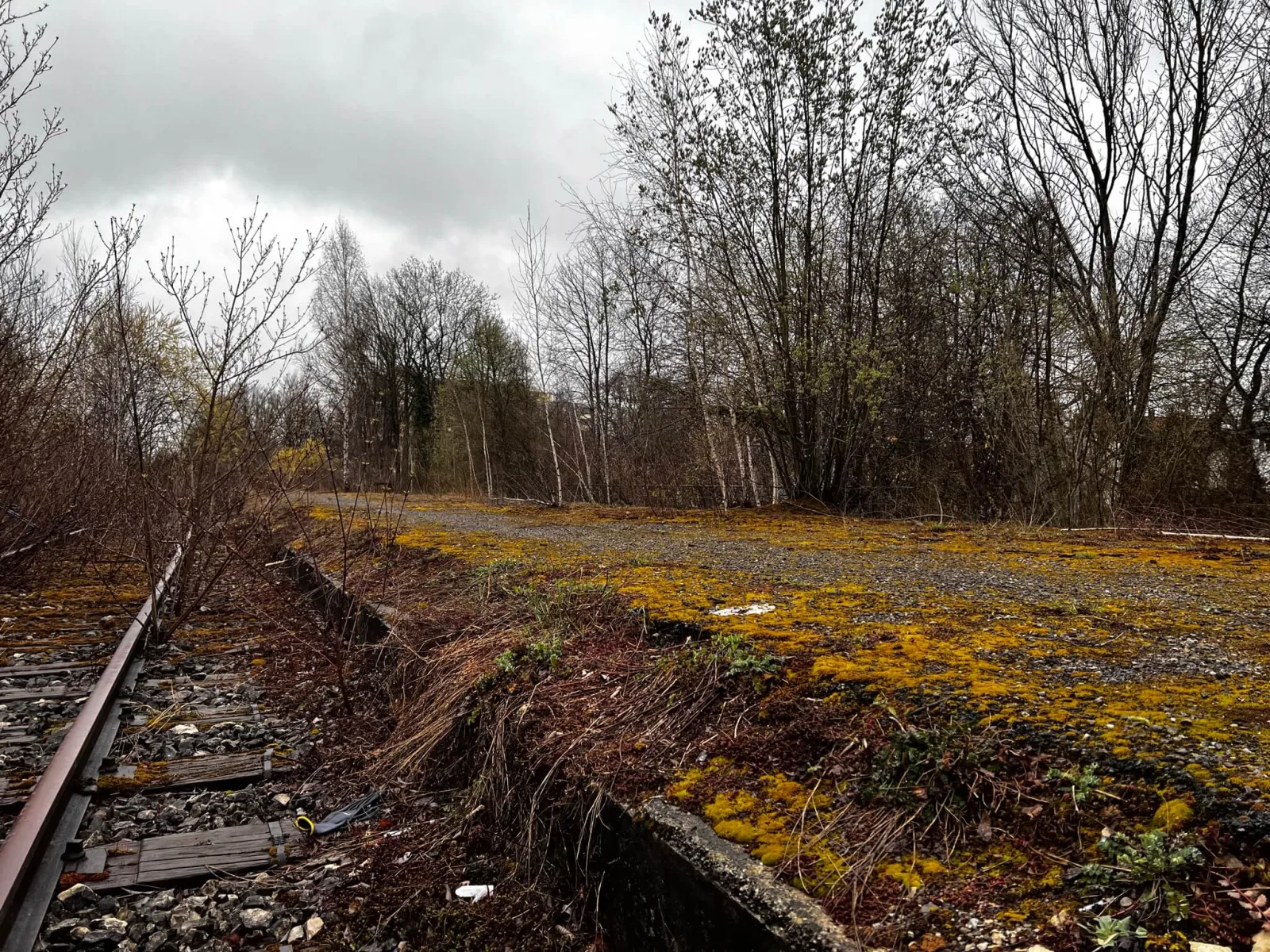
On the northwestern edge of the city, in Karlsfeld towards Dachau, an old abandoned station hidden behind trees sits right next to the active S-Bahn stop. Behind a noise barrier lie several hundred metres of old track, switches and an overgrown platform, separated from the modern, in-use stop on the S2 line.
The former passenger platform was abandoned and is today, as the satellite image shows, densely overgrown between fields and a housing estate. Unlike the big industrial ruins there is no building here that could be torn down, so the spot stays stable over the years and was last documented as accessible and intact in 2024. A small, quiet railway relic for anyone who likes the overgrown.
Here too: the land is railway property, entering track infrastructure is forbidden under railway law and dangerous. From the footpath and the nearby bus stop the overgrown platform is easy to make out. The abandoned Karlsfeld station is the most accessible and harmless entry on this list, ideal for a first outing in Greater Munich. Find more spots on our Bavaria urbex map.
5. DSC bunker field Geretsried - the explosives bunkers in the woods (Geretsried)
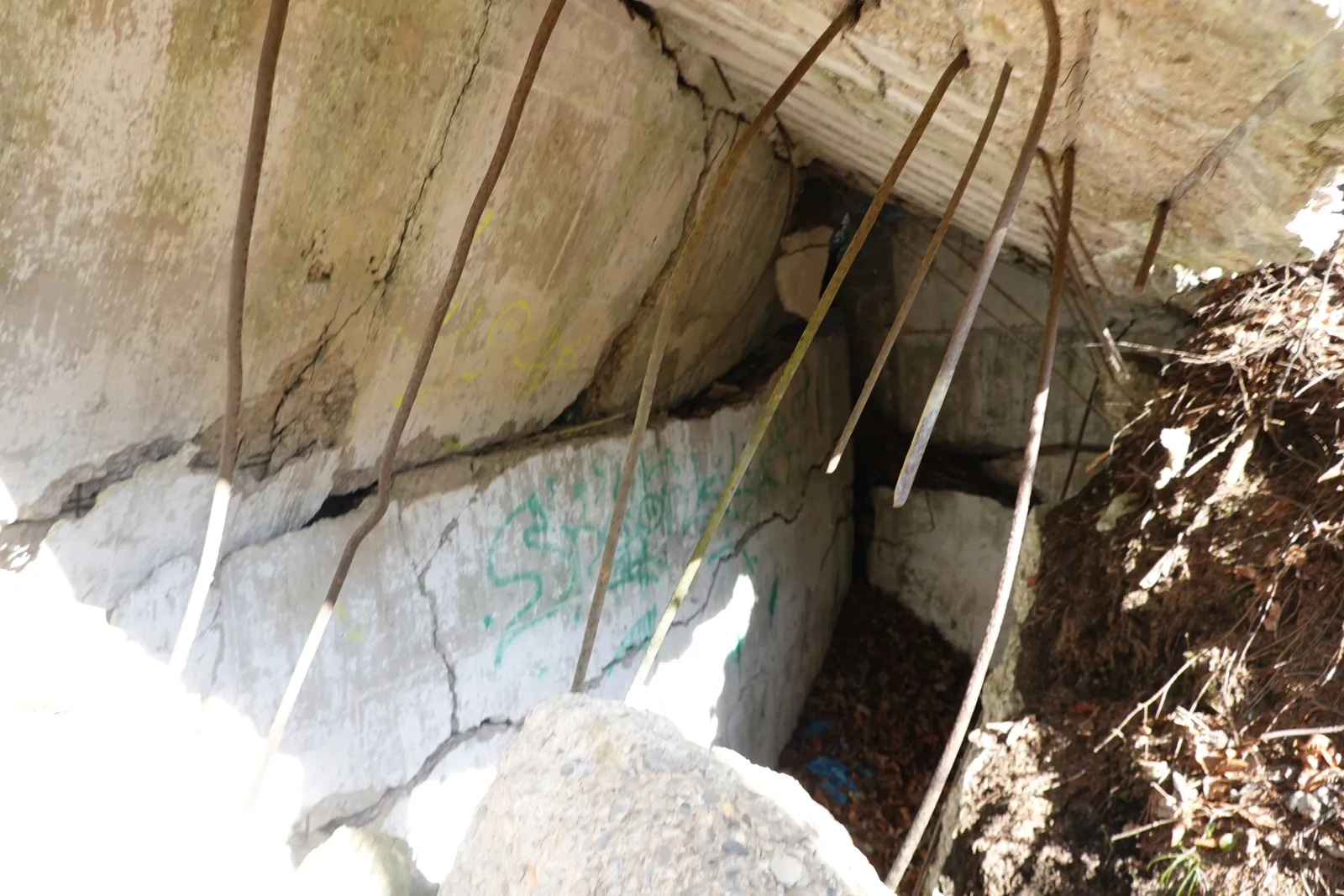
About 35 kilometres south of Munich, in the Wolfratshausen forest near Geretsried in the district of Bad Tölz-Wolfratshausen, lie the blown-up bunkers of the Deutsche Sprengchemie (DSC). From 1937, under the code name "Tal", one of Bavaria's largest explosives plants rose here, with hundreds of production and storage bunkers hidden under forest camouflage, two power stations and a rail connection. Numerous forced labourers were made to work here until the end of the war.
On 9 April 1945 the US Air Force bombed the plants, and in December 1945 most of the bunkers were blown up. What remains are blown-up bunker ruins, the destroyed pump and filter house of the power station, and underground passages, scattered through the forest and beneath the streets of Geretsried Süd. They have lain in the woods ever since and, unlike most Munich lost places, are permanently preserved because no one clears them away.
Parts of the area are a closed danger zone with open shafts and pits, and the underground tunnels are sealed for safety. The Geretsried adult-education centre runs guided bunker tours several times a year, the only safe way into the complex, sturdy boots required. The DSC bunker field is a dark chapter of Munich's hinterland history, tangible in the middle of the forest.
6. DAG bunker field Geretsried - the second explosives plant (Geretsried-Gartenberg)
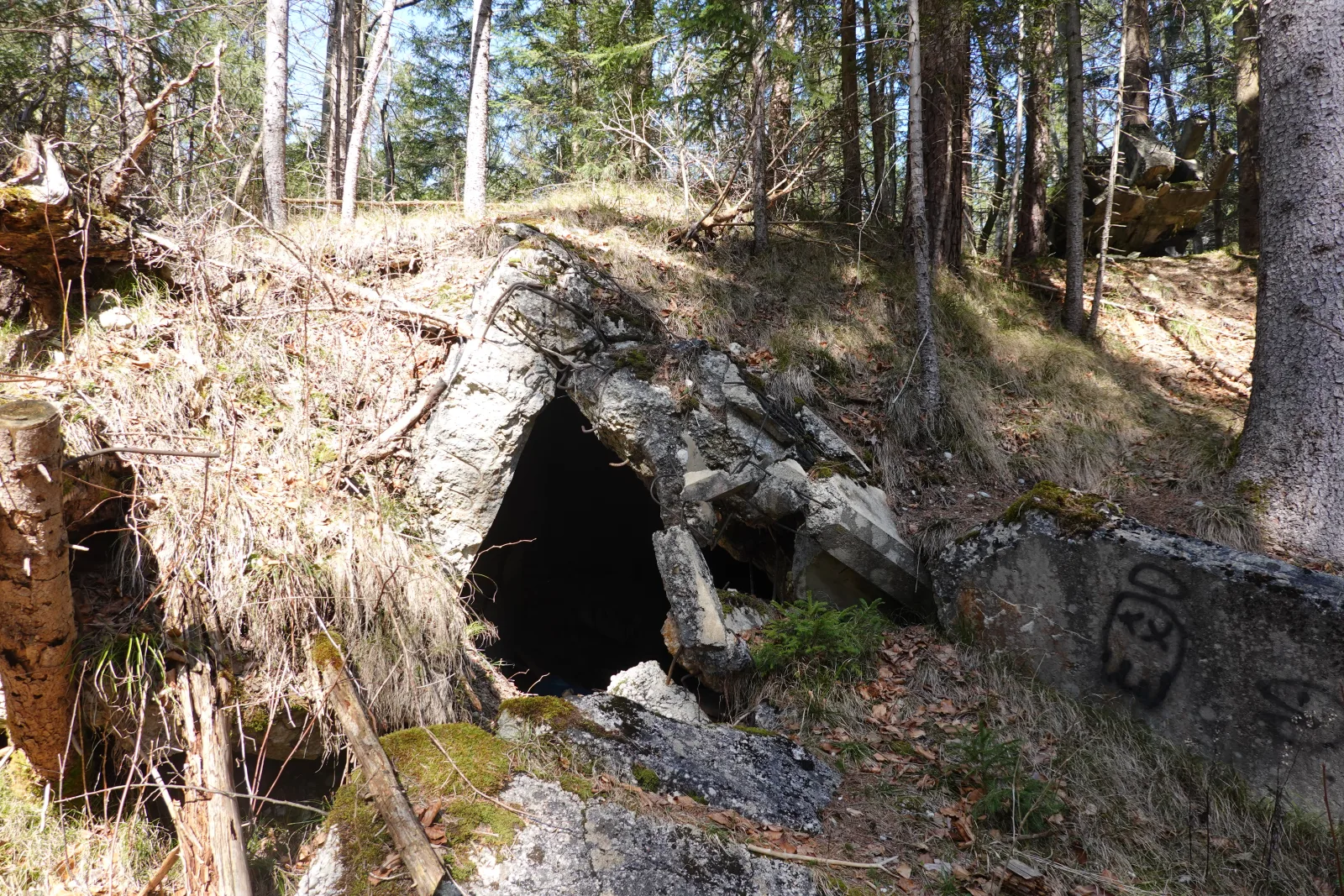
In the same forest, but as a separate plant, the Dynamit Aktien-Gesellschaft (DAG) built Geretsried's second large munitions factory from 1937, in what are now the districts of Gartenberg and Stein. Together, DSC and DAG turned the quiet forest south of Munich into one of the densest armaments areas in southern Germany, nicknamed "the chocolate factory" because, from above, the camouflaged bunkers lay in the woods like pralines.
The DAG works too were bombed on 9 April 1945 and partly blown up after the war. To this day, as the town's history records, remains of storage bunkers, administrative buildings and other structures are scattered across the whole municipality, at the forest edge beside today's industrial estate. The town of Geretsried itself only grew out of this armaments ruin after 1945, which makes the DAG site the historical counterpart to the DSC bunker field next door.
As at the DSC field: open bunker remains and pits form a closed danger zone, entering on your own is forbidden and risky, and the safe route is the guided tours. Connecting both bunker fields gives you the full scale of Geretsried's history. For the complete overview, our Bavaria urbex map lists thousands of spots.
What is not on this list
Munich is notorious for losing its lost places fast. We deliberately left out several famous spots because they are no longer abandoned. The Diamalt works in Allach has been built up since 2024 as the "Diamaltpark" with more than 700 flats, the Aubing power station reopened in 2024 as the "Bergson" cultural centre, and the Wiedemann sanatorium in Ambach on Lake Starnberg, once a fresh-cell clinic for celebrities, was largely demolished by 2023.
Also missing are active or protected sites often passed off as lost places: the Garching research reactor ("Atom-Ei") is a listed monument on the live TU campus, the Mangfall barracks in Bad Aibling is an active BND intelligence station, and Fürstenfeldbruck air base stays in military use until at least 2030. What stands here are only places that are genuinely open and still standing in 2026.
FAQ - Lost places in Munich
Is urbex legal in Munich?
Looking at and photographing buildings from public ground is legal. Entering private property without permission is trespass under section 123 of the German Criminal Code, punishable by a fine or up to a year in prison, and property damage falls under section 303. Almost all spots here are private, railway or municipal land, several accessible only on official tours. We document them for their history, without ever encouraging break-ins. For more, read our big pillar on the lost places of Germany.
Where can I find more abandoned places around Munich?
Our map lists thousands of spots across Munich and the whole of Bavaria. You can add the six places in this article to your personal map for free via the button under each entry, then unlock the rest through our regional packs.
Are these lost places dangerous?
Yes. The Geretsried bunker fields have open shafts and munitions remnants, MUNA Hohenbrunn possible ordnance and collapse-prone ceilings, the Floriansmühle bath sharp concrete and deep pools, the ghost station overgrown platform edges. Several can only be seen from outside or on guided tours. Never go alone, carry a head torch, and never enter a structure that looks unsafe. Our urbex gear guide covers the essentials.
Which lost place is best to start with?
The abandoned Karlsfeld station is the easiest and most harmless: it sits on the city edge, easy to see from the footpath, with no real difficulty. The Geisterbahnhof Olympiastadion is best admired from the paths of the Olympic Park. For MUNA Hohenbrunn and the Geretsried bunkers, the safest option is to join one of the official guided tours.
Conclusion: Munich, a city that loses its ruins fast
From the ghost station in the Olympic Park to the blown-up bunkers in the Geretsried forest, the lost places of Greater Munich tell a story of the Olympics, of war and of a building boom that rolls over almost anything left empty. They are not stage sets but open-air history books, fragile, to be explored with respect and without damage, several of them now reachable only on guided tours. Add them to your map, and carry on browsing our big pillar on the lost places of Germany or the full Bavaria urbex map.