Lost places in Cologne tell the story of a city that walled itself behind a double ring of forts, built engines and bricks on the Rhine and housed its merchant elite in grand villas, before wars, deindustrialisation and speculation left whole worlds behind. Between the overgrown walls of Fort VII and Fort IX, the derelict ghost villa of Fühlingen and the silent halls of the Deutz engine works, Cologne is one of the densest urbex grounds in the Rhineland. Our map lists thousands of geolocated spots across North Rhine-Westphalia and the rest of Germany.
For this guide we picked 6 places that are genuinely abandoned and still standing in 2026, each verified one by one: two forts of the outer fortification ring, a ghost villa scarred since the war, the birthplace of the four-stroke engine, a brickworks that has been decaying for over fifty years, and a legally accessible tank graveyard on the western edge of the region. No demolished landmarks passed off as live spots, no restored attraction dressed up as a ruin. Under each entry, an "Add to my map" button saves the GPS coordinates to your personal account, for free and with no credit card.
The searches lost places Cologne, abandoned places Cologne, urbex Cologne, abandoned buildings Cologne and derelict places NRW all point to the same reality: a military, industrial and bourgeois heritage that history set aside through demilitarisation, factory closures and shifting city politics, and that photographers, urbexers and historians are rediscovering today. This guide gives you each site's dated history, its legal status and its real dangers, before handing you its coordinates.
Lost places Cologne for free: why Urbex Maps changes the game
Before the spots, a word on what makes this guide different. Most pages about lost places in Cologne put "free" in the title, then send you off to a closed Facebook group, a forum or a paywall. Here the promise is concrete: under each place, an "Add to my map" button drops the GPS coordinates into your personal account, with no subscription and no credit card.
Behind the map is a community of more than 40,000 explorers, active since 2021. Every set of coordinates is checked at least twice - by the contributor who submits it, then by a regional moderator who confirms the spot still exists and has not been walled up or demolished. The places offered in this article are part of that catalogue; the rest of the thousands of German spots are unlocked through packs that fund the moderation and field verification.
One reminder before you set off: urban exploration is not illegal in itself, but entering private property without permission is trespass (§ 123 of the German criminal code), and it becomes a criminal matter the moment you cause damage or ignore signs and fences. We document these places for their history; we never encourage breaking in. Helmet, head torch, sturdy boots and caution on the floors: several of the spots below carry real collapse and asbestos risks, and the forts hide open shafts and flooded ditches.
1. Fort VII - the overgrown fortress in the south (Cologne-Zollstock)
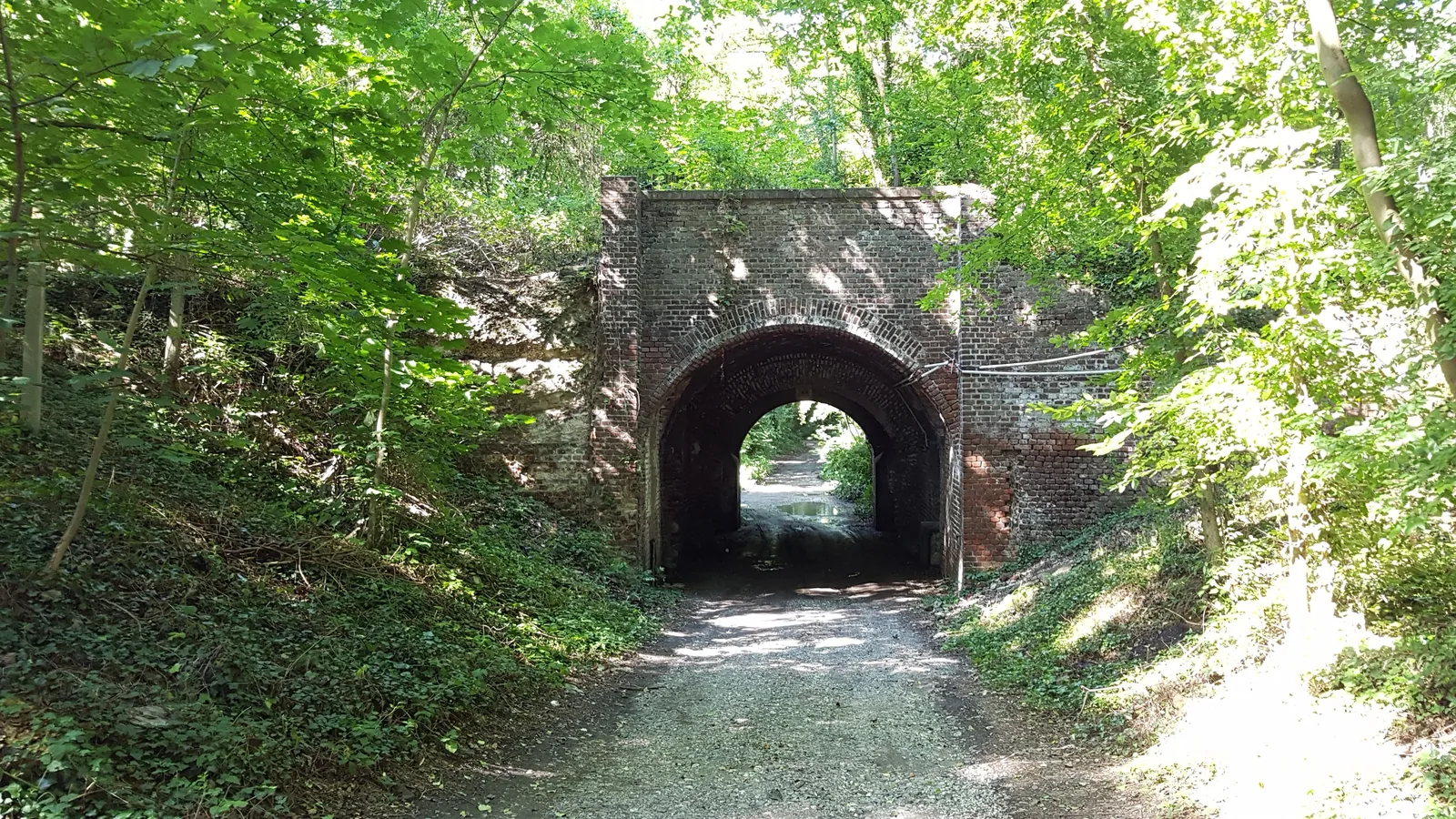
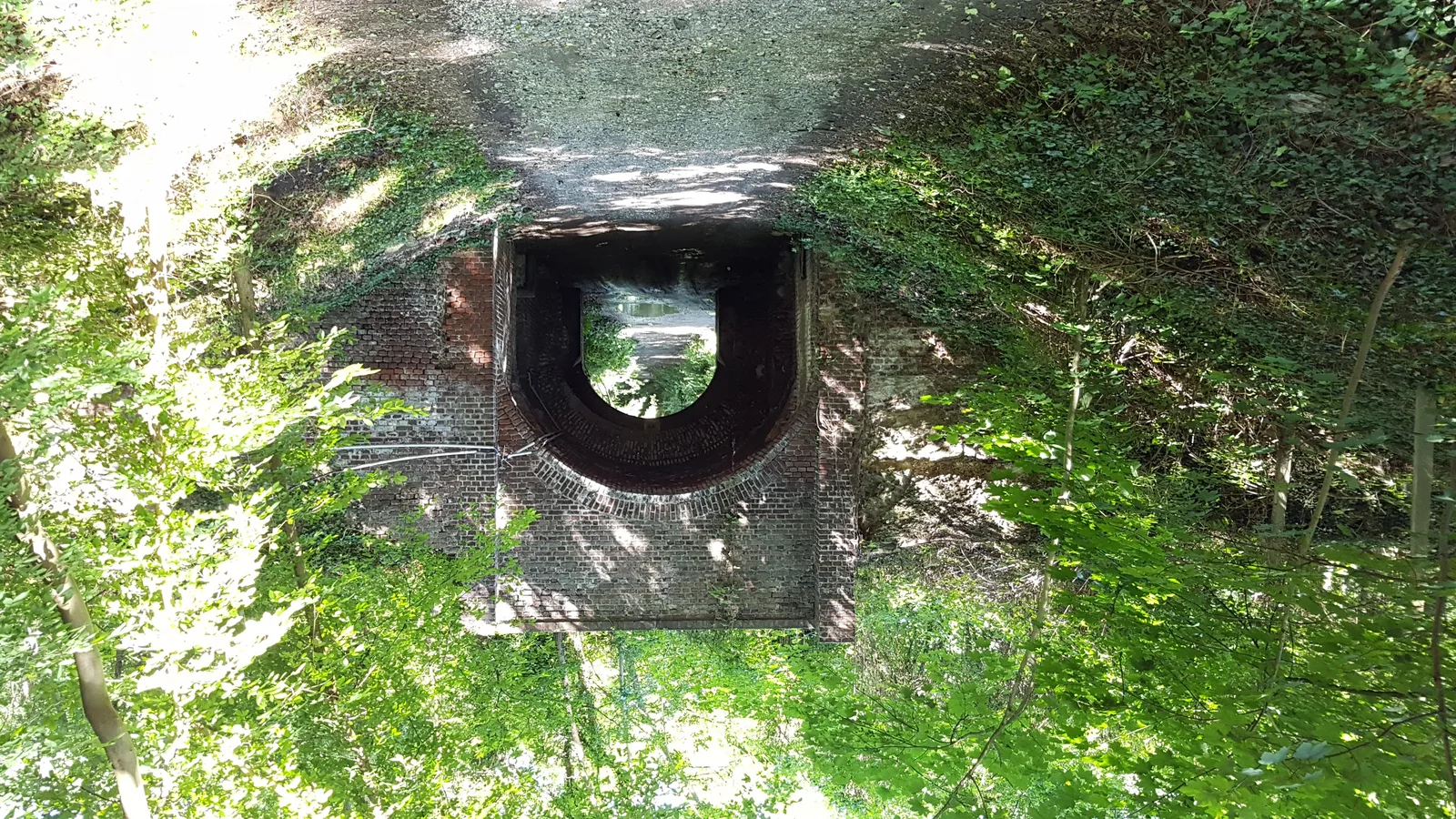
In the south of the city, in Cologne-Zollstock, Fort VII is, at roughly 345 by 200 metres, the largest work of the outer fortification ring. Built between 1874 and 1877 as part of the Prussian ring of forts around Cologne, it was partly slighted after the First World War under the Treaty of Versailles and used for anti-aircraft guns and air-raid shelter in the Second World War. Militarily it was already obsolete by 1918.
Today the site belongs to Deutsche Bahn and has stood empty for decades: a 1999 hotel project was never realised, and the fort is decaying visibly under heavy vegetation. Walls, ditches and casemates are slowly disappearing into the green - which is exactly what makes Fort VII the emblematic lost place of the Cologne fortress ring.
The site is private and officially closed to visitors. Real risks here: unstable masonry, open shafts, flooded sections of ditch and dense vegetation hiding holes. Look at it for what it is - a Prussian fortress returning to the woods - and you understand why it remains the best-known abandoned place in the south of Cologne.
2. Haus Fühlingen - the Oppenheim ghost villa (Cologne-Fühlingen)
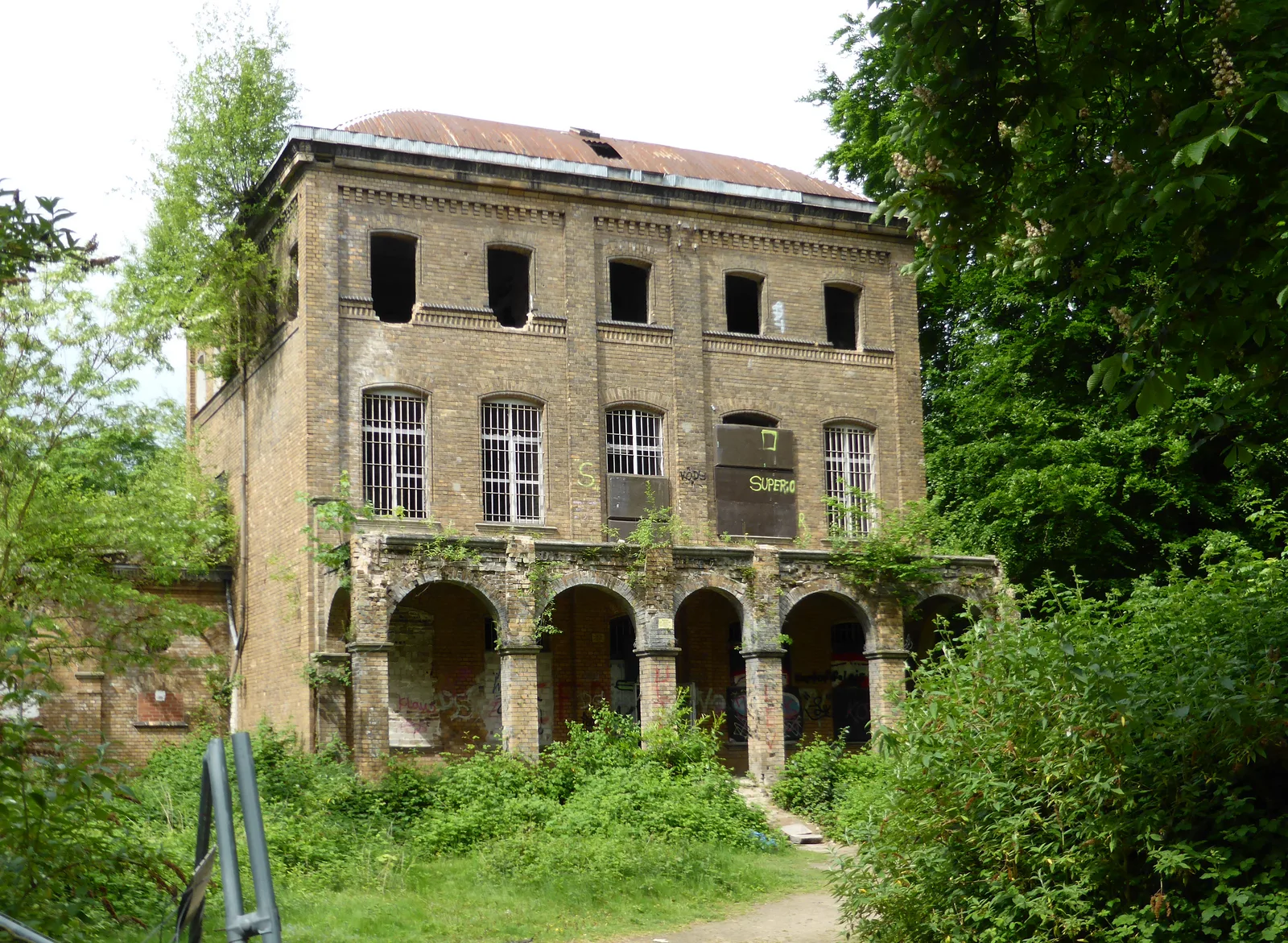
In the north of the city, in Cologne-Fühlingen, Haus Fühlingen is the most famous ghost villa in town. Built between 1884 and 1888 as a summer residence and stud farm for Eduard von Oppenheim of the Sal. Oppenheim banking dynasty, the estate became a site of forced labour in 1943. After the suicide of its then owner in 1962 the villa lost its purpose, and it has stood empty since around the year 2000.
In 2004 the house passed to the German Property Group, whose conversion plans were rejected in 2019; in October 2023 the villa was struck from the monument register because of its advanced decay. It sits in a landscape conservation area that rules out any new build, so it keeps decaying as a scarred ruin in the green. Anyone who wants to see the legendary Cologne ghost villa should hurry - demolition is not ruled out.
The estate is private and entry is forbidden, and the building is badly damaged by damp, mould and vandalism: rotten floors, falling plaster and unstable ceilings. Haus Fühlingen is the darkest story on this list - a villa too heavily burdened by its history to ever be lived in again.
3. Fort IX - the right-bank fortress (Cologne-Westhoven)
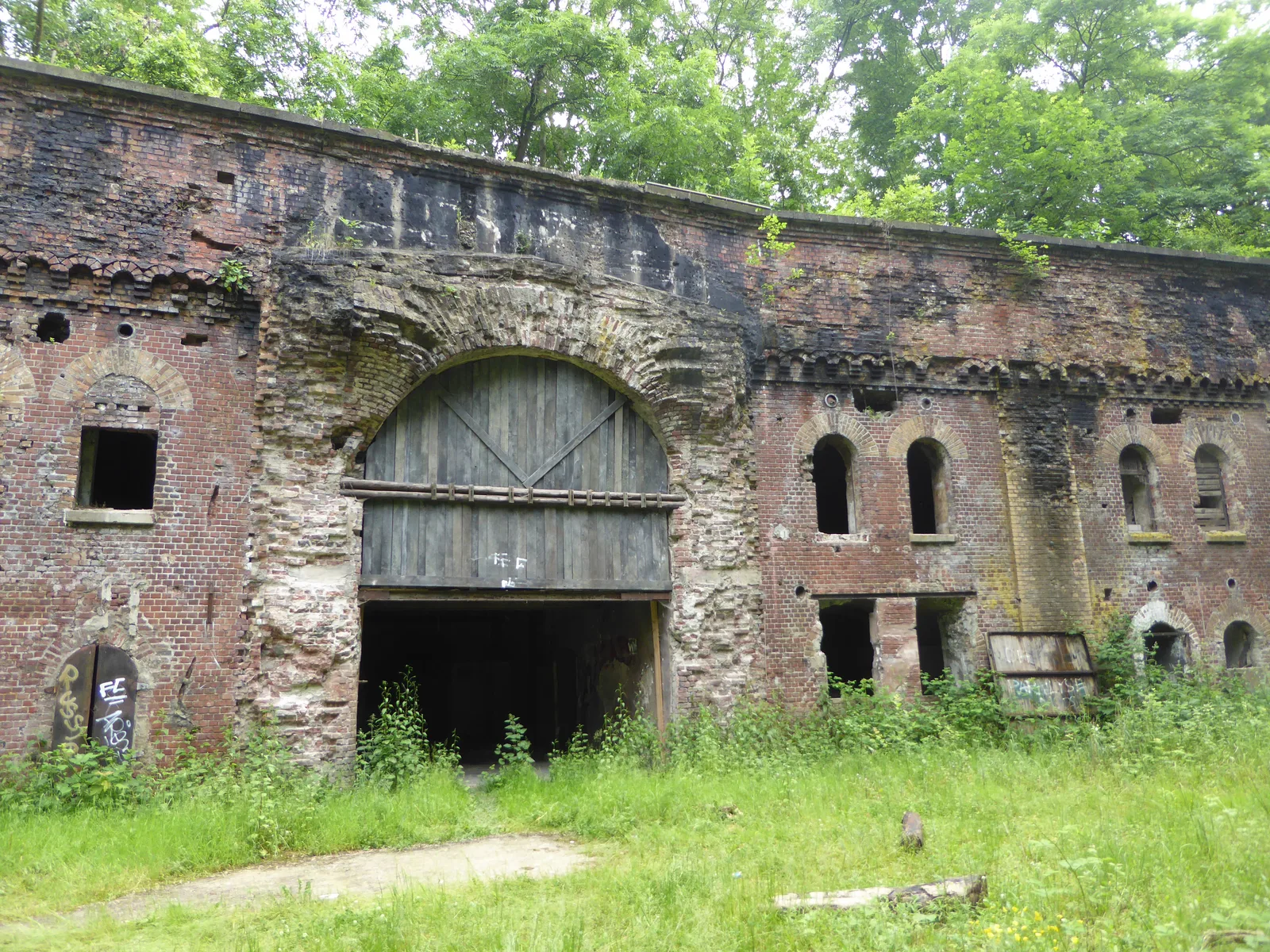
On the right bank of the Rhine, in Cologne-Westhoven, Fort IX is another work of the outer fortification ring, covering about 65,000 square metres. Built between 1877 and 1881, it was never used militarily as intended, partly slighted in 1922 and used as stables by the Belgian armed forces until 1998. Today it belongs to the federal government and stands empty, overgrown, with bats in its tunnels.
One important clarification: Fort IX is not the fortress museum - that one is in the neighbouring intermediate work VIIIb. The actual Fort IX is an abandoned complex whose ramparts and casemates are vanishing under brambles and young trees. Regular access exists only once a year, on the "open forts day" (next date: 7 June 2026); outside that day the site is closed.
The fort is federally owned and inaccessible outside the open day. The dangers are those typical of a fortress ruin: unstable vaults, open shafts, flooded areas and dense root systems. Fort IX completes Fort VII to form the picture of a double fortress ring whose right-bank half is sinking into nature just as slowly.
4. Gasmotorenfabrik Deutz - the birthplace of the four-stroke engine (Cologne-Mülheim)
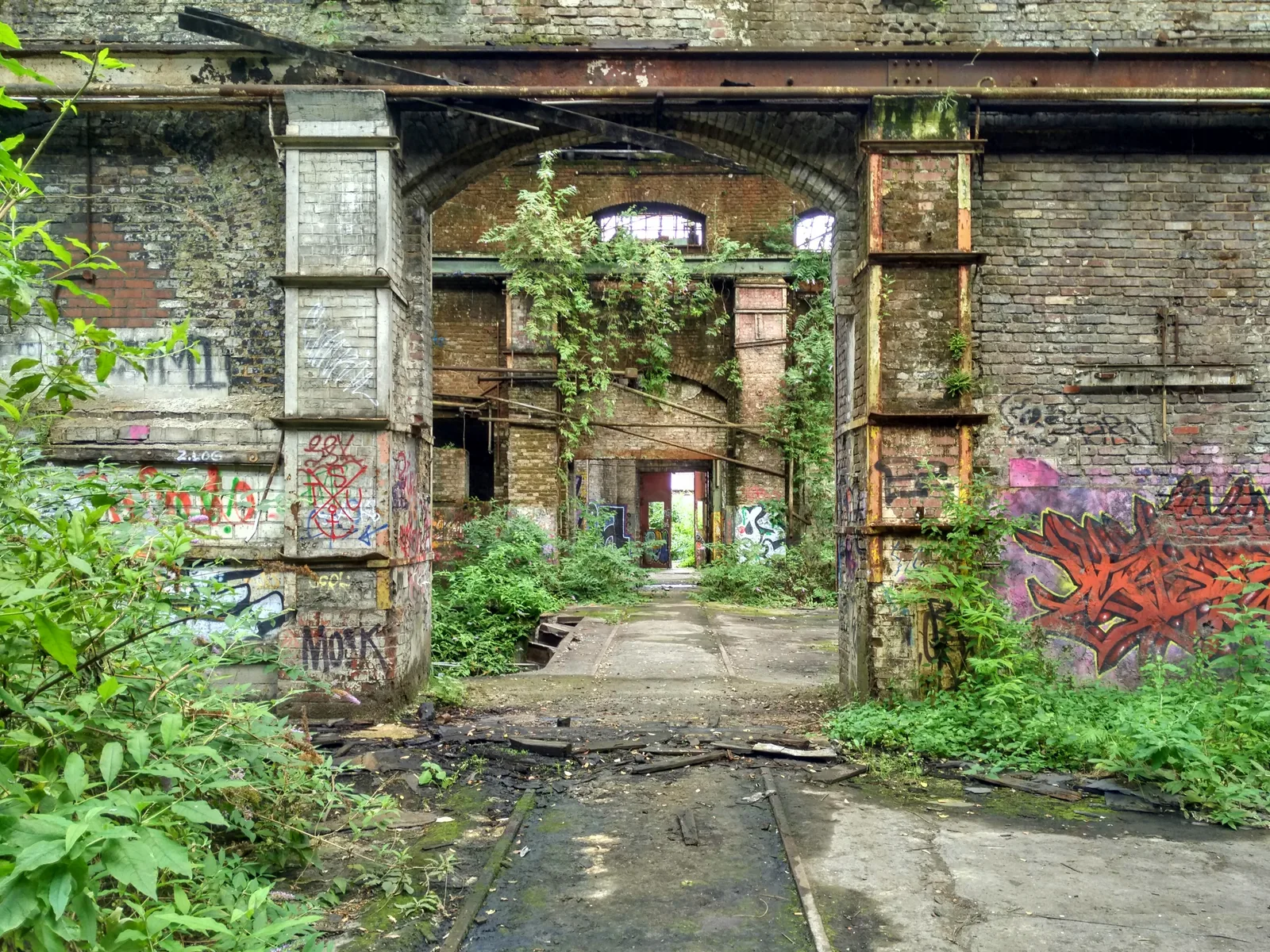
In Cologne-Mülheim stand the disused halls of the Gasmotorenfabrik Deutz, founded in 1864 by Nicolaus Otto and Eugen Langen - the world's first engine factory. It was here that the four-stroke Otto engine that changed the world was created in 1876. The elegant Möhring pavilion of 1902 was designed by architect Bruno Möhring. Production west of Deutz-Mülheimer Strasse ended in 2002, and the empty halls became a lost place sought out by documentary makers and urbexers.
The site is under pressure from redevelopment: housing and high-rises are rising around the Cologneo quarter, and the listed core has been bought by the city for cultural reuse. The lost-place character of the empty works halls is therefore finite - what stands empty today can be a building site tomorrow.
The site is private and under redevelopment, fenced in places and dangerous because of construction work. Industrial-ruin risks apply with particular force here: unstable ceilings, falling masonry, contaminated ground and possible asbestos. The Gasmotorenfabrik Deutz remains the most historically significant lost place in Cologne - the place where the internal combustion engine was born.
5. Pleistalwerk - the brickworks decaying for fifty years (Sankt Augustin)
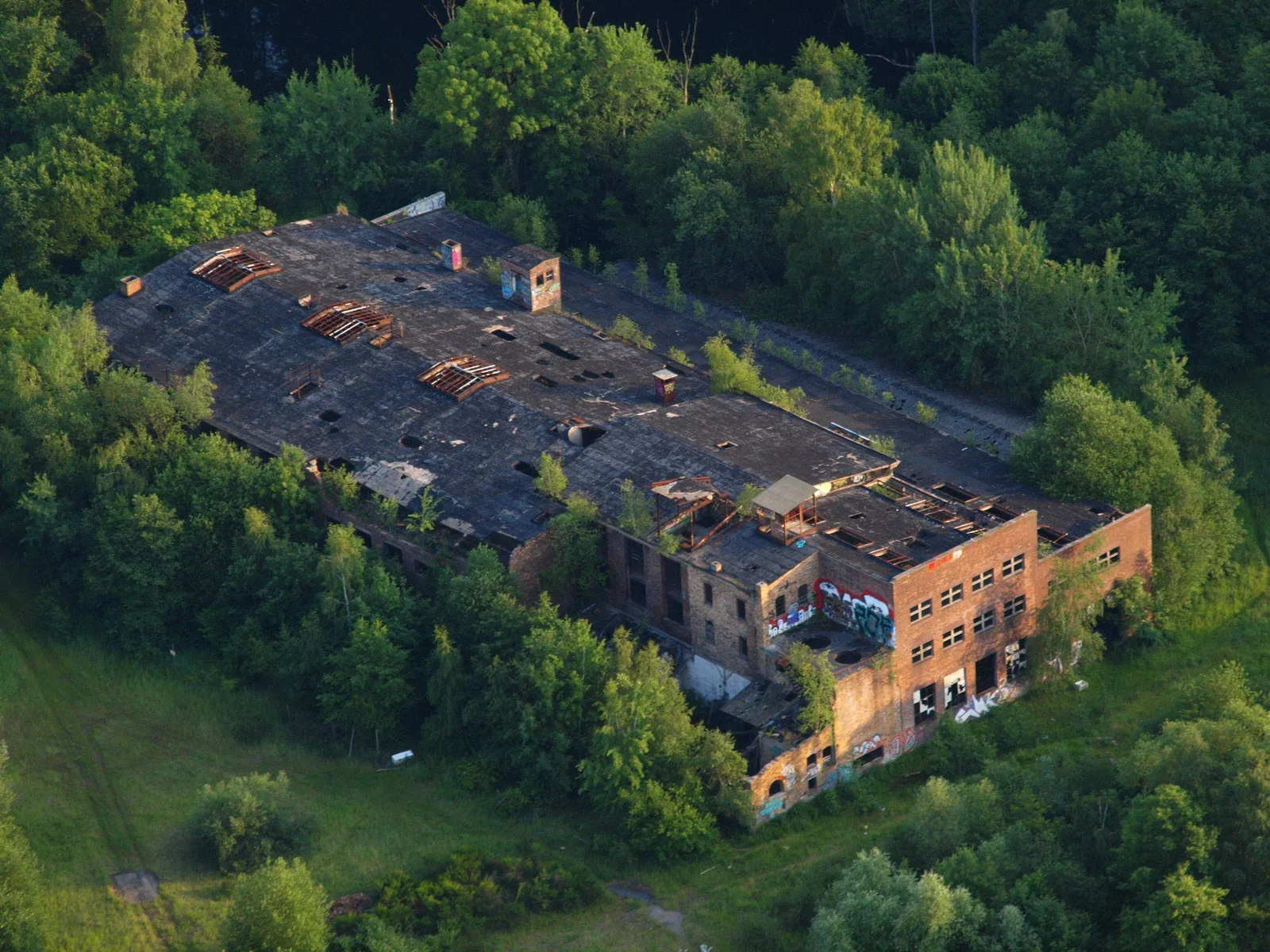
About 25 kilometres south-east of Cologne, in Sankt Augustin-Niederpleis, lies the Pleistalwerk, a brick and stoneware factory founded in 1841 by Albert von Mühlmann. By around 1912 the works employed 242 people; in 1926 it took the name Pleistalwerk. Production ceased in 1971, and the last use of the site ended in the 1990s.
Since then the works has been decaying for over fifty years - the brick halls, kilns and chimneys are a lost place well known in the scene, famous for "fifty years of purely natural decay" and for its graffiti. Entry has been forbidden since 2008 because of acute collapse risk, which has only deepened its morbid appeal.
The site is private with a no-entry order and genuinely dangerous: collapsing halls, holes in the floors, falling bricks. The Pleistalwerk is the most classic lost place in the Cologne area - an industrial ruin that nature has been reclaiming for half a century.
6. Brander Wald tank graveyard - the rusting tank wrecks (Aachen)
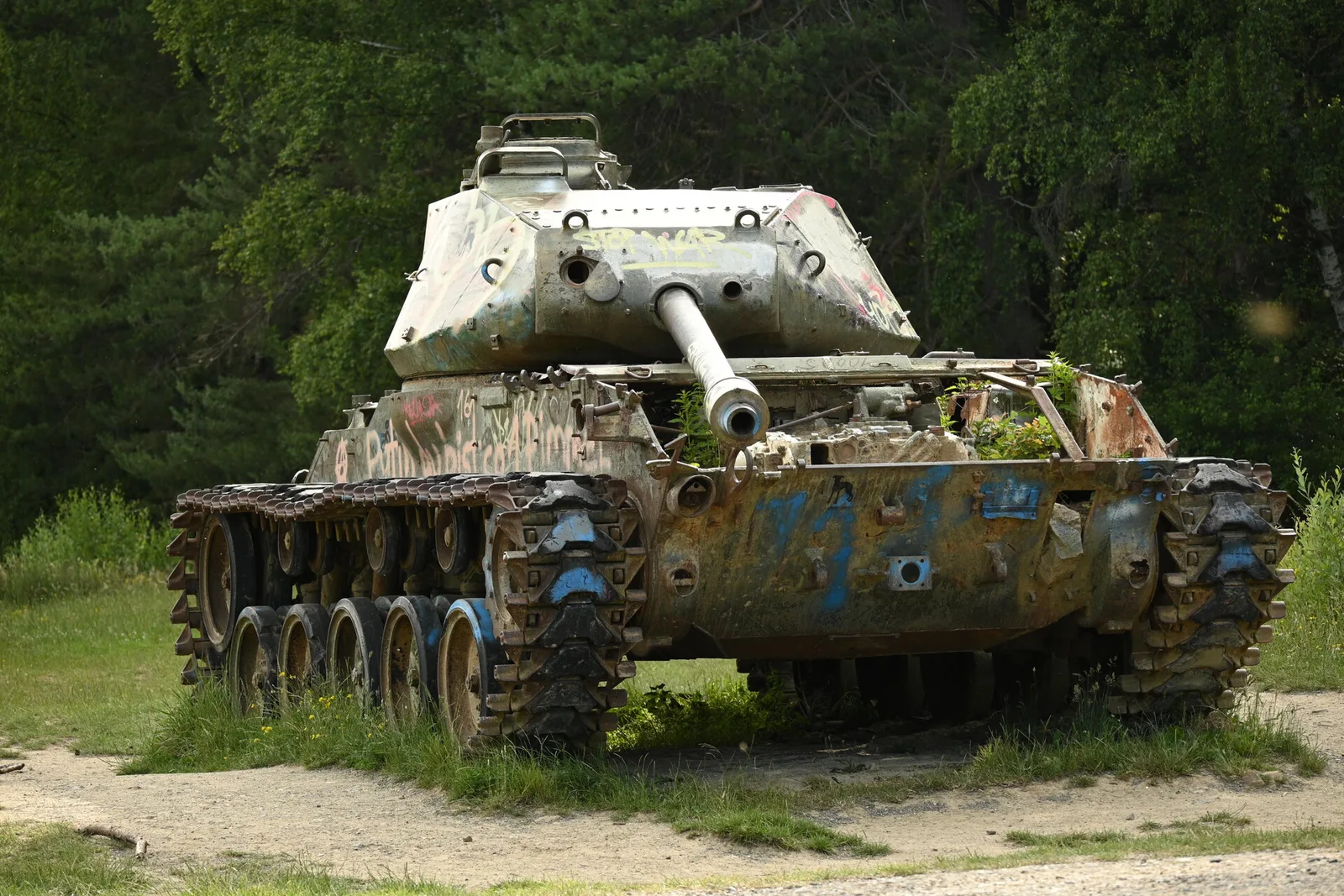
As a trip to the west, about 65 kilometres from Cologne in the Brander Wald near Aachen, lies one of the best-known freely accessible lost places in the region: a tank graveyard with several rusting wrecks. Three M47 Patton tanks, an M41 and an HS.30 armoured personnel carrier were placed as targets on a training ground by the old Westwall from the mid-1970s, their hatches welded shut.
Over the decades the tanks have rusted in the forest and been covered in graffiti - an unusual lost place that is not a ruin but a piece of Cold War history in the undergrowth. Unlike most sites on this list, the Brander Wald is legally accessible, as long as you respect the practice times of the adjacent shooting range (red flag = no entry).
These are wrecks in a forest, not a building: rusted edges, sharp metal and the neighbouring range are the only real risks. The tank graveyard closes this list with the one spot you can experience with no trespass at all. Find more spots on our North Rhine-Westphalia urbex map.
FAQ - Lost places Cologne
Is urbex legal in Cologne?
Looking at and photographing buildings from public ground is legal. Entering private property without permission is trespass (§ 123 of the German criminal code) and becomes a criminal matter if you cause damage or ignore fences and warning signs. Most spots here are private, listed or federally owned: we document them for their history, without ever encouraging break-ins. One exception is the Brander Wald tank graveyard, which is legally accessible. For more, read our pillar on lost places in Germany.
Where can I find other lost places around Cologne?
Our map lists thousands of spots across North Rhine-Westphalia and the rest of Germany. You can add the six places in this article to your personal map for free via the button under each entry, then unlock the rest through our regional packs.
Are these lost places dangerous?
Yes. Forts VII and IX have open shafts and flooded ditches, Haus Fühlingen has rotten floors and mould, and the Pleistalwerk and Deutz halls have unstable masonry and possible asbestos. Several are best seen only from outside. Go with someone, carry a head torch, and never enter a structure that looks unsafe. Our urbex gear guide covers the essentials.
Which lost place is best to start with in Cologne?
The Brander Wald tank graveyard is the easiest and the one legal option: wrecks in a forest, no trespass, only the shooting range's practice times to watch. If you want classic fortress atmosphere, view Fort VII in Zollstock from outside, and for industrial romance the Pleistalwerk is the most spectacular backdrop.
Conclusion: Cologne, a city written in ruins
From the overgrown forts of the fortification ring to the scarred ghost villa of Fühlingen and the birthplace of the Otto engine, the lost places of Cologne tell the story of a fortress, industrial and merchant city - and of the demilitarisation, the factory closures and the speculation that left these places behind. They are not stage sets: they are open-air history books, fragile, to be explored with respect and without damage. Add them to your map, and carry on with our pillar on the 16 lost places of Germany or the full Germany urbex map.