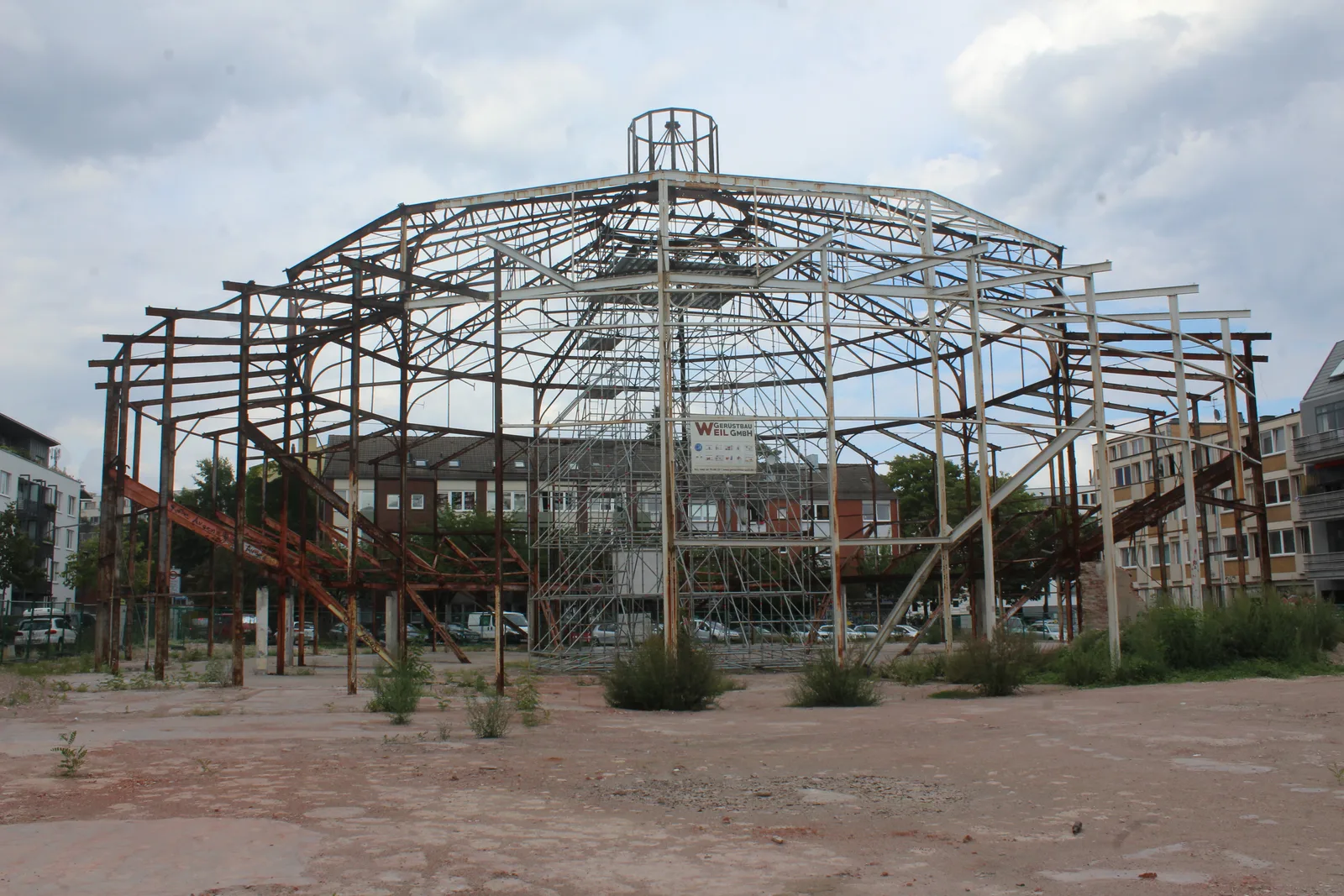
Lost places in Hamburg tell the story of a port and industrial city that built ships, pressed rubber combs, treated its sick on the edge of the woods and made explosives on the banks of the Elbe, then watched whole industries fall away. Between the steel skeleton of the Schiller-Oper in St. Pauli, the derelict halls of the Harburg rubber works and the overgrown ruins of the Düneberg powder factory near Geesthacht, Hamburg and its surroundings are one of the richest urbex grounds in northern Germany. Our map lists thousands of geolocated spots across Hamburg and the whole of Germany; this city guide is part of our larger pillar on the 16 most iconic lost places in Germany.
For this guide we picked 6 places that are genuinely abandoned and still standing in 2026, each verified one by one: a listed circus ruin in the heart of the city, a disused rubber factory in the Harburg harbour, a brick school empty for more than fifteen years, and three atmospheric ruins on the south-eastern fringe of the metro region. No demolished landmarks passed off as live spots, no restored attraction dressed up as a ruin. Under each entry, an "Add to my map" button saves the GPS coordinates to your personal account, for free and with no credit card.
The searches lost places Hamburg, abandoned places Hamburg, urbex Hamburg, abandoned buildings Hamburg and derelict places Hamburg all point to the same reality: a maritime, industrial and Gründerzeit heritage that history set aside through shipyard closures, the end of the old sanatorium system and changing uses, and that photographers, urbexers and historians are rediscovering today. This guide gives you each site's dated history, its legal status and its real dangers, before handing you its coordinates.
One honest word first: Hamburg's most famous lost places have vanished one after another in recent years, demolished or turned into apartments. That is why this list deliberately reaches into the metro region, all of these sites lie within about fifty kilometres of the main station. What remains is real: still standing, still derelict, verified in 2026.
Free lost places Hamburg: why Urbex Maps changes the game
Before the spots, a word on what makes this guide different. Most pages about lost places in Hamburg put "free" in the title, then send you off to a closed Facebook group, a forum or a paywall. Here the promise is concrete: under each place, an "Add to my map" button drops the GPS coordinates into your personal account, with no subscription and no credit card.
Behind the map is a community of more than 40,000 explorers, active since 2021. Every set of coordinates is checked at least twice - by the contributor who submits it, then by a regional moderator who confirms the spot still exists and has not been walled up or demolished. The places offered in this article are part of that catalogue; the rest of the thousands of German spots are unlocked through packs that fund the moderation and field verification.
One reminder before you set off: urban exploration is not illegal in itself, but entering private property without permission is trespass, and it can become a criminal matter if you cause damage or ignore signs and fences. We document these places for their history; we never encourage breaking in. Helmet, head torch, sturdy boots and caution on the floors: several of the spots below carry real collapse and asbestos risks, and on the Elbe some ruins sit right on deep water.
1. Schiller-Oper - the circus ruin of St. Pauli
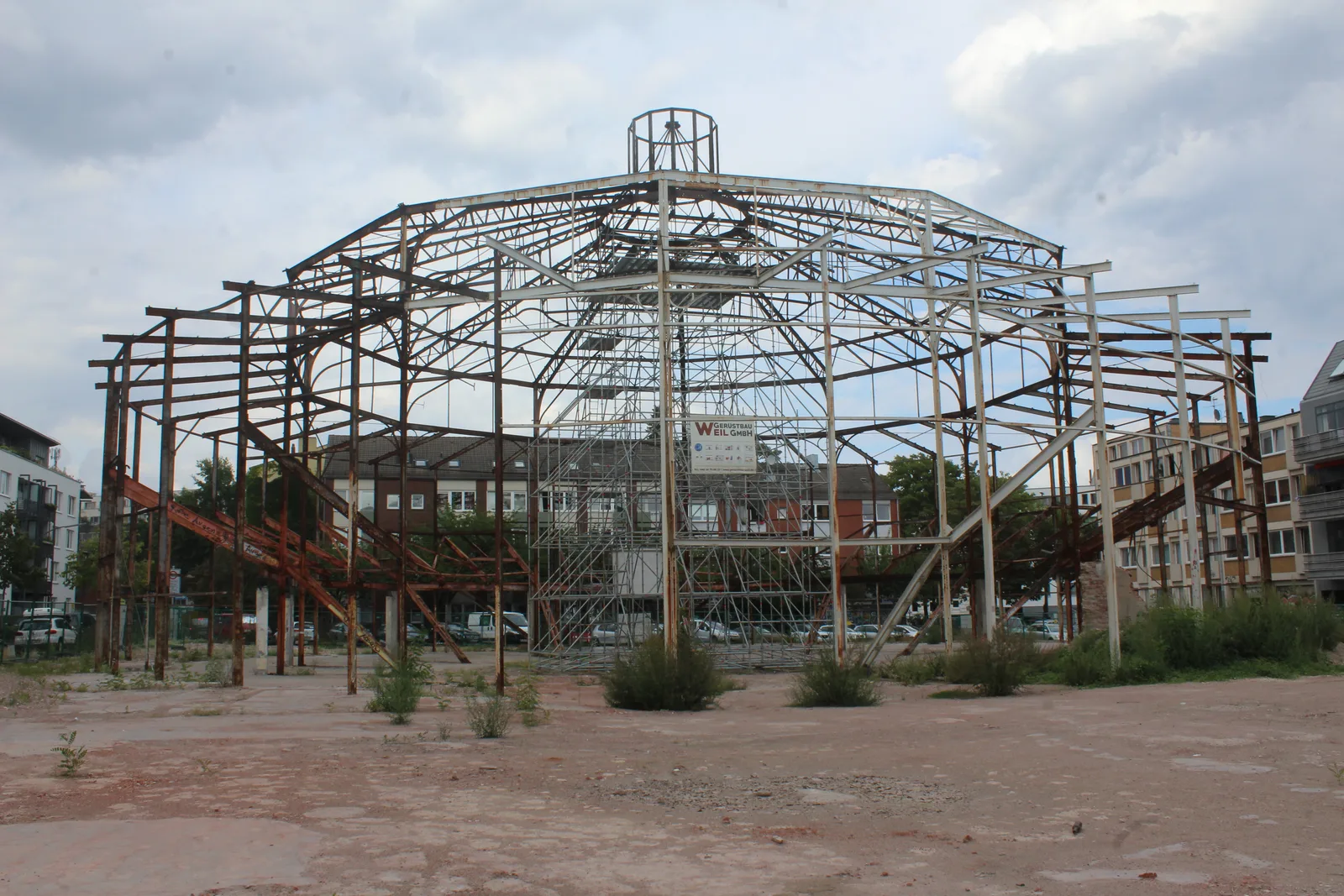
In the heart of Hamburg-St. Pauli, between Bei der Schilleroper and Lerchenstraße, stands the Schiller-Oper, the last surviving permanent circus building in Germany. This tent-shaped steel rotunda, about 40 metres across, was built between 1889 and 1891 by the circus pioneer Paul Busch and opened in 1891 with a gala performance of the Circus Busch. From 1904 it served as a variety theatre and from then on carried the name Schiller-Oper.
The building has stood empty since 2006; a private investor bought it in 2014 without renovating. In March 2021 a partial demolition began, leaving only the listed steel skeleton, about 24 metres high, exposed to the weather. The decay is now frozen in law: in December 2025, and again in April 2026, the Hamburg courts ordered the owner to secure and preserve the protected skeleton. It is no longer an intact hall but a steel rib cage, and that is exactly what makes it the most striking city ruin in Hamburg. Private land, to be viewed from the street, not entered. More spots on our Hamburg urbex map.
2. NYH rubber factory - the derelict hard-rubber works (Harburg)
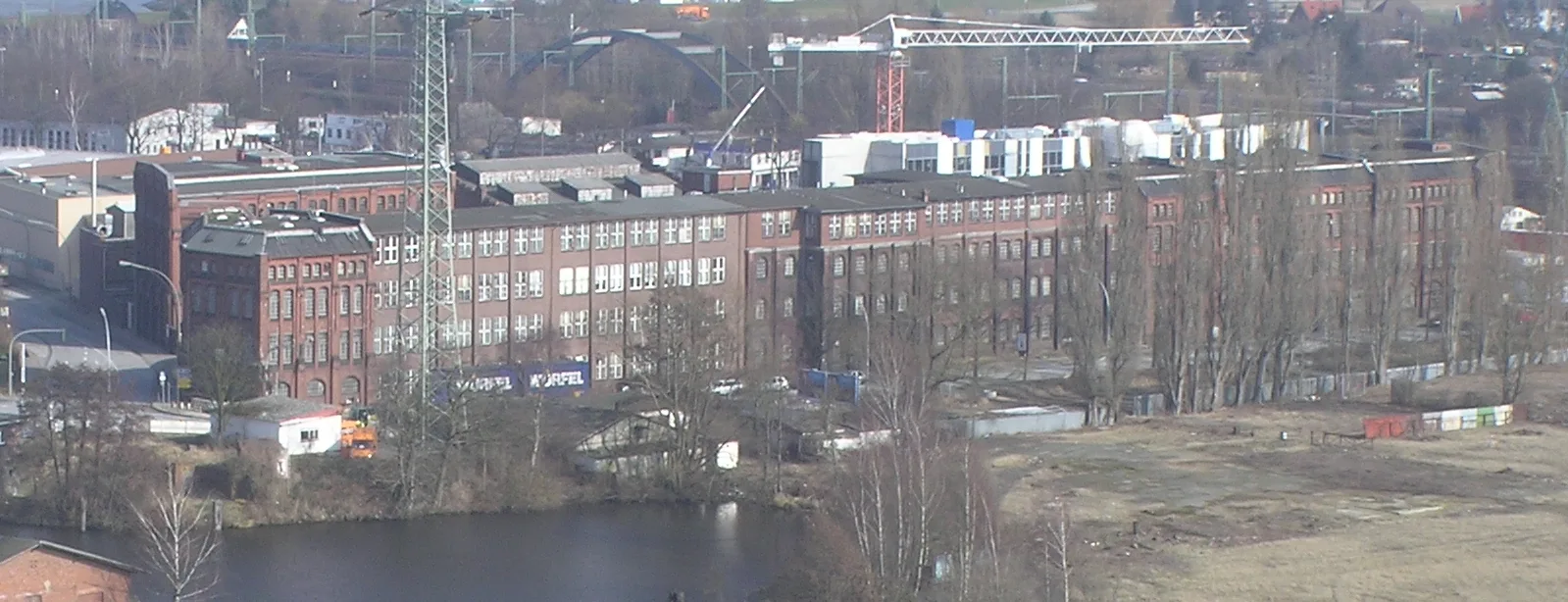
In the inner harbour of Hamburg-Harburg, on Nartenstraße, stand the brick halls of the New-York Hamburger Gummi-Waaren Compagnie, known as NYH. Founded in Barmbek in 1870, the works pressed hard-rubber goods, above all combs under the brands "Matador", "Hercules" and "Triumph". In 1954 production moved to these waterfront halls in Harburg; at its peak around 200 people worked here.
The factory closed in 2009 when its staff relocated to Lüneburg, and the halls have decayed ever since. Partly collapsed roofs, a flooded cellar and nitrosamine contamination mark the site. The new owner plans a conversion that preserves the listed fabric and adds around 400 dwellings, but nothing of it is built by 2026: the factory is a ruin awaiting its rebuild. That makes it one of the most photogenic abandoned places in southern Hamburg, see it before the diggers arrive. Private land, fenced, with real collapse risks. See our Hamburg urbex map.
3. Schule Neuhof - the abandoned harbour school (Wilhelmsburg)
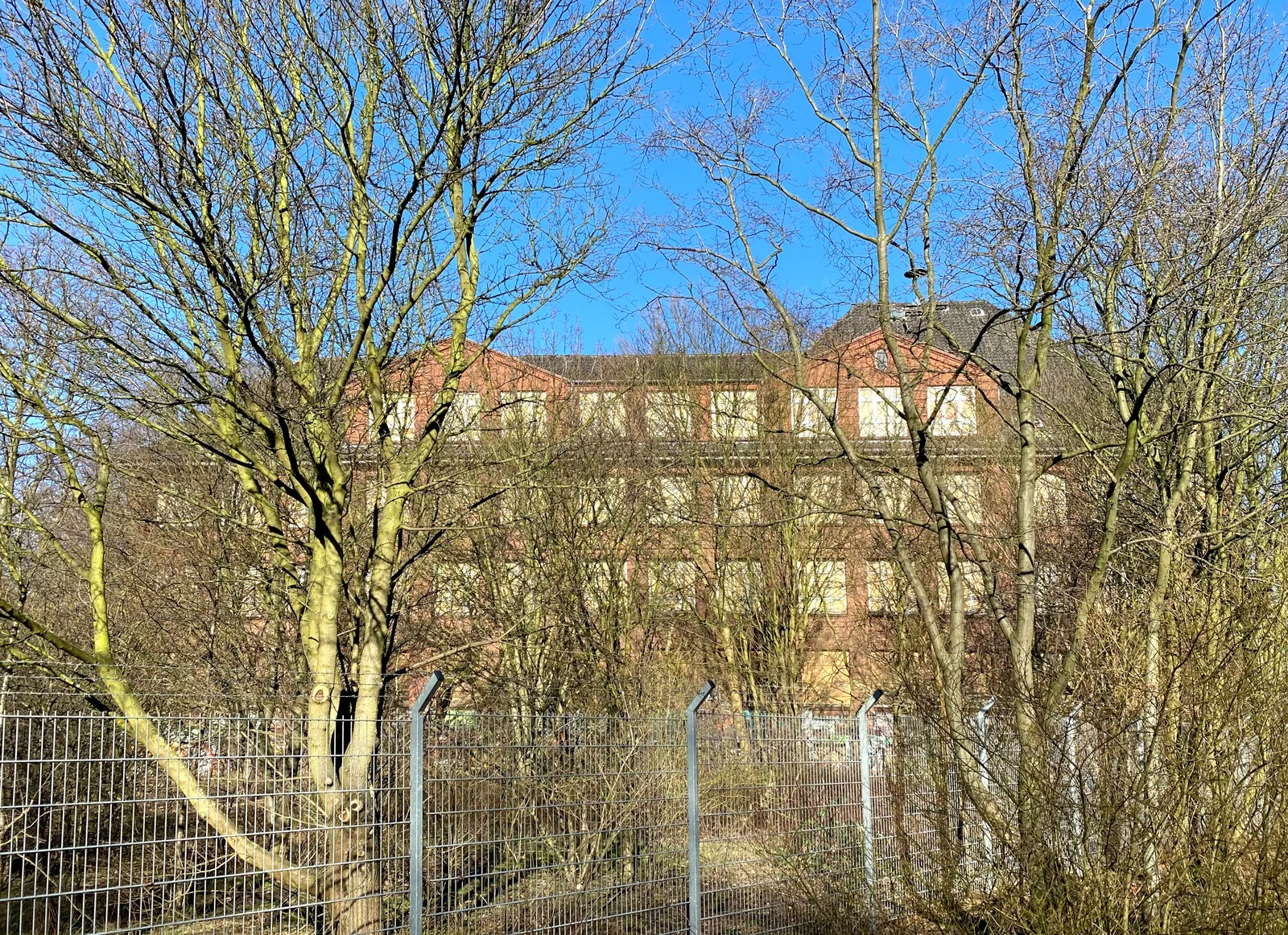
On Neuhöfer Damm, in the harbour district of Hamburg-Wilhelmsburg, stands Schule Neuhof, a brick school built in 1913. The surrounding Neuhof district was demolished in the 1970s to make way for the Köhlbrand bridge, and with it went the reason for the school. From around 1990 to 2007 the building was used as refugee housing; it has stood empty ever since.
The listed schoolhouse belongs to the Hamburg Port Authority and has been decaying for more than fifteen years in the middle of the industrial zone: boarded windows, water and mould damage, a classic of the Hamburg lost-place scene. Heritage protection keeps it from demolition, which is why it still stands while only port logistics remains around it. It is a place to document with care, not to break into, fenced and watched. More abandoned places on our Hamburg urbex map.
4. Theklahaus - the abandoned TB sanatorium (Geesthacht)

In Geesthacht, about 25 kilometres south-east of Hamburg, the shipowner Edmund Siemers founded the Edmundsthal-Siemerswalde lung sanatorium in 1896, opening on 4 May 1899. The Theklahaus pavilion, named after Siemers' daughter Thekla, took in male tuberculosis patients in around 104 beds and served as a military hospital from 1916 to 1919. The institution went insolvent and closed in 2001.
The main complex became a rehabilitation clinic that still operates, but the Theklahaus has stood empty since then and is decaying. It is listed and cannot simply be demolished. A 2023 investor plan for flats, a kindergarten and a café had collapsed by 2025, so for now the Theklahaus remains a lost place, a brick pavilion slowly being reclaimed by the woods. It sits on the clinic's private grounds, so here more than anywhere the rule is: view from a distance, disturb nothing. More spots in the region on our Hamburg urbex map.
5. Düneberg powder factory - the ruins in the sand-hill woods (Geesthacht)
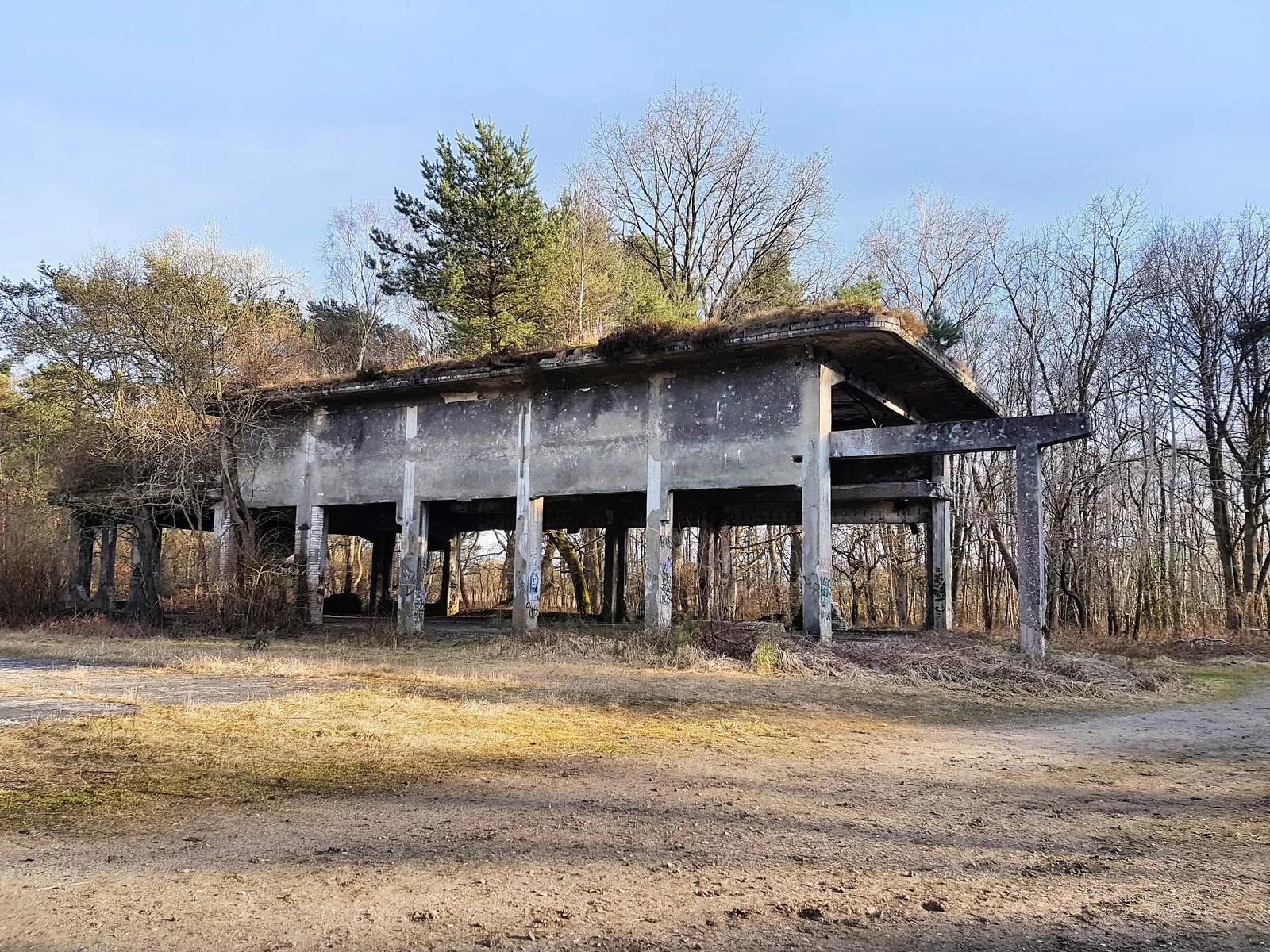
East of Geesthacht, in the Besenhorster Sandberge nature reserve near the Elbe, lie the ruins of the Düneberg powder factory. Gunpowder was made here from 1876; from 1 January 1935 the Dynamit AG ran the works, which across about 4.5 square kilometres and more than 700 buildings processed raw powder from the neighbouring Krümmel dynamite factory. Bombed on 7 April 1945, it ceased production, and most of the buildings were blown up after the war.
What remained are concrete ruins, bunkers and workshop walls, now overgrown and sunk back into the forest, a popular destination for graffiti artists and photographers. The site lies inside the nature reserve and on the "Route der Industriekultur", so it is semi-officially accessible and not hidden. It is the most atmospheric of the three Geesthacht spots: a whole forest of ruins, walked bunker to bunker. Respect the nature-reserve rules and do not enter walls at risk of collapse. More spots on our Hamburg urbex map.
6. Krümmel water tower - the tower of the dynamite factory (Geesthacht)
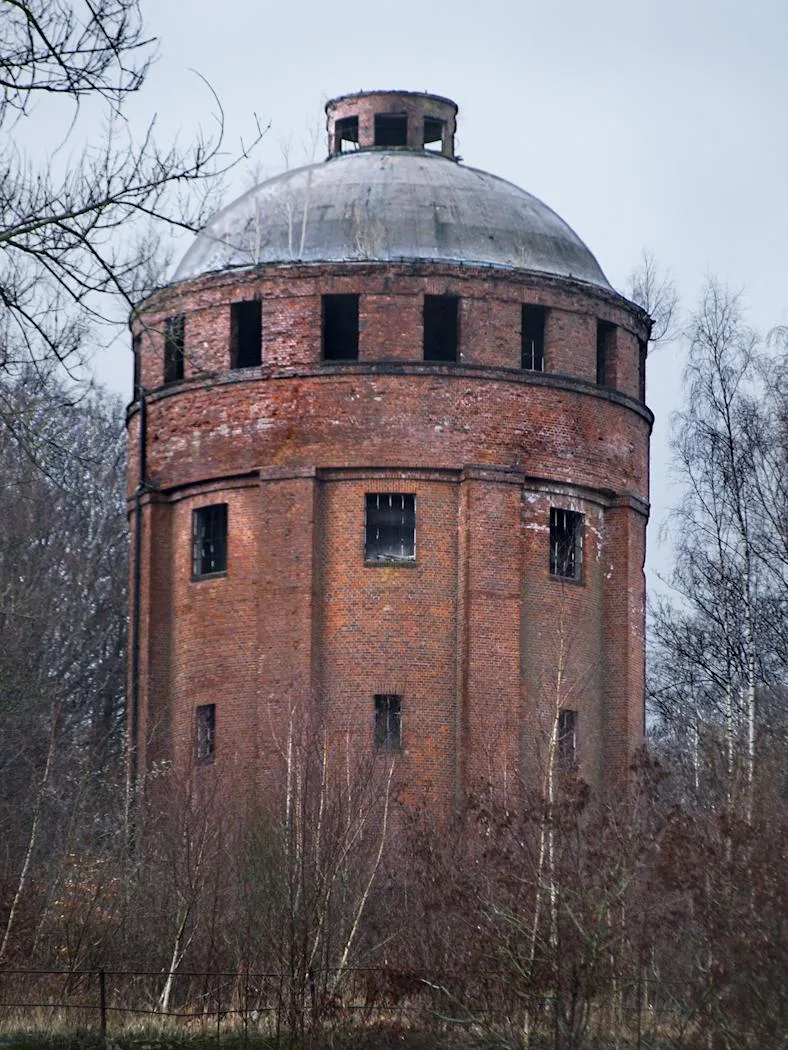
In the woods east of Geesthacht, in the Krümmel district, the Krümmel water tower rises about 30 metres out of the trees, the most distinctive surviving structure of the former Krümmel dynamite factory. The works were Alfred Nobel's first explosives factory outside Sweden, founded in 1865. The cylindrical reinforced-concrete tower with brick facing was built in 1916/17 to supply water to the neighbouring nitrocellulose factory.
Today the tree-shrouded tower is in poor condition and has long been closed and fenced off for fear of collapse; whole trees grow out of its masonry. It has been listed since 1997 but belongs to the energy company that runs the neighbouring nuclear power station, and is not being restored. It is the loneliest spot on this list, a single watchtower from a time when explosives for half the world were made here. View it from a safe distance, do not enter. See our Hamburg urbex map.
What is NOT on this list (and why)
If you google "lost places Hamburg" you quickly run into names that are no longer real urbex spots. We left them out deliberately, after checking. The Holsten brewery in Altona, for decades a place of longing, has been largely demolished since 2021 and is now a billion-euro construction site, the "Holsten-Quartier" with more than 1,300 flats. The Falkenried halls in Hoheluft, the old tram depot of 1892, were fully converted into lofts and offices around 2000. The U-Boot-Bunker Fink II in Finkenwerder was blown up and buried in 1945; only a memorial park remains, no explorable ruin.
The same goes for other classics: the Röttiger barracks in Neugraben-Fischbek were demolished between 2010 and 2013 and are now the completed Fischbeker Heidbrook housing district. The Flak tower IV on Feldstraße was built up and since 2024 carries a rooftop garden and hotel, and the Wilhelmsburg energy bunker is a public energy and heritage landmark with a café. A place earns its spot in this ranking only if it is genuinely abandoned in 2026, still standing and not turned into a museum, a hotel or a building site. That is exactly what sets us apart from the copy-and-paste lists that have been passing the same outdated names around for years.
FAQ - Lost places Hamburg
Is urbex legal in Hamburg?
Looking at and photographing buildings from public ground is legal. Entering private property without permission is trespass and can become a criminal matter if you cause damage or ignore signs and fences. Most spots here are private, listed or fenced: we document them for their history, without ever encouraging break-ins. For more, read our guide on abandoned places in the UK.
Where can I find more lost places in and around Hamburg?
Our map lists thousands of spots across Hamburg and the whole of Germany. You can add the six places in this article to your personal map for free via the button under each entry, then unlock the rest through our regional packs.
Are these abandoned places dangerous?
Yes. The Schiller-Oper is an exposed steel skeleton, the NYH rubber factory has collapsing roofs and a flooded cellar, the Krümmel water tower is closed for fear of collapse, and the Düneberg ruins are partly crumbling. Several are best seen only from outside. Go with someone, carry a head torch, and never enter a structure that looks unsafe. Our urbex gear guide covers the essentials.
Which lost place is best to start with in Hamburg?
The Schiller-Oper is the easiest: it stands in the middle of St. Pauli and can be viewed and photographed from the street with no effort at all. If you want more atmosphere, head to the Düneberg powder factory, whose forest of ruins in the Besenhorster Sandberge is freely accessible, but it asks for sure footing and respect for the nature reserve.
How do I contribute a spot to Urbex Maps?
Our community of more than 40,000 explorers keeps adding and checking places. Once you have a free account, you can submit a location with its coordinates and photos; a regional moderator then verifies that the place exists and still stands before it goes live. That double check is why our coordinates are reliable.
Conclusion: Hamburg, a city in flux
From the circus ruin in St. Pauli to the rubber factory in the Harburg harbour and the explosives ruins near Geesthacht, the lost places of Hamburg tell the story of shipowners, industrialists and sanatorium doctors, and of the closures, wars and changing uses that left these buildings behind. They are not stage sets: they are open-air history books, fragile, to be explored with respect and without damage, several of them already threatened by demolition or conversion. Add them to your map, and carry on with our pillar on the 16 most iconic lost places in Germany or the full Hamburg urbex map.