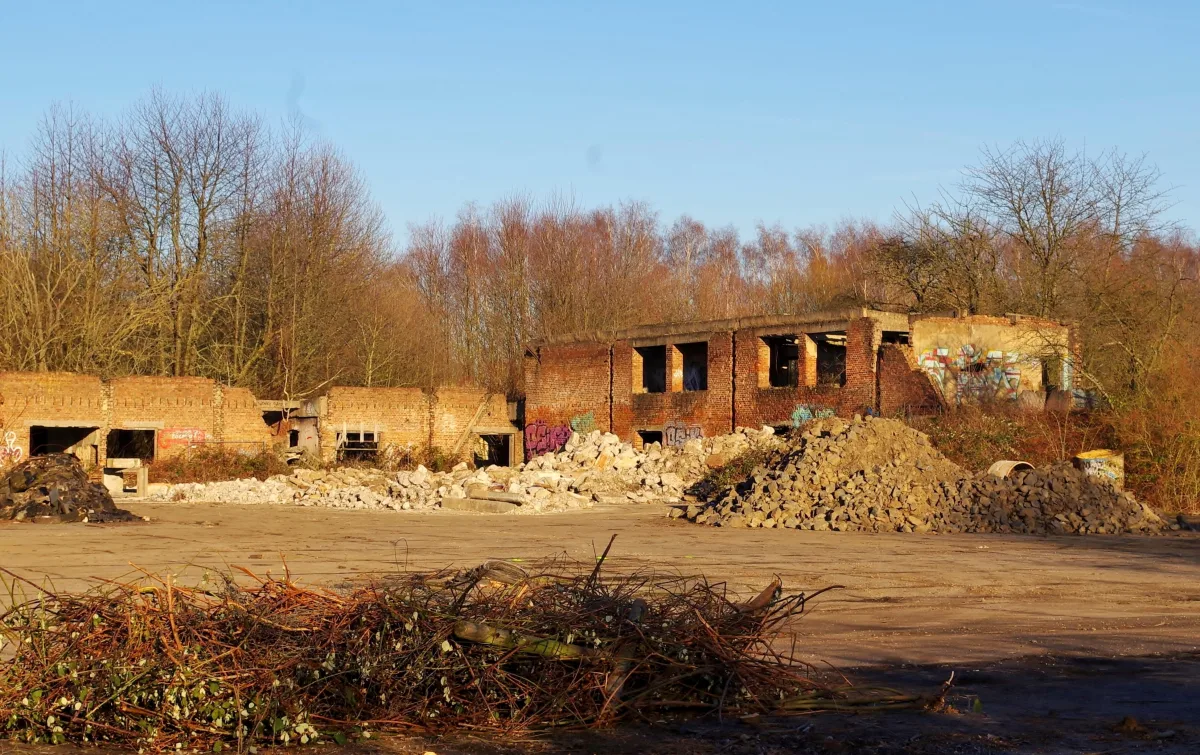
Lost places in Frankfurt tell the story of a city that was a US Army garrison for decades, was bombed and rebuilt, and whose industry and administration kept leaving buildings behind. Between the forbidden hangar of the Eschborn airfield, the empty old police headquarters and the crumbling Phrix cellulose factory on the Main, Frankfurt and the wider Rhine-Main area are one of the richest urbex grounds in Hesse. Our map lists thousands of geolocated spots across Hesse and all of Germany.
For this guide we picked 6 places that are genuinely abandoned and still standing in 2026, each verified one by one: a Nazi-era and US military airfield with a listed hangar, the headquarters empty since 2002, a Jewish sanatorium above Bad Homburg, a brickworks ruin in Wiesbaden, a railway depot in the main station track field, and an industrial-heritage factory on the riverbank. No demolished landmarks passed off as live spots, no long-restored museum dressed up as a ruin. Under each entry, an "Add to my map" button saves the GPS coordinates to your personal account, for free and with no credit card.
The searches lost places Frankfurt, abandoned places Frankfurt, urbex Frankfurt, abandoned places Rhine-Main and derelict buildings Frankfurt all point to the same reality: a military, industrial and administrative heritage set aside by the US troop withdrawal up to 1994, the end of whole industries and structural change, and which photographers, urbexers and historians are rediscovering today. This guide gives you each site's dated history, its legal status and its real dangers, before handing you its coordinates.
Free lost places Frankfurt: why Urbex Maps changes the game
Before the spots, a word on what makes this guide different. Most pages about lost places in Frankfurt put "free" in the title, then send you off to a closed Facebook group, a forum or a paywall. Here the promise is concrete: under each place, an "Add to my map" button drops the GPS coordinates into your personal account, with no subscription and no credit card.
Behind the map is a community of more than 40,000 explorers, active since 2021. Every set of coordinates is checked at least twice - by the contributor who submits it, then by a regional moderator who confirms the spot still exists and has not been walled up or demolished. The places offered in this article are part of that catalogue; the rest of the thousands of German and Rhine-Main spots are unlocked through packs that fund the moderation and field verification.
One reminder before you set off: urban exploration is not illegal in itself, but entering private property without permission is trespass (§ 123 of the German Criminal Code), and several of the places below are fenced, watched and carry acute collapse or unexploded-ordnance risks. We document these places for their history; we strongly advise against breaking in. Helmet, head torch, sturdy boots and caution on the floors: here you face collapsing ceilings, asbestos and, in the case of Eschborn, even munitions residue in the ground.
1. Eschborn Airfield - the forbidden military airfield (Eschborn)
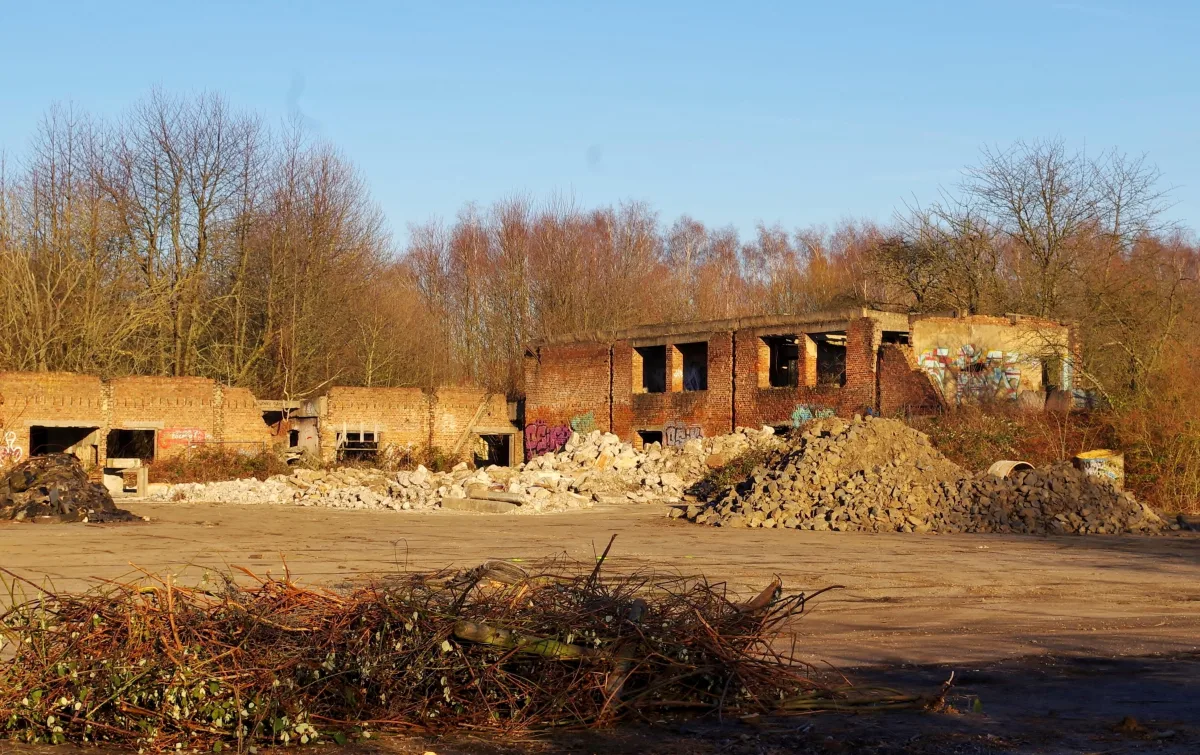
About ten kilometres north-west of central Frankfurt, between Eschborn, Schwalbach and Steinbach im Taunus, lies Eschborn airfield, the best-known military lost place in the Rhine-Main area. From 1937 the Wehrmacht built a Luftwaffe airfield here on 87 hectares of farmland, with five large hangars. Badly damaged in an air raid in August 1944, it was seized in March 1945 by the US Army and run as "Camp Eschborn" with engineer units until the final withdrawal in 1992.
From 1981 the Arboretum Main-Taunus, with around 600 tree and shrub species, was planted on the grounds, and its outer paths are open to the public. Inside, however, the listed Hangar 4 still stands with its free-spanning roof, alongside the remains of two more hangars and derelict barracks. That core area is fenced, partly with NATO razor wire, and not legal to enter: construction work regularly turns up unexploded munitions, and soil and groundwater are contaminated from decades of fuel storage.
The hangar can be viewed from the public paths of the arboretum, no more. Real risks here: munitions residue, contaminated soil, collapse-prone outbuildings. Eschborn airfield remains the most striking military lost place in the region, a piece of Nazi and Cold War history slowly disappearing into the wood.
2. Old Police Headquarters - the empty landmark (Gallus)
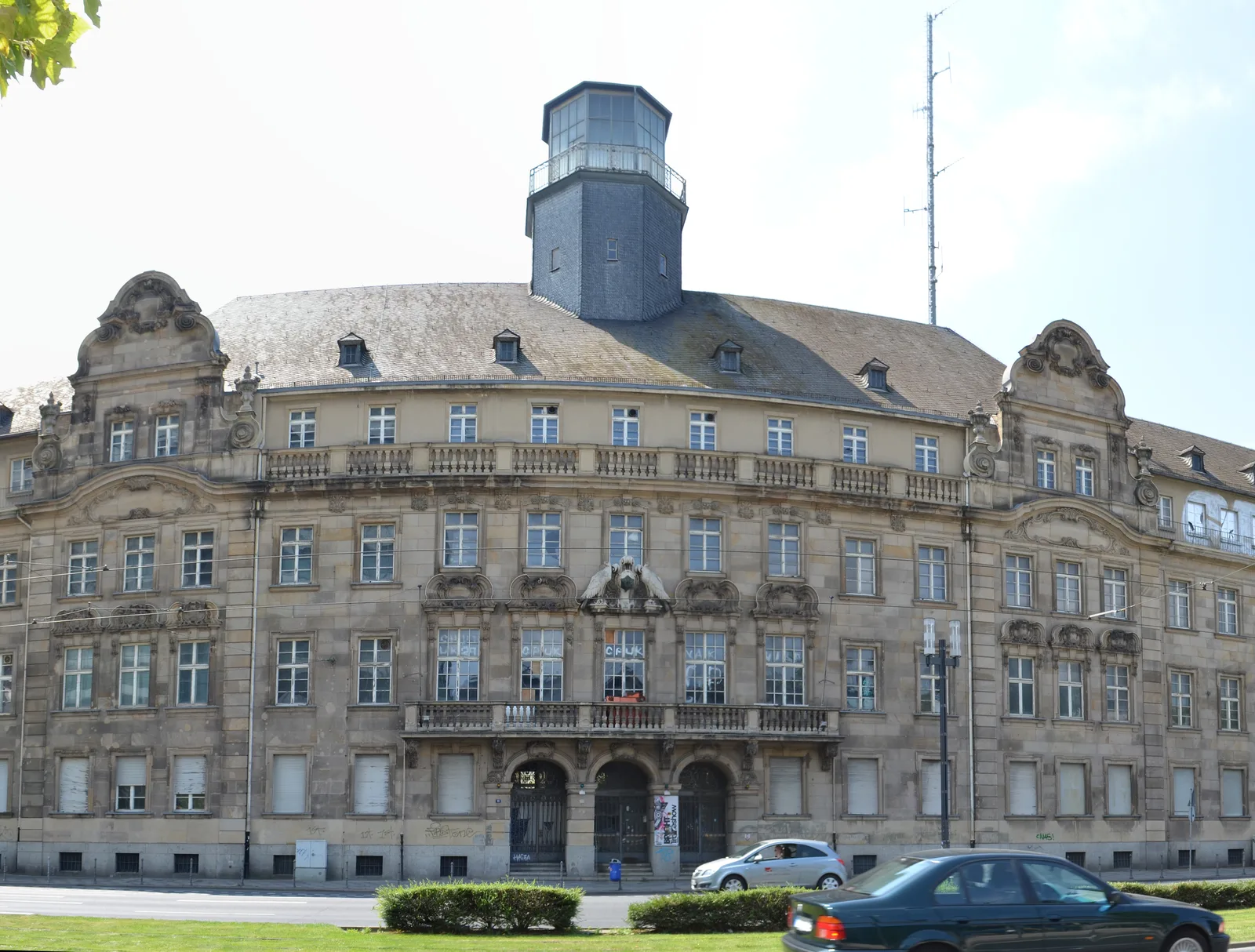
On Friedrich-Ebert-Anlage at the edge of the Gallus district, within sight of the skyline, stands the old police headquarters, one of the most striking lost places in the middle of the city. Built 1911 to 1914 in a mix of Neo-Baroque and Neoclassicism, the monumental building served as the headquarters of the Frankfurt police from 1914 to 2002. Since the officers moved to Adickesallee, the building has stood largely empty.
The building is a protected cultural monument. In 2018 the state of Hesse sold the site for 212.5 million euros to the Düsseldorf developer Gerch, who planned a 175-metre tower together with a renovated historic wing. In August 2023 Gerch filed for insolvency and the project has been on hold ever since. Lost-place tours behind the scenes ran until 2024; the old building decayed visibly, with water damage in the empty corridors.
The headquarters is private property, secured and being prepared for redevelopment; the site is not freely accessible. It is a place to read from Friedrich-Ebert-Anlage, not to climb into. The old police headquarters remains the most central lost place in Frankfurt, a Wilhelmine landmark waiting for its future among the high-rises.
3. Sanatorium Dr. Goldschmidt - the Jewish spa house (Bad Homburg)
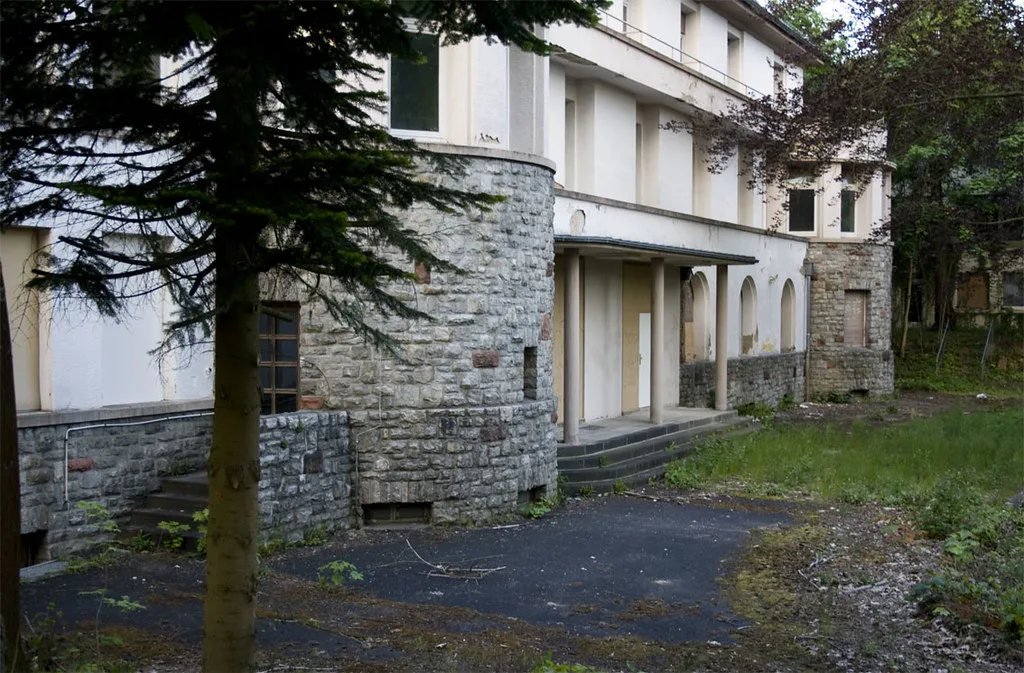
Above the spa town of Bad Homburg vor der Höhe, on Untere Terrassenstraße, stands the Sanatorium Dr. Goldschmidt, a silent witness to the Jewish spa history of the Taunus. In 1911 Dr. Siegfried Goldschmidt founded the "Taunus-Sanatorium" here, aimed above all at Jewish spa guests; in 1928 a synagogue was even inaugurated inside. Under the Nazis, running a Jewish sanatorium became impossible, and his successor Dr. Joshua O. Leibowitz emigrated to Palestine in 1937.
Afterwards the building served as a Reichsbahn training school, from 1947 as the administration of the American-British Bizone, and from 1952 to 1998 as the seat of the Federal Equalisation Office. Since then the complex has stood empty and decaying. At the end of 2016 the main building was added to the heritage protection list; an investor later withdrew, so a full restoration is still pending. The historic fabric, a ritual bath preserved as a "time capsule" and the synagogue in a secondary building give the place its special significance.
The site is private property, fenced and not accessible, directly opposite the Kaiserin-Friedrich-Gymnasium. The typical risks of a long-empty building apply: rotten floors, falling plaster, vandalism damage. The Sanatorium Dr. Goldschmidt is the most moving lost place on this list, a piece of German-Jewish history waiting to be rescued.
4. Old Brickworks - the derelict ring kiln (Wiesbaden-Bierstadt)
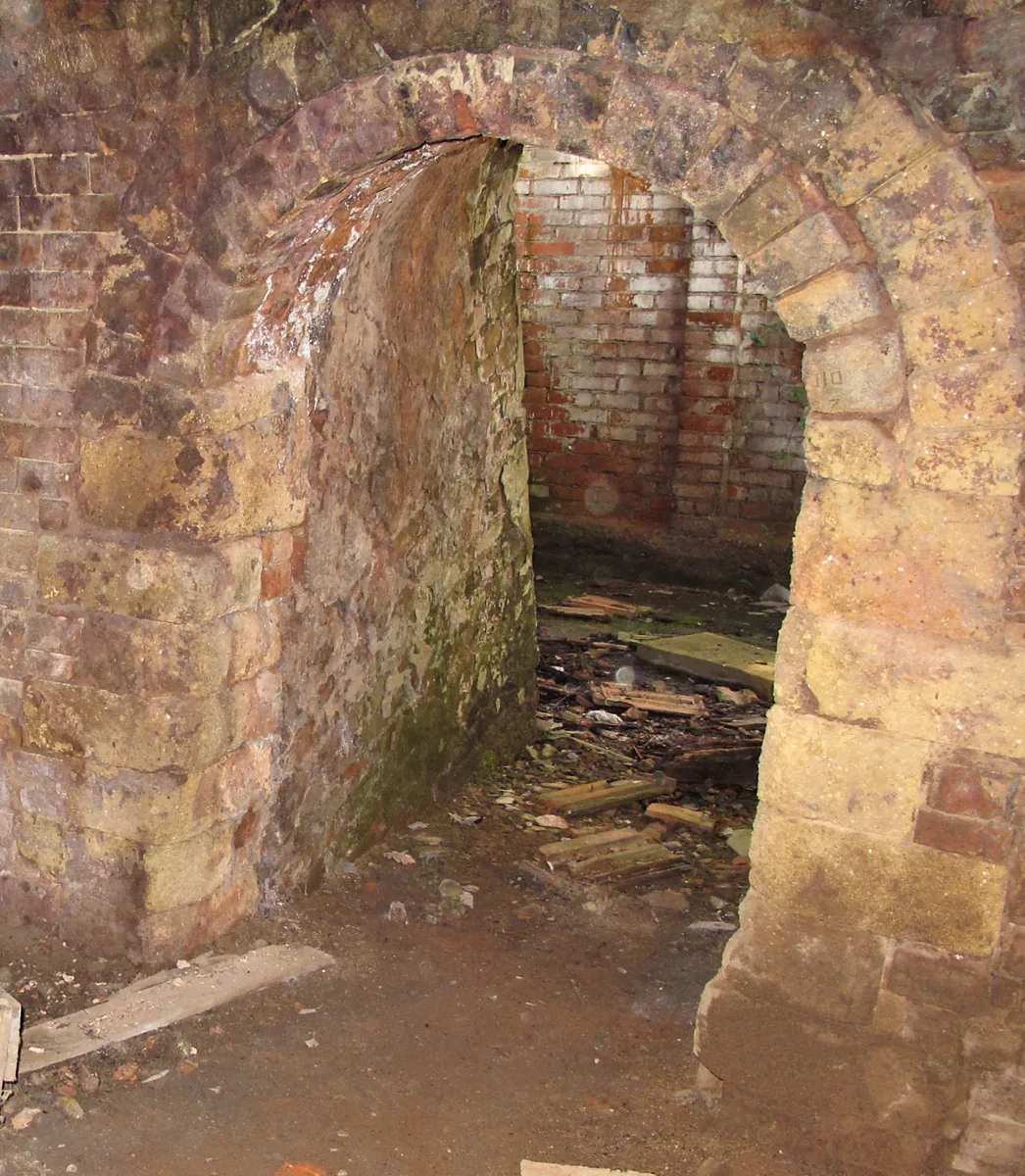
In the north of Wiesbaden-Bierstadt, on Nauroder Straße between Bierstadt and Naurod, lies the old brickworks (Alte Ziegelei), one of the last industrial ruins of the Hessian state capital. Until the 1950s the firm Nath und Oeder fired bricks here, one of Wiesbaden's once 26 brickyards, of which only three partly survive. Its centrepiece is a Hoffmann ring kiln and chimney, classified by the Hesse heritage office as an industrial and urban-history cultural monument.
Because of collapse risk the whole site was abandoned in 2008 and has stood empty ever since. The roof over the ring kiln has fallen in, and final collapse has only been delayed provisionally. All the buildings of the former brickworks survive: ring kiln, drying halls, transformer house and dwelling. The chimney, hidden in the forest, holds its own against the tall trees.
The site is fenced and acutely collapse-prone: falling bricks and swaying roof beams make entry life-threatening. It is best viewed from outside. The old brickworks is the most photogenic industrial lost place in the western Rhine-Main area, a Victorian brick monument slowly returning to the wood.
5. Locomotive Depot 1 - the depot in the track field (Gallus)
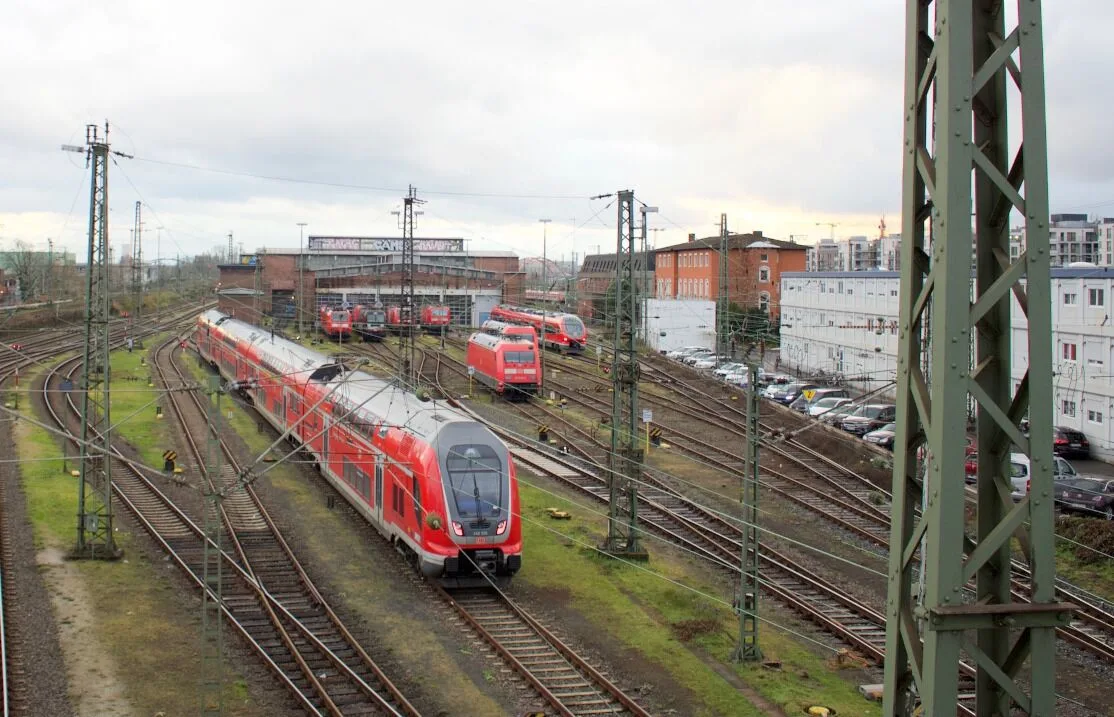
In the middle of the track field west of Frankfurt main station, visible from the Camberger Brücke bridge, lies Locomotive Depot 1 Frankfurt/Main (Bahnbetriebswerk 1), an abandoned railway depot among the active lines. Founded in 1889, it was for 119 years one of the largest locomotive depots in the country, where up to 150 staff maintained engines of the 103, 110, 140 and 143 classes. In 2008 the depot was dissolved and the last locomotive left the engine shed.
Since then the site has stood empty: the large engine shed with its lifting jacks, the traverser field, the e-locomotive wash plant and the old outer walls decay slowly between the tracks. The historic structure is, however, slated for demolition: the main construction site for the planned long-distance rail tunnel under the main station will be built here. The window to see the Bw as a raw ruin is closing.
The depot lies inside Deutsche Bahn's operational track field, an absolutely off-limits and life-threatening area: overhead lines, shunting traffic, no legal access. You view it from the Camberger Brücke. Depot 1 is the most ephemeral lost place on this list, a piece of railway history that will soon make way for the future of the Frankfurt rail hub.
6. Phrix Cellulose Factory - the industrial monument on the Main (Hattersheim-Okriftel)
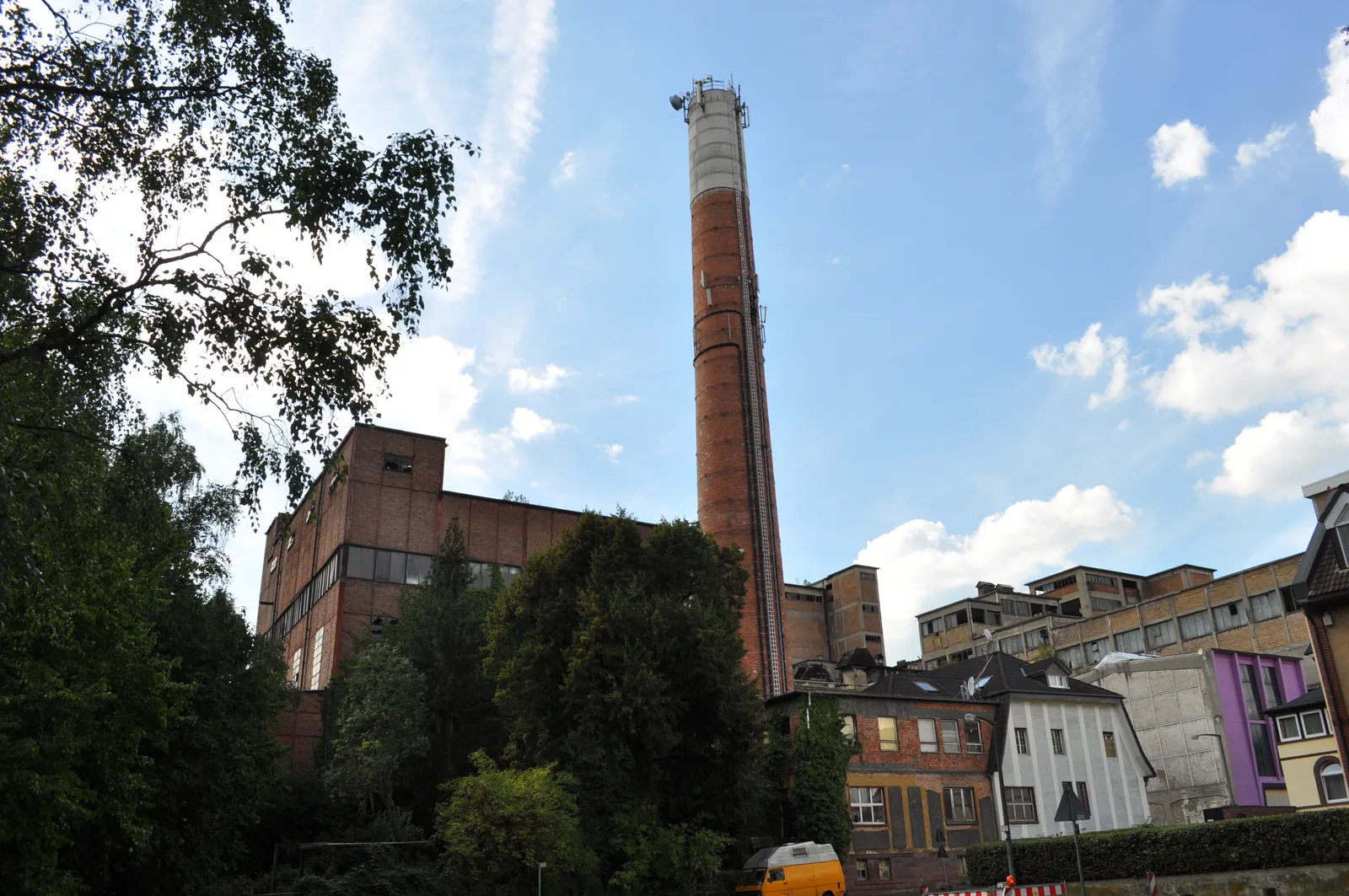
On the northern bank of the Main in the Okriftel district of Hattersheim am Main, in the Main-Taunus district west of Frankfurt, stands the former Phrix cellulose and paper factory, a listed industrial site right on the water. Founded in 1884/85 as a cellulose factory, it employed around 1,000 people in 1961 before being shut down in 1970 after BASF took it over. The distinctive brick halls remained a largely unused industrial ruin.
Since 2002 the PHRIX artist community has used a well-preserved part of the factory ruin as studios, with workshops and offices alongside. Large parts of the grounds, however, stayed derelict. In 2016 the developer Prinz von Preussen Grundbesitz AG acquired the listed complex and began carefully converting it into a residential quarter while preserving the historic fabric. Anyone who wants to experience the raw brick ruin should not wait too long.
Parts of the site are privately owned and under conversion, others still derelict; entering without permission is trespass, and the ruined halls carry rotten floors and falling components. The Phrix factory closes this list with the industrial history of the Rhine-Main, a brick monument on the Main that is half rescued, half ruined. Find more spots on our Hesse urbex map.
FAQ - Lost places in Frankfurt
Is urbex legal in Frankfurt?
Looking at and photographing buildings from public ground is legal. Entering private property without permission is trespass under § 123 of the German Criminal Code and can be punished with a fine or up to one year in prison. Most spots here are private, listed or fenced off: we document them for their history, without ever encouraging break-ins. For more, read our guide to lost places across Germany.
Where can I find other abandoned places around Frankfurt?
Our map lists thousands of spots across Hesse and the rest of Germany. You can add the six places in this article to your personal map for free via the button under each entry, then unlock the rest through our regional packs.
Are these lost places dangerous?
Yes. Eschborn airfield has munitions residue and contaminated soil, the old brickworks is collapse-prone and drops bricks, the sanatorium and the Phrix factory have rotten floors and asbestos, and the locomotive depot sits in the active track field with overhead lines. Several are best seen only from outside. Never go alone, carry a head torch, and never enter a structure that looks unsafe. Our urbex gear guide covers the essentials.
Which is the best lost place to start with in Frankfurt?
Eschborn airfield is the easiest: the outer area is an arboretum open to the public, and from there the listed Hangar 4 can be seen and photographed with no difficulty. The old police headquarters gives the most spectacular city backdrop, but can only be viewed from the street.
Conclusion: Frankfurt, a city between garrison and skyline
From the US hangar in Eschborn to the empty headquarters and the brick factory on the Main, the lost places of Frankfurt and Rhine-Main tell the story of a city of soldiers, railway workers and industrialists - and of the troop withdrawals, insolvencies and structural change that left these buildings behind. They are not stage sets: they are open-air history books, fragile, to be explored with respect and without damage, several of them already slated for restoration. Add them to your map, and carry on with our guide to the 16 iconic lost places of Germany or the full Hesse urbex map.