Lost places in Berlin tell the story of a divided city that was abandoned twice and resettled twice. Between the Iraqi embassy in Niederschoenhausen, empty since 1991, the brutalist Mouse Bunker in Lichterfelde, and the hospital ruins in the northern district of Buch, Berlin is one of the richest urbex grounds in Europe. Our map lists thousands of geolocated spots across Berlin and the rest of Germany.
For this guide we picked 6 places that are genuinely abandoned and still standing in 2026, each verified one by one: an embassy in diplomatic limbo, a concrete animal lab with no reuse, the guarded East German government hospital, Berlin's last roundhouse, a 1928 public baths and a forest sanatorium. No demolished landmarks passed off as live spots, no restored attraction dressed up as a ruin. Under each entry, an "Add to my map" button saves the GPS coordinates to your personal account, for free and with no credit card.
The searches lost places Berlin, abandoned places Berlin, urbex Berlin, abandoned buildings Berlin and urban exploration Berlin all point to the same reality: a heritage of the Cold War, East German medicine and industry that the city left behind through the fall of the Wall, hospital closures and stalled developer plans, and that photographers, urbexers and historians are rediscovering today. This guide gives you each site's dated history, its legal status and its real dangers, before handing you its coordinates.
For more background and the other 15 federal states, see our pillar Lost Places Germany: 16 iconic abandoned sites.
Free lost places Berlin: why Urbex Maps changes the game
Before the spots, a word on what makes this guide different. Most pages about abandoned places in Berlin put "free" in the title, then send you off to a closed Facebook group, a forum or a paywall. Here the promise is concrete: under each place, an "Add to my map" button drops the GPS coordinates into your personal account, with no subscription and no credit card.
Behind the map is a community of more than 40,000 explorers, active since 2021. Every set of coordinates is checked at least twice - by the contributor who submits it, then by a regional moderator who confirms the spot still exists and has not been walled up or demolished. The places offered in this article are part of that catalogue; the rest of the thousands of German spots are unlocked through packs that fund the moderation and field verification.
One reminder before you set off: urban exploration is not illegal in itself, but entering private property without permission is trespass (Section 123 of the German Criminal Code) and can become a criminal matter if you cause damage or ignore signs and fences. We document these places for their history; we never encourage breaking in. Helmet, head torch, sturdy boots and caution on the floors: several of the spots below carry real collapse and asbestos risks.
1. Iraqi Embassy - the diplomatic no man's land (Niederschoenhausen)
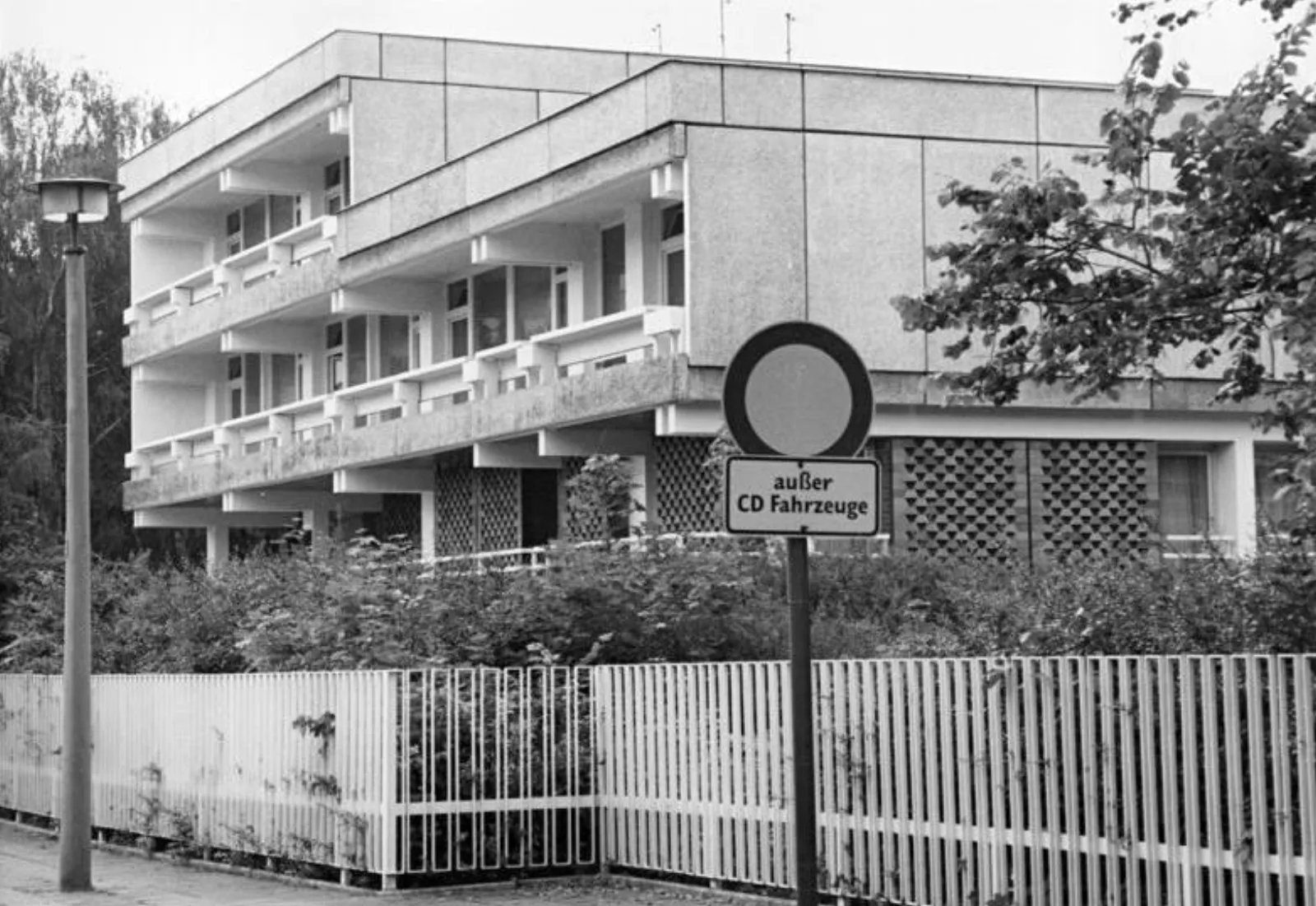
At Tschaikowskistrasse 51 in Berlin-Niederschoenhausen, a quiet villa quarter in the Pankow district, stands what is probably the most famous abandoned embassy in Europe. The former embassy of Iraq to East Germany was built in the early 1970s as a prefab slab building and served Baghdad as its mission to the East German state. In January 1991, during the first Gulf War, Germany expelled the Iraqi diplomats, and the building has stood empty ever since.
What makes the embassy so iconic: files, portraits of Saddam Hussein, passports and furniture stayed in place for years, a frozen moment of the Cold War. Its legal status is still unresolved. The land formally belongs to the Federal Republic, but the rights to the building remain with the Iraqi state, so it still enjoys diplomatic immunity and nobody is responsible for securing or restoring it. More than three decades of parties, vandalism and trophy hunters have heavily wrecked the interior.
The building is private and officially closed. It remains the classic among Berlin's lost places: a piece of diplomatic history that no one is allowed to demolish and that is slowly falling apart.
2. Mouse Bunker - the concrete animal lab (Lichterfelde)
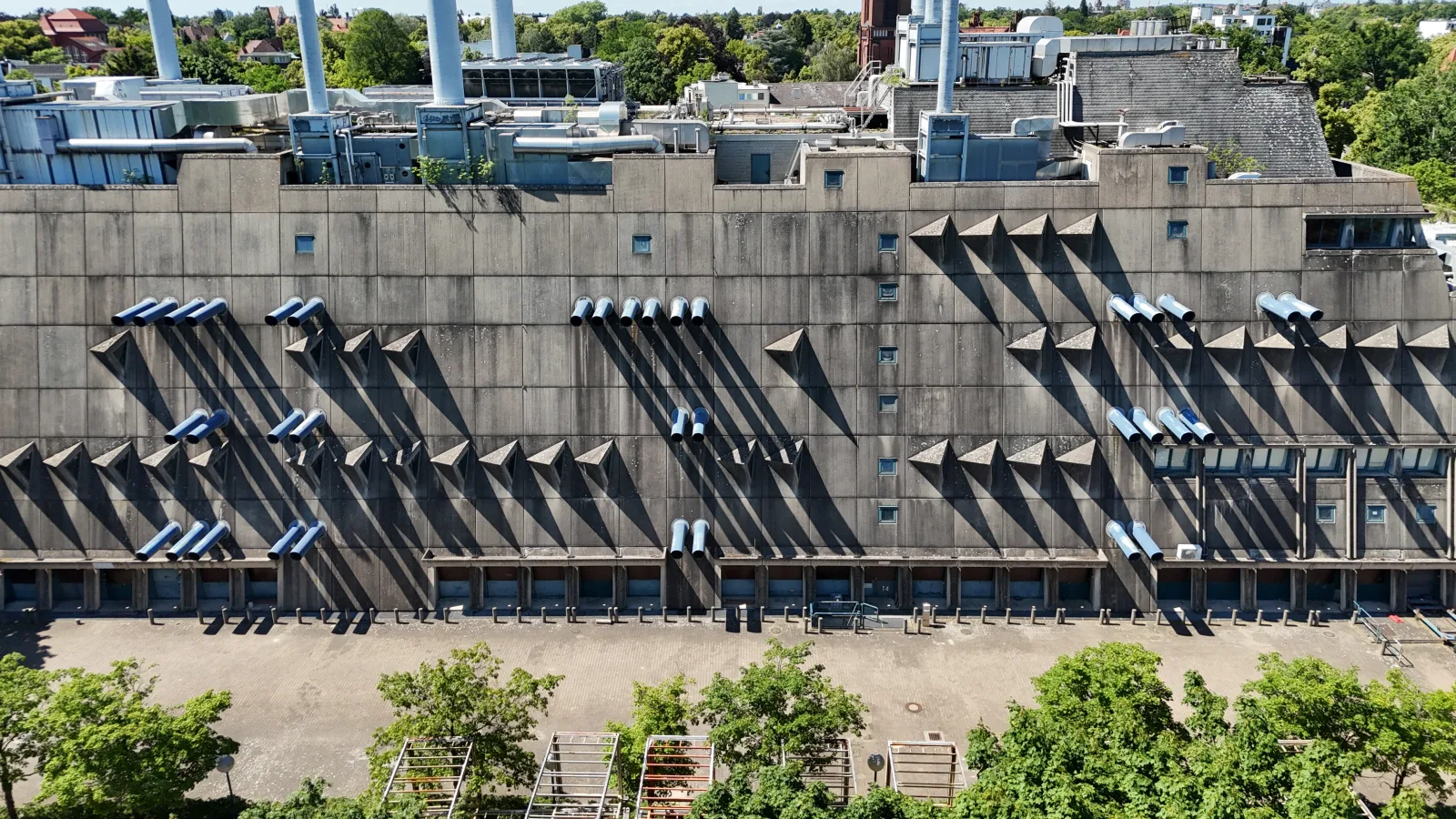
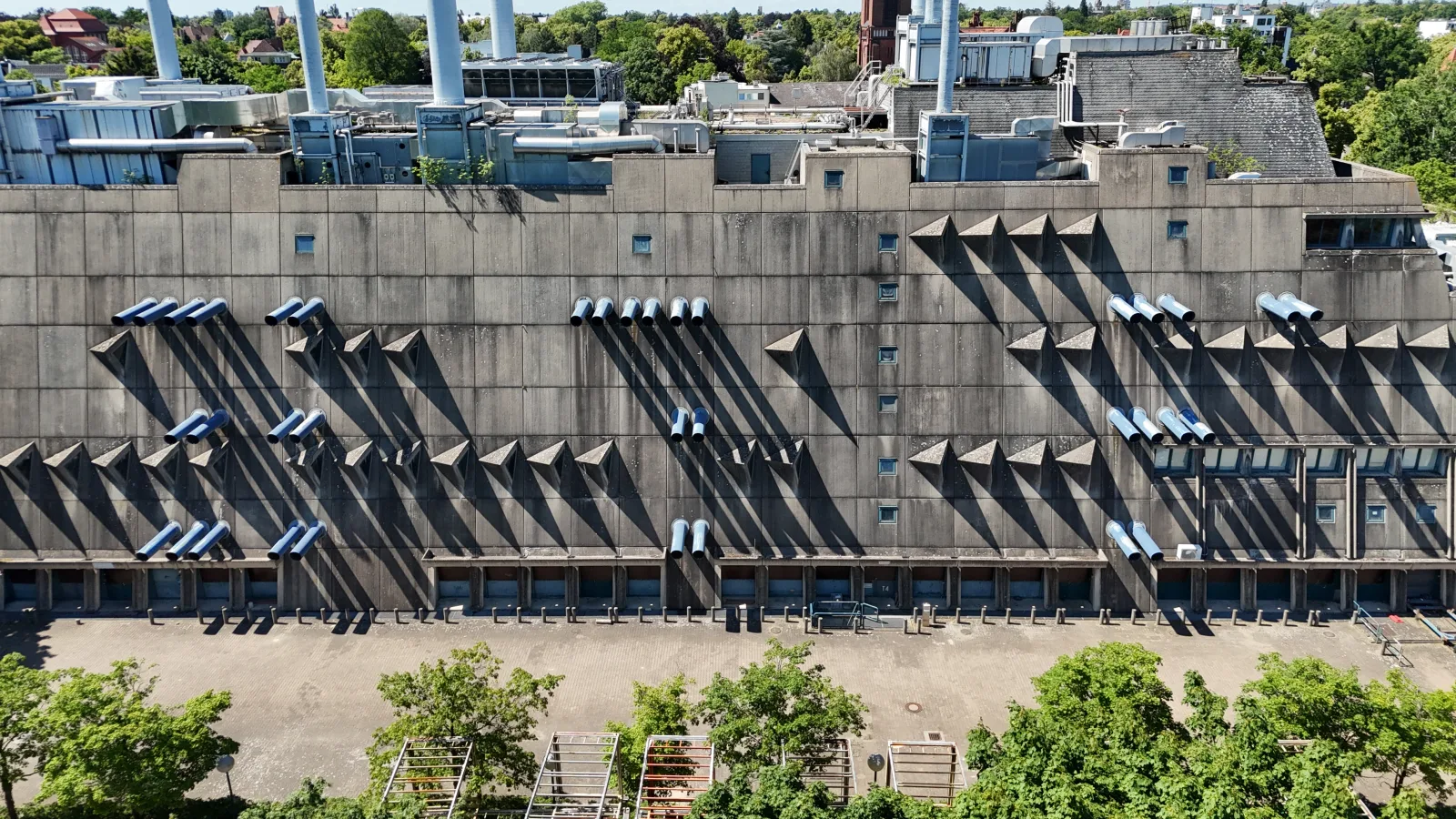
On Krahmerstrasse in Berlin-Lichterfelde, in the Steglitz-Zehlendorf district, crouches one of the most spectacular concrete buildings in the city. The Research Institutes for Experimental Medicine, known to everyone as the Mouse Bunker (Maeusebunker), was built between 1971 and 1981 to designs by Gerd and Magdalena Haenska as the central animal testing lab of the Free University. The blue ventilation pipes jutting like cannons from the windowless concrete facade made it an icon of Berlin brutalism.
Operations ended in 2020, when the Charite gave up the lab. Demolition had been planned for years, but after a long debate the Berlin Monuments Office listed the Mouse Bunker on 25 May 2023. Since then the building has stood empty, awaiting a reuse - debated somewhere between cultural venue, studios and research space - that has not yet happened. In September 2024 a "festival for urban wellbeing" enlivened its surroundings, while the building itself stays sealed.
The Mouse Bunker is secured and not open to the public. Clearly visible from the street as an architectural monument, it is one of the most photogenic lost places in Berlin, a monolith too good to knock down and too uncertain to easily reuse.
3. East German Government Hospital - the clinic of power (Buch)
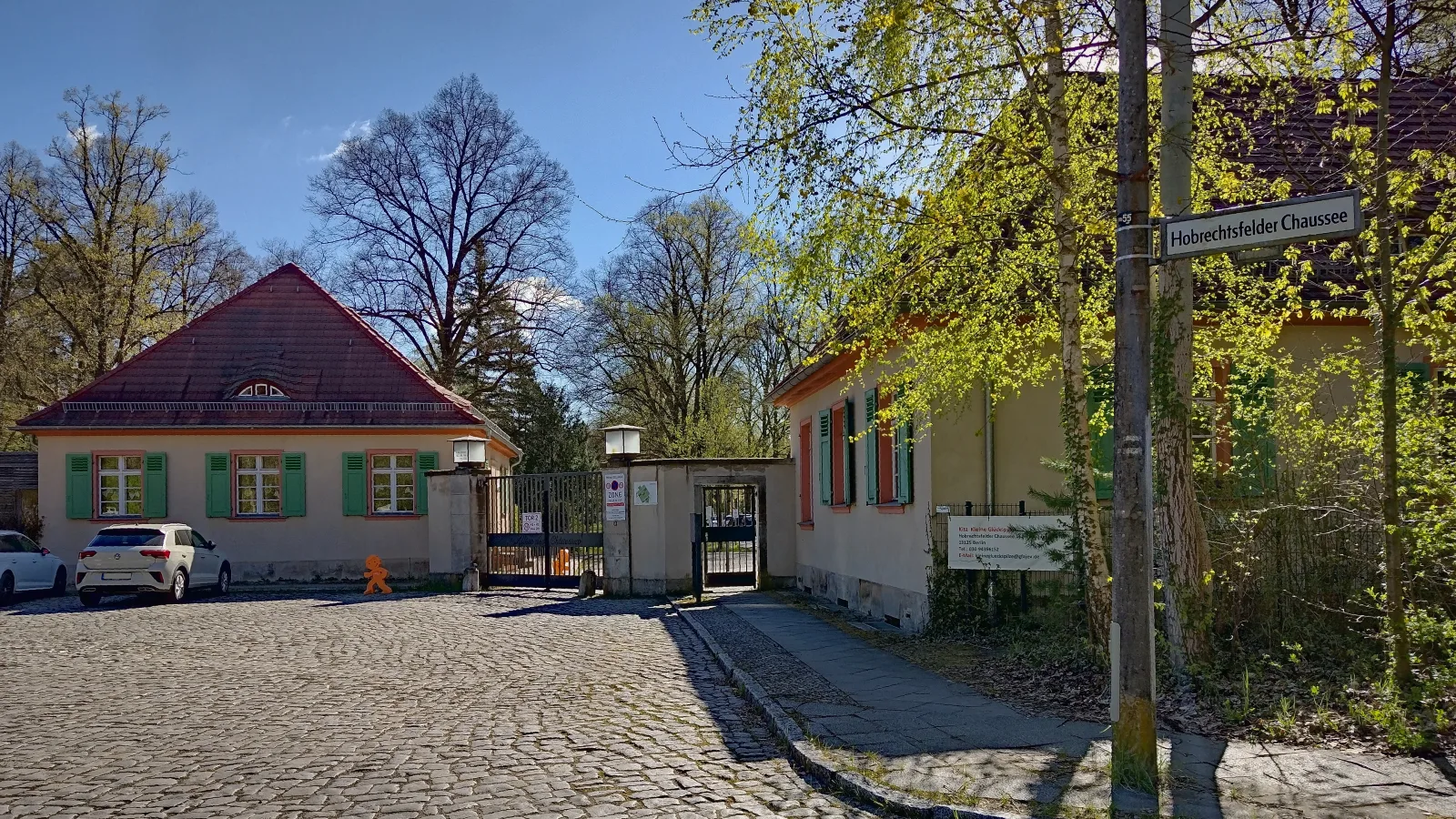
On the northern edge of the city, on Hobrechtsfelder Chaussee in Berlin-Buch in the Pankow district, lies one of the most heavily guarded clinic ruins in Germany. The East German government hospital, known internally as the Stasi hospital, opened in 1976 as a special clinic for the state's highest leadership: the Politburo, the council of ministers and the Stasi top brass were treated here behind closed doors, complete with their own atomic bunker underground.
After reunification the clinic lost its purpose; it closed in 2007 and has stood empty ever since. The site now belongs to the State of Berlin and is watched by a security service; since 2017 it has been secured against entry with silent alarms, motion detectors and cameras. A restoration would cost around 210 million euros, a full demolition 86 million, which is why the future of the complex remains disputed.
The grounds are state-owned, fenced and tightly watched, and entry is not allowed. It remains one of the most striking witnesses of East German privilege medicine, a clinic built for the few and forgotten by all.
4. Pankow Roundhouse - the last of its kind (Pankow-Heinersdorf)
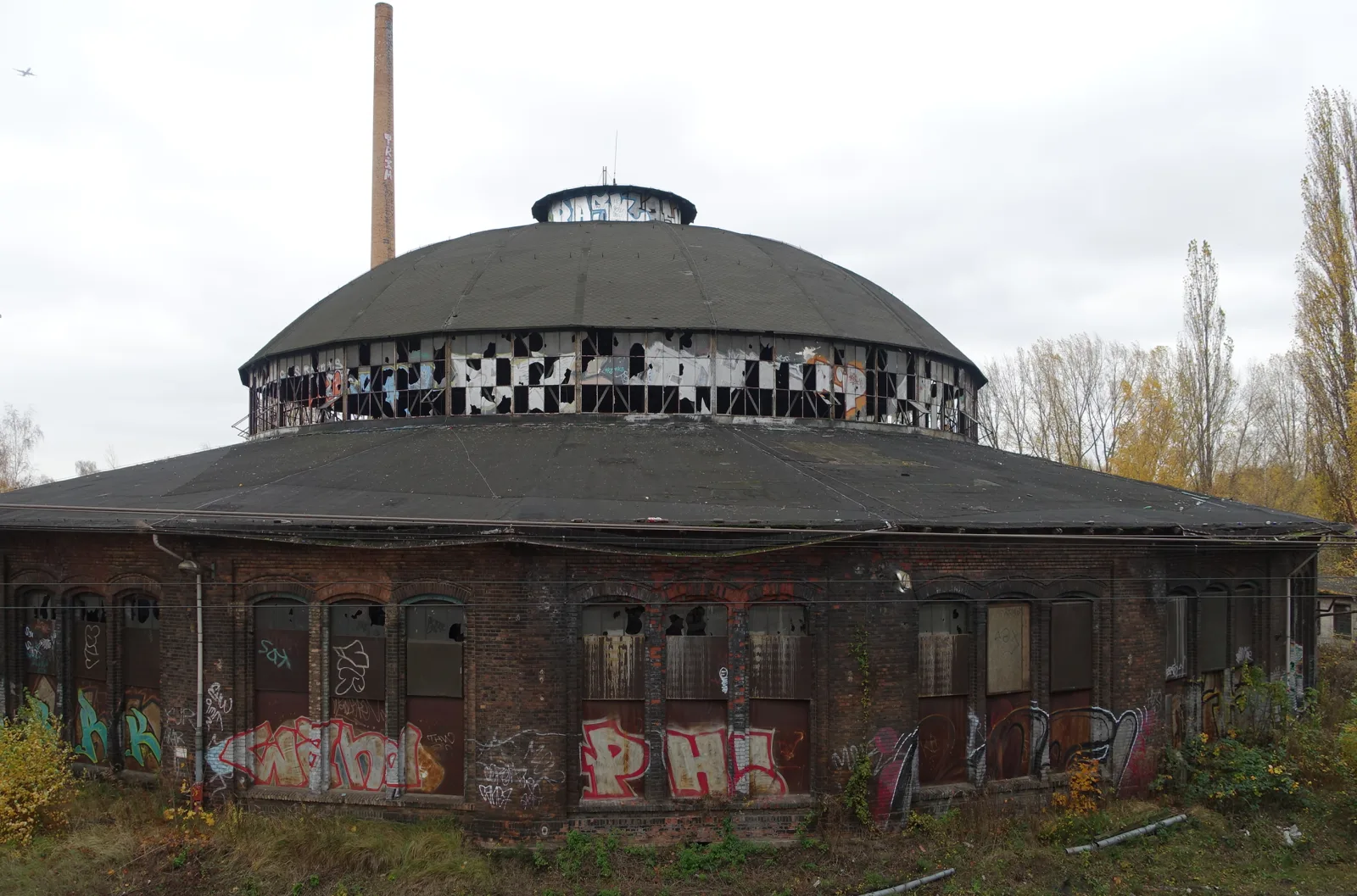
Right next to Pankow-Heinersdorf S-Bahn station, between the Prenzlauer Promenade and the railway embankment, stands the Pankow Roundhouse (Rundlokschuppen), the last roundhouse ever built in Germany. Erected in 1893 by the Royal Railway Directorate, it arranged 24 tracks in a half-circle around a central turntable. Together with the one in Rummelsburg, it is one of only two of its kind left in the country.
Freight traffic ended in 1997 with the closure of the marshalling yard, and the listed building has decayed ever since. In 2019 the administrative court ordered the owner to carry out emergency stabilisation; in 2021 work began on the failing roof. The site is being planned as the new "Pankower Tor" quarter by investor Kurt Krieger, with around 2,000 homes; the roundhouse itself is to be preserved as a monument and culturally reused, but it remains a ruin today.
The grounds are fenced and under redevelopment, and the shed is at risk of collapse. From the platform and the bridge it can be taken in clearly. It remains the most impressive railway monument in the city, Berlin's industrial history written in brick and steel.
5. Hubertusbad - the silent public baths (Lichtenberg)
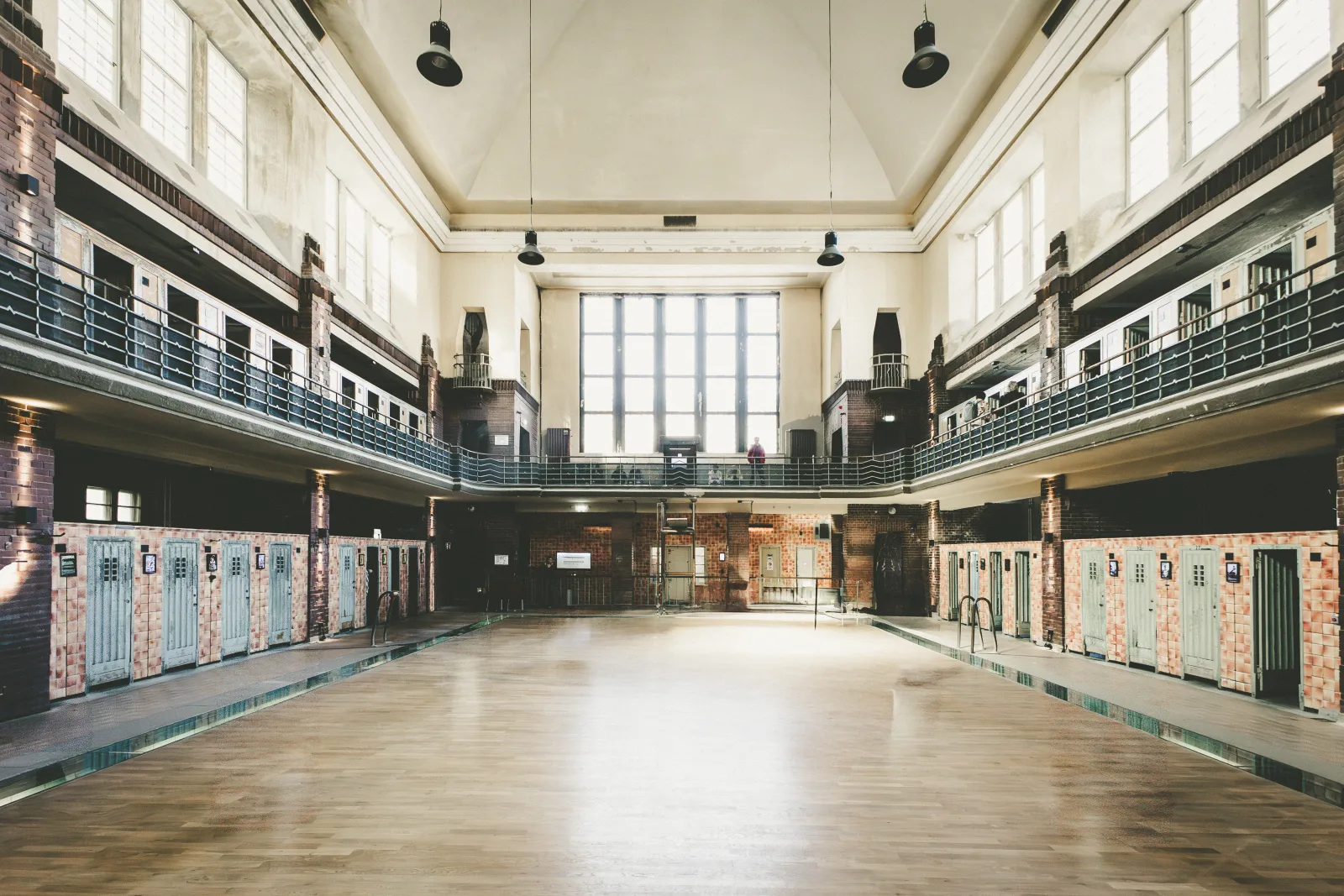
On Hubertusstrasse in Berlin-Lichtenberg, the Stadtbad Lichtenberg, locally called the Hubertusbad, is one of the most beautiful abandoned swimming baths in Berlin. Opened in 1928 in the Expressionist style, with two halls, murals and diving figures, it was a showpiece pool of the Weimar Republic and has been a listed building since its closure.
Structural damage and a lack of funds led to its closure in 1991, and it stood as a ruin ever since, the great pool dry, the plaster flaking. Rather than a conventional restoration, the Hubertusbad has been used since 2024 for immersive art exhibitions: in 2025 and into early 2026 the show Stadtbad RELOADED transforms the historic architecture with light and projections, while the building stays structurally unrestored.
The baths are listed and only accessible during events, otherwise sealed. It is the gentlest spot on this list, a Weimar dream of tiles and steel slowly being brought back to life.
6. Waldhaus Buch - the forest sanatorium (Buch)
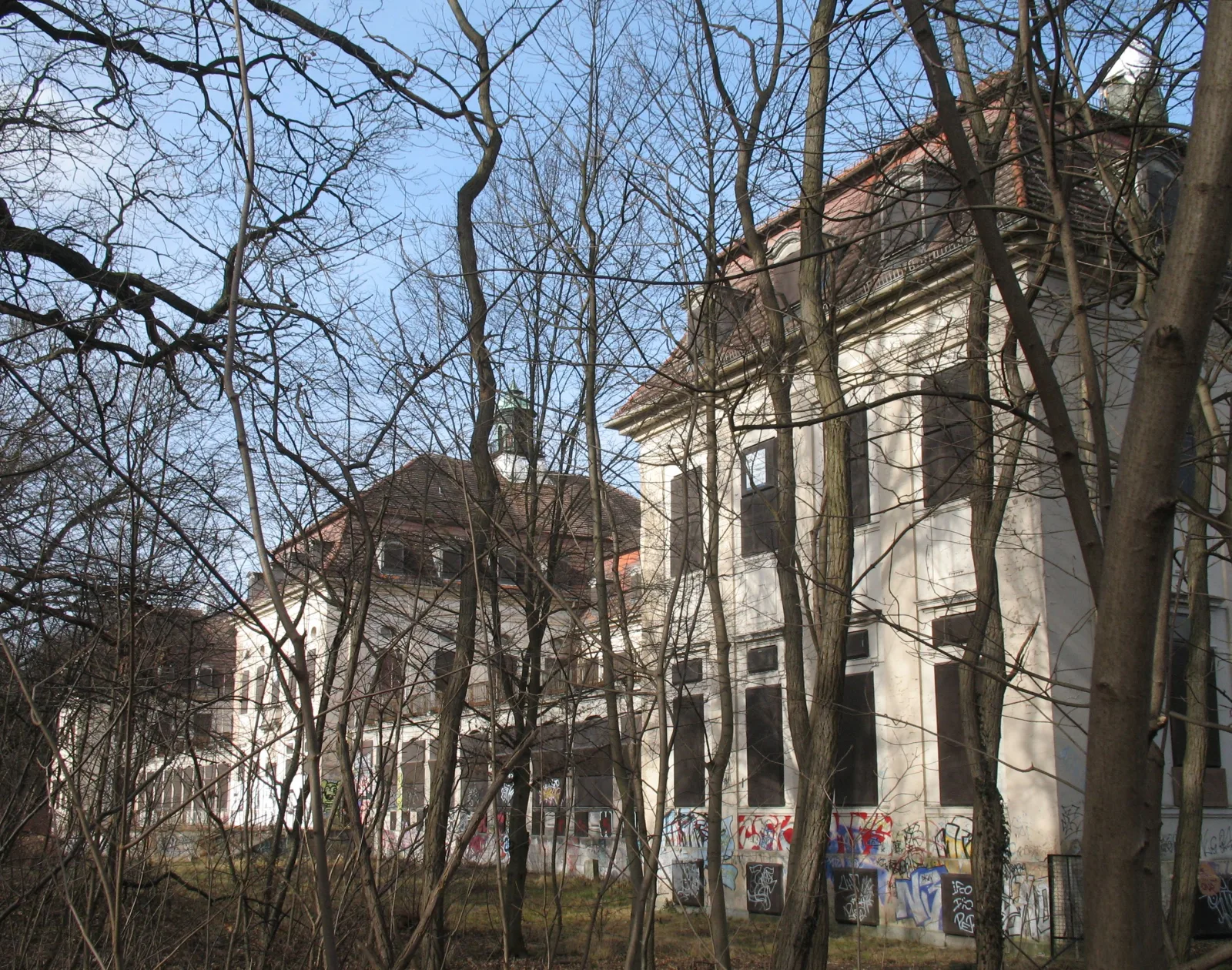
A little further east, on the edge of the woods of Berlin-Buch, stands the Waldhaus, a former forest sanatorium. Built around 1905 to designs by city architect Ludwig Hoffmann, it first treated tuberculosis patients, served as a military hospital during the war and later as an orthopaedic clinic. It is part of the great Buch hospital campus, once among the most modern in Europe.
The Waldhaus closed in 1992 and has been empty ever since. Its history has dark chapters: patients from here were murdered in the Nazi "euthanasia" killings in 1940. Today the building is heavily decayed and at risk of collapse, with steel grates sealing every entrance. Parts of the Buch hospital grounds have been converted into housing for years, and further plans for the sanatorium exist, but the Waldhaus itself still holds out.
The sanatorium is private property, secured and inaccessible. Typical sanatorium risks apply here: rotten floors, falling masonry and likely asbestos. Find more spots on our Berlin urbex map.
What is not on this list
Search for lost places Berlin and you quickly land on the Spreepark in Planterwald or on Teufelsberg. We left both out on purpose: the Spreepark has been under redevelopment for years and is set to reopen as a new park in 2027, and Teufelsberg is long since a managed visitor attraction with an entry fee, no longer a silent lost place.
Other classics simply no longer exist. The Blub water park in Neukoelln was demolished from 2020, the Eisfabrik ice factory on the Spree was converted into flats in 2023, the Ballhaus Gruenau was flattened in 2020 and the Mitropa laundry in Hohenschoenhausen back in 2016. An honest list shows only places that still stand and are still abandoned in 2026, not ruins that survive only in old photos.
FAQ - Lost places in Berlin
Is urbex legal in Berlin?
Looking at and photographing buildings from public ground is legal. Entering private property without permission is trespass under Section 123 of the German Criminal Code and can become a criminal matter if you cause damage or ignore fences. Most spots here are private, state-owned or listed: we document them for their history, without ever encouraging break-ins. For more, read our pillar on lost places in Germany.
Where can I find other abandoned places around Berlin?
Our map lists thousands of spots across Berlin and the rest of Germany. You can add the six places in this article to your personal map for free via the button under each entry, then unlock the rest through our regional packs.
Are these lost places dangerous?
Yes. Waldhaus Buch is at risk of collapse and likely contains asbestos, the government hospital is tightly guarded, the Pankow roundhouse has a failing roof, and the Iraqi embassy is heavily wrecked inside. Several spots are best seen only from outside. Go with someone, carry a head torch, and never enter a structure that looks unsafe.
Which lost place is the best to start with in Berlin?
The Mouse Bunker and the Pankow roundhouse are the easiest: both stand right by a road or S-Bahn station and can be admired and photographed from outside with no difficulty. The Hubertusbad can even be seen legally from inside during its art exhibitions.
Conclusion: Berlin, a city of second abandonments
From the embassy ruin in Niederschoenhausen to the forest sanatorium in Buch, the lost places of Berlin tell the story of a city divided, abandoned and reinvented twice over, and of the closures, stalled developments and heritage debates that left these landmarks behind. They are not stage sets: they are open-air history books, fragile, to be explored with respect and without damage, several of them now being rescued. Add them to your map, and carry on with our pillar Lost Places Germany: 16 abandoned sites or the full Germany urbex map.