France has thousands of abandoned places: an unfinished château-museum in the Oise that never received its first painting, an Art Nouveau spa hotel left empty at the foot of the Canigou, Atlantic Wall bunkers tipped over onto the beaches of the Alabaster Coast, the last great coal-washing plant still standing in the Carmaux coalfield, or an entire village walled up beneath the planes of Roissy airport. Our map lists over 27,000 geolocated abandoned places in France alone, from the Hauts-de-France to the Pyrenees, and it is from this pool that we drew.
In this guide, we have selected 20 abandoned places in France to explore in 2026: forgotten châteaux and ruined manor houses, disused sanatoriums and hospitals, industrial wastelands, military forts, ship graveyards and ghost villages. Each one was verified individually: we kept only places that are genuinely abandoned, still standing and not turned into a museum as of summer 2026. Below most entries, an "Add to my map" button saves the GPS coordinates to your personal account, free of charge and with no credit card.
The terms abandoned places, abandoned spots, derelict sites, urbex (short for urban exploration) and urban exploration all point to the same passion: finding, photographing and documenting these buildings that no one occupies any more and that nature is slowly reclaiming. Whether you are looking for an abandoned château in the Dordogne, an abandoned factory in the Somme, an abandoned sanatorium in the Hérault, or simply an abandoned place near you, this ranking covers eight regions and eighteen departments.
See over 27,000 abandoned places in France on the interactive urbex map →
Free urbex France: why Urbex Maps changes the game
Most lists of "abandoned places in France" promise free coordinates in their title, then send you off to a closed Facebook group, a forum, or a paywall at 50 euros. We do the opposite. Below most of the twenty places that follow, you will find a real spot from our database, with a button that drops the GPS coordinates into your profile for free. No subscription, no credit card, no hidden conditions.
Behind this promise lies a verification model. A community of more than 40,000 explorers has been logging places since 2021, and every set of coordinates is checked at least twice: once by the person reporting the spot, and once by a regional moderation team that confirms the place still exists. The spots offered in this guide come from that catalogue; the rest, over 27,000 other French places, is available through themed packs that fund the moderation work.
This ranking is ordered by visual impact and historical weight, not by region. We open with places whose history has recently made the news, then move through châteaux, bunkers, sanatoriums, industrial wastelands and ghost villages all the way to forgotten railway infrastructure. For each place, a link points to the corresponding regional map. And one honest caveat: some of the places below are private property or subject to legal proceedings. Exploring does not mean breaking in: you look, you photograph from authorised access points, you force nothing and you damage nothing.
What is NOT on this list (and why)
When you search for "abandoned places France" on Google, you quickly come across names that are no longer real urbex spots. We deliberately left them out, after checking. Maillezais Abbey (Vendée) and the troglodyte abbey of Saint-Roman (Gard) are magnificent ruins, but they are managed tourist sites, with ticket offices, opening hours and guided tours. The famous "Château Lumière" in Alsace, in reality Château Burrus in Sainte-Croix-aux-Mines, was bought in 2021, restored, and has hosted weddings since June 2024. La Mothe-Chandeniers (Vienne) was saved in 2017 through crowdfunding and now belongs to thousands of co-owners.
The same goes for the sanatoriums: the one in Cambo-les-Bains burned down in 2022 and was demolished to make way for housing, the Réal Martin sanatorium (Var) became an eco-district delivered in 2024-2025, and the Bergesserin sanatorium (Saône-et-Loire), long a legendary urbex spot, is being rehabilitated and has been off-limits by official order since May 2026. As for the Liévin pit headframe, it is a monument listed as a UNESCO World Heritage Site, restored and inaugurated in late 2025: a place of remembrance, not a playground. A place earns its spot in this ranking only if it is genuinely abandoned in 2026, still standing and not turned into a museum. That is what sets us apart from the copy-and-paste lists that have been passing around the same out-of-date names for years.
1. Château de Segonzac: the abandoned Dordogne château that caused a scandal
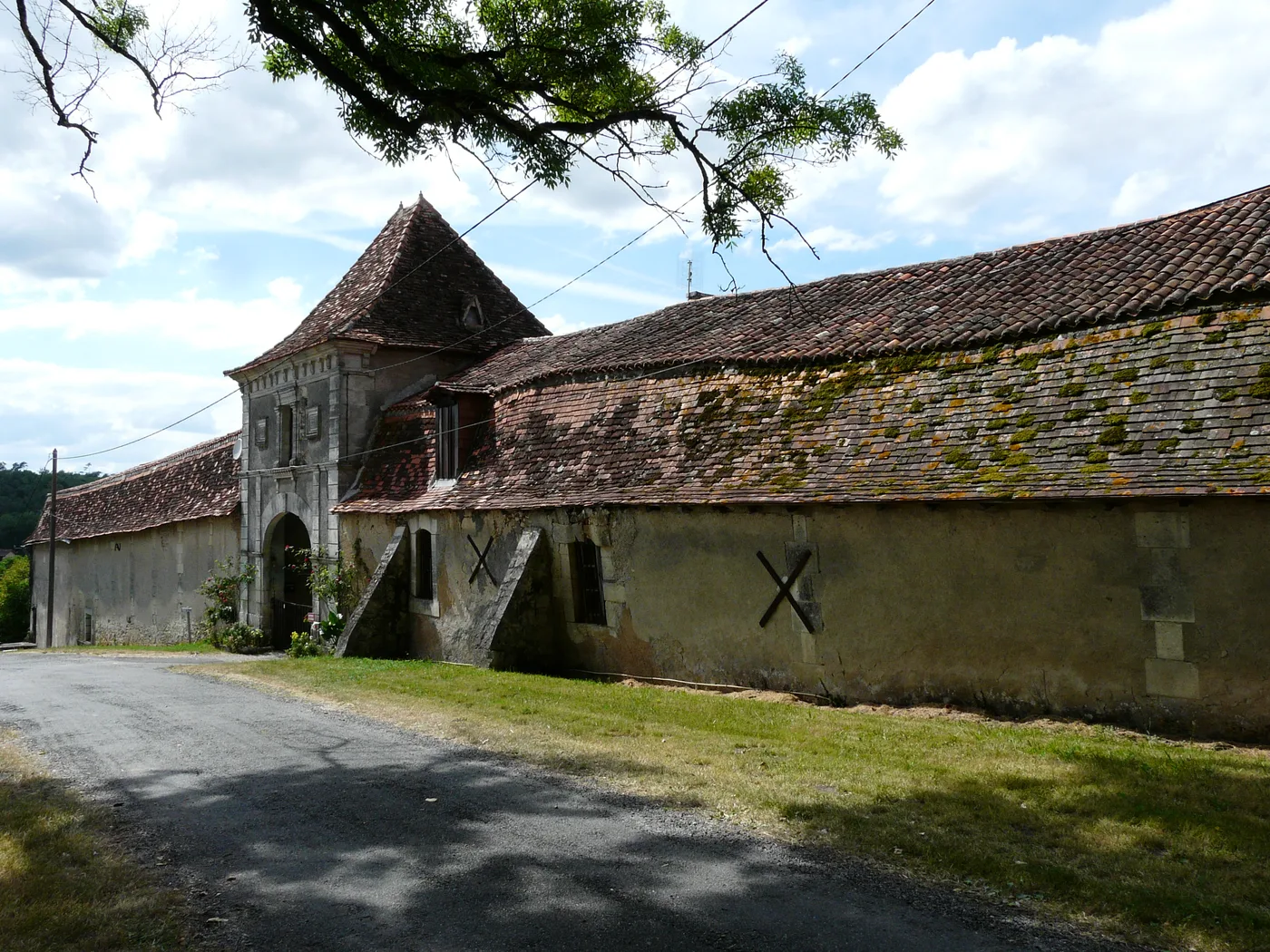
Near Ribérac, in the Périgord Vert, the Château de Segonzac is a noble seat whose origins go back to the 13th century. Owned by the Bardon de Segonzac family and never open to visitors, it now stands abandoned: cracked facades, gaping roofs, furniture left in place. It is exactly the kind of place people look for when they type "abandoned château Dordogne".
If we open this ranking with it, it is because it made the news in 2026 for a sad reason: explorers forced open the family vault and opened a coffin, triggering five complaints from the owner, who lives more than 350 kilometres away. Segonzac sums up the whole point of responsible urbex. We do not give its coordinates: it is private property under legal proceedings. We mention it as a warning, not an invitation. To explore legally in the Dordogne, look instead at our Dordogne urbex map.
2. The toppled bunker of Sainte-Marguerite-sur-Mer: the tipped blockhouse of the Alabaster Coast
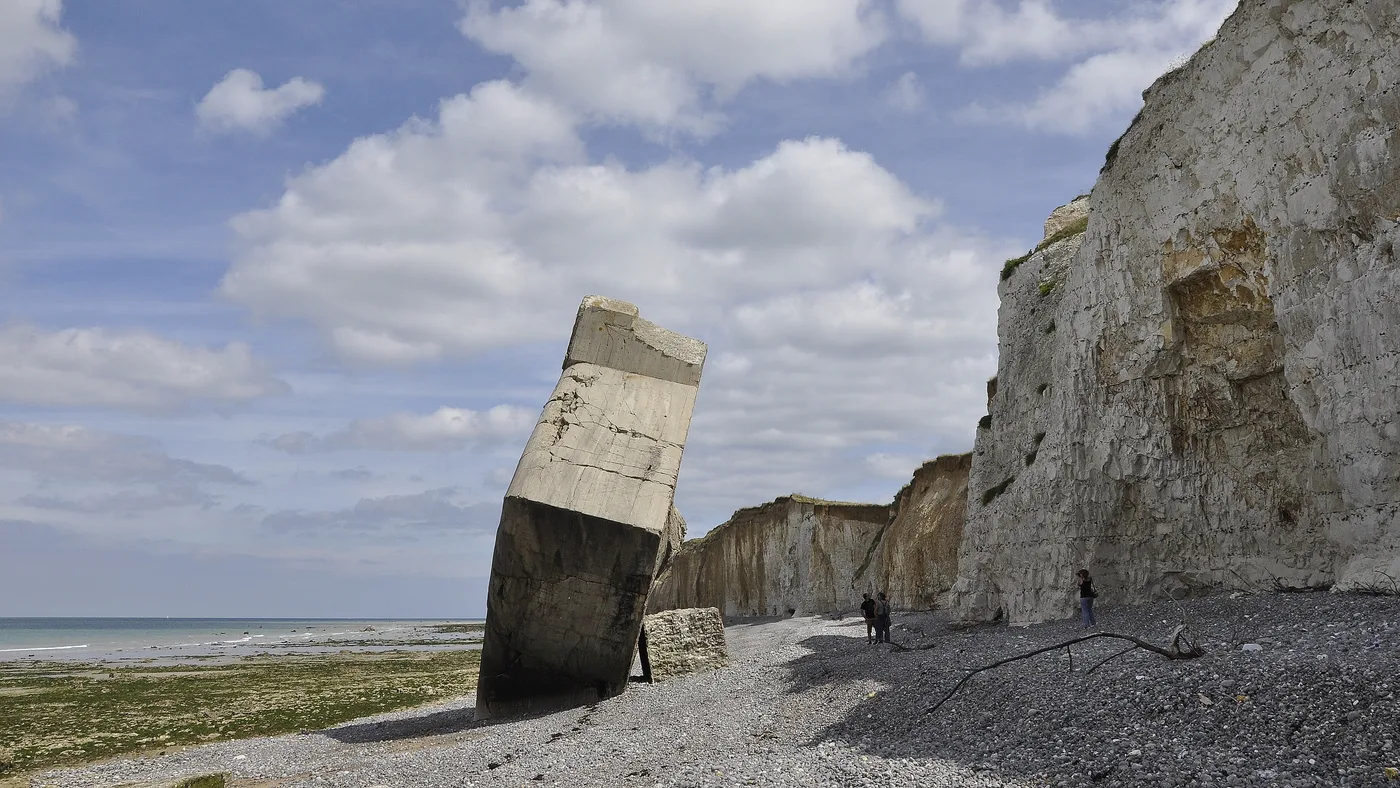
On the beach at Sainte-Marguerite-sur-Mer, in the Seine-Maritime, a cube of concrete lies tilted on the pebbles: it is a blockhouse of the Atlantic Wall (a Regelbau 621 built in 1942, within the Dieppe support group). When the cliff it sat on receded, Dieppe firefighters deliberately tipped it over in April 1995 to keep it from falling on its own. Since then it has been "planted" in the sand, half overturned.
It is one of the most photographed spots on the Alabaster Coast, immortalised even in the documentary Faces Places by Agnès Varda and JR. A rare advantage for urbex: it sits on the foreshore, freely accessible at low tide, without any trespassing. An excellent starting point for exploring the many abandoned blockhouses of the Normandy coast.
3. Château de Magny: the abandoned Calvados château left to die
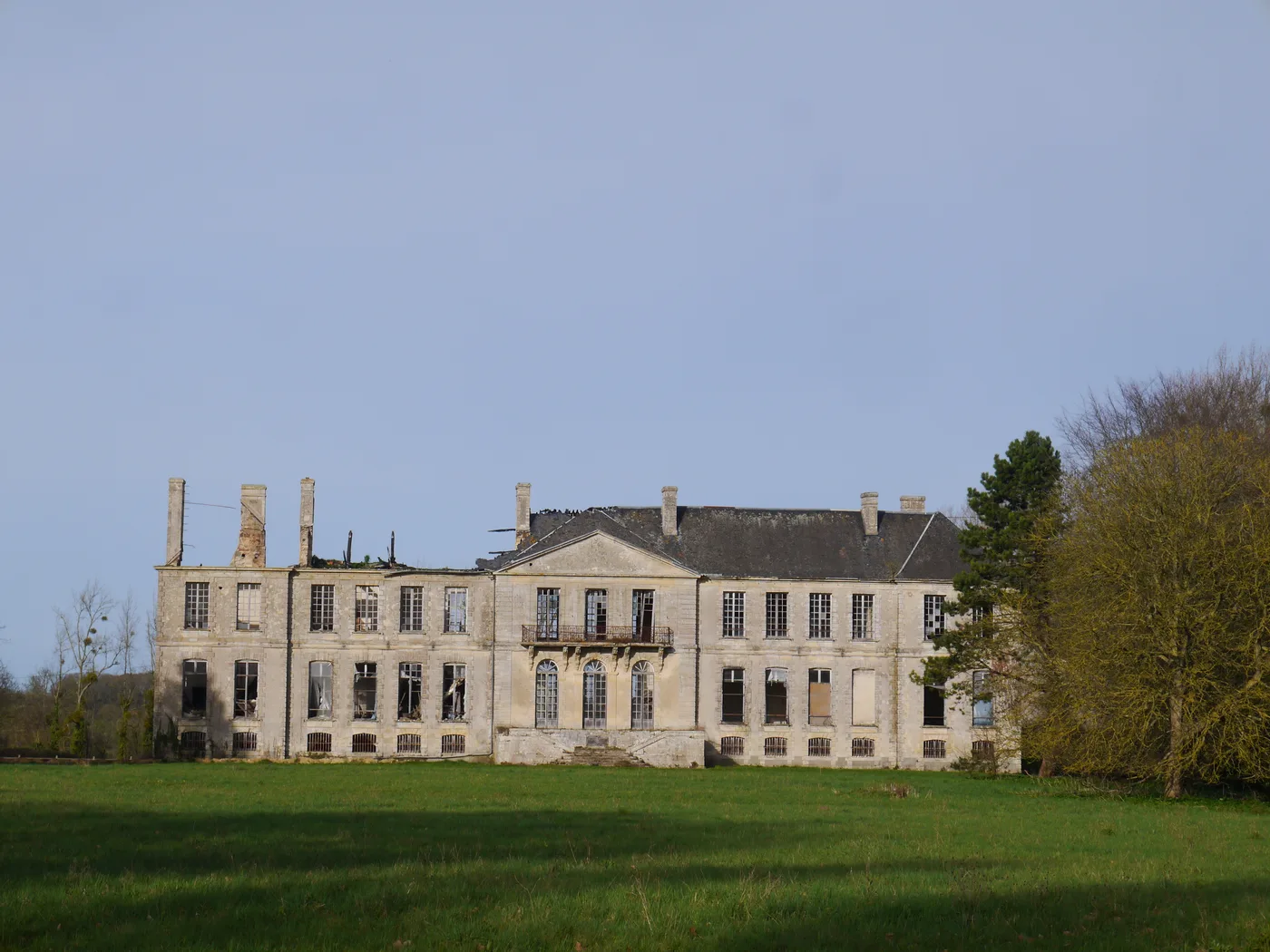
In Magny-en-Bessin, in the Calvados, stands an early 18th-century château left to its own devices. Several fires (one in March 2016), collapsed floors and roof timbers, and in early 2025 the fall of the west chimney, more than ten tonnes of stone: the building is falling apart, season after season.
Its recent story has become a textbook case: the owner, nearly 80 years old, refuses any restoration work even though almost 750,000 euros have been released by the Heritage Lottery, the Region and the DRAC. The funds remain frozen, and we are left to watch, powerless, the slow death of a monument supported by the Fondation du patrimoine. Private property: to be viewed from the outside. Other abandoned châteaux await you on our Calvados urbex map.
4. Carmaux coal-washing plant: the last mining cathedral of the Tarn
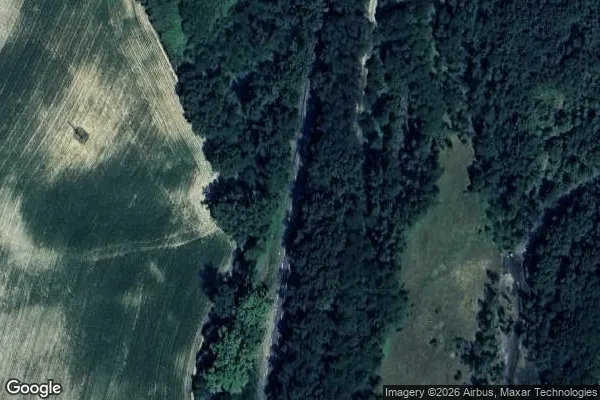
In Blaye-les-Mines, in the Tarn, the Carmaux coal-washing plant raises its seven levels of concrete and steel framework above the former coalfield. Opened in 1928, it washed and sorted the coal mined nearby; it closed at the end of the 1990s and was never reused after being sold off in 1997. It is described as one of the last great coal-washing plants still standing in France.
Two fires (2008 and 2010) weakened the structure, now deemed "eminently dangerous": holed floors, crumbling concrete, a structure impossible to secure at this scale. That is what makes it both fascinating and forbidding. It remains actively explored, as recent videos from November 2024 show.
5. Somail sanatorium: the abandoned sanatorium of the Hérault

Above Saint-Pons-de-Thomières, in the Hérault, the former Bayssières children's sanatorium, better known as the Somail sanatorium, once dominated the Haut-Languedoc. A tuberculosis sanatorium that became a children's asthma centre, it closed at the end of 1993 and has been abandoned since 1995. Emptied corridors, scattered medical furniture, light falling through broken windows: it is the archetypal abandoned sanatorium.
Unlike most French sanatoriums, demolished or rehabilitated in recent years, this one is still standing: exploration reports dated February and December 2025 confirm it is still there, and slowly decaying. For other abandoned places in the region, see our Hérault urbex map.
6. Kerhervy ship graveyard: the forgotten wrecks of the Blavet
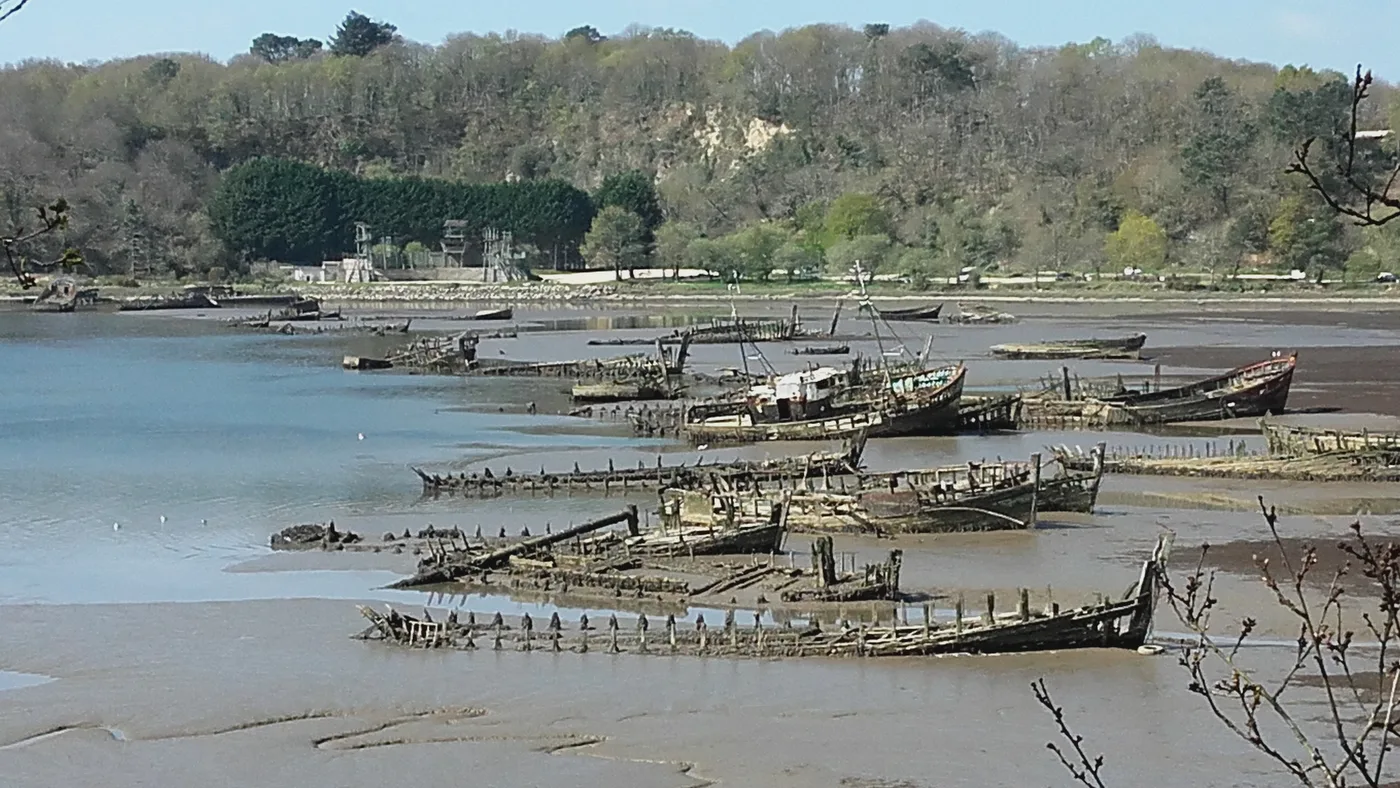
On the bank of the Blavet, at Lanester in the Morbihan, the Kerhervy ship graveyard lines up wooden hulls beached in the mud. These are former tuna dundee boats from the island of Groix and old trawlers, abandoned here since the 1920s; in 1943, the Germans even had wrecks transferred here to clear access to the Lorient submarine base.
The last boat, the trawler L'Ouragan, arrived in 2001; since then, bringing in new wrecks has been forbidden, and those that remain are sinking gently into the mud. Reached via the coastal path, this is open-air urbex, perfectly legal, ideal at sunset.
7. Camaret-sur-Mer ship graveyard: the beached lobster boats of the Finistère
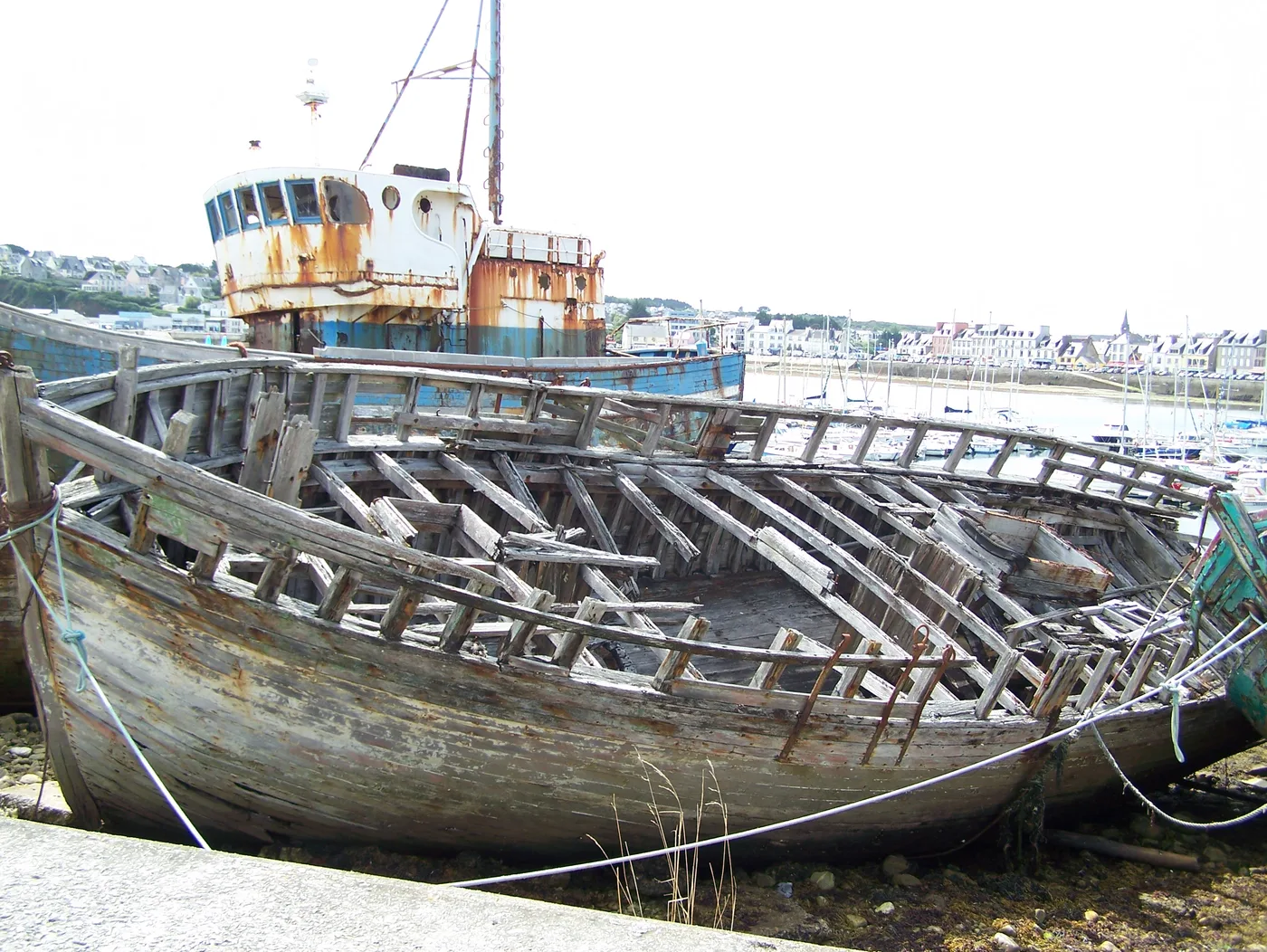
At the tip of the Crozon peninsula, on the Sillon de Camaret-sur-Mer in the Finistère, another ship graveyard gathers wooden lobster and tuna boats, laid to rest here since the 1950s when the lobster fishery collapsed. You can still make out named and dated hulls: the Castel Dinn (1960), the Notre-Dame des Neiges (1959), the Rosier fleuri (1948).
Owned by the State, in the surroundings of a historic monument, the site is slowly emptying: the hulls are holed so they no longer float, and the most dangerous are removed. Around ten wrecks remain, to be seen while they still hold together. More spots on our Finistère urbex map.
8. Goussainville Vieux-Pays: the ghost village beneath the planes of Roissy

Some twenty kilometres from Paris, the Vieux-Pays of Goussainville, in the Val-d'Oise, is the most famous ghost village in the Île-de-France. When Roissy-Charles-de-Gaulle airport opened in 1974, the village, crushed by the noise (and marked by the crash of a plane onto the houses in 1973), lost most of its inhabitants. Aéroports de Paris bought nearly 150 houses to demolish them, but ended up walling them up and leaving them standing.
The village escaped destruction thanks to the listing of the church of Saint-Pierre-Saint-Paul (13th century), which protects everything within a 500-metre radius. Today, the houses with their breeze-block windows sit alongside the first signs of a revival: a park opened in 2024 and a café-restaurant is moving in on the square. Make the most of it, as the "ghost town" atmosphere is gradually fading. See also our Val-d'Oise urbex map.
9. Château Mennechet: the unfinished château-museum of the Oise
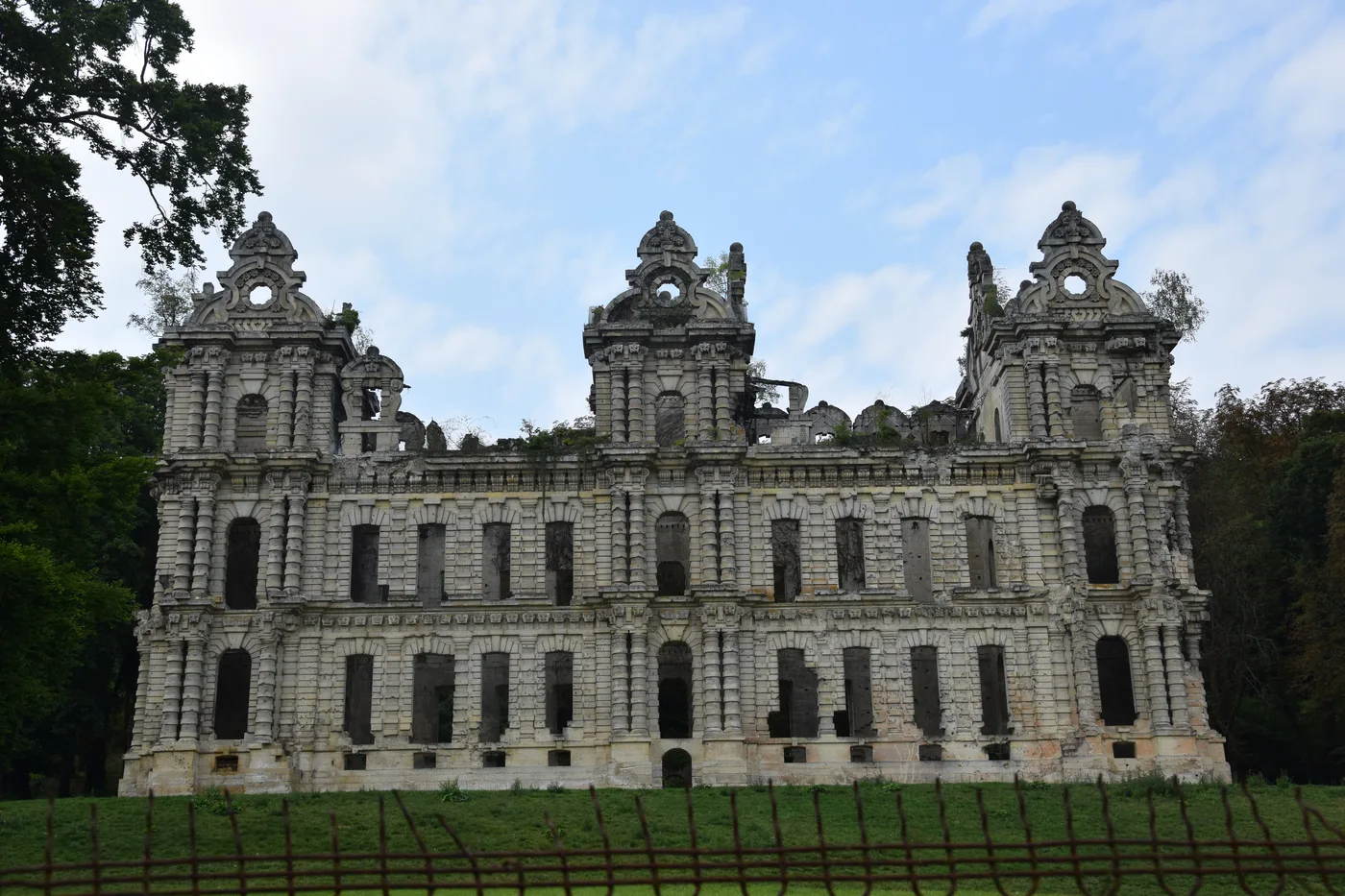
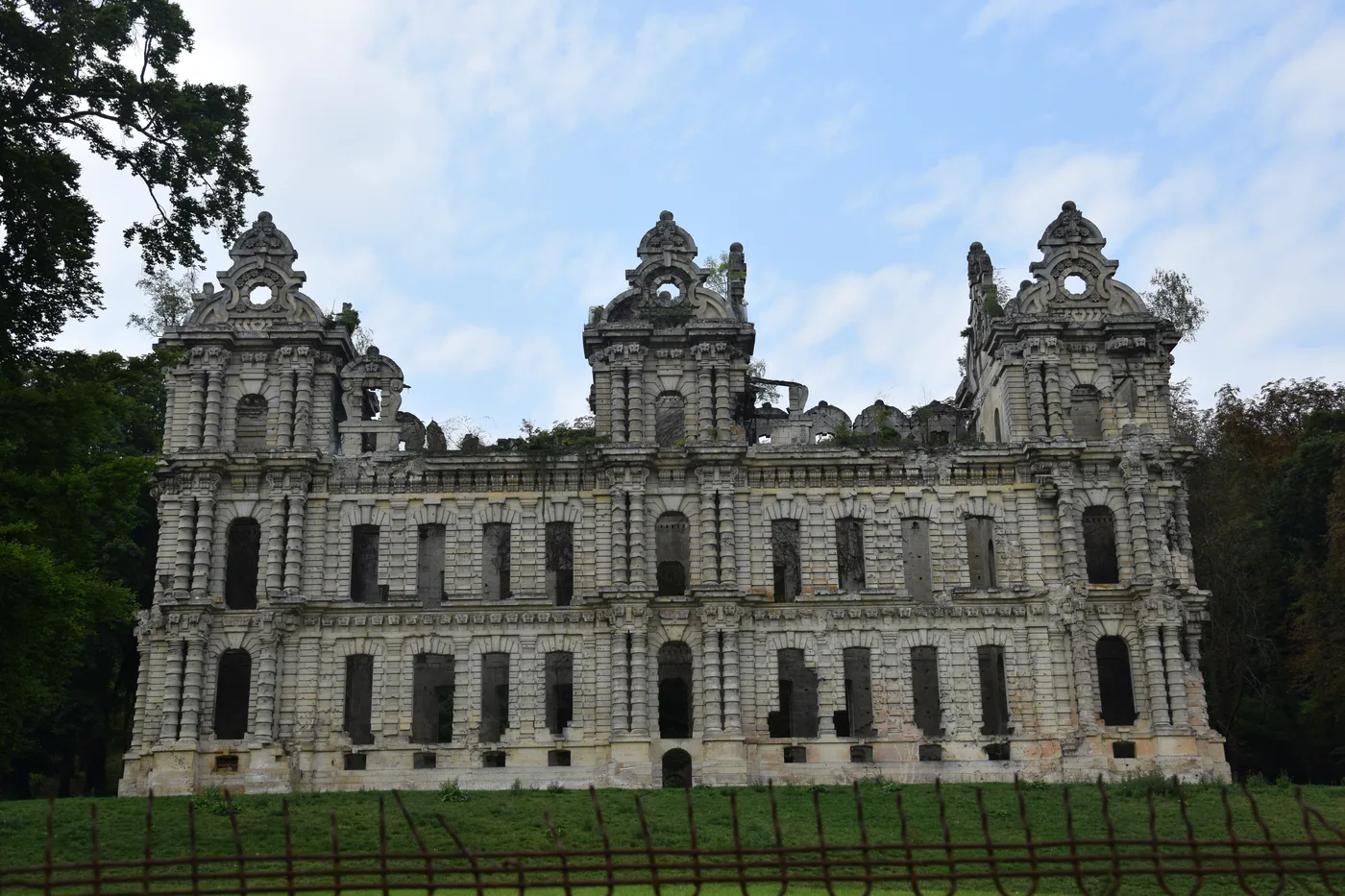
In Chiry-Ourscamp, in the Oise, the Château Mennechet, known as the Château de la Folie, is a ruin like no other: it was meant to be a gallery-château 40 metres by 60, begun in 1881 by the collector Alphonse Mennechet de Barival to house his art collection. He died in 1903, aged 90, before it was finished. The building would never receive its first painting.
Damaged by First World War bombardment, the neo-Renaissance shell is today an open-air facade, listed as a Historic Monument in 2011. The property is private and fenced off: you admire it from the outside, which is enough to measure the sheer scale of the project. More places on the Oise urbex map.
10. Fort de Mayot: the forgotten Séré de Rivières fort of the Aisne

In the Aisne, the Fort de Mayot, or Fort Perré, is part of the Séré de Rivières system built after 1871 to lock down the roads to Laon. Constructed between 1879 and 1881 for around 565 men, it was disarmed as early as 1909 and decommissioned in 1912, before it had ever seen action.
Occupied without a fight by the Germans during the First World War, its barracks were destroyed during their withdrawal in 1918. Left out of any modernisation, it has since been sinking under the vegetation: an abandoned military fort just the way we like them, still explored in October 2025. Private property, access in principle forbidden. Other works on our Aisne urbex map.
11. The hanging blockhouse of Heuqueville: the bunker clinging to the cliff
Between Le Havre and Étretat, at Heuqueville in the Seine-Maritime, a block of concrete weighing some 3,000 tonnes hangs in the void, against the cliff face. It was the firing observatory of a German coastal battery. Erosion swept away the cliff beneath it back in 1986; ever since, it has been sliding slowly towards the sea, spectacular and frozen in place.
Be careful not to confuse it with the neighbouring blockhouse of Octeville-sur-Mer, which fell and was buried on 29 July 2024: the Heuqueville one is still holding on, as confirmed by numerous drone shots from 2024. It is one of the most striking photo spots on the Normandy coast, to be admired from the customs officers' path, without going down the cliff.
12. Navarre factories: the great industrial wasteland of Évreux
In Évreux, in the Eure, the Navarre district keeps the remains of a former metalworking factory closed in 2004, alongside the large "Lopofa" housing blocks. A partial demolition, launched in 2013-2014, was never completed, and the clean-up never started: in June 2026, the Eure prefecture still confirmed that "the works have never begun".
The result is a vast wasteland still standing, explored by drone as well as on foot. But the clock is ticking: the city of Évreux has scheduled the demolition of the blocks and the renaturation of the site for the end of 2026, with a park planned for 2027. So see it soon. More wastelands on our Eure urbex map.
13. Belle-Étoile Abbey: the ruined abbey of the Orne
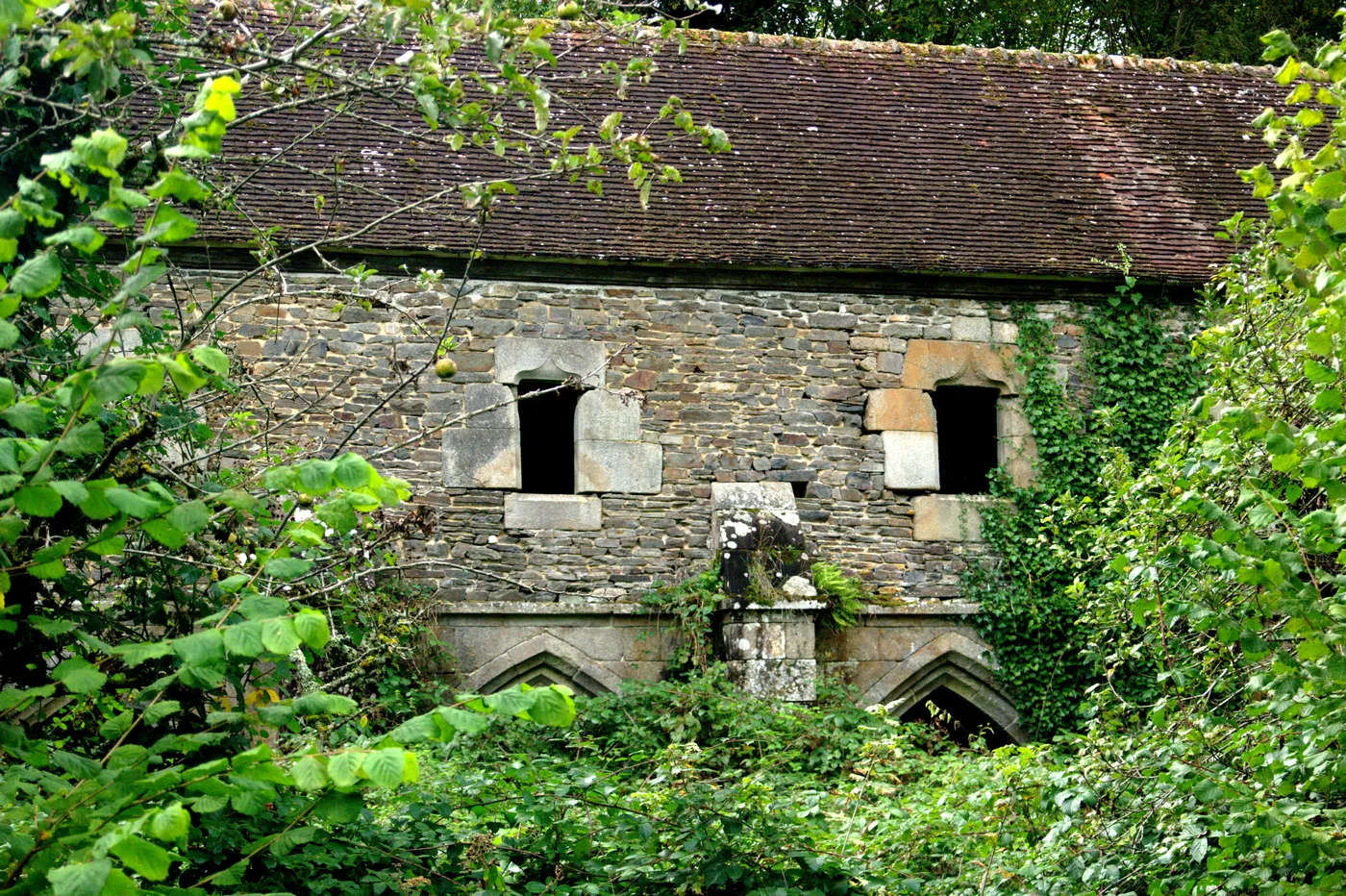
On the Cerisy hill, in the Orne, Belle-Étoile Abbey was founded in 1216 by the Premonstratensian order. Sold as a national asset during the Revolution and largely demolished, it survives only in fragments: sections of the church, a cloister from the late 15th century, a tithe barn, a 1713 guesthouse, all overrun by vegetation, with collapsed vaults.
Part of the remains has been listed as a Historic Monument since 1926, but the site, private property, was put up for sale around 2022 and appears on lists of endangered heritage. On both counts, access is restricted: you do not let yourself in, you respect the place and its owner. See our Orne urbex map.
14. Château du Grand Dragon: the abandoned château on the edge of Bordeaux
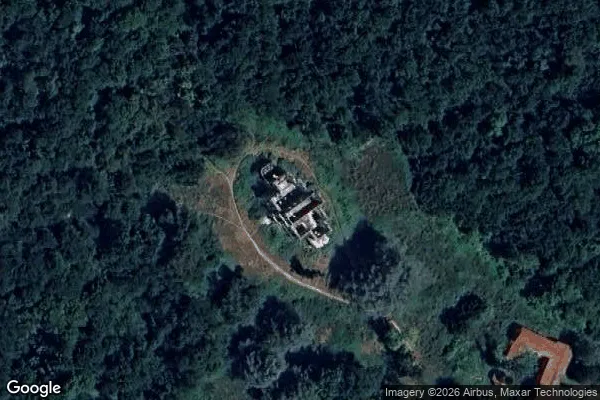
In Bouliac, on the hillsides overlooking Bordeaux in the Gironde, the Château du Grand Dragon is a late 19th-century residence (around 1862) with a turbulent fate: occupied by the German army during the Second World War, turned into a retirement home, then abandoned at the end of the 20th century. Fires and looting did the rest.
What remains is the walls, some outbuildings (stables, dovecote) and a ravaged interior, photogenic to the core. It is one of the best-known abandoned châteaux of the Bordeaux area, still regularly explored. More spots on our Gironde urbex map.
15. Château du Procureur: the manor abandoned since the 1940s
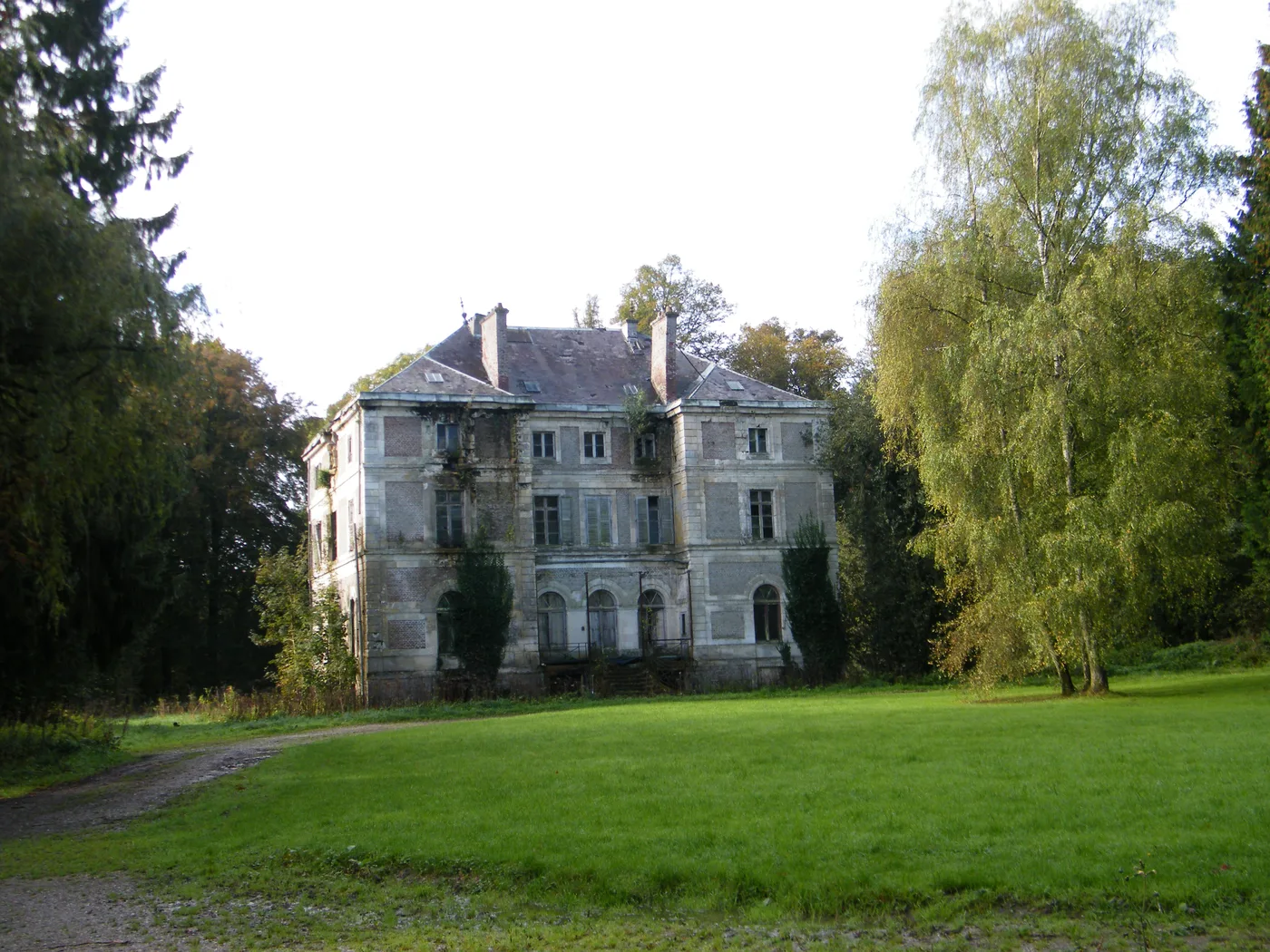
In Montonvillers, in the Somme, the Château du Procureur is a manor built around 1820 on 17th-century foundations. Occupied by German troops during the Second World War, it was deserted in the 1940s and never lived in again: it is one of the oldest abandonments in the region.
Still standing and still listed as abandoned in 2025, it remains an abandoned manor prized by Picardy explorers. The site is, however, watched, with gendarmerie patrols having already interrupted visits: caution and discretion are essential. See our Somme urbex map.
16. The Heidenbuehl brickworks: the factory swallowed by the forest in Alsace

Along the road climbing from Châtenois towards Sainte-Marie-aux-Mines, in the Bas-Rhin, the former Heidenbuehl tile and brick works is being slowly swallowed by the forest. Started around 1880 as a tile works by the Lang family of Sélestat, converted into a brickworks in 1918 with a continuous Hoffmann kiln, it employed some thirty workers in 1930 before production stopped in 1950.
What remains is the brick walls, the kiln and the galleries, eaten away by moss and roots, in a very particular green light. A quiet classic of Alsatian urbex, far from the overcrowded spots. More places on our Bas-Rhin urbex map.
17. Hôtel Alexandra: the abandoned Art Nouveau palace at the foot of the Canigou

In Vernet-les-Bains, in the Pyrénées-Orientales, the Hôtel Alexandra still raises its Art Nouveau facade at the foot of the Canigou. This early 20th-century spa palace, where André Malraux is said to have written part of L'Espoir and where the cellist Pablo Casals stayed, has been abandoned for more than forty years: holed roof, worm-eaten floors, looted interiors.
It is one of the most photogenic abandoned hotels in France, listed as "endangered heritage". A rehabilitation project was mentioned in 2024: to be confirmed before you go, because the status of such a place can change fast. See our Pyrénées-Orientales urbex map.
18. The Pierre-Lys gorge: the ghost railway line of the Aude
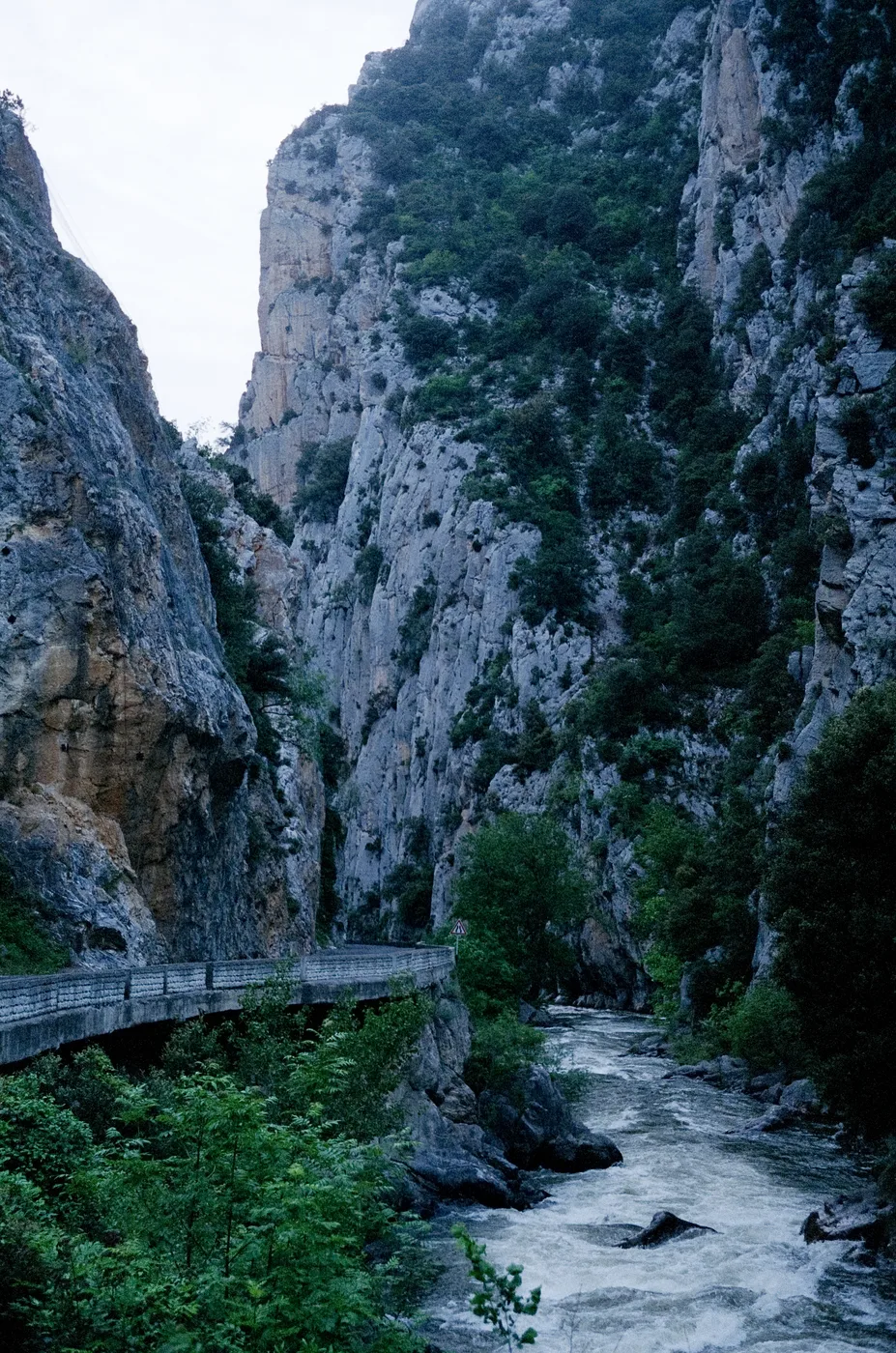
In the upper valley of the Aude, between Quillan and Axat, the former Carcassonne-to-Rivesaltes railway line crosses the spectacular Pierre-Lys gorge through a succession of tunnels and rockfall galleries dug between 1878 and 1904. This section was taken out of service in 1956 and its track lifted around 1991: today only the disused infrastructure remains, ghost stations and galleries in the heart of the gorge.
The department describes the stretch as "permanently abandoned, access forbidden", and any possible reopening has been pushed back beyond 2030. This is railway urbex in its purest form, set against a backdrop of mineral gorges, to be explored with care (tunnels, rockfalls). More spots on our Aude urbex map.
19. Château de l'Âge-au-Seigneur: the ruined château of the Creuse
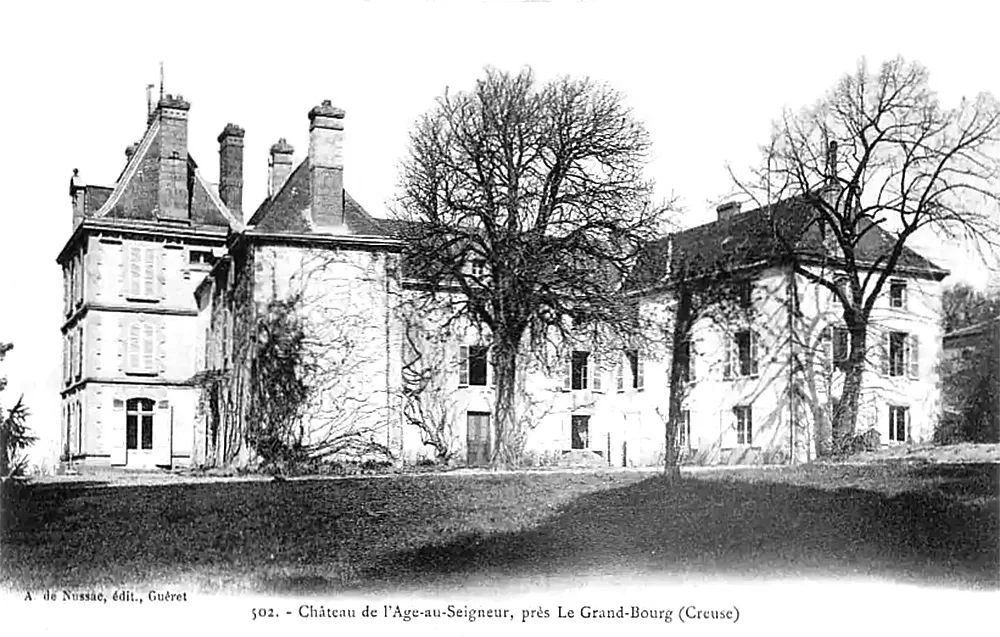
At Le Grand-Bourg, in the Creuse, the Château de l'Âge-au-Seigneur blends medieval origins (12th century) with 19th- and 20th-century extensions, carried out by the engineer Pierre Breuilh, famous for introducing the Douglas fir to France. A fire in the early 2000s reduced this great residence of around fifty rooms to a ruin, stripped of its floors.
Private property and unlisted, it remains one of the emblematic abandoned châteaux of the Creuse, a rural department with no shortage of neglected heritage. To be viewed with respect for the place. See our Creuse urbex map.
20. Château du Clos des Fées: the abandoned château near Étretat
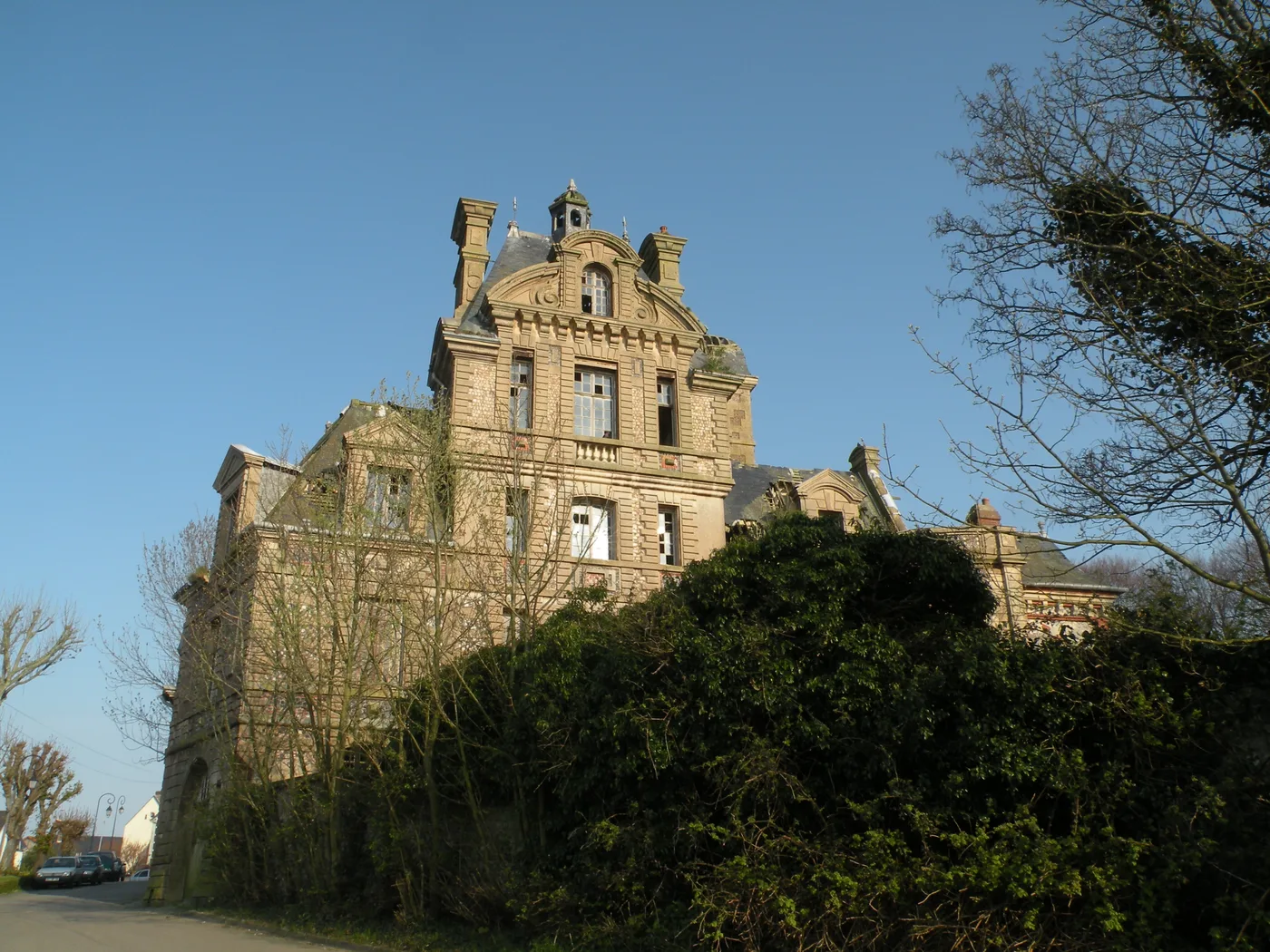
In Saint-Jouin-Bruneval, a few kilometres from Étretat in the Seine-Maritime, the Château du Clos des Fées is a century-old residence abandoned for more than thirty years, eaten away by dry rot and marked by two fires. Bought by the local council in 2020, it was long a playground for explorers.
But it is a place living on borrowed time: an official "before demolition" visit was organised in April 2026, the plan being to keep the facade to build social housing. In other words, it is still standing, but not for much longer in its current form. For other châteaux in the region, see our Seine-Maritime urbex map.
FAQ - Abandoned places in France
How many abandoned places are there in France?
No one keeps an official count, but they number in the tens of thousands: châteaux, farms, factories, sanatoriums, stations, forts. Our map alone geolocates over 27,000 in France, kept up to date by the community. You can filter them by region and by department from the France urbex map.
Is it legal to explore an abandoned place in France?
An abandoned place almost always has an owner. Entering without permission is trespassing on private property, and forcing an access point amounts to breaking and entering. We say it for every place: you look and photograph from authorised access points, you force nothing, you damage nothing. For the legal details, read our article "Is urbex legal in France?".
Is urbex dangerous?
Yes: rotten floors, asbestos, glass, falls, collapses. Several places on this list (the Carmaux washing plant, the cliff blockhouses) are explicitly unstable. You never go alone, you tell someone, you bring a light, and you back off at the slightest doubt. See our urbex safety rules.
Where can I find abandoned places near me?
The simplest way is to open the France urbex map and zoom in on your area: every region and every department has its own dedicated page. The free spots in this guide unlock in one click in your personal account. For the method, read "How to find abandoned places near me?".
Why are some famous places not on the list?
Because they are no longer abandoned. La Mothe-Chandeniers was saved through crowdfunding, Château Burrus hosts weddings, the Cambo and Réal Martin sanatoriums have been demolished, and the Liévin headframe is UNESCO-listed. We keep only places verified as genuinely abandoned and standing in 2026.
Are the GPS coordinates really free?
Yes. The spots offered in this guide unlock free of charge, with no credit card, from your personal account. The paid packs only serve to fund the moderation and give access to the rest of the 27,000 French places. Discover also the free urbex map.
When is the best time to explore an abandoned place?
Late autumn and winter are often ideal: the fallen vegetation clears the facades, the low-angled light is superb for photography, and the buildings are less frequented. On the other hand, avoid unstable places in frost or rain, when floors and stairs become treacherous. In any season, favour daylight and visiting in a group.
How can you tell if an abandoned place is still standing in 2026?
That is the whole challenge: an abandoned place can be demolished, sold or rehabilitated from one year to the next. Several places in this ranking are in fact living on borrowed time (Évreux, the Clos des Fées). Our map is kept up to date by the community, and every spot offered here has been verified as genuinely abandoned and standing as of summer 2026. If in doubt before a trip, cross-check with recent satellite imagery and dated exploration reports.
How do I add a new abandoned place to the map?
The map is collaborative: if you discover an abandoned place that is not on it, you can suggest it from your personal account. Every set of coordinates submitted is then checked by the regional moderation before publication, to guarantee that it is accurate and that the place still exists. It is this verification work that makes the France urbex map reliable.
Conclusion: heritage on borrowed time, to be explored with respect
If France has so many abandoned places, it is the sum of its history: rural exodus that emptied the châteaux and farms, deindustrialisation that shut down factories, spinning mills and coal-washing plants, the end of the great sanatoriums after the defeat of tuberculosis, wars that left forts and blockhouses behind, and major developments (an airport, a railway line) that froze entire villages in place. Every ruin in this ranking tells a chapter of that story.
But this heritage is fragile, and not only against time: of these twenty places, several are already destined for demolition or rehabilitation. All the more reason to explore them with respect, forcing and damaging nothing, and to document them while they are still here. That is the whole point of our collaborative map. To discover them all, open the France urbex map (over 27,000 abandoned places) and start with your own region.