Gondolas frozen above a lake for half a century, an entire mining company town left standing in the mountains, and an Art Deco racecourse grandstand slowly swallowed by the forest—Tokyo is a city of skyscrapers, but it is also one of Japan's richest troves of abandoned places. From the mountains of Okutama to the doorstep of Minato Mirai, this article hand-picks 3 abandoned places around Tokyo that are still genuinely standing in 2026. No ticketed tourist attractions—only real ruins you can still explore. From the Okutama Ropeway to Nichitsu and the Negishi racecourse, they were chosen for their visual power and the weight of their history.
Our map geolocates more than 229,000 abandoned places across over 200 countries, and from that pool we narrowed things down to only the real ruins that still exist in 2026 and have not been turned into a paid attraction. Each one comes with its history, a video, and an "Add to my map" button. The exact GPS coordinates are free, with no credit card required. This is part of a wider guide to urban exploration in Japan; if you want to dig deeper, see our nationwide guide to abandoned places in Japan.
Abandoned places in Tokyo: what changes with Urbex Maps
Many sites that claim to be "free" end up charging you thousands of yen on a forum for the real location. We do the opposite. Press the "Add to my map" button and the exact coordinates unlock in your own private space, with no credit card. A community of over 40,000 explorers, active since 2021, verifies every set of coordinates at least twice before publication. The three sites below are ranked by visual power and historical importance. Each has its own page and a link to the map of abandoned places in Japan. Everything opens from the free urbex map or from your my map.
The 3 abandoned places in Tokyo at a glance
| Place | Area | Type | Access in 2026 |
|---|---|---|---|
| Okutama Ropeway | Okutama, Tokyo | Aerial ropeway (cable car) | Open (outdoors, at your own risk) |
| Nichitsu (Chichibu mine) | Chichibu, Saitama | Mining ghost town | Off-limits (monitored) |
| Negishi racecourse grandstand | Yokohama, Kanagawa | Racecourse grandstand | Off-limits (fenced) |
1. Okutama Ropeway: gondolas frozen over the lake for half a century
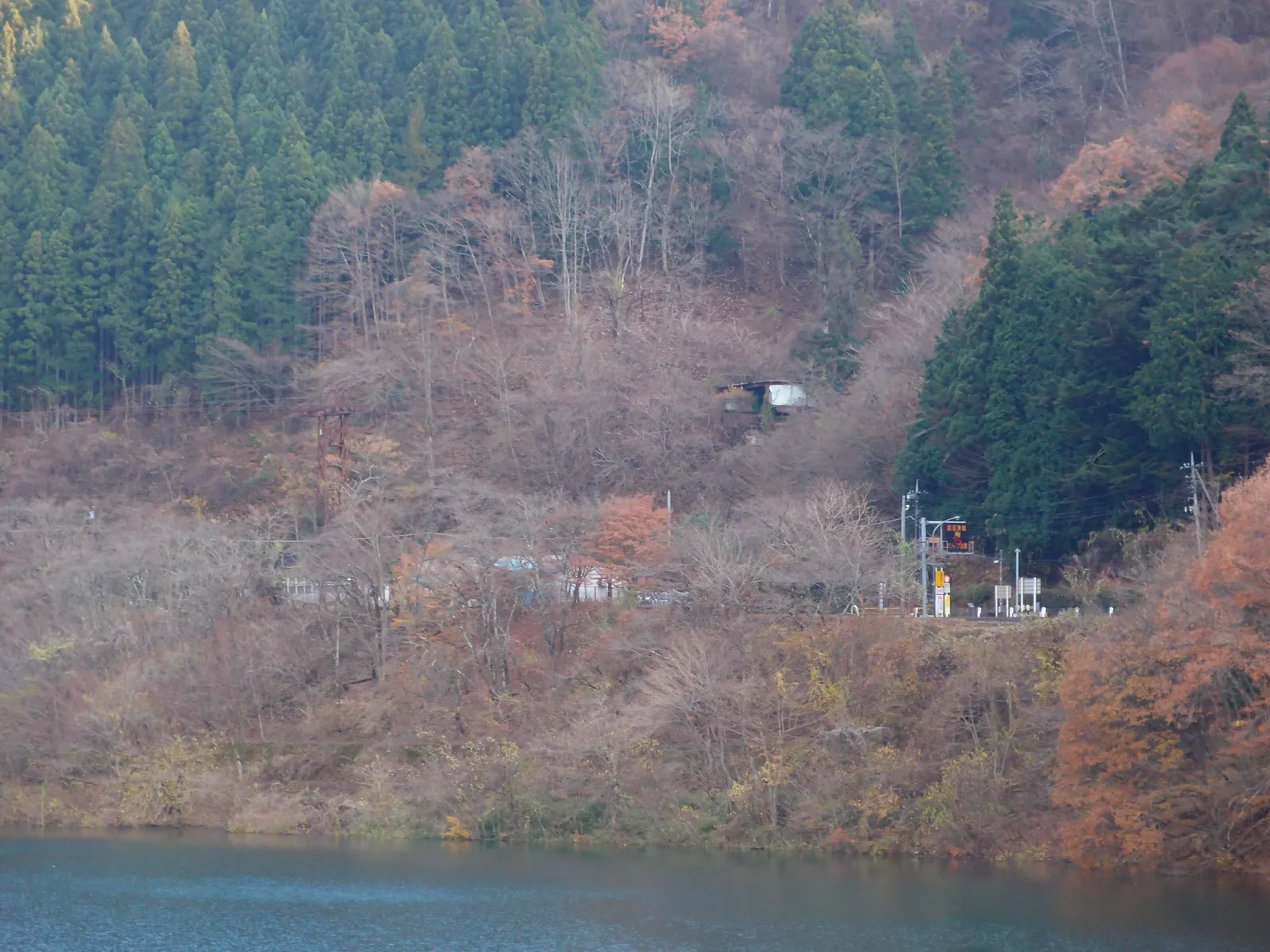
On the shore of Lake Okutama, near the Mitou Bridge, stands one of Japan's most famous abandoned ropeways. The Okutama Ropeway opened in 1962 as a tourist attraction, but passenger numbers never took off; it stopped running after just a few years and was effectively abandoned in 1966. For more than half a century since, the mountaintop "Mitousanguchi Station" and its two gondolas have stayed frozen in mid-air and in the station buildings, their faded shells and decaying machine rooms forming a scene where time has stopped. Reachable from central Tokyo by train and bus, it is one of the most accessible large-scale ruins in Tokyo. For the history, see the Wikipedia article. Find more ruins on the map of abandoned places in Japan.
2. Nichitsu (Chichibu mine): a mining ghost town lost in the mountains
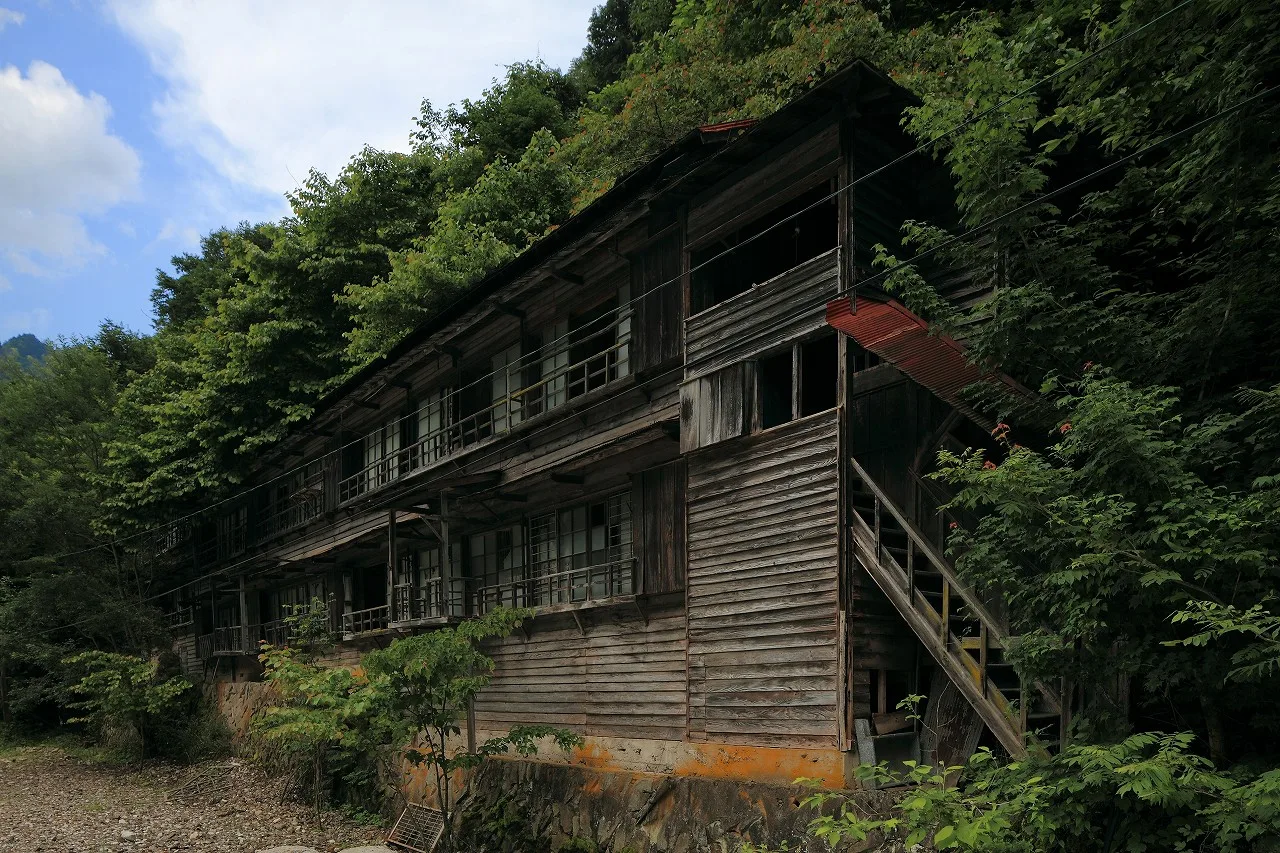
Deep in the mountains of Chichibu, Saitama, at the foot of Mount Ryōkami, Nichitsu (the Chichibu mine) is one of Japan's iconic mining ghost towns. This mining town once produced iron, zinc, gold and more, and at its peak was home to several thousand people, with company housing, a clinic, an elementary school, and even a cinema. As mining scaled back the people left, and today an entire cluster of decaying wooden company houses and facilities remains stranded in the mountains. Because Nichitsu's operations are still active on site, the land is private, off-limits and monitored; it has all the feel of a village where time has stopped, but exploring it demands the utmost care. It is one of the most striking abandoned sites in the whole Kantō region. For more, see the Wikipedia article.
3. Negishi racecourse grandstand: Art Deco towers swallowed by the forest
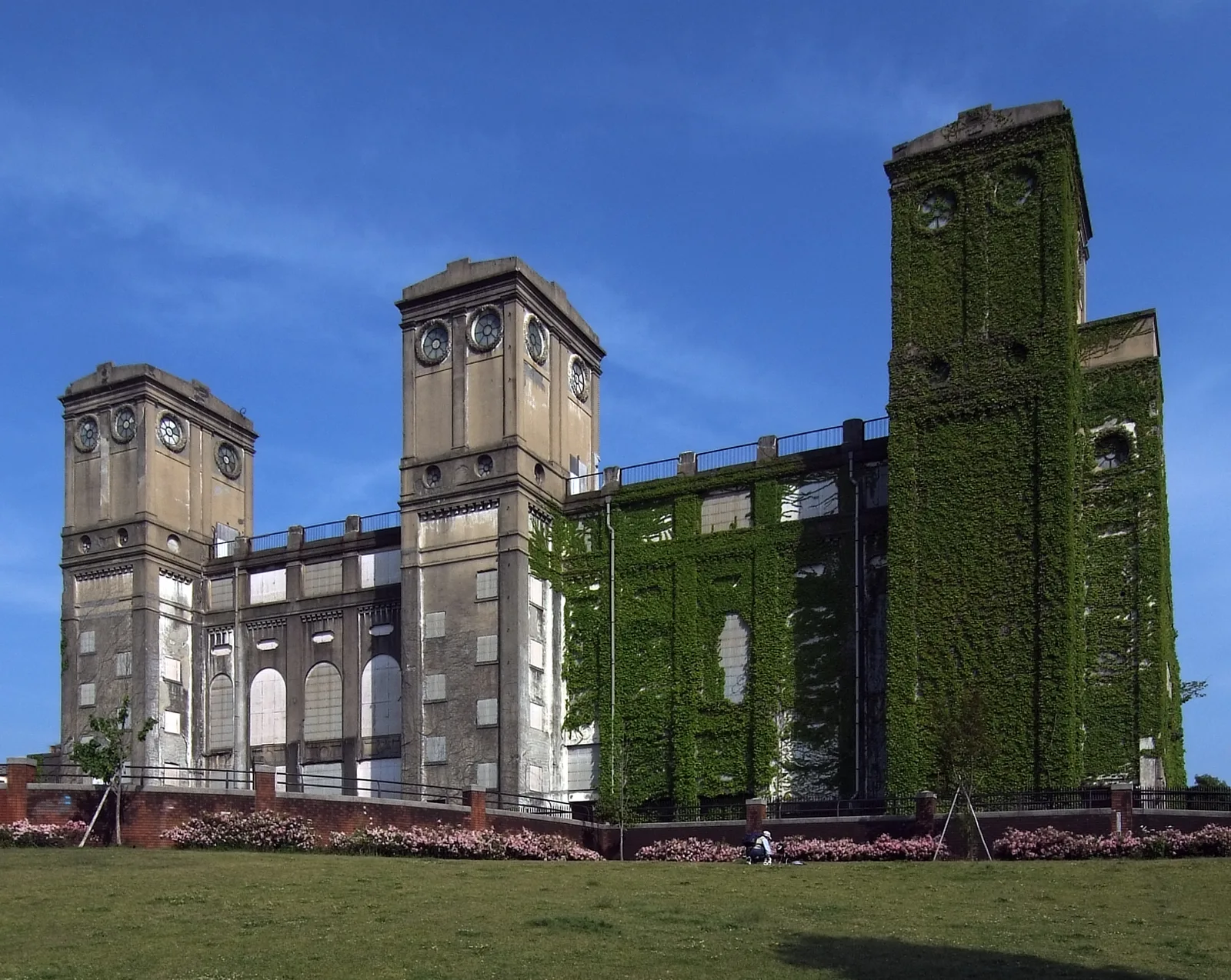
Standing on a hill in Negishi, Yokohama, the former Negishi racecourse grandstand is an otherworldly ruin right on the edge of the city. On the site that grew into Japan's first Western-style racecourse, a spectator grandstand designed by the architect J. H. Morgan was completed in 1929, and it still rises today as three Art Deco towers. Requisitioned by the US military after the war and never seriously reused after it was returned, the concrete towers have been swallowed by ivy and trees, giving off a powerful, ruinous presence. It is fenced off and closed to the public inside, but you can take a long look at the exterior from the adjacent Negishi Forest Park—making it one of the most accessible ruins in the Tokyo area. For the background, see Wikipedia. See also the map of abandoned places in Japan.
Abandoned places in Tokyo: frequently asked questions
Is it legal to explore abandoned places in Tokyo?
Exploring is not a crime in itself, but almost every ruin has an owner (private, municipal or state), and entering the property without permission can amount to breaking and entering or trespassing. Some places, like the Okutama Ropeway, can be seen from the outside in the open air; others, like Nichitsu or the former Negishi racecourse grandstand, are fenced or monitored and off-limits inside. Do not climb over fences, do not break anything, and leave immediately if you are asked to.
How do I get the GPS coordinates for these abandoned places?
Each spot above has a card with an "Add to my map" button. Click it and the exact GPS coordinates are saved to your own my map. It is free, with no credit card required. You can open all the saved coordinates together on the free urbex map and navigate area by area.
Is exploring abandoned places dangerous?
Yes, the dangers are real. Collapsing floors and roofs, asbestos and broken glass, and mine shafts are especially hazardous. Never go alone, carry a light and sturdy shoes, tell someone your route, and respect barricades—these are essential. Do not underestimate the decaying buildings of Nichitsu or the steep terrain of Okutama.
What other abandoned places are there in Tokyo?
The Tokyo area is dotted with many ruins, from the Hachijo Royal Hotel on Hachijojima to sites scattered across Tama, Okutama, and the mountain areas of Kanagawa and Saitama. The nationwide overview is gathered in our guide to abandoned places in Japan, and you can search area by area from the map of abandoned places in Japan, which holds thousands of locations.
Explore the map of abandoned places in Tokyo
The three sites featured here are only the tip of the iceberg. The map of abandoned places in Japan holds thousands of locations with coordinates, from the city center out to Okutama and the surrounding mountains. Start with the area nearest you, add your favorites to my map, and head out to explore—never forgetting your respect for these places and your own safety.