A colossal mine headframe rising as if to pierce the clouds, a shuttered round schoolhouse, and red-brick ruins slowly being swallowed by the forest. About an hour's drive north-east of Sapporo, the Sorachi (空知) region is one of Japan's richest troves of coal-mining ruins. Once called "the heart of Hokkaido," this area keeps the memory of the era when coal powered the nation sealed inside its cold air. In this article we have hand-picked three abandoned places that still genuinely exist as of 2026, all reachable using Sapporo as a base. These are not ticketed tourist attractions but real ruins you can still explore.
Our map holds more than 229,000 abandoned places across over 200 countries, all geotagged. From that vast dataset we selected only the ones that truly still exist as of 2026 and have not been turned into paid attractions. Each comes with its history, a video, and an "Add to my map" button. The exact GPS coordinates are available for free, no credit card required. This is the mother ship for exploring abandoned Japan. If you want to dig deeper, we also have city-by-city articles: Tokyo, Osaka, Nagoya, Fukuoka, and for the full picture, our Abandoned Japan pillar article.
Abandoned Places in Sapporo & Hokkaido: Why Urbex Maps Changes Everything
Many sites that advertise "free" end up charging you thousands of yen for the exact address, buried deep in a forum. We do the opposite. Just press the "Add to my map" button and the exact coordinates are saved to your personal space with no credit card. Since 2021, a community of more than 40,000 explorers has verified each set of coordinates at least twice before it goes public. The three places below are ranked by visual impact and historical weight. Each comes with its own page and a link to the abandoned Japan map. You can open everything from the free abandoned-places map or from my map.
The 3 Abandoned Places Around Sapporo at a Glance
| 場所 | エリア | 種類 | 2026年のアクセス |
|---|---|---|---|
| 住友奔別炭鉱 立坑櫓 | 三笠市(空知) | 炭鉱の立坑櫓 | 禁止(外観は道路から) |
| 沼東小学校 円形校舎 | 美唄市(空知) | 廃校(円形校舎) | 禁止/私有地 |
| 幾春別炭鉱 錦立坑櫓 | 三笠市(空知) | 炭鉱の立坑櫓 | 自由(ジオパーク屋外) |
1. Sumitomo Ponbetsu Colliery Headframe, Mikasa: A Steel Giant Towering Over Sorachi
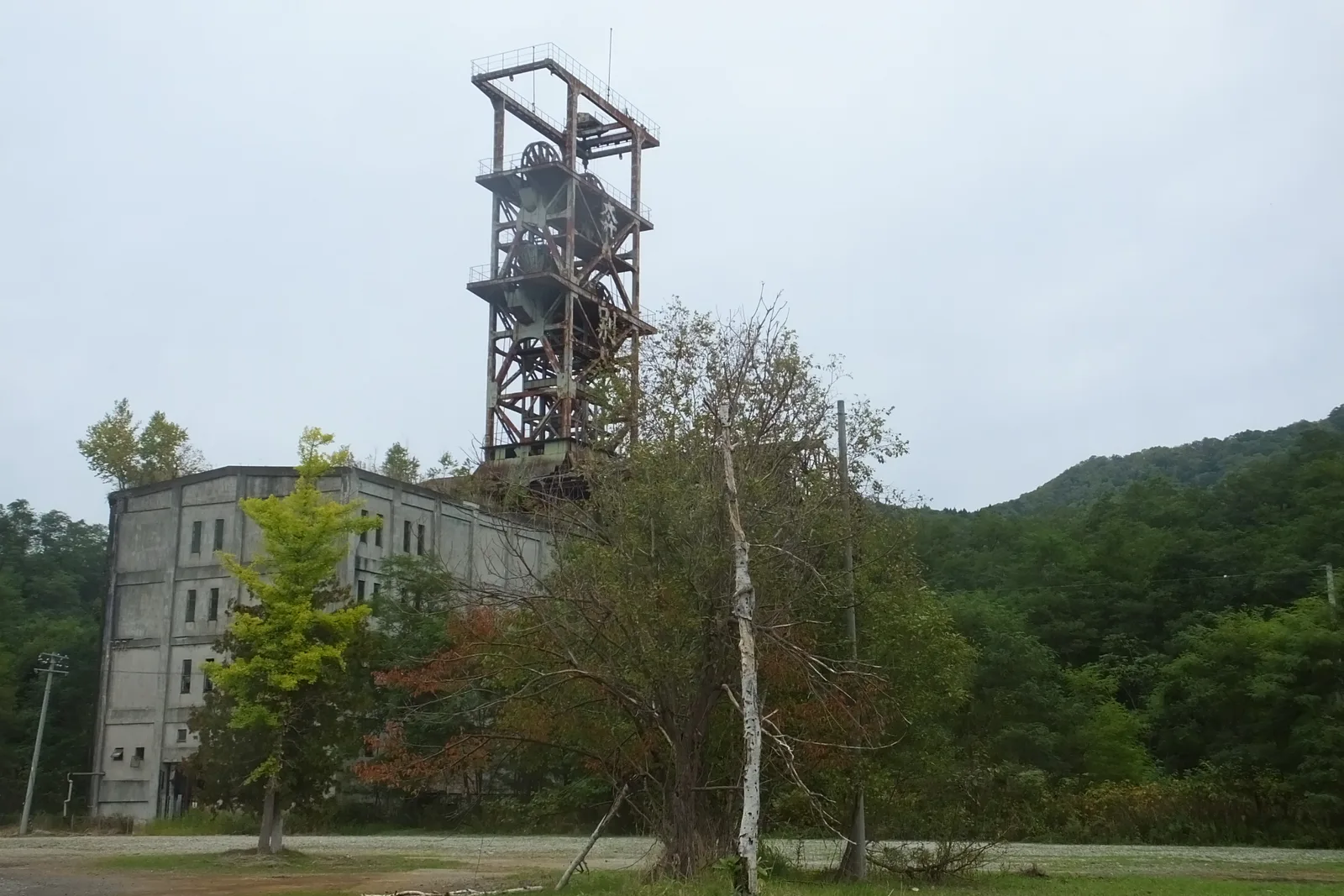
Deep in the mountains of Mikasa, a steel tower roughly 51 metres tall suddenly comes into view. When the headframe of the Sumitomo Ponbetsu (奔別) colliery was completed in 1960, it was the largest of its kind in the East. This giant, which hauled miners and coal up from nearly 1,000 metres underground, served for barely more than a decade before the mine closed in 1971. It has been staring up at the Sorachi sky ever since, for half a century. Around it stand the remains of hoppers and a coal-preparation plant, and in winter, wrapped in a blanket of snow, its presence grows even more striking. It is the flagship image of Hokkaido's coal-mining heritage; the grounds are off-limits, but you can gaze up at its imposing bulk from the road. Find many more ruins on the abandoned Japan map.
2. Numato Elementary Round Schoolhouse, Bibai: A Circular Memory Left by a Mining Town
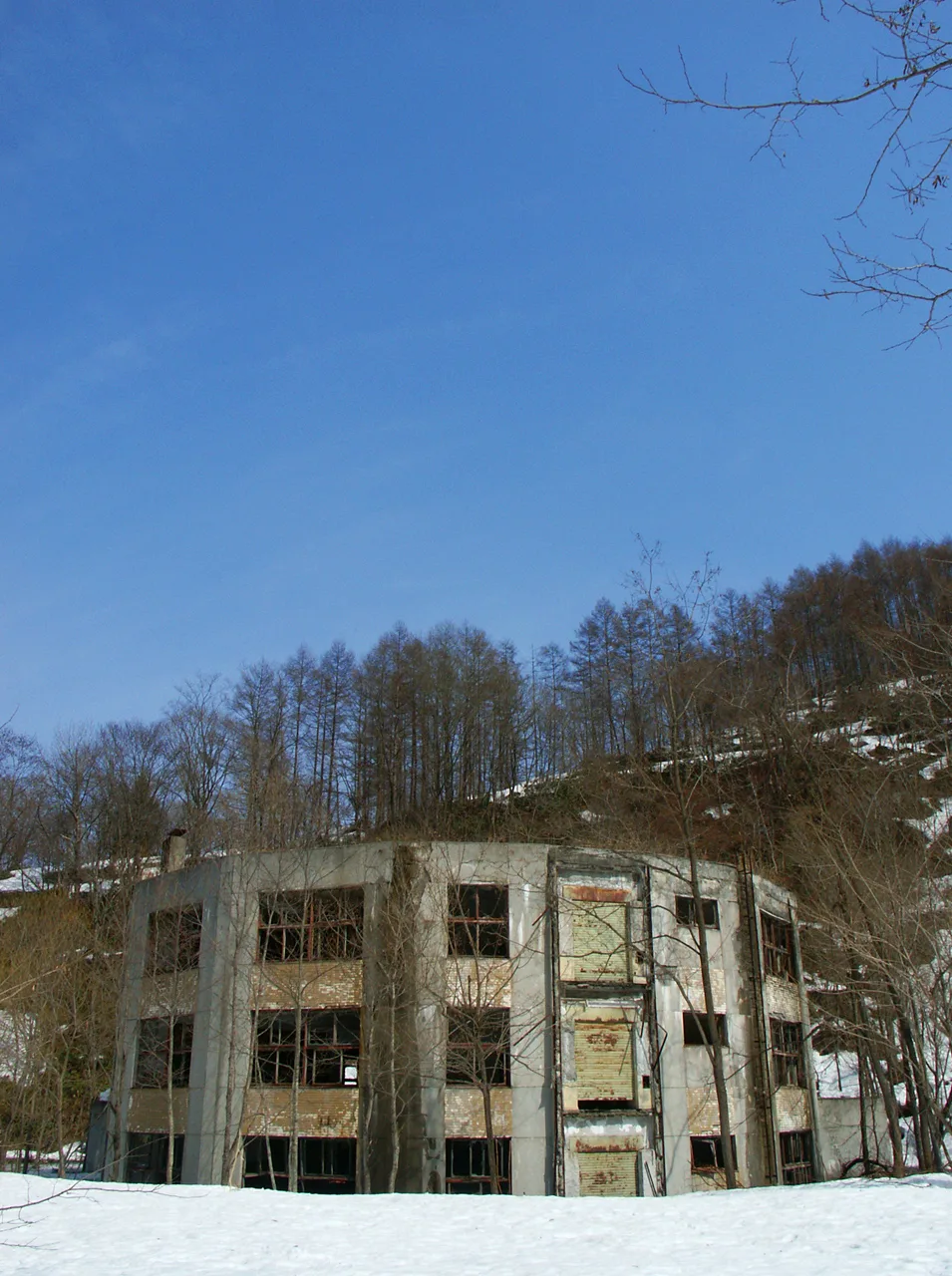
In the mountains of Bibai (美唄), all but buried among the trees, stands the round schoolhouse of Numato (沼東) Elementary School. Built in 1958 in the town of the Mitsubishi Bibai colliery, whose population had surged with the mining boom, its classrooms were arranged in a circle around a central stairwell, a bold, then-fashionable design. But when the energy revolution sent the collieries into decline, people vanished from the town, and the school closed in 1974. Today, together with the surrounding miners' housing, it has returned to the forest, and only the round schoolhouse quietly remains. No building better symbolises the rise and fall of Hokkaido's mining towns. As it sits on private land, entry is forbidden, and any exploration is illegal and at your own risk.
3. Ikushunbetsu Nishiki Colliery Headframe, Mikasa: Hokkaido's Oldest Red-Brick Shaft
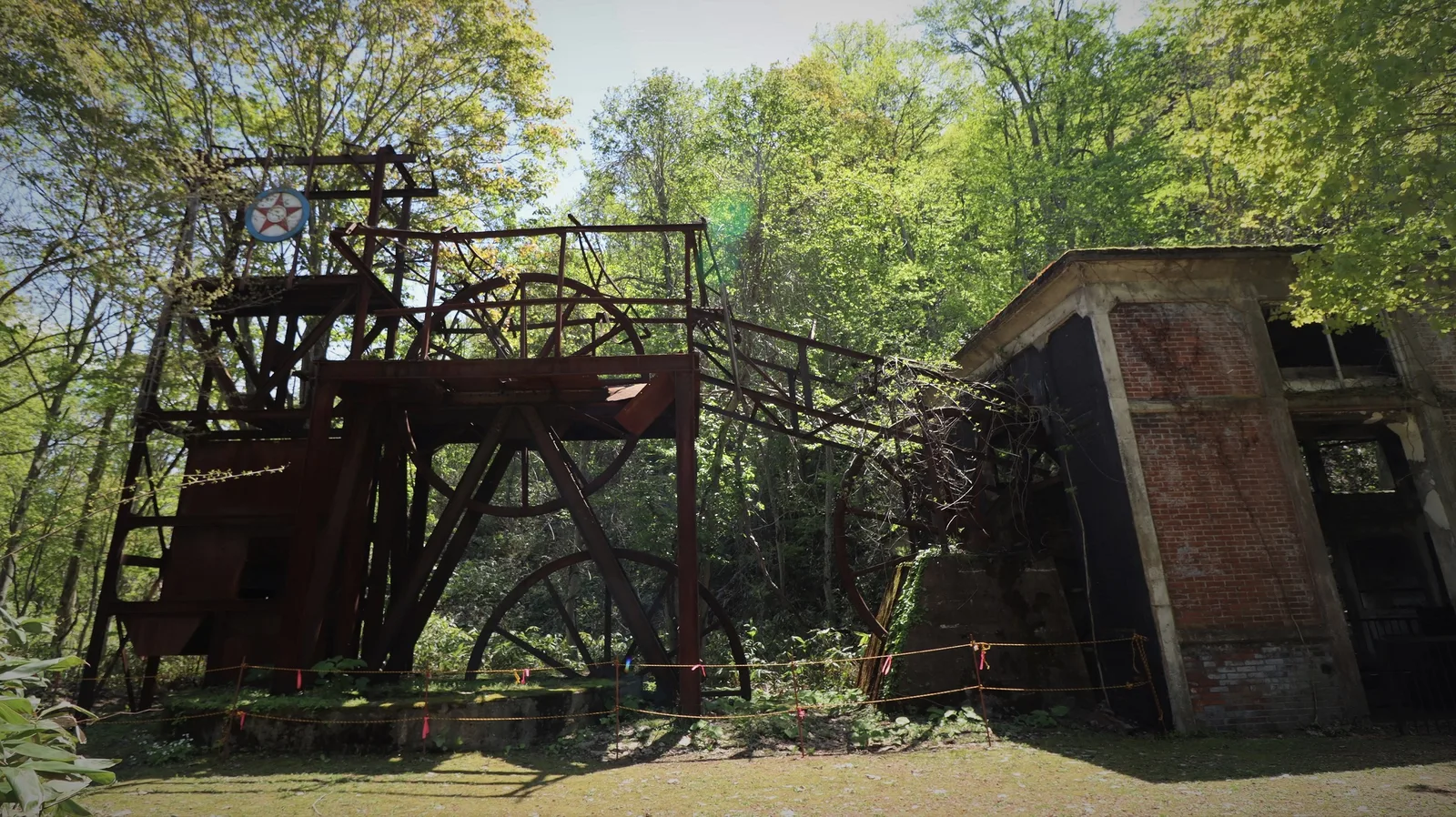
In Ikushunbetsu (幾春別), Mikasa, sleeps the oldest surviving mine headframe in Hokkaido. The Nishiki (錦) shaft was built around 1920, during the Taishō era, and at the foot of its steel tower nestles a red-brick winding house. Even among the mining ruins of Sorachi it stands out as remarkably old, and its unique character, the warmth of brick set against the coldness of steel, is its charm. Today the area is being developed as part of the Mikasa Geopark, and you can view it relatively freely as an outdoor ruin. The Ponbetsu headframe stands close by, making this an unmissable stop if you want to tour Sorachi's coal-mine ruins in a single day. Find coal-mining ruins across the country in our Abandoned Japan pillar article.
Abandoned Places in Sapporo & Hokkaido: Frequently Asked Questions
Is it legal to explore abandoned places in Hokkaido?
Simply looking at an abandoned place is not a crime, but almost all of these sites have owners (companies, local governments, private individuals). Entering the grounds without permission may amount to trespassing. Some places, like Ikushunbetsu, can be viewed freely outdoors as a geopark, but the Numato Elementary round schoolhouse and the Ponbetsu headframe are off-limits, and exploring their interiors is illegal and at your own risk. Do not break fences or gates, damage nothing, and if you are asked to leave, comply.
What is the most famous abandoned place around Sapporo?
The best known is probably the headframe of the Sumitomo Ponbetsu colliery in Mikasa. This steel giant, roughly 51 metres tall, was once hailed as the largest in the East and stands as a symbol of Hokkaido's coal-mining heritage. In the abandoned-school category, the round schoolhouse of Numato Elementary in Bibai enjoys enduring popularity thanks to its unusual circular design.
How do I get the GPS coordinates of these places?
Each of the spots above has a card with an "Add to my map" button. Click it and the exact GPS coordinates are saved for free to your personal space, "my map." No credit card is required. You can then open everything on the free abandoned-places map and explore area by area.
Is exploring abandoned places dangerous?
Yes, the dangers are real. Former coal mines in particular are extremely hazardous: floors and stairs can collapse, and deep shafts or underground cavities can open up beneath you. In a Hokkaido winter, snow, ice, and cold are not to be underestimated either. Do not go alone; bring a flashlight and sturdy shoes, tell someone where you are going, and respect fences and warnings. The Ponbetsu and Ikushunbetsu shafts are not places to approach on a whim.
Explore the Abandoned Japan Map
These three places are only the tip of the iceberg. The abandoned Japan map gathers thousands of geotagged spots from Hokkaido to Okinawa, each with its coordinates. Start with the area that intrigues you, add your favourites to my map, and set off to explore. Never forget your respect for these places, or your own safety.